Recent Articles
Ho-ho-ho! It’s a 24-Hour Christmas Marathon!
This Christmas Eve, my present to you is this hypothetical 24-hour holiday programming block, designed to ensure you have something great to have on the TV during the big day tomorrow. Laughs! Tears! Horror! Confusion! This schedule has it all! Merry Christmas!
Occasionally in October, when inspiration strikes (and I have no other ideas), I traditionally like putting together hypothetical 24-hour Halloween-themed programming blocks, providing a hypothetical reader a hypothetical complete 6-am-to-6-am series of movies, TV episodes and various miscellany to keep the spirit of the season with them all day long. I’m not sure they’re particularly practical to put together, or even popular with my audience, but they’re fun exercises for me anyway. I find it exciting to pair media together in slowly changing tones (fun and light in the morning, devastating and confusing by the middle of the night). I’ve done at least three of them by now, and I find them satisfying every single time, even if I have no intention of ever actually watching my own programming block, nor do I expect anybody else to follow through on it either.
However, it dawned on me this year that I had never done a Christmas-themed 24-hour programming article. And, hey, why should Halloween get all the fun? So…that’s what this article is! I guess it’s fairly self-explanatory, I guess. So, imagine, if you will, it’s December 25th and you’re trying to figure out what to put on the TV as the kids and/or the cats open their presents….
6:00 AM - 7:15 AM: Christmas Commercials!
It’s probably the greatest victory of American capitalism that some of my most vivid Christmas season memories as a kid were the commercials that aired in the background of them. I’d get defensive about this, but I feel like I don’t really need to explain it. You all understand it, right? Commercials are fun when you’re a kid! Toys! Cereal! Stuff! Ads stick with you in a way they just don’t when you become an adult.
So, why not wake up early and begin the gift-opening process with some classic 90’s commercials playing in the background, just like the old days? I went with the video linked in the title simply for length, and there seem to be lots of goodies to be found within, including a Cookie Crisp ad with a jingle that turned out to still be buried somewhere in my brain, as well as a classic McDonald’s commercial that I promise you’ll know instantly if you were between the years of 1985 to 1991. However, you can also swap out this slot with a similar video that covers the decade of your childhood. 70s, 80s, 00s, they all appear to be represented on YouTube. Take your pick and enjoy!
7:15 AM - 9:00 AM: Christmas Cartoon Classics!
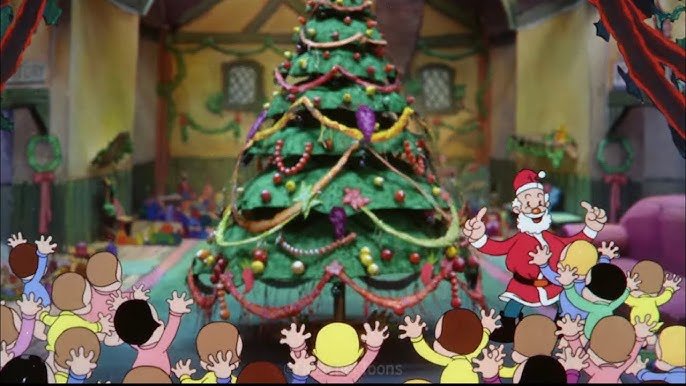
Okay, so I wrote about this strange collection of vintage cartoons (mostly by Max Fleischer, usually actually about Christmas) last year, and I feel like I made my case for them pretty damn well at the time, so I won’t expound on it too much more now. But, in short…do you like that specific 30s style of animation that manages to be horrifyingly janky and satisfyingly fluid? Do you like 90 minutes of animated shorts written from the perspective of post-Great Depression despair and woe? Don’t you want to meet such iconic characters as Mr. Piper, the elves Coco, Hardrock, and Joe, and a dog named Hector (even though his name is actually Princie)? Finally, don’t you want to see a cartoon featuring a Betty Boop side character that is genuinely one of my favorite shorts ever? No? Well, too bad, that’s what I put on the schedule. You’ll love it, I promise.
9:00 AM - 10:00 AM: Nicktoons Christmas! (Paramount Plus)
The morning hours feel like the perfect time to start knocking out some more classic cartoons (of the non-Fleischer variety). This year, let’s start off by plucking a couple of entries out from the vaunted 90s Nicktoon canon. There are a ton to pull from, but I’m zeroing in on just two:
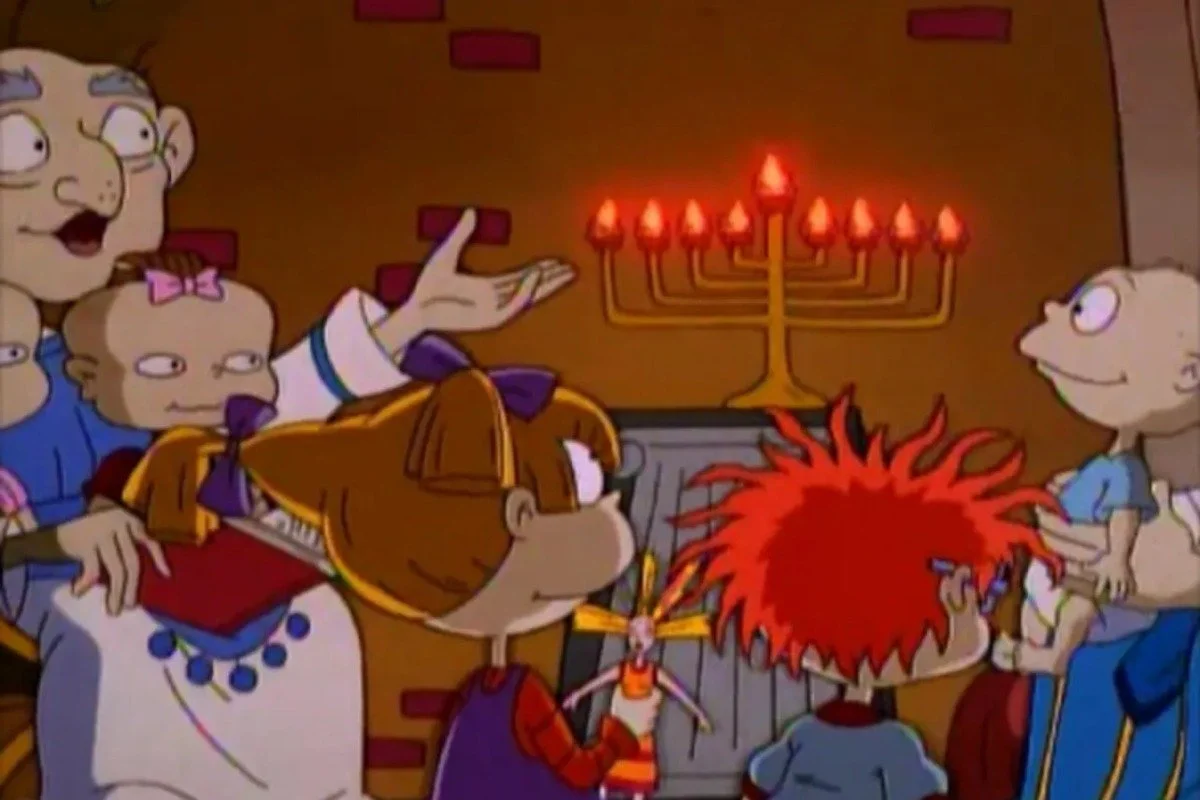
RUGRATS Season 4, Episode 1: “A Rugrats Chanukah” (1996) - Never let it be said that a holiday marathon can’t be a multi-cultural experience! If you had a child in the late 80s or early 90s, there was undoubtedly a period where RUGRATS ran your lives. Almost certainly the second most-famous Nicktoon ever (behind SPONGEBOB SQUAREPANTS), it’s impossible to overstate how ubiquitous this cartoon was to the kids back then. So, it’s really quite impressive what the show chose to do with the massive amount of eyeballs fixated on it. To that end: to fill the gap between eras of the show (there was basically a two-and-a-half year break between seasons in the mid-nineties), Klasky-Csupo decided to create a pair of holiday specials centered around Jewish faith. One was for Passover, which we’ll cover in next spring’s 24-Hour Easter Marathon article. But the other was a Chanukah special.
It’s really great! Even if it was only a surface-level exploration of Chanukah, it would be of vital importance as children’s programming; this is how I found out there were even alternate winter holidays besides Christmas. But the episode is a genuine, sincere dive into what it means to hold beliefs that inevitably make you different, as well as the importance of passing on your values to the next generation, even if you don’t have children yourself (which is essentially Shlomo and Uncle Boris’ entire arc). Yeah, there’s lots of classic Rugrats jokey wordplay for the kids: “maccababies” and “The Meanie of Chanukah” being two of the most famous. But, if you haven’t watched it in a while, it’s worth another look this morning. It hits surprisingly hard, even to this atheist’s heart.
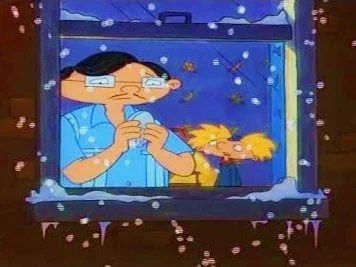
HEY ARNOLD! Season 1, Episode 11: “Arnold’s Christmas” (1996) - HEY ARNOLD! has always stood heads and shoulders above the other Nicktoons, mostly for its beautifully serene jazz score, and its willingness to tackle complex emotions through the prism of quirky children. This early episode is a great example of what it could do best.
Arnold is bound and determined to provide the best Christmas present ever to Mr. Hyunh, one of the members of his grandparent’s boardinghouse. That present: finding Mr. Hyunh’s daughter, who he got separated from during his flee from war-torn Vietnam. This turns out to be exactly the difficult task that it sounds, and he keeps dead-ending. Helga, who expresses her passionate love for Arnold through abject bullying, decides to secretly help him in his quest. Along the way, the episode touches on the trauma of war, the concept of self-sacrifice, and the vague uselessness of local government. The ultimate conclusion, and final shot, still brings a tear to my eye after all these years. One of the best Christmas episodes from one of the best cartoons ever.
10:00 AM - 11:30 AM: THE MUPPETS CHRISTMAS CAROL (1992) (Disney Plus)
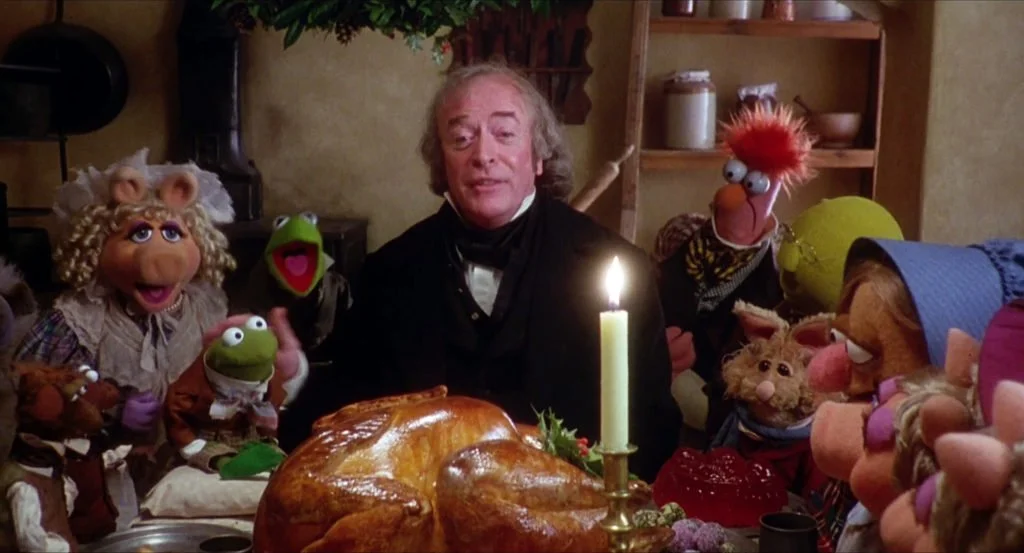
A beloved entry in the “millenial child” canon, this movie has always been special for me, as it’s one of the very first movies I remember actually seeing in a theatre. It’s at least one of the first three, up there with FANTASIA and AN AMERICAN TAIL: FIEVEL GOES WEST. Also, it’s one of my mom’s very favorite Christmas movies. Good enough for me. Isn’t this time all about family anyway?
This movie is undoubtedly the best of the “modern” post-Henson Muppet films, with a much-lauded dead-serious, beautiful performance from Michael Caine at its center. “A Christmas Carol” is a sneakily difficult story to tell, as it completely dies on the vine unless Scrooge is both black-hearted (so we believe why everyone hates him) and likeable (so that we buy the turn at the end). Many have tried, some have undoubtedly succeeded. But Caine, like always, ends up being the best of the bunch; tell me you’re not tearing up by the time he starts singing “Thankful Heart”.
But the reason I’ve always liked THE MUPPETS CHRISTMAS CAROL is that it also makes the great decision to make Gonzo the “main Muppet” and narrator here, not Kermit, who’s otherwise engaged in the Bob Crachit role. Gonzo getting the spotlight didn’t happen all the time, so it was always special when it did. And he’s great! Just as an example, it thrilled me as a kid when he dips out of the story once it gets too scary, only for him to reemerge to tell us Tiny Tim did not die. It’s just a great time, and the perfect movie to have on during the family hours of Christmas Day.
11:30 AM - 1:15 PM: HOME ALONE (1990) (Disney Plus)
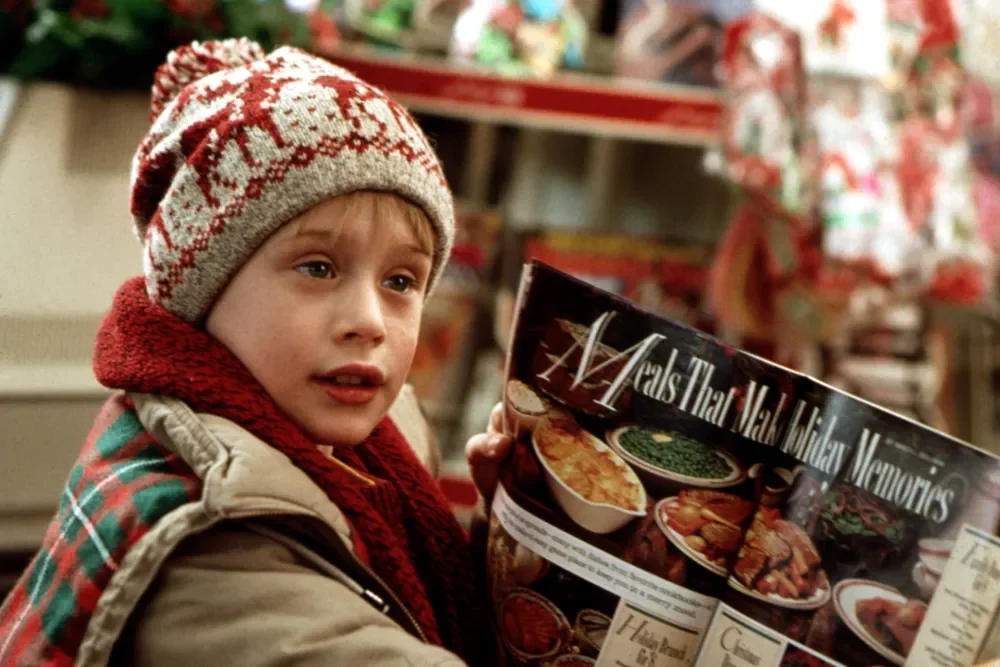
When a Christmas flick also serves as one of the best movies ever made, it makes life so much easier.
Like, do I even need to explain this one? It’s HOME ALONE, one of the very few movies I can think of that might actually be universally beloved (I do not know a single person who has seen it and didn’t like it). Okay, I will say this: the reason this Macaulay Culkin wish fulfillment/home invasion film stays fresh no matter how many years in a row you watch it isn’t its great performances from a stacked cast (John Heard, Joe Pesci, Catherine O’Hara, Daniel Stern, a cameoing John Candy!), nor its soaring John Williams score, nor its house-of-horrors-and-traps finale. It’s the script, one exclusively focused on a series of setups and payoffs, with every little detail in its chaotic opening act in place to set up its otherwise ludicrous premise. How can a family accidentally leave a child behind before a Paris vacation? John Hughes’ script makes a pretty great case.
And, of course, there’s the great final moment, summed by best by George Constanza:
“The old man got to me!”
1:15 PM - 3:00 PM: THE SANTA CLAUSE (1994) (Disney Plus)
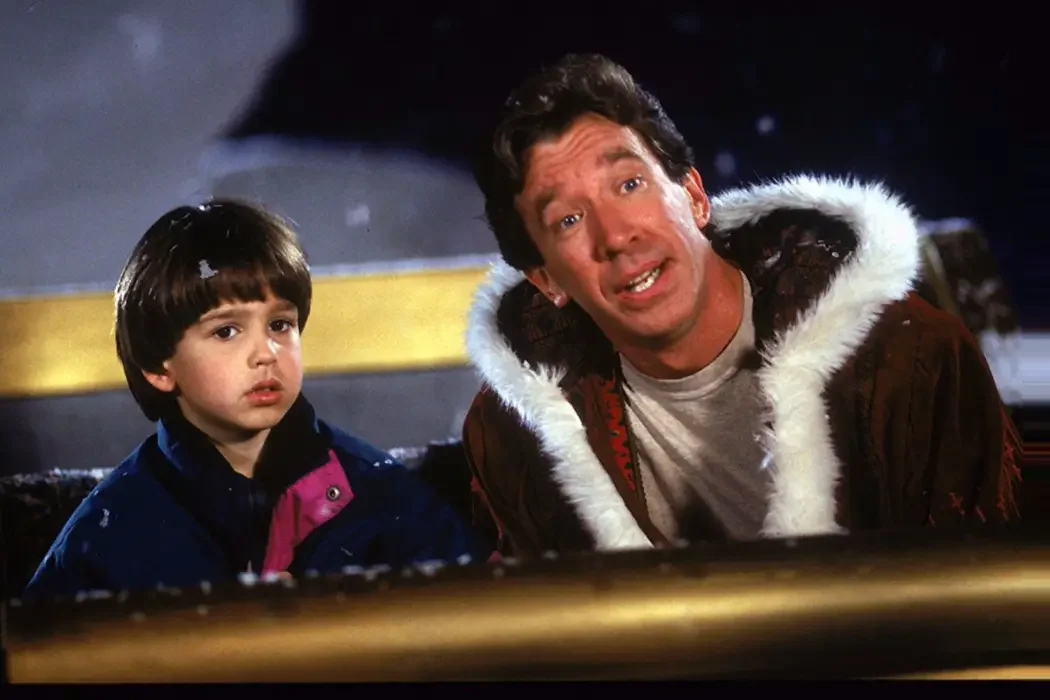
This was a movie I latched onto as a kid almost immediately after seeing it on TV for the first time, which surprised me considering my reaction when a classmate told me about the general premise: “Wait, Santa gets killed? Why would they put that in a movie???” But, I’ve always liked it for how cozy it manages to feel, despite its inherent cynicism and borderline-mean spirit. Again, we watch Santa die, then see new Santa' Scott Calvin’s life get destroyed as his body morphs, his family life crumbles, and he loses custody of his kid. All throughout, we get Tim Allen’s hilarious barbs about how psychiatry is a scam, and I think at one point, he kind of makes a pass at a child-seeming elf?
But…you know…those are only things you really pick up on as an adult. When you’re a kid (or at least when I was a kid), you’re more captivated by the sweet magic of its message (you’re never too old to believe in Santa), juxtaposed with the sarcastic humor of Mr. Allen, a style of joking that I genuinely had never been exposed to before. I suspect a lot of people my age might feel the same about it, because THE SANTA CLAUSE is an established classic now, despite vaguely mixed reviews at the time. So, in the spirit of the season, let’s enter the late afternoon believing in SANTA CLAUSE!
3:00 PM - 4:00 PM: Seinfeld Two-Fer! (Netflix)
For a show about a bunch of Jewish people in New York, SEINFELD was surprisingly prolific in terms of Christmas episodes. Although there are two that stand out as the most popular (Season Six’s “The Race”, and Season Nine’s “The Strike”), there were a total of five no-doubt-about-it SEINFELD Christmas episodes. That count increases to seven if you count Season Five’s “The Conversion” (in which George converts to Latvian Orthodox on Christmas Day) and Season Eight’s “The Andrea Doria” (not really about Christmas, but Monk’s Cafe is decorated for the occasion). All of them are great watches, and those lesser-talked about ones (Season Three’s “The Red Dot”! Season Four’s “The Pick”! Season Seven’s “The Gum”!) deserve just as much shine as “The Race” and “The Strike” get every year, goddammit.
Anyway, this year, let’s watch “The Race” and “The Strike”.
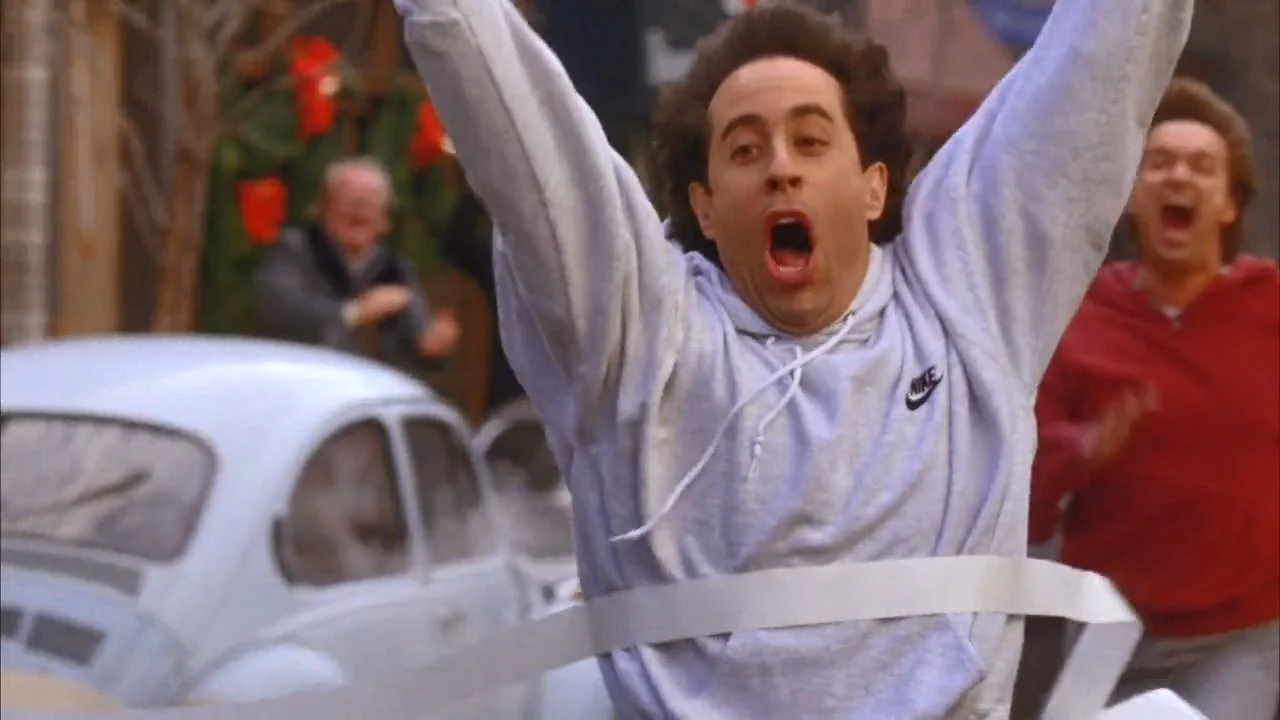
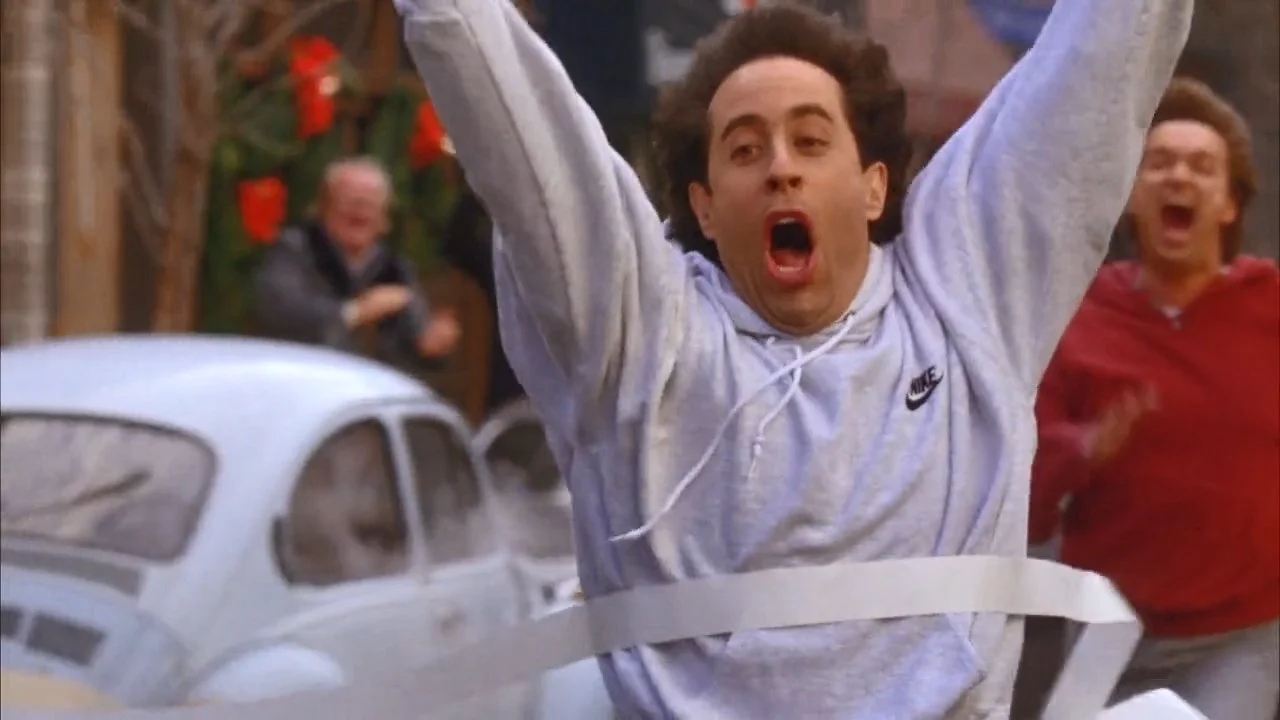
Season Six, Episode 10: “The Race” (1994) - In which Jerry gets (accurately) accused of cheating in a high school race, and gets forced into a rematch race. More specifically to the season, however, this is the one where Kramer gets work as a mall Santa, then loses the work after being indoctrinated into communism by Elaine’s boyfriend. Don’t worry, patriots, her boyfriend gets his after Elaine accidentally blacklists him from his favorite Chinese restaurant. It’s a sign of strength that, even if there weren’t a shred of Christmas to this, it would still be a great watch during a holiday party. The conclusion of the titular race (and closing freeze-frame) is up there with the very finest SEINFELD moments ever.
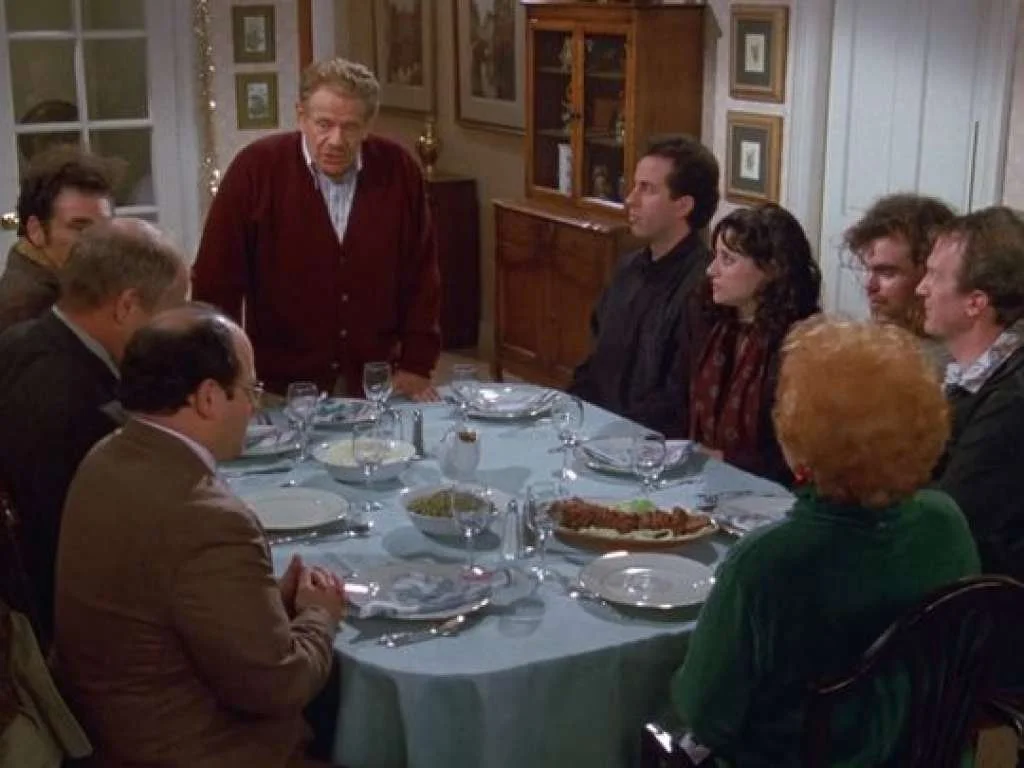
Season Nine, Episode 10: “The Strike” (1997) - The Festivus episode. I gotta say, though, Festivus plays less of a role in this than you might remember. And it really isn’t as fleshed out as I had recalled: it’s really just the pole, the airing of grievances and the feats of strength (which we don’t even see!). I actually think the best storyline here is the one where George spitefully gives out donation cards to a fake charity at work (with the hilariously bland title “The Human Fund”), if only because it directly involves Mr. Kruger, one of the show’s greatest one-season wonders, into the action. I genuinely think of Kruger locking himself out of his office then just going home more often than I do the Festivus pole. Oh, and Kramer’s “HEYnobagelnobagelnobagel” chant. Happy Festivus!
4:00 PM - 6:00 PM: A COMMUNITY Christmas! (Peacock)
There are only three possible points of view when it comes to the former NBC/Yahoo Screen college sitcom COMMUNITY: you’re a diehard fan, you’ve never heard of it, or you’re sick of hearing other people talk about it.
I’m definitely in the first camp, and I can’t call Christmas a success without going through its four holiday episodes. Yes, that even includes the one from its much-maligned fourth season (a reputation that is both fair and not; if they ever release the oft-rumored COMMUNITY movie, I’ll write a whole article about the show, and get into it there). My wife and I usually watch them in this order:
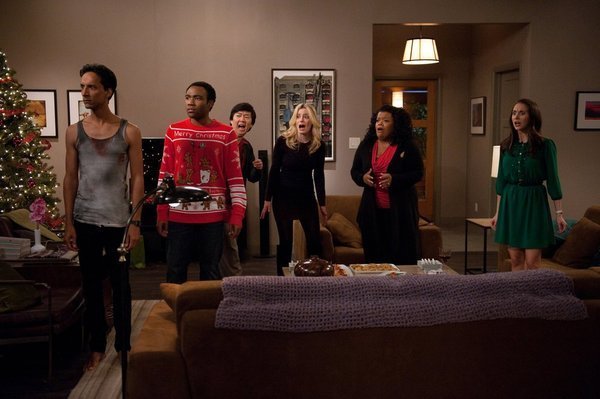
Season 4, Episode 10: “Intro to Knots” (2013) - An awkward Christmas episode, as it technically aired in April, a result of the strange scheduling snafus Season Four found itself the victim of. Yes, it is the least of the quartet of COMMUNITY Christmas episodes; like many episodes from this season, the tone is slightly off, and it’s just a little self-consciously wacky (I don’t love its ending tag dipping into the Darkest Timeline). Also, I’m not sure why they decided to turn it into a tense stand-off chamber piece after teasing a DIE HARD-themed episode earlier in the year. But I think it has merits all on its own! Malcolm MacDowell makes for a wonderful villain as the professor our Greendale gang must talk into upping their grade at a Christmas party. And at this point, our core characters are so well-formed that any attempt to play them off against each other is going to hum. It’s light, but it works, especially in comparison to other Season Four installments.
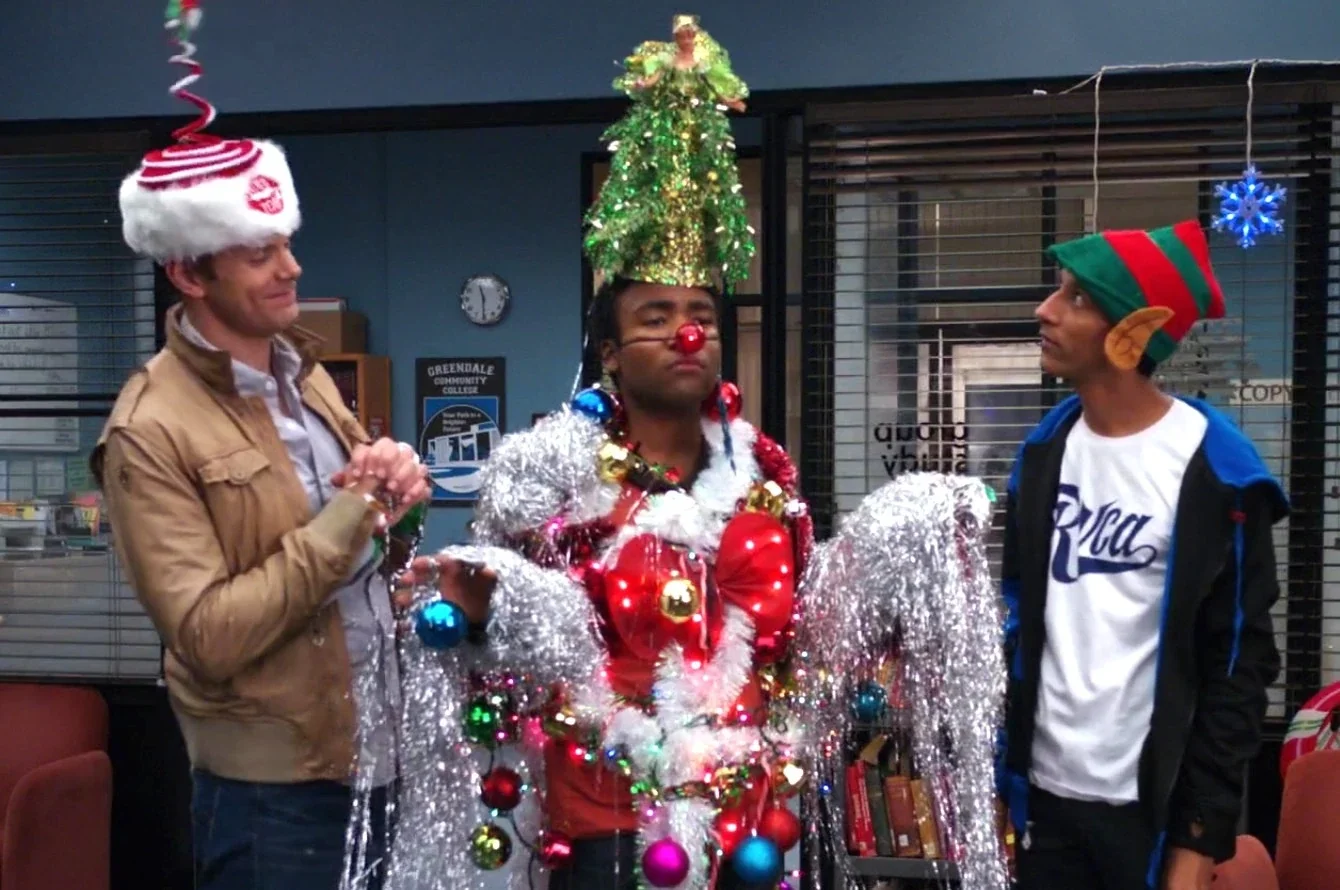
Season 1, Episode 12: “Comparative Religion” (2009) - The first Christmas at Greendale is a sneakily great one, with one of Donald Glover’s best bits (trying and failing to come up with another word besides “fight”). We also have another incredible piece of guest casting, with a very-much-all-grown-up Anthony Michael Hall playing an 80’s style high school bully (again, at a community college). But what really makes it something special is the arc that Shirley (Yvette Nicole Brown) goes through here in twenty minutes. The show’s resident Christian, she starts from a place of wanting to have them all hang out for a Christmas gathering, as long as it’s on her terms, her way, everyone else’s particular beliefs or schedules be damned. As it turns out, this is her first Christmas without her ex-husband, and she’s scared of losing that family connection. Then, by the end, she’s throwing fists side-by-side with Jeff (Joel McHale), having learned to accept the particular foibles and quirks of her new, found family. It’s a great early winter finale for COMMUNITY, and one of the most underrated Season One episodes.
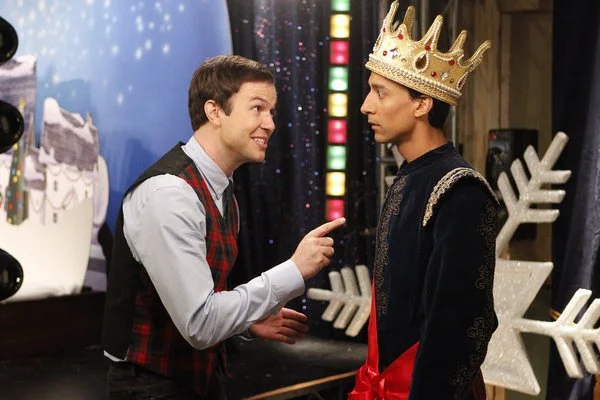
Season 3, Episode 11: “Regional Holiday Music” (2011) - Another COMMUNITY Christmas episode, another incredible guest star! This time, we have a pitch-perfect Taran Killam playing Mr. Rad, the show’s Matthew Morrison stand-in for an episode-long GLEE slam (boy, does that timestamp COMMUNITY). It’s maybe the most fun episode of COMMUNITY, with everyone in the main cast besides maybe getting to perform a full song showcasing both their characters (the punchline of Britta singing a song “from the heart” is a great one) and their individual comedic talents (for a long time, I was under the belief that Glover had written the rap he performs in this, although it seems that it was actually Dan Harmon). And, yes, it is absolutely vicious towards GLEE, and it was probably just in time; another year, and that FOX teen musical drama would have been on its downward trajectory, and it wouldn’t have been fun to kick it as much. But the constant framing of everything as being a step towards “regionals” remains funny to this day. Also, it’s all worth it just for Annie (Alison Brie) and her riff on the sexual nature of “Santa, Baby”.
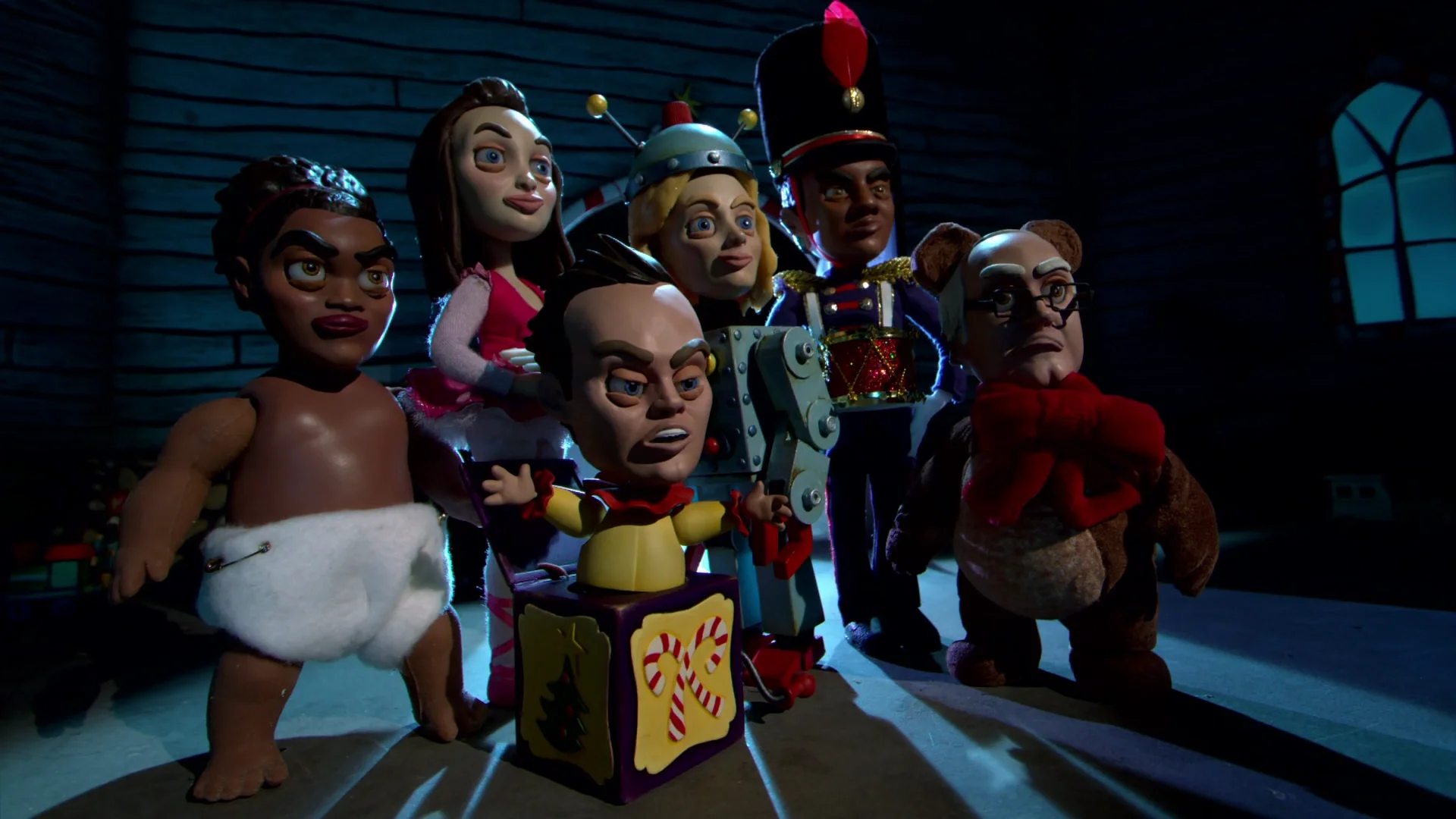
Season 2, Episode 11: “Abed’s Uncontrollable Christmas” (2010) - Not only the best COMMUNITY Christmas episode, but on the short-list of best COMMUNITY episodes, period, and a premiere example of what made the show special. On the surface, it’s a wry take on those old Claymation Christmas programs, and it would come off like a masterpiece just on those terms alone. So much work and attention to detail had to be done to pull this off; just the fact that Pierce is in a wheelchair the whole time means they had to map out the whole season ahead of time to know that plot point before animating this episode, which assuredly commenced months before anything else. But the episode is so much more than mere parody. It winds up being an ode to the ever-shifting nature of tradition and meanings, as old families pass on and new families form. It’s just an amazing episode that never fails to make me tear up every year.
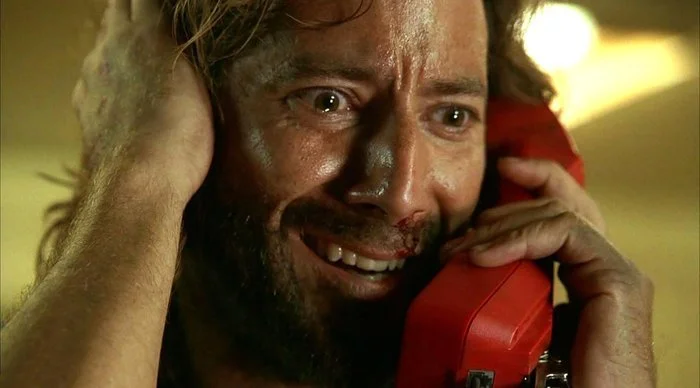
6:00 PM - 7:00 PM: LOST’s “The Constant”! (2008) (Netflix)
Okay, look, it’s just not Christmas without this episode of LOST, alright? I know this one feels like a swing, given that:
a) it’s not particularly Christmas-y for most of its runtime, and
b) I’m inserting into this marathon a mid-Season Four episode of one of the most serialized network shows of the 21st century, potentially alienating those who haven’t watched the show before.
Just…roll with me on this. Even if you’ve never seen a frame of LOST before, I think “The Constant”, the fifth episode of its fourth season, still plays like gangbusters. Beyond some setup around the edges, it’s not even all that connected to the main plot. Instead, it takes a bit of a divergent path to bring catharsis to perhaps its most beloved character, the tortured romantic Desmond Hume, as he tumbles through time to reconnect with his lost beloved Penny. I’d even argue that having no knowledge of what everyone is talking about, or what’s going on is to the viewer’s advantage, putting you perfectly into Desmond’s disoriented mind, as he tries to get unstuck between two points in time (then-current day 2004 and 1996). If only he could connect with something (or someone) important to him at both points….
Look, I know it’s crazy to take an hour that spends half its time trying to explain how in-universe time travel works and call it a “character episode”, but I swear it is. And it doesn’t get Christmas-y until the end, but when it does...well, those who have seen the show know why it’s here. I spent like a whole year in this space exploring the many ups and downs of LOST’s six seasons, but this was the show at just about its very best. The perfect transition into the part of the marathon filled with the stuff that brings a tear in my eye…
7:00 PM - 7:30 PM: SCRUBS! (2001) (Hulu)
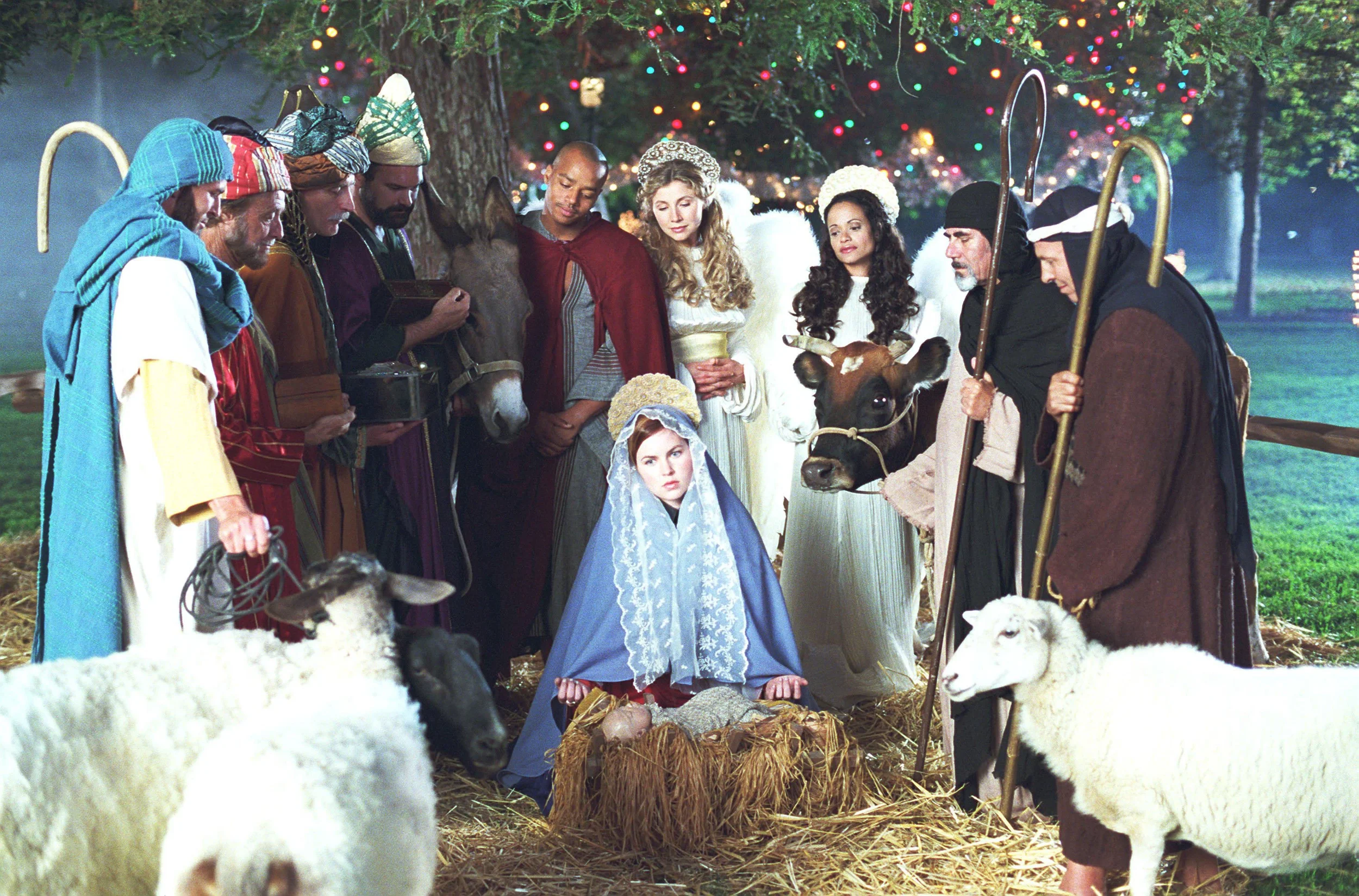
Just in time for this now-technically-the-turn-of-the-century hospital sitcom’s impending revival, let’s revisit its first (and finest) Christmas episode, “My Own Personal Jesus”. The crux of this one, in case you forgot, is that super-faithful Christmas guy Turk gets his beliefs shaken after his first Christmas Eve on call. Yes, it’s a sitcom episode that tackles maybe the biggest question there is: how can God allow so many innocent people to suffer needlessly? Also, Elliott desperately tries to find a young pregnant patient who’s run away from the hospital and is now in danger. Ready to laugh?
That feels like too much for any show to handle, and it’s not like you’d be able to pass your theology essay by citing this episode or anything, but “My Own Personal Jesus” highlights what SCRUBS at its peak could do best. It tackled major questions with sincerity (and is weirdly frank about the horrors of childbirth), while still adding something like 200 jokes, some of which involve the Janitor getting kicked in the penis. The show would eventually turn into borderline-parody, but the early days were really something special. Maybe it’s just because I watched this episode a lot during the Christmasses of my high school days, but this one always makes me feel warm to this day.
Plus, John C. McGinley dresses like the Grinch. That’s gotta be worth putting it on the marathon just for that.
7:30 PM - 8:00 PM: A CHARLIE BROWN CHRISTMAS (1966) (Apple TV)
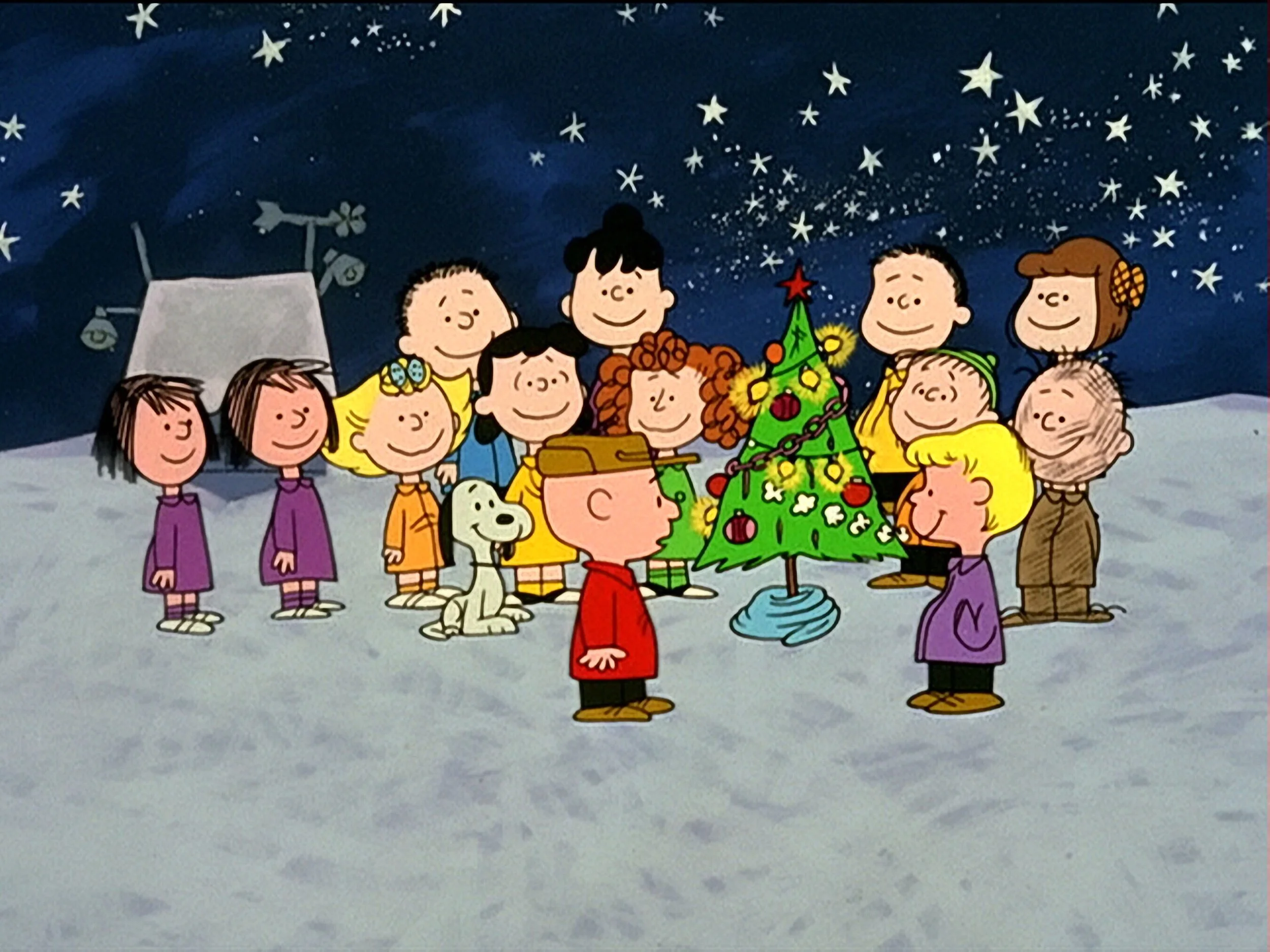
So much of life is going back to movies and television you loved as a kid and realizing, “oh noooo this sucks”. I’ll never forget my friend in high school excitedly digging into his bootleg DVDs of his favorite 80’s cartoon He-Man and the Masters of the Universe only to realize a) it blows ass and b) he was actually thinking of the cartoon She-Ra: Princess of Power all along. I can only laugh at him so much, though, as I’ve had my own horrible revelations about things I thought were once good. For example….haha, just kidding, I’m not going to offer up an example. Are you out of your mind?
Well, the good news about the Peanuts gang’s initial television special is that A CHARLIE BROWN CHRISTMAS is the rare media aimed at children that honestly and truly only improves when you become an adult. Taking it in as a grown man knocking on the door of 40, this 25 minute masterpiece is only revealing a lot of its beauty. How could its story of a lonely-feeling kid desperately looking for meaning in a world increasingly overrun with advertisement and artificiality not hit hard now in 2025? There’s something anxiety-inducing about a show from the mid-60s illustrating all the same issues we find ourselves talking about now, but I suppose there’s also a certain comfort there, too. Pair it with amazingly sincere child actor voice performances, and you have possibly the definitive animated Christmas special ever made.
Of course, if one doesn’t want to dig in too hard to this children’s cartoon, you can always enjoy it for its inherent goofiness. All of us are hip to the insane dancing scenes by now, but it’s worth emphasizing just how insane all the dancing scenes are. I think the classic move is Frieda swinging her arms back and forth, but my favorite has always been the kid doing an early version of the Running Man. There’s also just a little bit of jank to the proceedings, with scenes lasting maybe just a frame or two too long, and many pops and hisses in this soundtrack. This might be a barrier for some, but I’ve always found it cozy, a reminder that the thing was handmade.
A reminder that something real can still exist.
8:00 PM - 10:15 PM: IT’S A WONDERFUL LIFE (1946) (Amazon Prime)
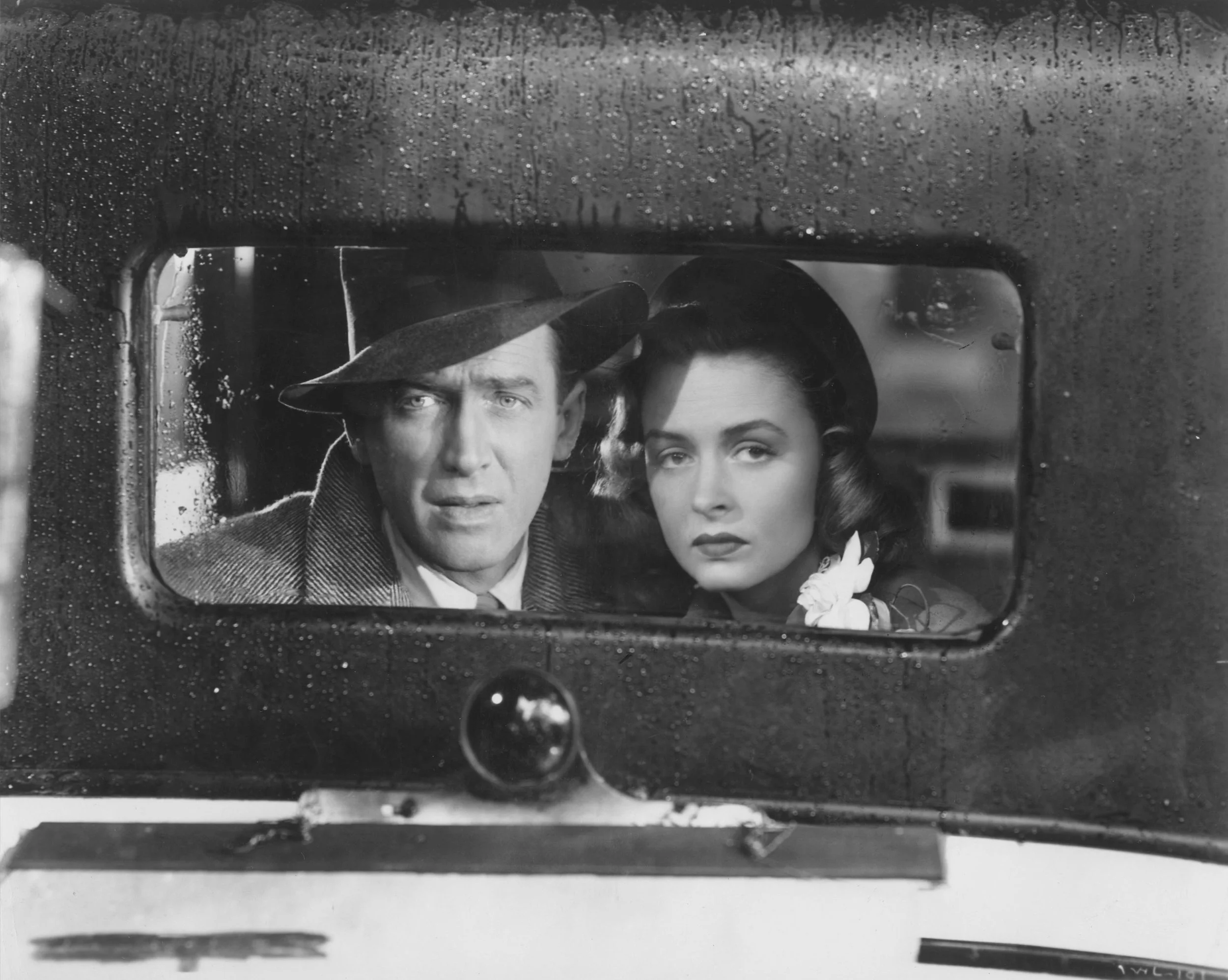
In the primetime Christmas night slot, there is frankly no other option than to go with the greatest holiday movie of them all, at least in this humble reviewer’s opinion. I wrote a whole piece about this Frank Capra classic a couple years ago (and it’s an article I’m particularly proud of; you can check it out here if you’re interested), so I won’t rehash too much here. Suffice to say that, just like A CHARLIE BROWN CHRISTMAS, IT’S A WONDERFUL LIFE is a story that only ages better and better as the years go on. The ultimate “working man” Christmas tale, with George Bailey caught between a sense of duty to his community and the crushing thumb of capitalist greed (represented so memorably by Lionel Barrymore’s Mr. Potter), sacrificing his present for others’ futures. Somehow, this movie rallies from the dark imagery of George about to leap off a fucking bridge on Christmas Eve with about 30 minutes to go to reach maybe the most heartwarming ending in Hollywood history. Is it manipulative? Maybe. Schmaltzy? Kinda. Does it work? Yes. Every time. A miracle of classic film-making.
10:15 PM - 12:00 AM: DIE HARD (1988) (Hulu)
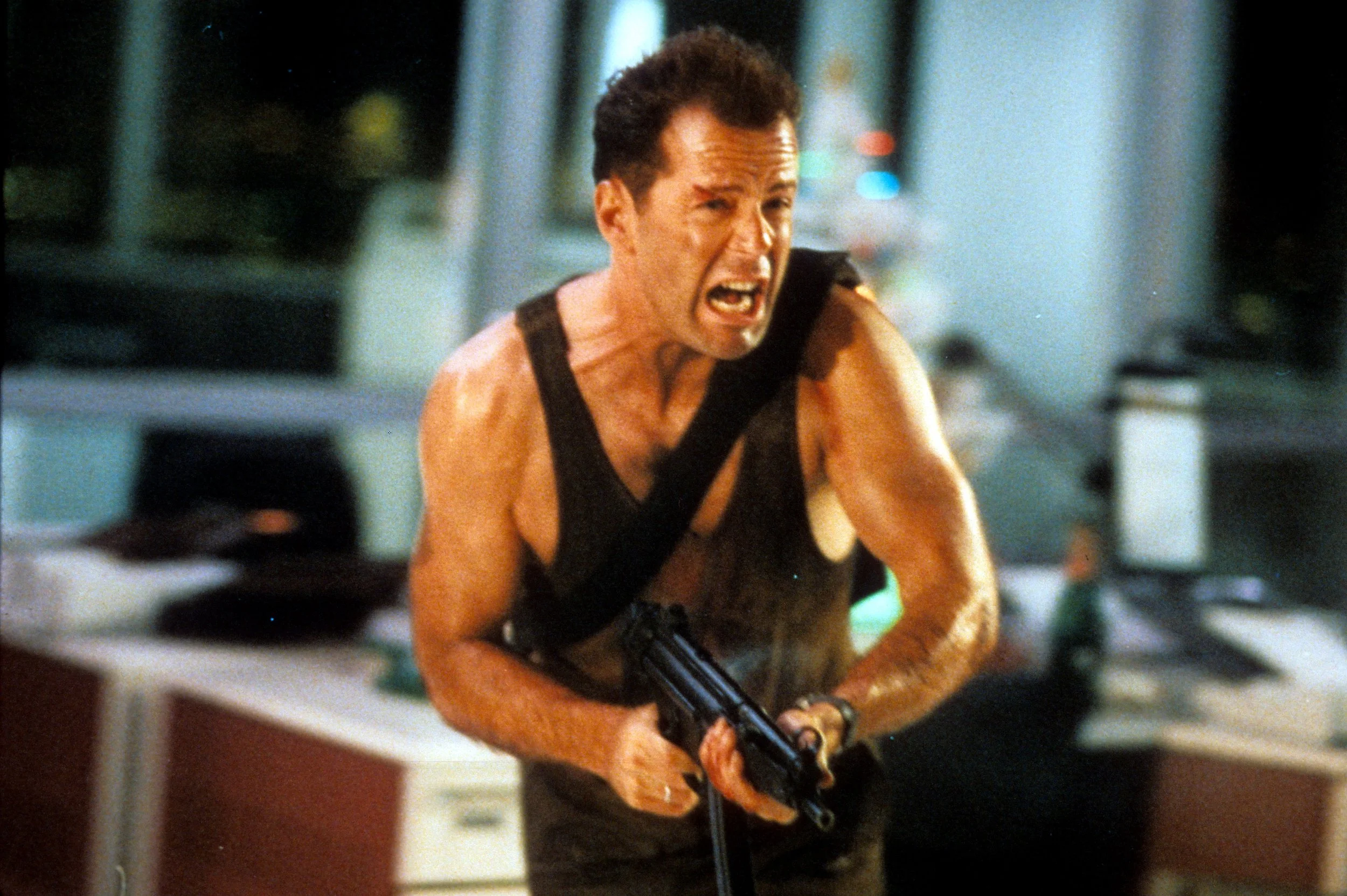
I don’t have a lot of Christmas-related hot takes, but I do have at least one: if you’re one of those who likes to proclaim “DIE HARD isn’t a Christmas movie!”, I think you’re a hideous bore. You probably like correcting people who refer to the monster as Frankenstein, too. Yeah, I’m talking to you, Culkin! Well, have fun going to bed now or whatever, because the rest of us are watching DIE HARD to say goodbye to the 25th.
This feels like another entry that needs very little explanation. The odds are incredibly high that you’ve seen this Bruce Willis actioner a million times already. It’s so saturated in pop culture that there are whole other fictional franchises whose characters are infatuated with it; BROOKLYN NINE-NINE’s Jake Peralta’s whole personality is built around loving DIE HARD. And there’s a reason it’s so popular: it’s maybe the premiere example of a well-built action movie, proof that genre need not pre-determine quality. And it all starts with the performances of our main hero and villain. Willis infuses the macho action archetype that was so in vogue in the 80’s and infuses it with a much-needed everyman quality. He barely wants to be doing what he’s doing right now, which makes him weirdly relatable, you know? Then there’s Alan Rickman, who turns every one of exceptional thief Hans Gruber’s lines into goddamn poetry, instantly putting him on the Mount Rushmore of Christmas villains (right alongside Ebeneezer Scrooge, The Grinch, and Uncle Frank).
Because that’s the thing: of course DIE HARD is a Christmas movie, if only because I’ve never heard a cogent argument against it. “It’s not ABOUT Christmas, it’s just set during it!” is almost a distinction without a difference. “You could set it at any other time and the movie would be exactly the same!” Well, yeah, every movie would be not a Christmas movie if you removed it from Christmas. Also, if you just don’t feel like DIE HARD is a Christmas movie, you can always, like you know, not watch it at Christmastime. Problem solved! Leave everyone else alone!
Great, now I’m worked up, and it’s the middle of the night. Perfect time for some Christmas horror…In the primetime Christmas night slot, there is frankly no other option than to go with the greatest holiday movie of them all, at least in this humble reviewer’s opinion. I wrote a whole piece about this Frank Capra classic a couple years ago (and it’s an article I’m particularly proud of; you can check it out here if you’re interested), so I won’t rehash too much here. Suffice to say that, just like A CHARLIE BROWN CHRISTMAS, IT’S A WONDERFUL LIFE is a story that only ages better and better as the years go on. The ultimate “working man” Christmas tale, with George Bailey caught between a sense of duty to his community and the crushing thumb of capitalist greed (represented so memorably by Lionel Barrymore’s Mr. Potter), sacrificing his present for others’ futures. Somehow, this movie rallies from the dark imagery of George about to leap off a fucking bridge on Christmas Eve with about 30 minutes to go to reach maybe the most heartwarming ending in Hollywood history. Is it manipulative? Maybe. Schmaltzy? Kinda. Does it work? Yes. Every time. A miracle of classic film-making.
12:00 AM - 2:00 AM: BLACK CHRISTMAS (1974) (Peacock)
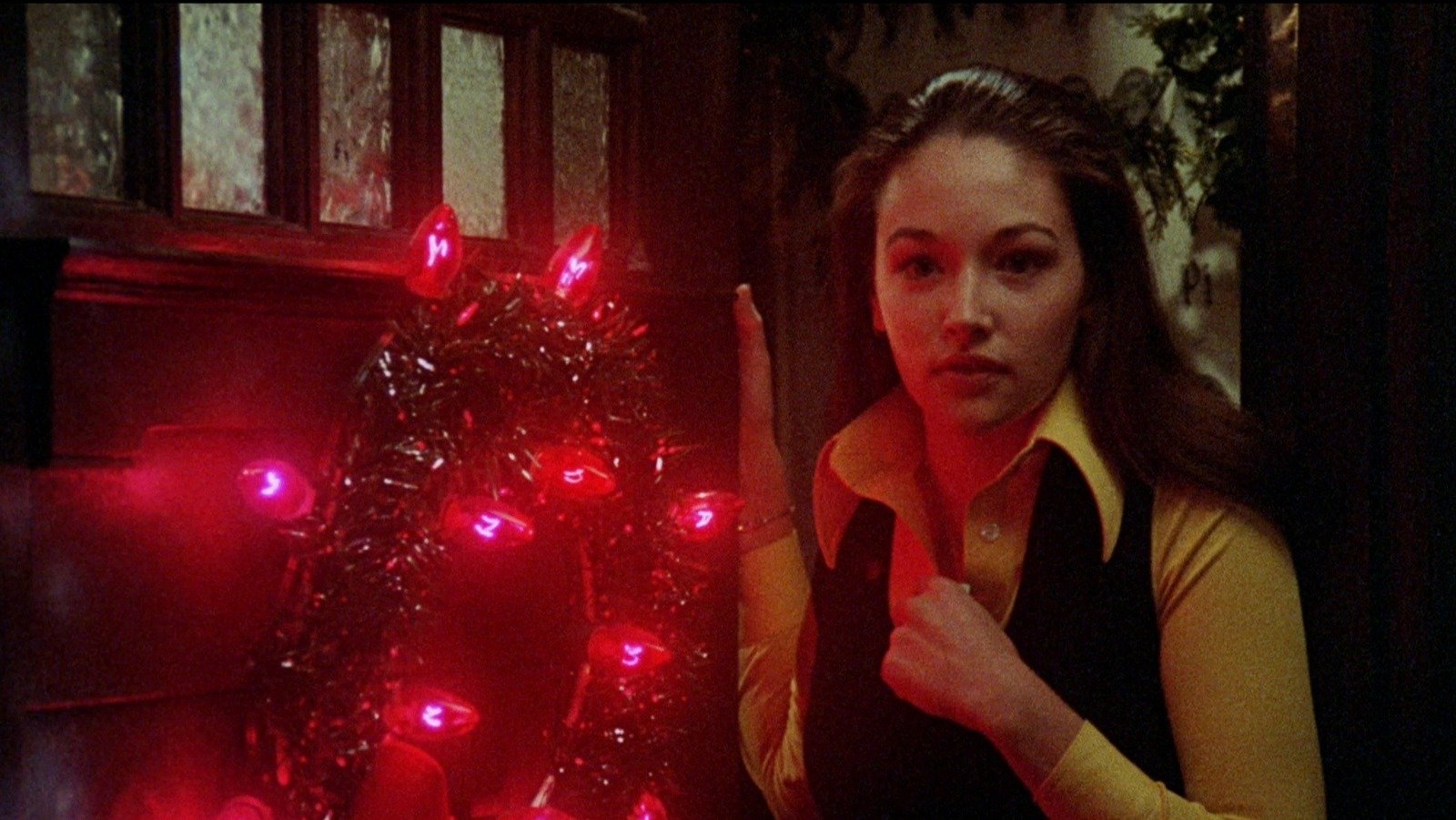
The other Bob Clark Christmas movie.
2:00 AM - 4:00 AM: JACK FROST (1997)
Also known as the movie that does not star Michael Keaton. Also also known as the movie you probably knew as a VHS cover before you ever saw it. The movie itself kinda sucks, and is likely for Shannon Elizabeth completists only. But…I will say…and it’s 2 am, we’re past the point of judgment…
…I think the snowman is kinda cute. Not in a weird sexual way, just in a “not that scary” kind of way. Don’t give me that look. Santa’s still watching to see if you’re being nice, so…just watch it.
Look, let’s just wrap this up.
4:00 AM - 6:00 AM: THE STAR WARS HOLIDAY SPECIAL (1978)
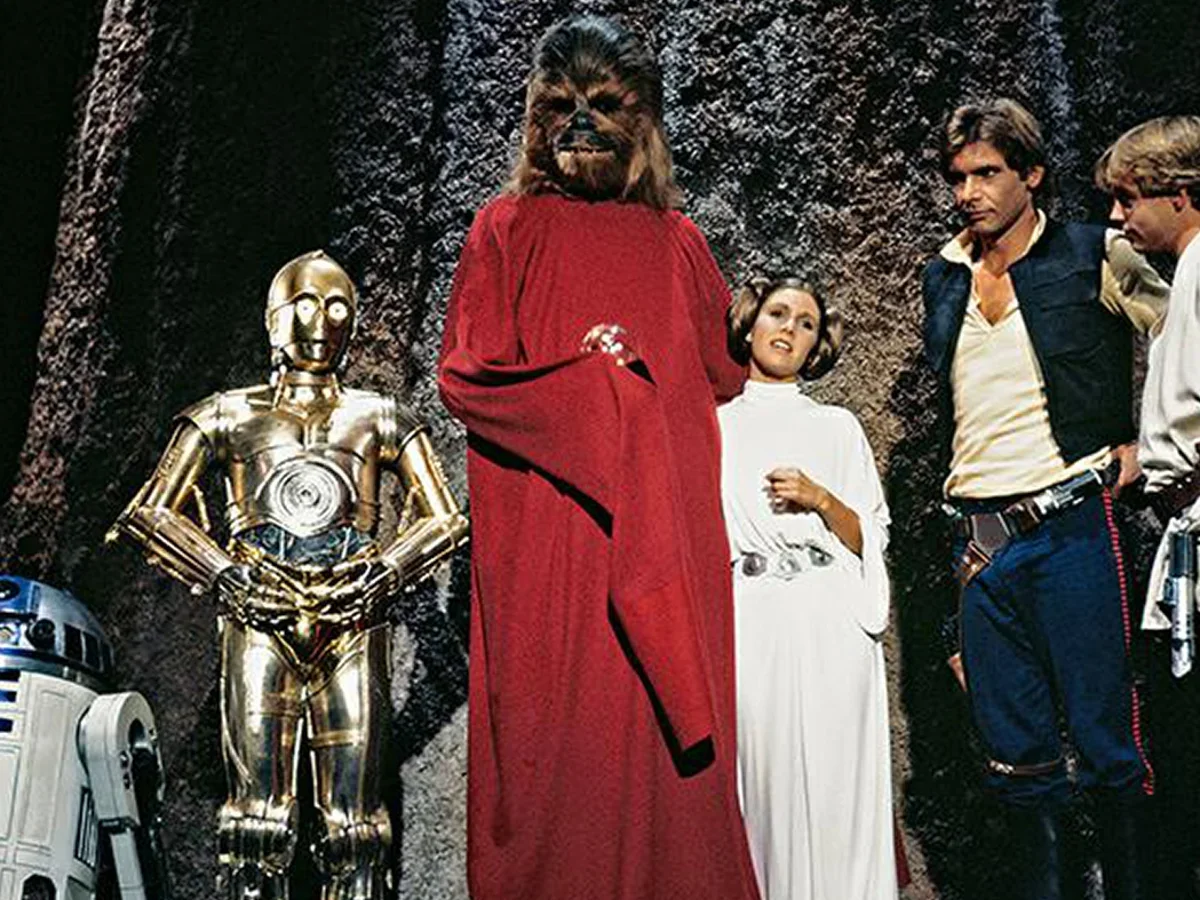
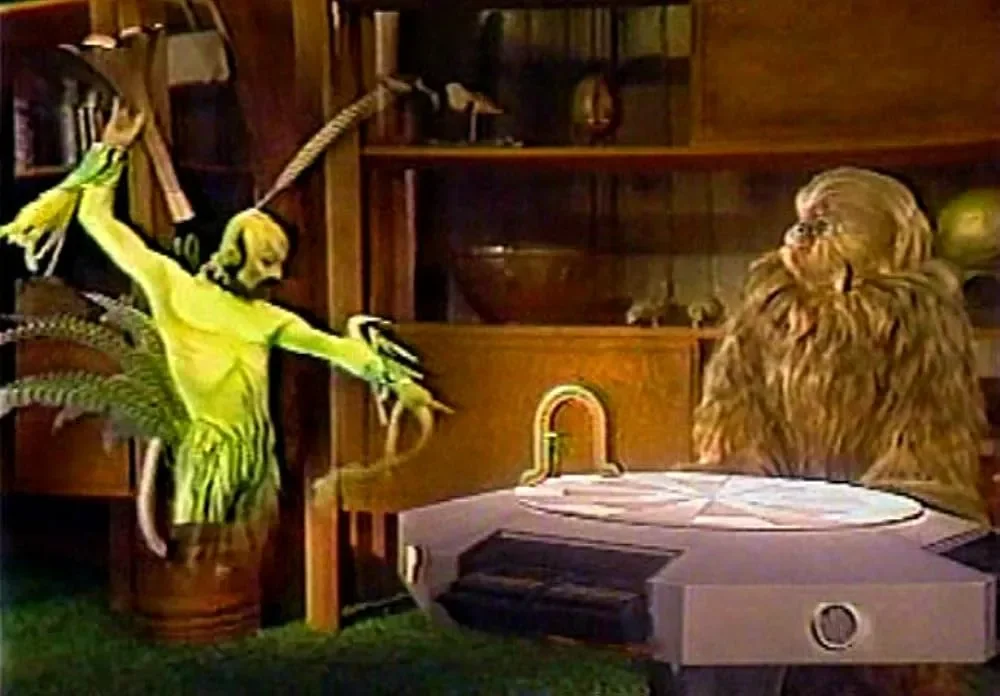
Let’s round towards home with maybe the only choice of programming for the dead-ass of night, the infamous THE STAR WARS HOLIDAY SPECIAL. If you’ve never seen it, you’re in for…well, not a treat, exactly…..and not a ride, per se…but you’re in for something. The perfect blend of 70’s STAR WARS and the stock variety special, this ostensible piece of brand extension has way more Art Carney and Bea Arthur than you might have ever reasonably expected, as well as innumerable bizarre tangents, including a grandpa Wookiee watching a Jefferson Starship performance on a holodeck. There’s also a strange (but atmospherically intriguing) cartoon segment that introduced the world to Boba Fett. Oh, and Leia sings a song at the end. You probably can’t wait to go track it down and watch it right now.
Of course, if you have seen it, then you know that THE STAR WARS HOLIDAY SPECIAL weirdly serves as a cure for insomnia. It’s one of the most strangely paced pieces of STAR WARS media imaginable. As an example, it feels like a rite of passage for any fan of kitschy TV oddities to find a bootleg upload of this, turn it on, get to the opening scene of a Wookie family just grunting in Wookie language to each other, watch it go on and on and on and on and on
and on for thirty minutes, and slowly realize in horror “is…is this what the whole thing is going to be?” Eventually, of course, other characters who speak English arrive, but the damage is done. It’s such a glorious misfire.
So, yes, it will frankly help you fall asleep after a long winter’s night of holiday programming. Plus, it’ll be funny to wake up suddenly and see something like this on your television screen:
Merry Christmas! Get some rest. You’ve earned it.
The Simple Power of IT’S A WONDERFUL LIFE
Today, a quick Christmas bonus going over the simple and effective power of IT’S A WONDERFUL LIFE’s, both its ending (and how it makes me cry every time) and the movie’s constant building to that payoff. Merry Christmas, everyone!
I. “Each man’s life touches so many other lives.”
When it comes to movies and television, I’m not much of a crier.
Most people I know take to weeping when something overwhelmingly sad or despondent occurs on screen, especially when it’s a situation that hits close to home (“I’ve been there!” or “oh god, she reminds me of my mom”). It just doesn’t happen for me that often, even when I can empathize or sympathize with the poor characters. I can definitely feel the punch in my gut, and the most affecting emotional moments in cinema can stay in my head for days and days. I just don’t ever really cry.
Even onscreen deaths don’t do a lot for me. I definitely take most fictional deaths with something resembling disappointment, especially when it’s a character I really like. But there’s just this wall I often have that keeps the corners of my eyes from actually producing water. Maybe it’s because death is used as such an emotional crutch in film and TV and we’ve seen it over and over and over and over since the first time we saw BAMBI as little kids that it loses its impact; it now needs to be a really well-earned moment for it to resonate for me, especially once you start experiencing the loss of real people in your life.
I don’t bring this up as a boast of superiority. This is not a smug “look at all those pathetic little humans out there reacting to fiction; don’t they know this is all made up?” observation, I promise. I’m genuinely jealous of those who are able to absorb visual storytelling to the point of it feeling real. It’s an ability that makes art so much more accessible, so much more alive. This wall of stone in front of me has worried me at times, like I’m watching movies the wrong way or something.
However, I know that I’m not a total monster. There are a couple of moments in fiction that get me every single time, where the mere thought of them can get me going if I’m in a particularly vulnerable state of mind. They just need to be moments of triumph rather than catastrophe, moments of joy, often depicting characters realizing they’ve done something they didn’t even know they could do. That they matter.
I’ve mentioned this one before, but…in the middle of a much longer article, I mentioned how much I loved the seventh episode of the second season of THE BEAR, titled “Forks”. I didn’t divulge then and, in the interest of hoping you all out there who haven’t watched it yet will take the plunge soon, I won’t really detail it out now (this isn’t an article about THE BEAR, after all). Suffice to say, though, that the episode takes a character that was often very frustrating (to the point of almost actively being a problem for the show) and redeems him so completely and totally and imbues him with such purpose that he instantly became my favorite. It’s a story that proves it’s never too late to reinvent yourself. A story about how every second counts. A story so well told that I can no longer hear the opening jangle of “Love Story” anymore without wanting to start running around the room.
Another moment…this one is slightly more embarrassing to admit, but Christmas is about sharing, so…..
I admit that I get got by the ending of GUARDIANS OF THE GALAXY VOL. 2. The Ravager funeral hits me very time. There, I said it. It’s for several reasons: for one, the death of Yondu meant the MCU lost Michael Rooker, one of the more overqualified and too-interesting actors in the entire franchise. For two, it’s Rocket Racoon’s realization that people still cared about Yondu, even when he spent his life pushing everyone away and pretending not to care (a lesson that resonates with our favorite talking raccoon). For three, it’s the fact that, despite his fears at the beginning of the film, Yondu didn’t let the Ravagers down! Sylvester Stallone said so! It’s another redemption story, this time for a gruff character that spent a lot of time acting like he didn’t care only to show, in his final moments, that he absolutely cared, to such a degree that at least one of the living is forever altered.
They’re both moments of men proving that they matter. That they have (or had) worth.
Look, I have a type.
This brings us to the ending of IT’S A WONDERFUL LIFE, an iconic and oft-parodied moment in a movie that’s almost exclusively filled with iconic and oft-parodied moments. You probably know it without ever seeing it. “To George Bailey, the richest man in town”. Auld Lang Syne. “Attaboy, Clarence”. That whole thing. Like much of the film, its final scene wears its heart so strongly on its sleeve that its arm threatens to come off. It’s borderline manipulative.
And goddamnit, if it doesn’t make me cry. Every single fucking time. It’s as much a Christmas tradition as the Charlie Brown Christmas tree. Naturally, I wanted to write about it as a little holiday treat. so, let’s jump into IT’S A WONDERFUL LIFE!
II. “George Bailey is not a common, ordinary yokel.”

IT’S A WONDERFUL LIFE is a movie that became a Christmas classic mostly because it was free.
The fact that the 1946 Frank Capra drama was not exactly a box-office dynamo upon its release (essentially breaking even on its $3 mil budget) is one of the more famous things about it. However, what gets lost in all that is that it was still liked by many in its time. Its reviews were solidly mixed, yes, but consider that it was also nominated for Best Picture during the 19th Academy Awards, with Capra and James Stewart snagging Best Director and Best Actor nominations, respectively. It won only a technical achievement award, but the film garnered respect from its peers even upon its release. It even ruffled some feathers: its blatantly anti-capitalist themes prompted the FBI to issue a memo implying the film was Communist propaganda. Not bad for a movie that is often dismissed as sentimental!
* for its simulation of falling snow, a technique considered unique for its time.
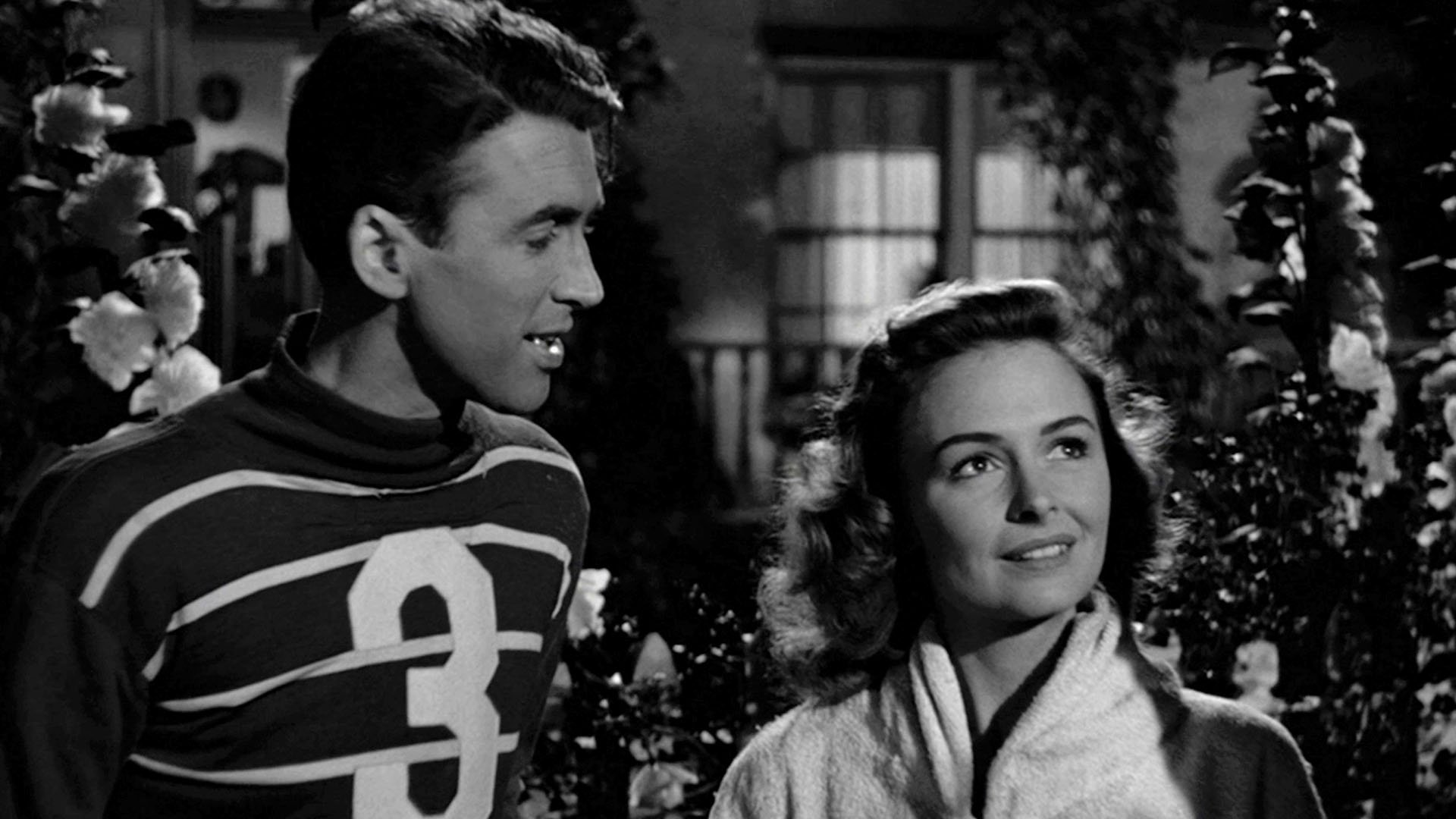
Every single person on the planet probably knows the story of IT’S A WONDERFUL LIFE but, just in case….it tells the now very well-known story of George Bailey (Jimmy Stewart), a young man living in Bedford Falls who’s at the end of his rope. We learn exactly how he got there by going through his life, as told to his guardian angel (Henry Travers). We see George as a child saving his brother Harry (Todd Karns) from a watery death. We see him as a boy working for a pharmacist, Mr. Gower (H.B. Warner). We see George as a recent high school graduate, eager to go off to college and see the world. When his father (Samuel Hinds) suddenly passes away, George must put his ambitions aside and run the Bailey Building and Loan, a people-oriented institution constantly under attack from the miserly and profits-first Mr. Potter (Lionel Barrymore). Along the way, he courts the loving Mary Hatch (the inimitable Donna Reed) and begins to raise a family.
Mr. Potter is finally able to bring the Building and Loan to its knees, essentially by seizing an opportunity to steal eight grand from the loyal, but wildly forgetful, Uncle Billy (Thomas Mitchell). With a bank audit about to begin, George finally has nowhere to turn. A man once full of life is about to plunge himself off a bridge to his death.
Enter Clarence! The wingless angel launches the most famous section of the film by granting George his wish to never be born so that he can see for himself just the impact he had on his loved ones, and the world at large, as well as just how much worse the world would be if he hadn’t been there. If he hadn’t stood up against the greedy and cold Mr. Potter. If he hadn’t fought for the people of Bedford Falls. If he hadn’t started a life with Mary. If he hadn’t saved his brother’s life. George refunds the value of life and runs off to face another day, just in time for everyone in town to raise the money to cover the stolen eight grand…and then some! The Building and Loan lives on, Clarence earns his wings, and the hearts of everyone in the audience grows three sizes that day.
Alas, IT’S A WONDERFUL LIFE came and went like a good majority of movies did in the times before television, home media and streaming. Some have pointed out that the movie was not quite as optimistic as post-war audiences were hoping for in 1946 (and it is bleaker than you might remember), which might explain why it didn’t connect with audiences right away. It became a movie somewhat lost to time, and it was certainly no holiday classic.
Then, the 1976 Christmas season came.
Thanks to a clerical error, National Telefilm Associates neglected to renew the copyright for the film in 1974, and it more-or-less entered the public domain soon after. Starting with 1976, IT’S A WONDERFUL LIFE aired constantly on television, which led to people discovering it all over again. By the 1980’s, it was as much a part of the holiday television schedule as Rudolph and Charlie. There’s an overwhelming chance the first time you ever saw it was on TV.
For me, it was a movie that I was introduced to in stages.
For many, many years of my life, I knew it as “that movie that came on after the Macy’s Thanksgiving Day Parade” (yes, there was a time where it wasn’t the dog show!). My mom usually worked on Thanksgiving, so I got to know the first forty-five minutes of IT’S A WONDERFUL LIFE (with commercials) really well. 12:45 pm was about when my grandfather would pick me up to take me over to grandma’s house to start prepping for the day’s festivities.
After a couple of years, I started getting kind of curious about what else happened in this movie, specifically when we got to the angel making it so that Jimmy Stewart was never born. I started having the TV turned on to NBC in that brief period between getting settled at Grandma’s and having other family start to trickle in. I think my grandparents liked that I was getting into older movies. Yet, I never did make it to that damn bridge. This was easily the most famous thing about the movie, and yet, I never managed to watch it long enough to ever see it.
Finally, a family member loaned me a cheapie VHS copy of it and told me to enjoy. I finally sat down and watched the dang thing one November in the early 2000’s and finally, finally got to see Clarence arrive and alter George Bailey’s existence. Shockingly, this most parodied element of IT’S A WONDERFUL LIFE doesn’t occur until around minute 100 of a 130-minute movie. I kind of considered most of what came before it to be a little overlong and a little boring, I’m afraid. Too much focus on loan management, on housing, on bank examiners. George Bailey should have tried getting into video games or something. At least, that’s how I felt at the time; if it weren’t for the film being so intertwined with my still-forming holiday traditions and memories, I might have never thought about it again.
The funny thing about IT’S A WONDERFUL LIFE, though, is how much it opens up once you become an adult yourself.
III. “Why’d we have to have all these kids?”
Look, one of the joys of IT’S A WONDERFUL LIFE is just how fakey Hollywood it can often be. There’s a lot of “pause for the punchline” kind of moments, where background characters emerge from the ether to say an old-timey one-liner like “why don’t you kiss her instead of talkin’ her to death!”. Where the presence of a bottle or a shot glass in a character’s hand represents a fall from grace. Hell, there’s a fucking black crow that starts flying around whenever shit is about go down at the Building and Loan. It’s not subtle, and it’s often pretty goofy.
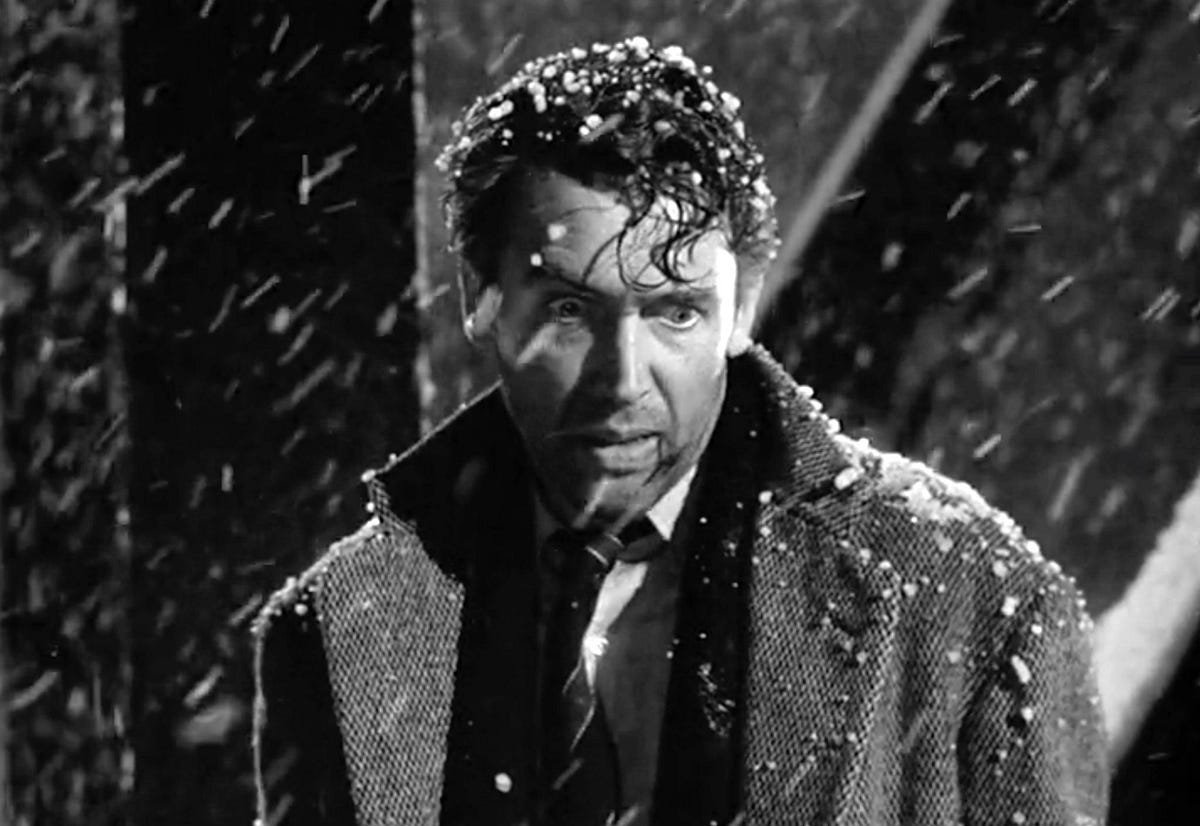
My favorite little detail of the whole movie is how, throughout the course of what has to be one of the most stressful Christmas Eves a movie character has ever experienced (after Potter steals the money from Uncle Billy, George threatens Billy with prison before coming home and roasting the house, his wife, his wife’s family, his kids, his kids’ teacher and the song his kids are playing), he goes from being clean-shaven to developing a five-o’clock shadow. What a day!
And, yeah, it’s got all the hallmarks of an “old movie” with possible “old movie problems”, depending on your point of view. There’s a scene of George and Mary flirting in a way that might be considered uncouth now; George withholding her robe from her as she crouches naked behind a bush is pretty obviously meant as a playful give-and-take, but I imagine it may bump some today. And, like basically all movies made between 1931 and 1956, there’s a black maid character that you kind of just have to get through*, although Annie (Lillian Randolph) isn’t the butt of a joke as often as I had remembered.
*My method of dealing with racism and sexism in old media: I visibly shake my head and audibly say “oh, that’s not okay”, even if nobody else is in the room. This then absolves any guilt or unease about continuing to enjoy the movie from there.
And, of course, the movie is littered with that “old-timey movie” accent. IT’S A WONDERFUL LIFE is filled with oft-quoted lines of dialogue. But, for me? My favorite line to quote to myself is one from the alternate George-less present. It’s when Sheldon Leonard, playing the titular owner of the bar Nick’s, starts laying down the law to Clarence Oddbody after he orders something a little too, um, colorful: “we serve hard drinks in here for men who want to get drunk fast, and we don’t need any characters around to give the joint ‘atmosphere’!” Watch it again sometime and tell me that’s not a satisfying thing to recite.
But I think all the Hollywood artifice contained within IT’S A WONDERFUL LIFE is actually a charming addition to the movie, not a cheap detraction. Because, honestly? The movie is often unbearably, shockingly dark. And somewhat cynical. And, yes, anti-capitalist enough to prompt a response from the fucking FBI. And displaying the darkness alongside a magic movie world just makes it that much darker.
For context, IT’S A WONDERFUL LIFE contains a grief-stricken shop owner battering his child employee until he bleeds from his ear. A young man dies of influenza. A father yells at his kids after lamenting ever having them in the first place. Our hero tearfully prays to God before drunkenly crashing a car on his way to commit suicide. It just goes on like this.
More than anything else, though, it contains the story of a dream deferred, of a man who constantly gets beaten down by the levers of his country, of his god, of life itself. And, for the most part, the story doesn’t cut any corners in regards to its slow, steady depiction of George getting beaten down.
Whenever something can go wrong for George Bailey, it does. It must. His father suddenly passes away. The Building and Loan must survive a bank run. His brother, the heir apparent to the B&L, gets married and hooked up with a great job elsewhere. And every single time, he must put others before him. For better or for worse, he has a driving sense of nobility within him. He knows exactly what is good with the world: his father, the family’s B&L, his wife Mary, his brood of kids, keeping citizens with roofs over their heads even if payments are late, community, society, loyalty. Keeping one’s word. He also knows exactly what’s wrong with the world: Potter, the richest man in town.
IT’S A WONDERFUL LIFE makes it very clear: the rich are the enemy. Potter drives people into slums, or maybe the streets. He owns almost every utility in Bedford Falls, and spends most of the movie trying to take down the Bailey Building and Loan. He eventually finds his chance by stealing money from Uncle Billy, the fateful envelope that leads to George’s follicle miracle on Christmas Eve. Potter is never to be trusted. He’s loyal only to himself. And that’s why he nearly wins.
This movie never, ever stops putting the screws to George Bailey. For the first 100 minutes (and even really the next 20 after that), it’s George getting his ass handed to him by life. He never gets to go and travel around the world, or to get his education, or even to leave his damn hometown. And, y’know, that’s the thing about being an adult. This happens to almost all of us to some degree. I’m guessing almost everyone who’s ever seen IT’S A WONDERFUL LIFE can relate to some aspect of George’s plight to some degree. How could you not? I won’t turn this into a screed about the state of the American worker, but I will let you search within and do the math yourself.
Even when Clarence finally takes human form and shows him what life would have been like if he had never been born, George kinda eats shit the whole time. He’s informed by everybody he’s ever loved that they don’t know who he is. He’s thrown out onto the street. People are constantly dismissive, and at least one is outright scared*. And, yes, it turns out life is now a dystopia named Pottersville. Nice going not being born, George!
*That would, of course, be the now-matronly Mary, whose “unwed librarian” status is indicated by putting her hair up and fitting her with glasses.
It can be a difficult watch if you let it be. It’s a story of how you can live as nobly as you possibly can, and believe in people, and treat everyone well, and put everybody else around you before yourself, and you can still get chewed up and spit out by a rich fuck who decides you’re in his way. And that’s kind of all there is to it. And when you’re watching it happen to one of the most beloved movie stars to ever grace the silver screen? Yeah, it’s brutal. By the time George sits on a barstool at Martini’s, praying to God to help him if he’s out there….it’s panic-inducing.
IV. “No man is a failure who has friends.”

All of the above is why, when the movie does kind of pull off some Hollywood razzle-dazzle by getting us to that magic ending? Where everything is okay at the end, once George realizes his life meant something? Where even the fucking bank examiner starts contributing money to the George Bailey Relief Fund? Where the most powerful choice that George is ever provided turns out to be to choose to keep on going? That he matters, and always has, warts and all? How could it not be genuinely rousing?
Yes, it’s schmaltzy. It’s corny. One might even call it manipulative, were they so inclined. Because it’s leaning on all the old tropes that all stories do. Friendship and love, it turns out, is all you need. Now let’s sing a song to the new year! Christmas!
But, goddammit, it hits. Because it’s the perfect conclusion to this melancholy story. It turns out that George has not been defeated. He ultimately wins the day by having the one thing Mr. Potter never did. He has friends. He has people that love him. He’s touched their lives. Everyone is emotionally better for having been in George Bailey’s life; one angel now has his wings because of him. George Bailey is better for being alive.
It all culminates in one of the only movie moments that honest-to-god makes me cry every time, even if I just think about it. Harry Bailey, the war hero, comes home to raise a toast to his brother George,
“The richest man in town.”
Merry Christmas, everybody.

THE LONG KISS GOODNIGHT: A (Shane) Black Christmas Continues
Back in 1996, THE LONG KISS GOODNIGHT came and went without much of a peep, and briefly ended the careers of its star and its screenwriter. In 2022, its simultaneous subversion and embrace of 90’s action tropes feels like an oasis. Let’s take a trip to Honesdale!
Jennifer Lawrence recently got into trouble with the Twitterati due to a quote from her Actors on Actors video with Viola Davis for Variety in which she allegedly claimed that prior to THE HUNGER GAMES, “nobody had ever put a woman in the lead of an action movie” before. People were quick to point out that this is a literally untrue statement, citing such past female action icons as Ellen Ripley, Leia Organa and Sarah Conner (although it should be said that everybody seemingly mentioning the same three characters over and over isn’t the “epic clap back” as people are intending it to be).
In context, this dubious quote from Lawrence seemed more like a misspeak than anything else, with her intent being more in regards to studios’ heavy reluctance to trust in the box office power of a female-driven action film than some sort of unearned claim to history; she cited nerves in the moment to her bungled quote, although it really did little to change Lawrence’s current location in the Internet-build-up-then-tear-down cycle.
Regardless of what she did or didn’t mean to say or not say, even if Katniss Everdeen isn’t the literal first female action hero, it’s undeniable that studios are often still so unwilling to move forward with these kinds of films (even though people seem to like them and can list them off at the drop of a hat!). More to the point, they seem to so often undercut them when it comes time to market them. It’s a shame, too, because there’s lots of fun examples of the kind of female-led action film that quite frankly should be way more normalized than they are.
Once again, enter Shane Black.
Black’s career had been going swimmingly since the box office success of LETHAL WEAPON. Since then, he penned the story for 1989’s LETHAL WEAPON 2 and the scripts for 1987’s MONSTER SQUAD, 1991’S THE LAST BOY SCOUT, and 1993’s LAST ACTION HERO. Yep, even by 1993, the macho blockbuster was already entering its “ironic meta-parody” era.
Then came 1996’s THE LONG KISS GOODNIGHT, the kind of movie that you would think audiences would have been starved for at the time. In a decade and a half dominated by greased-up muscle guys like Arnold Schwarzenegger, Jean-Claude Van Damme and Sylvester Stallone, here comes an action movie starring….Geena Davis! It’s the perfect type of genre subversion, the kind of thing that makes you turn your head at the poster going, “Huh? Thelma’s packing heat again?”
As it turns out, audiences really didn’t care, at least not as much as many of the film’s stakeholders were hoping for. The movie kinda came and went after about a month. There are lots of reasons as to why (a big one being that Geena Davis was currently one of the faces of one of the biggest Hollywood flops of all time; more on that later!), but the movie’s relative failure had some pretty significant consequences for the trajectory of the action genre at large.
For instance: if you take a look at Black’s filmography after 1996, you’ll notice almost a decade goes by before he made another film. This is because THE LONG KISS GOODNIGHT was considered a major shortcoming by his standards. After that, a confluence of culture shifts and bad timing kept him on hiatus well into the 2000’s, until a new confluence of culture shifts and good timing brought him back to the top.
That’s all a story for another time. For now, does THE LONG KISS GOODNIGHT deserve its sort-of-bomb status? Not on your life. If anything, I think more people would be surprised how fun it is if they gave it a shot.
I think you would be, too. Let’s get into it.

THE LONG KISS GOODNIGHT (1996)
Starring: Geena Davis, Samuel L. Jackson, Brian Cox, Craig Bierko, David Morse
Directed by: Renny Harlin
Written by: Shane Black
Released: October 11, 1996
Length: 121 minutes
In many regards, THE LONG KISS GOODNIGHT is a movie that works best if you know as little as possible about it going in, so if you haven’t watched it, you may want to consider knocking it out before reading this. Or don’t! It’s Christmas time, who am I to tell you what to do?
The starting conceit: Samantha Caine (Davis) is an ordinary housewife that has been living in a nondescript town in the Upper Midwest with her daughter and a long-term boyfriend for the past eight years. What was she doing before then? Well, she doesn’t know. The first memory she can recall is being found pregnant on a New Jersey beach. That’s it; anything before then is completely gone. She’s tried to get some insight via a series of private detectives, but to no avail. Maybe the newest one, Mitch Henessey (Jackson), will have more luck.

One night, near Christmas, Samantha gets into a car accident and suffers a concussion. When she comes to, she discovers she suddenly has a ton of skill with a knife, both cutting and throwing.
As it happens, it turns out Samantha Caine used to be “Charly”, a highly trained, platinum blonde CIA assassin who went missing eight years ago. From there, it’s up to Samantha/Charly and Henessey to determine why she disappeared in the first place, as well as what the people who are now after her are up to. By the way, what the hell is “Project Honeymoon”?
THE LONG KISS GOODNIGHT is a movie with excess on its mind, although it should be noted that the explosions and wild knife stuff is paired with an extremely functional screenplay that only gives you as much information as you need at any given point, and a plot that all hangs together, but can either be tuned in or out of as you please. At its core, the two leads have a dynamic not unlike the one between Murtaugh and Riggs in LETHAL WEAPON, but with some significant subversions, which we’ll talk about in a second. The movie is comfortable, but also keeps you on your toes. It also threatens to collapse at any moment.
The reason that it doesn’t is because of Geena Davis.

Davis’ career had already been marked by an ability to play any type of role, appearing in such diverse genres of films as TOOTSIE, THE FLY, BEETLEJUICE, THELMA & LOUISE and A LEAGUE OF THEIR OWN, the latter two juicing her early 90’s career peak. The pivot to action star, though, was a relatively new thing for her, fueled a little by her recent marriage to director Renny Harlin.
I genuinely don’t know if THE LONG KISS GOODNIGHT would have worked without her grounding it (at least, as much as it allows itself to be grounded). Yes, you definitely buy her way more than you think you will as the CIA assassin. But without you COMPLETELY buying her as a beleaguered housewife in the movie’s opening act, this whole thing might have been dead on arrival. As it happens, Davis gives you both, infusing this jacked up action hero with a palpable maternal sense. The end result is a genuine cult classic.

Another thing that makes THE LONG KISS GOODNIGHT so much fun (and sneakily subversive) is its complete swap of the traditional gender dynamic. In this film, Samuel L. Jackson and Geena Davis are more or less “buddy cops”, which is sort of fun considering they’re not really cops, and they’re not really buddies, at least not at the start. But, as it goes along, you start noticing that Henessey is the damsel-in-distress here, the character that gets proposed to be bait for the bad guys, the one that needs to be rescued by the macho action hero. Davis, on the other hand, is constantly the one “in charge”, the “man with a gun”. She’s even given the action-hero physique; take a look at her arms in the surprisingly harrowing torture sequence where she’s tied to the water wheel; she looks jacked.

Looked through this prism, then, it’s no wonder it’s so exciting whenever Charly gets to take over, leaving Samantha the housewife (and all that she represents) in the dust.
THE LONG KISS GOODNIGHT is also a surprisingly prescient movie. “Project Honeymoon”, the bad guys’ big bad evil master plan, turns out to be a plot to conduct a false flag operation, with the idea to detonate a chemical bomb at Niagara Falls and blame it on Islamic terrorism. If you think that particular storyline sounds far-fetched, run it by your weird cousin at Christmas later this week and see what he thinks.
Finally, it’s also littered with people you like from other things. The always great Brian Cox (aka the guy from that HBO show I haven’t watched yet) is in a key role as Nathan Waldman, the man who trained Charly to be the efficient killer she once was. David Morse appears in a small but crucial part as a former mark. After some thinking, I even realized I recognized Samantha’s daughter, Caitlin. She’s played by Yvonne Zima, who I knew as Rachel Greene’s daughter on the first half of ER. A killer lineup!
The only thing really holding THE LONG KISS GOODNIGHT back from true greatness is that it feels a little long. It’s SO excessive and adrenaline-fueled that you’re totally wiped by the end. The 80’s/90’s action blow-’em-up blockbuster was starting to show its limitations just a bit in the middle of the 1990’s (which undoubtedly left it open to criticism from folks waiting for their chance to strike).
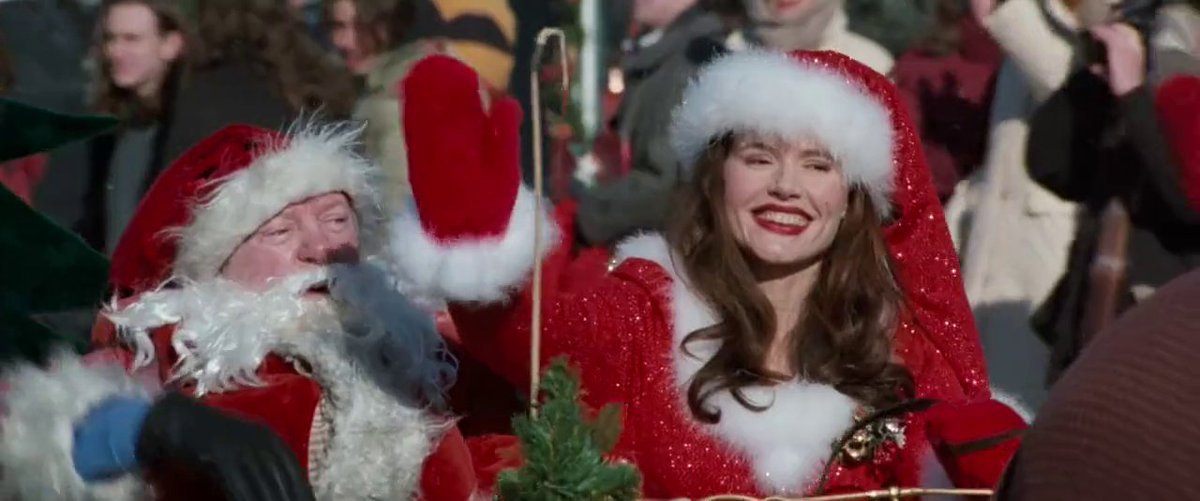
“But, Ryan, what about the Christmas factor???” So glad you asked. If anything, THE LONG KISS GOODNIGHT is even more Christmassy than LETHAL WEAPON. No longer set in the warm valley of Los Angeles, Black sets this one in the snowy land of Honesdale, Pennsylvania (the fictional home of Schrute Beets, don’tcha know). The inciting incident is a giant small-town Christmas parade. Add a plethora of string lights and some diagetic holiday music, and you’ve got maybe the Christmassy-est non-Christmas movie of the entire goddamn 1990’s.
And yet, as mentioned, the movie was considered something of a failure at the time, making it to only third in the box office on opening weekend. THE LONG KISS GOODNIGHT only managed about $33 mill in the United States and about $62 mill internationally for a combined total of $95, compared against its budget of…$65 mill. Yeah, it surprised me to learn that, for all the hand-wringing, the thing actually made money. It just wasn’t nearly enough as everybody was hoping.
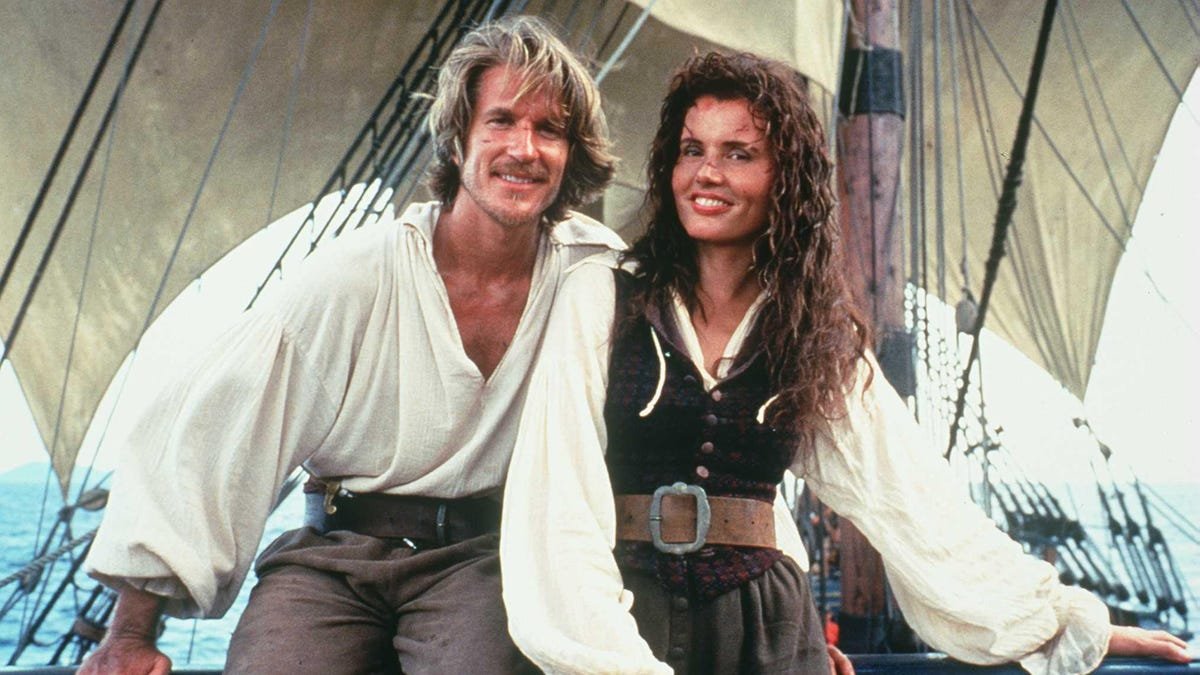
Why was this? Well, there a few unique mitigating factors, perhaps none bigger than the fact that THE LONG KISS GOODNIGHT was the second Renny Harlin-Geena Davis collaboration in about a year. The first was released the previous Christmas, a little movie called…..CUTTHROAT ISLAND, listed in the Guinness Book of World Records as the biggest box-office bomb of all time. Bad time to get back on the horse.
Some, including Harlin himself, also put blame on the bad marketing, which I can’t speak a lot to: the trailer seems pretty straight-forward. There’s also something to be said to the fact that audiences and the media were starting to grow weary of “macho Hollywood”; the tide was starting to turn against guys like Black, who were perceived to be overpaid relative to the quality of his output. This was personified by a strange hit-piece from Variety’s Peter Bart after the script was sold in 1994. He sounded pretty pissed! People were hungry for a change, at least in the media.
However, Shane Black posits that it perhaps THE LONG KISS GOODNIGHT might have been more successful had the gender roles been more traditional:
It might have made more money, they told me, but it had to be a woman. The lead had to be female.'
In the end, it’s probably a mix of all of the above. The fact is that it’s been proven to be enormously difficult to generate a fully original female-led action flick that is profitable enough for the studio that financed it (again, it should be noted that THE LONG KISS GOODNIGHT made money, just not enough; it’s worth considering if the standard would have been so high if Sam Jackson had been in the lead).
For what it’s worth, Jackson himself has looked back on it pretty fondly, going so far to say that it was his favorite movie of his to re-watch. Given he makes 400 movies a year, that’s quite the praise. I’m surprised he didn’t say FARCE OF THE PENGUINS, but no matter.
Regardless, the damage was done. As mentioned, Black essentially went on a decade-long hiatus after this, becoming more well-known for his extravagant parties than FOR writing anything at all. Was it the fallout of the tide starting to turn on him (it should be noted that 1993’s LAST ACTION HERO wasn’t exactly a box office success, either)? Was it the end result of many bad production experiences with studios over the prior decade? Was it just another period of low productivity from a man known for such bouts of writer’s block? Probably a mix of it all.
It also marked a steady decline in Davis’ film output; the only role she played after this until 2009 was as Stuart Little’s mom in the STUART LITTLE trilogy (actually, it’s worse than that, she was voice only in the direct-to-DVD STUART LITTLE 3: CALL OF THE WILD). To be fair, she began to focus on TV after the turn of the century, headlining her own self-titled sitcom, as well as playing the president in 2006’s COMMANDER-IN-CHIEF. But, you know, both those shows ran for a combined 40 episodes. Not great.
It’s hard not to read between the lines. Her pivot into the male world didn’t do as good as we decided it should, you’re now on the wrong side of 35…..see ya later.
It’s why I find it hard to muster up a lot of hatred for Jennifer Lawrence’s words earlier this month. Yes, she completely misspoke, but we’ve forgiven all kinds of gaffes from public figures before, at least from ones we’re not angling to tear down in that moment. The underlying intent and sentiment behind what she was trying (and failing) to express in the Variety video couldn’t be clearer once you really break it down.
It’s still damn near impossible to come up with more than a handful of female action characters that exist as wholly original creations, and not part of some previously existing intellectual property. It’s why it;s crucial we appreciate the ones we do have, even if they were considered underwhelming at the time.
This Christmas, consider taking a trip to Honesdale, Pennsylvania, won’t you?