Recent Articles
Thanks For The Memory: The First Fifty Years of Oscar Openings
Today, in honor of Academy Awards night, let’s dig through the first fifty years of Oscar openings. Jack Lemmon! Jerry Lewis! Frank Sinatra! Burt Lancaster and Kirk Douglas! Bob Hope! Lots and lots of Bob Hope! They’re all here, hoping to kick things off with a bang.
Do you feel that in the air? Do you smell the greasepaint? Do you feel the sense of self-satisfaction?
It’s Academy Awards night!
Yes, it’s the Academy Awards! The Oscars! It’s everyone’s favorite three-hour broadcast of the year. Even those who profess to hate or not care about it at all feel the need to jump in to let everyone know just how much they hate it and don’t care about it. And admittedly, it can be a giddy hate-watch; the sheer amount of time that needs to be filled can lead to some jaw-dropping moments. Just last year, we got Adrian Brody droning on and on about whatever it was and the songwriter from EMILIA PEREZ sharing her art with the world. Even if you’re just watching to make fun, the unique circumstance of live TV will nearly guarantee your mill will get some grist.
I’d argue this is a waste of time, though, haters. Honestly, you can get a sense of how the broadcast is going to go within the next twenty minutes.
Besides the Best Picture reveal, It’s probably the most watched part of the program. It’s certainly the part I’m most invested in. We all know what part I’m talking about; this is the section that kicks the whole gala off, where Jimmy Kimmel or Steve Martin or whoever comes out, gets a few ribs out on the famous crowd, gets the energy up, and then hands it all off to our first set of presenters. Sometimes, there’s even an up-tempo dance number, performed by a notable star. It’s the real razzle-dazzle part of the show, to ensure everyone keeps watching. It’s probably the most valuable real estate of the entire evening.
We now know it as the spot where Billy Crystal does his parodies, or where Chris Rock (*gasp*) makes fun of celebrities, or where Conan O’Brien now does his beautiful giddy clown act. But, the Oscars opening has a whole history all its own, one that has undergone several changes in generation, philosophy, and audience. I’ve always wanted someone to do a long, drawn-out deep dive on this portion of TV history.
.
.
.
.
…..
Fine! I’ll do it myself!
What follows is the first yearly installment of a new three-part series. Today, let’s work our way through as many Oscars openings as we can.
A couple of caveats before we get started in earnest. First, my definition of “Oscars opening” is pretty simple. The “opening” is the period of time that elapses between the second the TV broadcast begins to the second before the first set of presenters take the stage. This historically includes a host monologue, but not always! The Oscars have gone hostless more often than you think!
Secondly, I’m ignoring the first twenty Academy Award ceremonies. This is for a couple of reasons. The first Academy Awards to be broadcast on TV was the 25th edition, in 1953. Of the 24 preceding ceremonies, six weren’t even put on the radio. Of the remaining 18, 9 were only partial broadcasts, usually an hour, but could be as short as 15 minutes. Those radio programs are not particularly well-preserved; I’ve only tracked one of them down as of this writing. My point being: I couldn’t evaluate most of these openings even if I wanted to.
But, even if all of them were up for review….Oscar openings not aimed at a TV camera feels like an entirely different thing. The congenial host, the glitz and glamour, the risk of people looking really stupid…that’s the Oscars openings you think of. In the radio age, it’s just people walking up to, and off of, the stage. My plan from the beginning, then, was to just start this thing with the first officially televised Academy Awards opening, in 1953.
However, I then noticed that the four openings before that are actually archived by the Academy and just sitting on a YouTube playlist on their official channel (a playlist, by the way, that frustratingly isn’t updated anymore…we’ll get there). Well, you know I had to watch those, too. Thus, I threw them into this article as a bit of a warm-up, before we get to the actual broadcast openings. At the very least, it gives us an idea of what the Oscar openings were like prior to TV cameras being rolled in.
21st ACADEMY AWARDS
Date: March 24, 1949
Host: Robert Montgomery
Broadcast: ABC Radio
Location: The Academy Theater
Best Picture: HAMLET
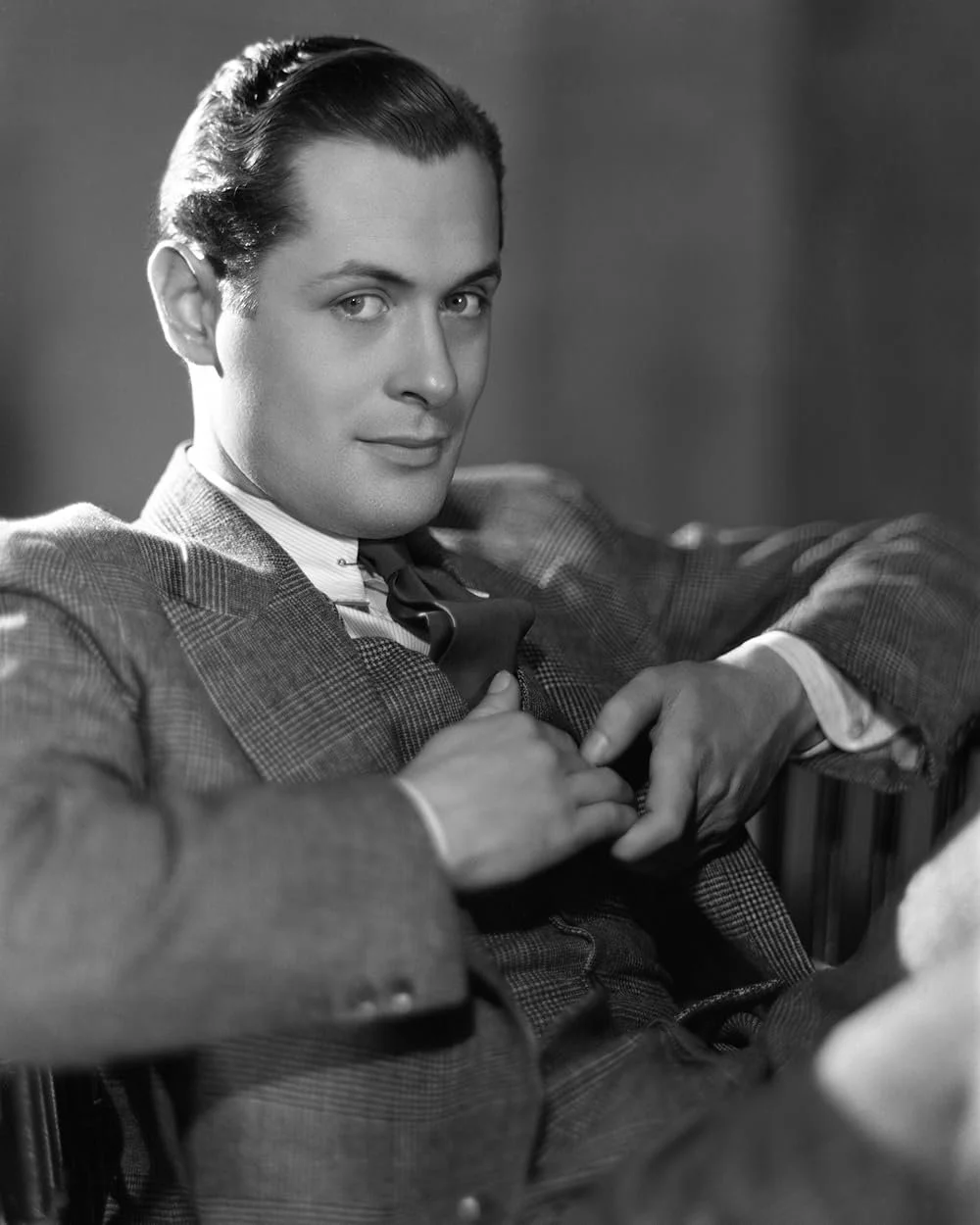
The opening of the 21st Academy Awards comes to us via newsreel, one of those old-timey things that completely, 100% live up to the stereotypes you have about them in your heads. After the opening credits, we get a guy doing “1940s news guy” voice (the same type of guy who probably found a second career as a horse-race color commentator), announcing to us the arrival of this year’s stars to “the final heat of the richest sweepstakes in the country”.
We open with a speech by then-Academy president Jean Hersholt. Opening with the President’s speech will become a long-standing tradition for the Oscars broadcast, one which rattled me. Boring speeches about the state of the Academy typically get buried in the middle of modern broadcasts (sometimes followed by a zinger by the host about how the energy in the room is gone). But, the logic is sound. The ceremony at this point is still for industry insiders.
Then comes our MC for the evening, actor and two-time Oscar nominee Robert Montgomery. His opening routine is short and to the point, a far cry from the long stand-up acts we’ve grown accustomed to. What’s interesting about Montgomery’s speech is that, even in 1949, Oscar hosts are already making cracks about the vanity and solipsism of Hollywood stars; he laments not having won an Oscar yet, which keeps him from making an acceptance speech thanking the only people pertinent to the victory: the Academy and himself. It gets a big, uproarious laugh.
This brings Montgomery to his only real obligation in his opening remarks, a request for winners to keep their acceptance speeches brief and to the point. Even in 1949, the Academy was desperately trying to reign in long-winded speeches! This is not a new phenomenon! History isn’t so much a straight line, as it is a perpetual circle.
22nd ACADEMY AWARDS
Date: March 23, 1950
Host: Paul Douglas
Broadcast: ABC Radio
Best Picture: ALL THE KING’S MEN
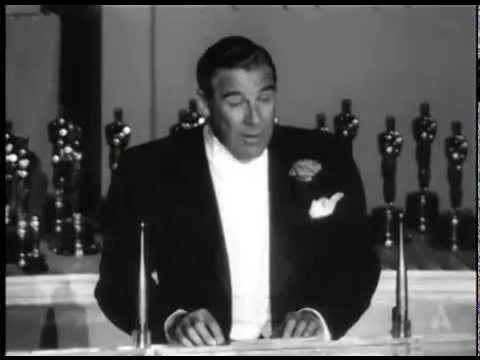
I can’t say for sure, but the video we have of this opening on YouTube, rather than being a newsreel, feels very much like the audio from the radio broadcast synced up to archival video. The opening narration is mostly descriptive (“Slowly the curtain rises to expose a stunning stage setting, dominated by a huge replica of the hero of the evening: the Academy Oscar!”).
Academy President Charles Brackett comes out to discuss the state of film, highlighting its successes in light and grand entertainment, as well as in its dealing with social and racial issues, in case you think the Oscars only recently became “woke”. Then, here comes actor Paul Douglas, who seems like an unusual choice, a fact he leans into with his opening line: the Academy's pursuit of a fresh hosting face came up with only one choice….get Douglas! “Well, we all know how busy Kirk is.”
This opening also is our first indication of an extremely long-standing Oscars tradition: the explanation of how the votes are tallied, evoking the good people over at PricewaterhouseCoopers and the fact that they are the only ones who know the results of the evening ahead. This leads into Douglas explaining something that I never really thought about: if nobody else knows the winners, how is the orchestra always ready to go with the appropriate music once a winner is announced? The answer is logical, but unexciting: everyone in the orchestra has the five possible pieces of music ready to go, and the conductor is just really good and can get a downbeat going as soon as the winner is revealed. Turns out there’s no conspiracy, people are just good at their job! Boring, I know.
Oh, and Paul Douglas also has to give an announcement to tell winners to keep their damn speeches short. Whereas last year, Robert Montgomery implored everyone to end their extended thanks through certified mail, Douglas just thanks the cameramen, procedures, and makeup artists all at once on their behalf, so that nobody else has to. “We’ll also assume that without your mother, none of this would be possible.” Good bit! How pissed do you think the Board of Governors would be if you told them this is an issue still plaguing the Oscars sixty years later?
23rd ACADEMY AWARDS
Date: March 29, 1951
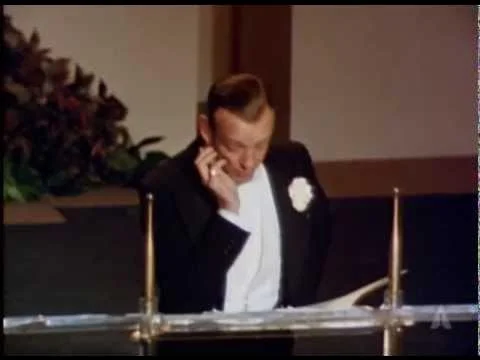
Host: Fred Astaire
Broadcast: ABC Radio
Location: Pantages Theatre
Best Picture: ALL ABOUT EVE
Another “radio broadcast synced to the filmreel footage” video, although in this one we also get to enjoy the Alfred Newman-conducted overture over footage of stars like Tony Curtis, Janet Leigh, Ronald Reagan and Elizabeth Taylor arriving. I can’t say with 100% certainty, but based of the presence of “Bibbidy-Bobbidy-Boo” and “Mona Lisa” in the orchestra, I thiiiink the overture is covering the previous year’s Best Original Song nominees. It would make more sense to be that year’s batch of noms, so it’s possible this radio broadcast opening is synced to the wrong year. Who knows. Not me!
Out comes Academy Prez Charles Brackett again to look back on the year 1950 and, boy, does he seem ready to move on to 1951. He evokes the horrors and bloodshed of Korea, Russian land grabs, and the threat of atomic annihilation. It’s an intense, socially conscious, overtly political opening speech, one that champions Hollywood for presenting inclusive, diverse, and individualistic stories in response. Again, just in case you thought the Oscars only started doing this kind of thing due to Trump Derangement Syndrome or whatever.
Anyway, following this is our MC, Fred Astaire! As far as name brand value, he’s about as good as you could get for 1950, but he’s not who you might imagine as an Oscar host. He’s more nervous than you might expect, but he’s appropriately self-effacing, stating that following Paul Douglas’ stint last year, the Academy switched from one of Hollywood’s newest faces to “one of its oldest”. It’s more interesting to watch how stuck he is to the pages in front of him, even using his finger to stay in place. Considering this is a radio broadcast, it doesn’t really matter, but it’s also weirdly humanizing to see a first-class entertainer be put slightly out of their element. Stars: they’re just like us!
Oh, and yes, he implores winners to keep their speeches short. The comic bit here is to reflect on obviously-false past instances of speeches running long, stating a past winner once brought “the Beverly Hills phonebook” up with her. It’s light, fun and a good counterpoint to Brackett basically calling 1950 the worst year in human history.
24th ACADEMY AWARDS
Date: March 20, 1952
Host: Danny Kaye
Broadcast: ABC Radio
Location: Pantages Theatre
Best Picture: AN AMERICAN IN PARIS
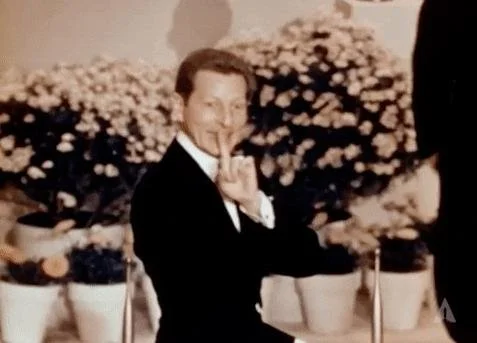
An interesting opening for a couple of reasons: first of all, it’s the first opening of these four to feel like more than just a live radio taping. For the most part, these have been stars and Academy presidents coming out on stage, hitting the dais, reading their prewritten remarks and getting out of there. This is mostly that, except…our new host can’t help but make a bit out of his entrance.
President Charles Brackett does his normal “state of the Academy” speech, this time focused on the pipeline between Broadway play and Hollywood movie (a timely topic, given the prominence of A STREETCAR NAMED DESIRE, DEATH OF A SALESMAN and A PLACE IN THE SUN amongst the nominees), then transitions to introducing the host, Danny Kaye. Kaye makes a bit of entering too early, then having to retreat back to the wing, which gets a huge laugh. This happens a couple of times before finally getting on stage, each time getting just as many laughs. As Brackett lists off the attributes of a successful host, Kaye has a little dance bit to mark each, until leaving the stage again after the mention that he must be “dignified”. It rightfully kills.
This is notable to me because this bit would be inscrutable on radio, the kind of comedic routine that could only work on film. I can’t speak to the first twenty Oscars openings, but this is certainly the first non-verbal bit I’ve seen in this project, and it’s a great one. It could be a coincidence that the next Oscars would be fully broadcast, but maybe not.
Danny Kaye is also the reason behind the second interesting thing about this: his opening routine is exclusively centered around his having never won, or even held, an Academy Award. He starts off funny about it, being self-deprecating about his lack of nominations. But it takes a weird turn, going into the reasons behind why everyone goes nuts over a little statue: it’s a recognition of excellence from your peers. He transitions into a story about a man joining the navy, working his way up the ranks through hard work, then writing his mother about his recent promotion to Captain. Her response? “To me, you’ll always be a Captain. But to a Captain, are you a Captain?”
I feel like Kaye is revealing too much about himself on this one. The idea of wanting to be considered the best by your peers is insightful, even a little poetic. But after just getting done doing a whole bit on never having received one, it all comes a little (okay, a lot) needy to me. Unfortunately, Kaye would have to settle for his two honorary Oscars (one in 1955, the other in 1982).
Oh, and yes, he warns everyone not to let their speeches run long, stating there’s a new rule in place dictating that speeches “be no longer than the movie itself”.
25th ACADEMY AWARDS
Date: March 19, 1953
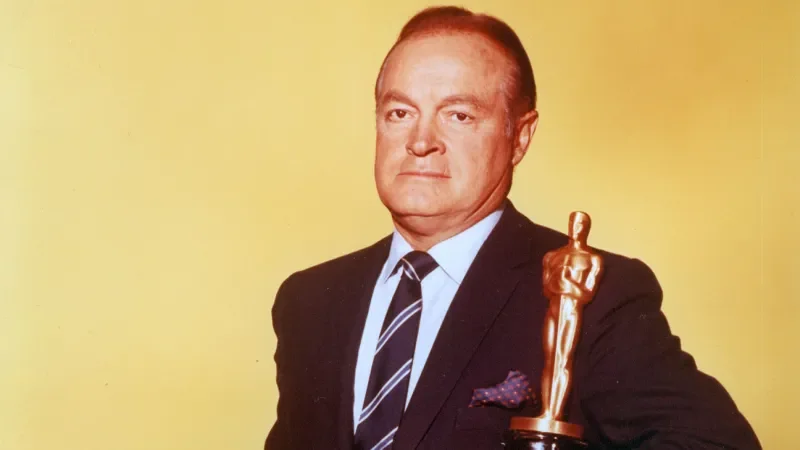
Host: Bob Hope
Broadcast: NBC
Location: Pantages Theatre (Los Angeles), NBC International Theatre (New York)
Best Picture: THE GREATEST SHOW ON EARTH
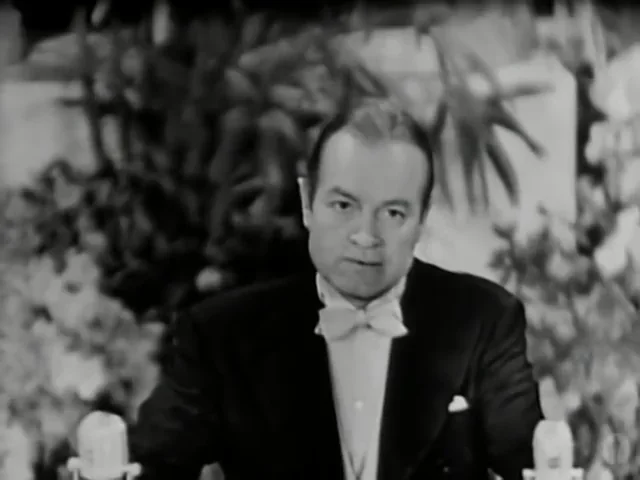
The Oscars have made the big time! Its 25th birthday is broadcast live, and from two different cities! For the first time, the Academy Awards are held at two simultaneous locations: there’s the main hub at the Pantages Theatre in Los Angeles, but there’s also a whole separate audience sitting in Columbus Circle at the NBC International Theatre in New York. Each has its own host (New York is supervised by Conrad Nagel and Fredric March), although it’s made fairly clear that Bob Hope is the official MC of the 25th Academy Awards. They have a little bit of fun with this, switching back and forth in the opening to check in on each other, but it’s nothing special. I suspect just being able to switch cameras across the country was novelty enough.
Speaking of Bob Hope, this is the first time we’re hitting one of his monologues in this project, but he was an old Oscars hosting veteran by 1953. This marks his seventh time as Academy Awards host, and it’s nowhere near his last. As a result, there’s a level of professionalism and comfort that we haven’t gotten to see in the reviewable years prior. The big topic of his opening bit is television, with Hope indicating just the slightest bit of animosity towards the Academy conceding to a “lesser” art form. One of his best lines is “Television: where old movies go to die.” He also mentions the particular novelty of being able to see stars in your living room for the first time: “All over America, housewives are turning to their husbands and saying, ‘Put on your shirt, Joan Crawford is coming.”
There are several aspects to his opening bit here that should be marked, as they will become mainstays to his Oscars monologues to come. First, he kicks things off with a “Ladies and gentleman, welcome to (insert name of TV show here)”, in this case “Suspense!”* He also has a whole section about how he’s never been nominated for an Oscar. Now, for whatever reason, where Danny Kaye came off super-insecure doing this same bit last year, Hope is able to make it funny with ease. Maybe it’s because it’s all just setup-punchline joke format, instead of it segueing into a weird story about a fake Navy captain. Anyway, this will become a central tent to Hope’s Oscar monologues.
*A CBS show from the 50s. Look it up.
Overall, what surprised me most about this, coast-to-coast technological theatrics aside, is the lack of dynamics, almost as if the broadcast wasn’t sure what to do to sell itself on television. This will soon change, as it becomes increasingly clear that TV is no novelty, and will soon become intertwined with movies themselves…
26th ACADEMY AWARDS
Date: March 25, 1954
Host: Donald O’Connor, Fredric March
Broadcast: NBC
Location: Pantages Theatre (Los Angeles), NBC Century Theatre (New York)
Best Picture: FROM HERE TO ETERNITY
The second ever Oscars television broadcast commences with a lot more grandeur than before, with a sweeping, intense opening narration selling just how important this is: “This is Movietown’s election night, the final game of the World Series, the running of the Derby, the Rose Bowl!” A lot of this, I imagine, is in place in order to sell the Academy Awards to a wider audience. But also, consider the fact that, at the time, the Oscars really were a bigger deal than they are now. The Tonys, Emmys, and Golden Globes were still in their infancy, and there just weren’t that many other opportunities to see major stars altogether like this.
After a quick overture of “Lullaby of Broadway” (led by Andre Previn!), Academy President Charles Brackett comes out to declare the return of the Film. Where it supposedly went to is not clarified, but I have to wonder if this was Hollywood feeling a bit of the heat from the competition of television. Then out comes our host for the evening, famous funnyman Donald O’Connor. And, here’s the thing: he kind of bombs! He does sort of admit, in a joking manner, that he’s “terrified”, and it’s not like it’s a catastrophe or anything. But it does highlight that the role of “Oscar host” requires a unique set of skills. You have to be a capable public speaker, congenial, and funny, but you also have to be comfortable being out of your element. O’Connor may be one of the best screen comedians Hollywood has ever had, but being in front of a live broadcast with prepared remarks in front of a room of your peers is a whole different ballgame. It’s comforting, in a way, watching such a huge star like O’Connor resort to “Is this thing on?” ad-libs. It can happen to any of us.
Then, we cut to New York (dual broadcast again!) and Fredric March takes it away once more. This leads to this year’s big technical stunt: the screen splits, giving way to O’Connor and March “talking to each other”. It’s kind of a stilted routine: both men are clearly hanging on to their scripts for dear life, and the punchlines aren’t that great. But the trick technically goes off without a hitch.
Oh! One other novelty: we also briefly cut to a live ad spot for Oldsmobile, with a group of singers introducing Paul Douglas climbing out of said Oldsmobile and hawking its virtues. Betty White comes out to help him pitch the sponsor, and the whole thing ends in a robust song-and-dance number. Back when we had proper ads!
27th ACADEMY AWARDS
Date: March 30, 1955
Host: Bob Hope, Thelma Ritter
Broadcast: NBC
Location: Pantages Theatre (Los Angeles), NBC Century Theatre (New York)
Best Picture: ON THE WATERFRONT
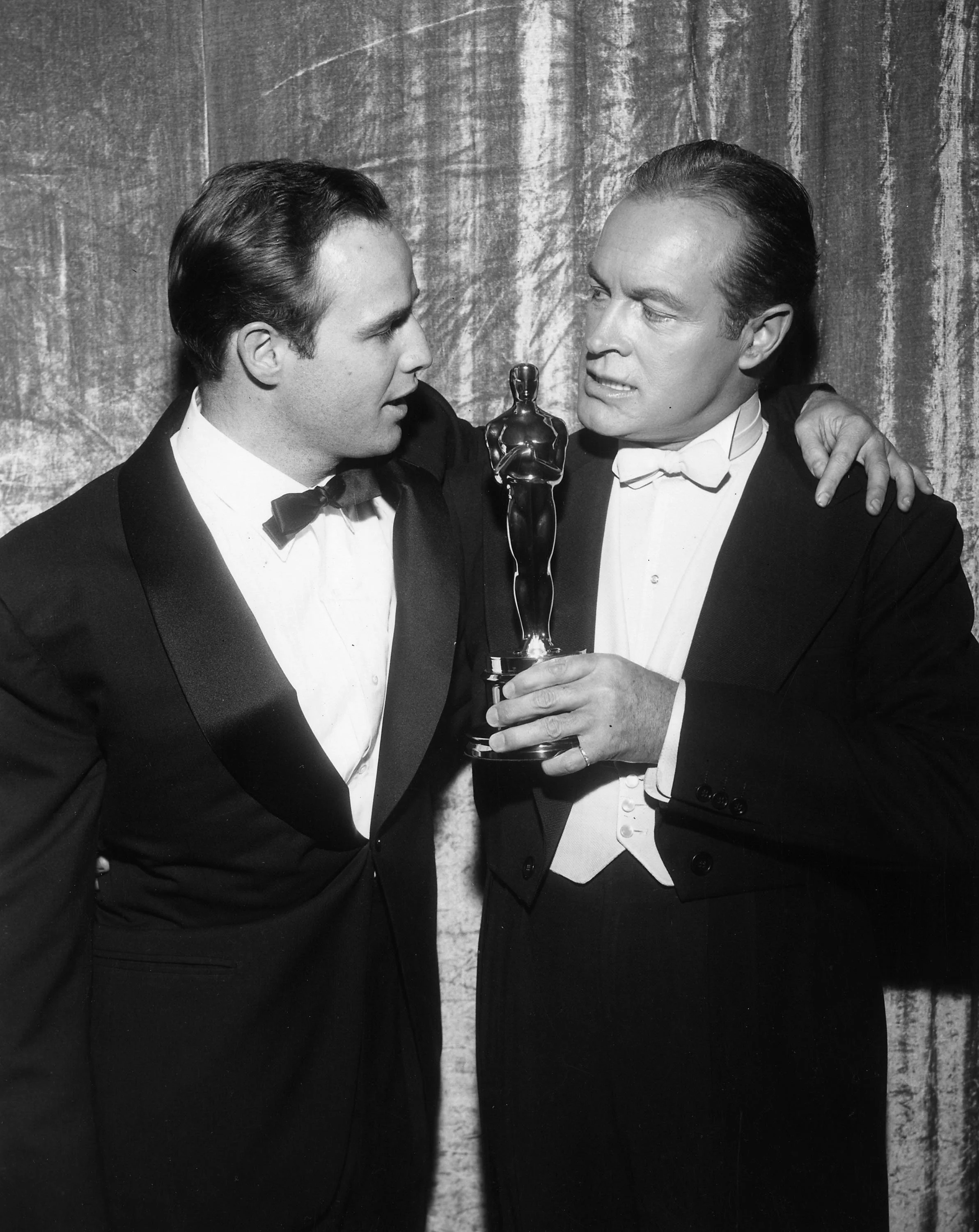
David Rose’s orchestra leads us through a medley of some past Best Original Song nominees and winners as the camera pans over the stars in attendance at the Pantages and NBC Century Theatres. Also, something I’ve never seen before or since: the full list of nominees are superimposed on the screen. I know that the full cottage industry of entertainment magazines and Oscar odds have rendered this unnecessary, but I would love it if they brought this back. It’s just the right amount of dorky for me.
The theme of this year’s Charles Brackett sketch: PricewaterhouseCoopers. He also explains that this year’s set of presenters are the 20 acting nominees for that year, in order to give them “something to do”. I find this insane for some reason. Imagine if Timothee Chalamet and Rose Byrne had to go up and present this year? No, go sit there and be nervous all night like everybody else.
Then comes Bob Hope. Opening line: “Welcome to ‘You Bet Your Career’”. His act has a bit more of an edge this time than last year. Early on, he mentions that winners will receive Oscars, while the losers will receive “monogrammed do-it-yourself suicide kits”. He also alludes to the industry’s bounceback after the “TV scare”: “I was a little worried last year when the Oscars came through in a kneeling position”. Otherwise, it’s more of the same you expect from Hope: cracks about his lack of an Oscar, swipes at the amount of minks in the audience, and jokes about Cecil B. DeMille’s Biblical pictures.
(Another interesting theme to his monologue? The supposed edgy content of this year’s nominated pictures. Yet one more “the more things change” kind of moment.)
Hope kicks it to Thelma Ritter in New York to give a head count of the stars in attendance on that coast, and the ceremony goes on from there. Another solid outing from the man most associated with “classic Oscar host”. It’s kind of amazing: his punchlines are almost eighty years old at this point, and I fully do not understand half of them, given their topical nature. But I find myself laughing anyway. He just has a cadence to his delivery. He’s almost as good as James Franco and Anne Hathaway.
28th ACADEMY AWARDS
Date: March 21, 1956
Host: Jerry Lewis, Claudette Colbert, Joseph L. Mankiewicz
Broadcast: NBC
Location: Pantages Theatre (Los Angeles), NBC Century Theatre (New York)
Best Picture: MARTY
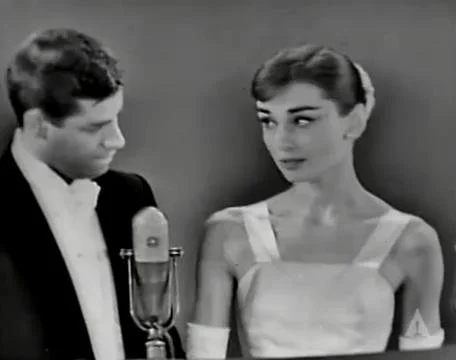
As Andre Previn leads the orchestra through a rendition of “Zip-A-Dee-Doo-Dah!”, an announcer walks us through the Oscar voting process. This indicates that the Academy still can’t quite crack how to present this necessary element of transparency in a way that doesn’t feel like the home audience needing to eat their veggies. This doesn’t really work, either: I just wanna hear the overture! Shut up!
After Academy President George Seaton gives opening remarks, highlighting the ever-increasing international scope of Hollywood films, out comes this year’s Oscars host: Jerry Lewis! He does pretty well here, and it helps that he’s a rapidfire set up-punchline type of guy, cut from the same cloth as Bob Hope. Interestingly, though, he’s even funnier after a line bombs, which happens more often in these few minutes than you might expect. After a particularly silent reaction, Lewis merely grabs his forehead and does an exaggerated “ohhhh.”. At one point, he informs the audience, “these are the jokes!” Some might take issue with this, preferring he just move on rather than apologize to the audience. But, I liked it.
He then kicks it over to Colbert and ol’ Mank in New York to kick off the awards. There’s some stilted back-and-forth, the kind that can only be generated by two people doing comedy in two different rooms. But Colbert is genuinely tickled, leading Lewis to beg her to please keep laughing like that, a nice button to a funny (if choppy) Oscars opening. Look, the Academy must not have minded, because Lewis would return the very next year…
29th ACADEMY AWARDS
Date: March 27, 1957
Host: Jerry Lewis, Celeste Holm
Broadcast: NBC
Location: Pantages Theatre (Los Angeles), NBC Century Theatre (New York)
Best Picture: AROUND THE WORLD IN 80 DAYS

We open with another blatant Oldsmobile ad, then it’s the customary overture-and-Academy-president-speech combination. The former, led by Johnny Green, plays David Raksin’s “Prelude to a Gala Evening”, while the latter expounds upon Hollywood’s growing global influence, with the world being roamed for story content. He points to the stories of the Best Picture nominees. Most of them (AROUND IN THE WORLD IN 80 DAYS, THE TEN COMMANDMENTS and THE KING AND I) speak for themselves on that front. However, Seaton has to stretch a little bit to include FRIENDLY PERSUASION (it apparently “explores a region too often bypassed: the human heart”).
Then it’s time for Jerry’s second straight turn as Oscars MC. And, you know, he’s even better this time around. He doesn’t really have to juice the audience in order to save a flop. That said, his best line happens to be an ad-lib; as New York host Celeste Holm begins to turn the wrong way for an attempted split-screen “kiss” between her and Lewis, he exclaims “you need a shave, baby!”. Good stuff.
By the way, another little “they’ve been complaining about this for years” moment: a decent chunk of Lewis’ routine centers around the ever-increasing length of the nominated movies. His best one: “The other night, I went to see WAR AND PEACE, and of course, I couldn’t see all the picture because the kid in front of me grew up.”
30th ACADEMY AWARDS
Date: March 26, 1958
Host: Bob Hope, David Niven, James Stewart, Jack Lemmon, Rosalind Russell, Donald Duck
Broadcast: NBC
Location: Pantages Theatre
Best Picture: THE BRIDGE ON THE RIVER KWAI
For the 30th anniversary of the Academy Awards, they went all the way out for hosting star power. Look at that list up there! Two hosting legends in Bob Hope and David Niven! Jimmy Stewart! They booked Donald fucking Duck.
Unfortunately, under the parameters of this project, we get to talk about none of them. The opening of the 30th Academy Awards is actually pretty lowkey. After an announcement that Wagon Train, Kraft Theatre and Father Knows Best are being preempted, the show just starts and out comes Academy president George Seaton. His speech is short, but fascinating: the big gimmick this year, besides the bevy of hosts (who just end up being glorified presenters, in a way), is that the broadcast is being aired commercial-free, due to their view of it as a public service.
The idea of the Academy Awards broadcast being considered a public good sounds really foreign in 2026. Most of the time now, you hear it being discussed as the complete opposite, this archaic, problematic thing that nobody likes. But, consider what it really is: a celebration of a major art form. Yes, it’s a self-congratulatory, somewhat elitist and insular celebration, but it’s a celebration nonetheless. Nearly 70 years of cynicism and missteps has led to us constantly worrying about how to “fix” the Oscars, a problem that doesn’t really have a clear and obvious solution. So, it’s kind of nice to travel back in time to a place where just the existence of them in your living room was considered art in and of itself.
Anyway, sorry, Mr. Duck, your segment isn’t eligible.
31st ACADEMY AWARDS
Date: April 6, 1959
Host: Bob Hope, David Niven, James Stewart, Tony Randall, Mort Sahl, Laurence Olivier, Jerry Lewis
Broadcast: NBC
Location: Pantages Theatre
Best Picture: GIGI

After a quick (and kinda boring) intro from Bill Holden and John Wayne and another overture, this one kicks off with my single favorite find of this entire project: a sarcastic song-and-dance number called “It’s Great Not To Be Nominated”, performed by Burt Lancaster and Kirk Douglas! Besides the total surprise of either of them ever being involved in such a thing, it becomes immediately clear that, um, this number is also genuinely good. The Sammy Cahn-penned tune is witty and clever, yes. But Burt and Kirk get so much more into it than you could ever possibly imagine; the whole thing ends with Kirk standing on Burt’s shoulder, before both tumble forward. Incredible stuff, and way better than the standard “Academy President speech” opening.
(And if you liked this, good news: this was actually a reprise of a number Burt and Kirk did for the previous Academy Awards. That means there’s another one out there for you to watch!)
Then it’s time for Bob Hope to come on out. Although, as you can see, this is another vegetable medley of hosts, Hope gets pole position with a genuine monologue. At this point, there are no further surprises to be had in his routine; he opens with a TV-related “welcome to…” line*. He feigns heartbreak over not being nominated. He even repeats a joke from years prior (“the best acting tonight will be from the losers”). But, as mentioned, he’s so comfortable in the role that I just find myself put at ease when watching his openings. You know exactly what you’re going to get, and that’s the beauty of it.
*This year, it’s “You Bet Your Life”.
32nd ACADEMY AWARDS
Date: April 4, 1960
Host: Bob Hope
Broadcast: NBC
Location: Pantages Theatre
Best Picture: BEN-HUR
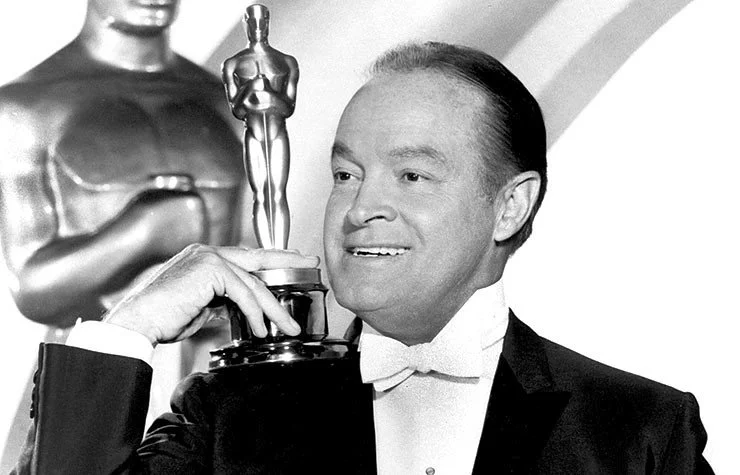
Another year, another Andre Previn-conducted overture, this time a sizzling medley of Harold Arlen songs (including “Blues in the Night” and “Somewhere Over the Rainbow”). For what it’s worth, this is probably the best overture thus far, the perfect uptempo setup for Academy President B.B. Kahane’s stumbly opening remarks, who uses his time to introduce Bill Miller of PricewaterhouseCoopers. I mention Bill Miller here because by 1960, he had already become somewhat of a fixture on the Academy Awards broadcast, the public face of the accounting firm that tabulates the votes. It’s such a weird, vaguely inconsequential rite of passage, but I get a little giddy from here on out whenever Bill gets introduced in these openings. The Oscars! An award show so magical that it can turn anyone into a star!
After a corny introduction where the first envelope of the evening contains the name of the host, out comes Bob Hope, or as he refers to himself “Better Luck Next Year”. The big historical topic of note is the then-ongoing SAG/AFTRA strike, which Hope refers to as the first “mink-lined picket in history”. I wonder how a lot of this routine would go nowadays; Hope’s shtick is heavy on the “oh, the poor rich actors in their mansions” aesthetic, although I also have to say that he’s pretty funny about it. “Where else can a man walk off a job and refuse to get out of his swimming pool unless they improve working conditions?” It’s sort of a precursor to Ricky Gervais’ scorched-Earth Golden Globes monologues, but not everyone loved those either.
If it helps: this section also contains one of the only real stumbles I’ve ever seen from Hope in this context, where he accidentally says “strinke” instead of “strike” (his ad-lib response: “That’s alright, I’ll be fine in about an hour”).
Other thing of note: a passing reference to Smell-O-Vision (“we used to have to wait for the reviews”), as well as a prescient dig at psychologically-driven pictures (“in the future, we’ll have the villain shoot the hero, and the hero will say, ‘Gee, I wonder what he meant by that?’”).
33rd ACADEMY AWARDS
Date: April 17, 1961
Host: Bob Hope
Broadcast: ABC
Location: Santa Monica Civic Center
Best Picture: THE APARTMENT
This year’s Andre Previn overture is a medley of Arthur Freed and Nacio Herb Brown-penned movie tunes (why, yes, they do play “Singin’ in the Rain”, thank you for asking). Then comes a pretty rough opening speech from Academy president Valentine Davies. This is a problem that sometimes comes with presidents whose credits are mostly behind the scenes: public speaking is not a gift bestowed to all. To that end, I swear there’s a point where he stops a section of the speech too early, prompting someone off-stage to say “keep going”. I’m not trying to be an ass, and I swear it doesn’t make me feel good that Mr. Davies passed away a couple of months later. I’m just telling you that’s what happened.
Then comes a rendition of “Thanks For The Memories”, which can mean only one thing…it’s Bob Hope time. The big topic of the evening for Mr. Hope is the awards’ recent change in venue from Hollywood proper to Santa Monica. Look, getting into Southern California minutiae is a risky business, lest one come off like a character in one of those SNL sketches, but Bob has a point here. Santa Monica is, charitably, a thirty-minute drive from Hollywood. What are we doing here, exactly? Mixed into the act is his usual blend of “I don’t have an Oscar”, “Walt Disney has all the Oscars”, and “Jack Lemmon”.
34th ACADEMY AWARDS
Date: April 9, 1962
Host: Bob Hope
Broadcast: ABC
Location: Santa Monica Civic Center
Best Picture: WEST SIDE STORY
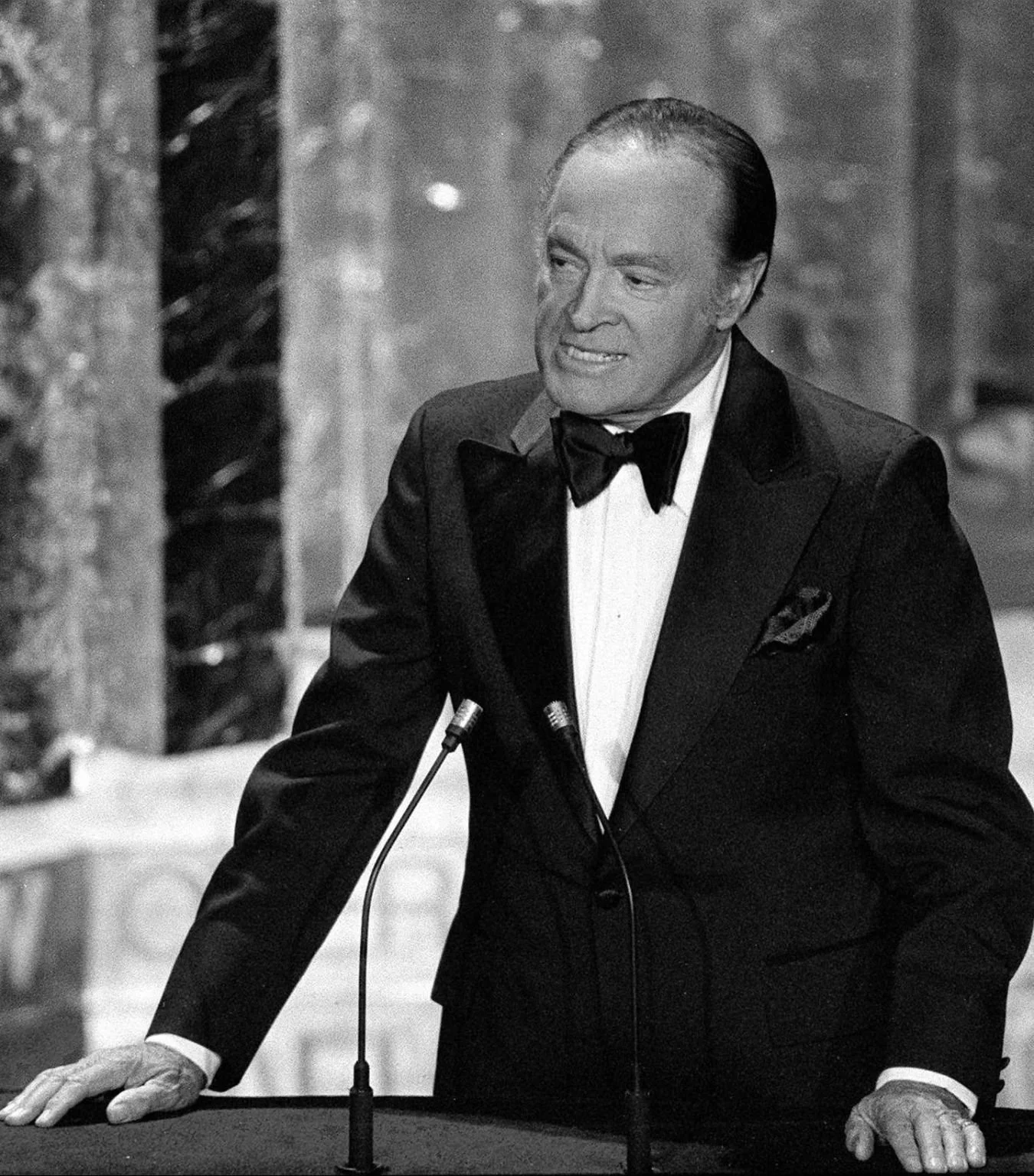
This Oscars opens with something completely unexpected: the “Star Spangled Banner”, sung by Mary Costa. Take that, libtards! In all seriousness, I don’t have a problem with it, I just have no idea why they decided to do it this year, and never before or since. Seriously, do you know? Please contact me if you do. For lack of a better answer, I’m assuming it’s in honor of Taco Bell being founded just a couple of weeks before.
After that, it’s back to business as usual. A Johnny Green-conducted medley (this time, a work called “The Oscar Fantasy Orchestra #1”), followed by a vaguely boring speech by the Academy president. At least this year, it’s an actual performer (Wendell Corey), which helps it brisk, crisp, and professional. He first introduces Bill Miller, who’s looking hot as always, then Bob Hope.I should mention, at this point, that I’m running out of things to say about Mr. Hope. He’s good! He’s steady! He’s the perfect opening note for the song that is the classic Academy Awards.
So, instead of just hitting variants of “he make me laugh, lol”, I want to at least reflect on some topics that come up that seem notable. Firstly, he mentions the new Dodger stadium (which would officially open the very next day!). Second, he mentions George C. Scott, not for the last time, who famously made it known he’d refuse any award he was provided (Hope’s retort: “Hollywood needs more people like him; if enough people refuse Oscars, maybe I’ll get one”). Third, there’s a lot of ribbing about how adult and mature movies are becoming nowadays (“Who knew Tennesee Williams would be afraid to go?”), in yet another edition of Nothing Anybody Is Complaining About These Days Is New.
35th ACADEMY AWARDS
Date: April 8, 1963
Host: Frank Sinatra
Broadcast: ABC
Location: Santa Monica Civic Center
Best Picture: LAWRENCE OF ARABIA
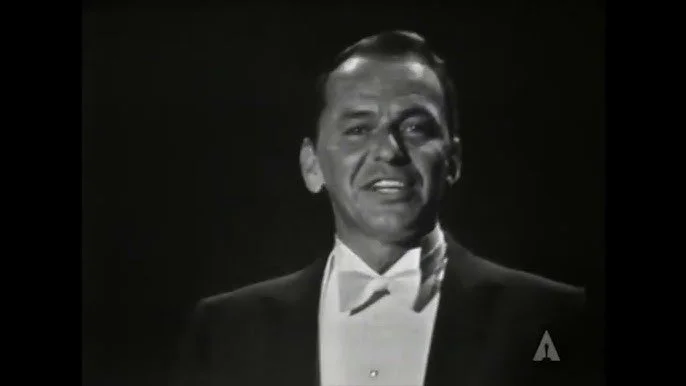
A change in host! It’s like they knew I was running out of things to say about Bob Hope. And what a change; this year, it’s perhaps the most famous person to ever live: the Chairman of the Board himself, Frank Sinatra.
Before Frank comes out, we can see a future full-on tradition forming in the intro: the announcement of the various stars arriving to the venue. This would eventually get spun off into the all-day red carpet extravaganza we have now, but in 1963, it’s just taking a few minutes at the top to announce folks like Robert Stack, Ginger Rogers, Danny Thomas, and Edward G. Robinson. We also get a quick overture, this time of the current Best Picture incumbent WEST SIDE STORY’s main theme “Tonight”.
Then, it’s Ol’ Blue Eyes’ turn. And…I don’t know what I expected, but it wasn’t the weirdly poignant and serious exegesis on the nature of art. How we once made movies as an industry because we just had to express ourselves. How people would flock to it like they did to The Mona Lisa. And now that due to cheaper and faster competition coming from overseas, we “find ourselves back in the Mona Lisa business [...] a nice business to be in”. He then goes into a whole thing about how, if Da Vinci had tried to make The Mona Lisa here, the damn thing would be killed by a thousand cuts administered by some no-nothing producer.
It’s an odd speech to watch! He’s completely right, at least philosophically, but it cuts against the ra-ra “everything is great!” nature that’s so typical of Oscar openings. It’s jarring to see one of these open with a beloved cool guy saying, “thank god we’re making good movies again, no thanks to the jerks that bankroll them”. Can we get back to that? Can we get Pedro Pascal to open the Oscars by saying, “fuck Netflix” or something?
Sinatra then introduces president Wendell Corey to give his remarks, but who cares. Sinatra already said it all.
36th ACADEMY AWARDS
Date: April 13, 1964
Host: Jack Lemmon
Broadcast: ABC
Location: Santa Monica Civic Center
Best Picture: TOM JONES
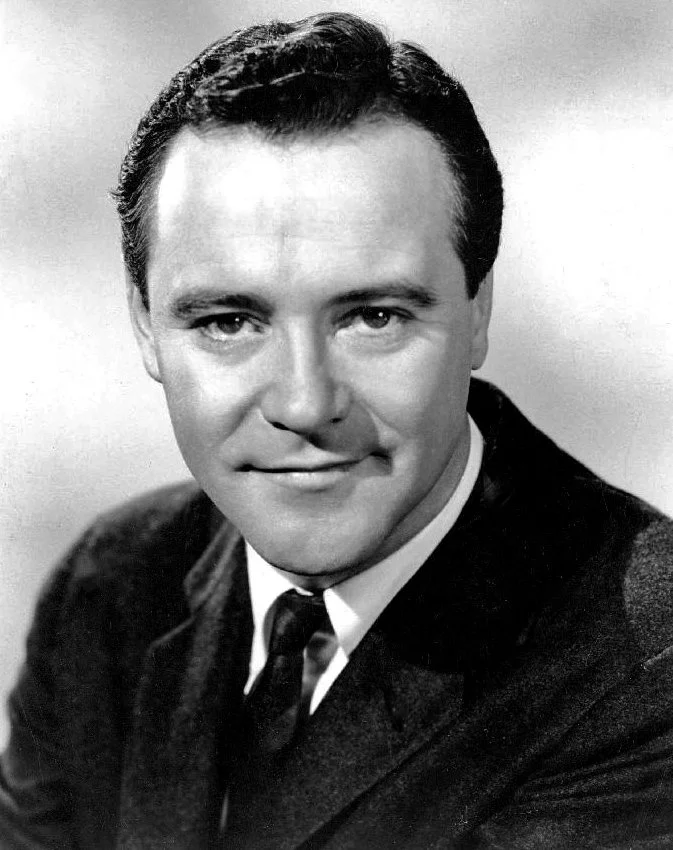
New year, new host. This time, it’s Jack Lemmon, which is a pretty funny choice, considering how often Bob Hope joked about him in his openings.
Stars like Bobby Darin and Sandra Dee, Julie Andrews, David Niven, Patty Duke and Shirley Jones arrive to hear the overture, a lengthy medley in tribute to one of the great lyricists in Hollywood history (and current Academy president) Arthur Freed. It’s a swinging, jazzy medley, and is a total blast, if you’re into such things (and I imagine if you’re this deep into this article, you must be).
Then out comes Mr. Lemmon, who fits pretty neatly into a particular category of Oscar host: “comedic actor who isn’t quite a stage comedian”. His opening routine lamenting on the increasingly taboo nature of smoking in movies is actually pretty witty and insightful when you take it all in, and would probably be worth a series of knowing nods and chuckles were you read it, but Lemon doesn’t quite bring the house down the way a Bob Hope might have. Still, it’s sold, short, and sweet, and he gets in a couple of jabs about Arthur Freed both on the way in and way out, which feels gutsy.
(Speaking of Freed, up to this point, he strikes me as the platonic ideal of the Academy president: a booming stentorian of a certain age who gets in, gets out, and doesn’t waste time trying to wax poetic. Thumbs up for Freed.)
37th ACADEMY AWARDS
Date: April 5, 1965
Host: Bob Hope
Broadcast: ABC
Location: Santa Monica Civic Center
Best Picture: MY FAIR LADY

It’s funny, I was just sitting here a few entries ago, lamenting how Bob Hope’s solid act defied extended analysis. And now, getting back to him after a quick break, I find myself wondering why they ever had anybody else host these things during his lifetime.
Anyway, we’ll get to him. In the meantime, a young Dick van Dyke, Agnes Moorehead, Greer Garson, Ann-Margret, Deborah Kerr, Anthony Quinn, and Jane Fonda are among the highlights in the brief “red carpet” segment that is becoming commonplace by 1965. We get another Johnny Green-conducted overture, which appears to be themes from the year’s nominees, and another short and to the point speech by Arthur Freed. To his credit, Freed still finds time to introduce my man Bill Miller from PricewaterhouseCoopers.
(By the way, I haven’t mentioned it yet, but the 60s Oscars telecasts have this little elegant technique to kick things off; an extreme close-up of the program, followed by a pair of hands opening the program to page One, leading to a zoom-in and fade to the stage. I like it! Like many nice touches of this era, I wish we still did it!)
Then comes Bob Hope once again for his 11th hosting stint, and it’s business as usual. It’s a particularly good and energetic set for Hope, no doubt bolstered by the three year break he enjoyed. Although the topics won’t surprise you (movies are being made overseas, subject matter is getting more mature, I will never win an Oscar), pretty much every punchline lands. Outside of a weirdly brutal line about Richard Burton (“he doesn’t know he’s been nominated yet, the phone is still off the hook”), his best joke is an insightful read of the room: “Thousands of voices saying silently, ‘please let it be me…but if it can’t be me, not him’”. Welcome back, Bob!
This kicked off a four-year streak of Hope hosting duties, which means he oversaw another major leap in technology for the Oscars…
38th ACADEMY AWARDS
Date: April 18, 1966
Host: Bob Hope
Broadcast: ABC
Location: Santa Monica Civic Center
Best Picture: THE SOUND OF MUSIC

The Oscars! Now brought to you in living color! I gotta say, it’s not a moment too soon, either. As comforting as I often find black-and-white television, the Oscars without color have just never seemed right. It’s the lush kind of TV color, too, back when it was a novelty, and networks wanted to make damn sure it was taken advantage of. It’s perfect for a grand event like the Academy Awards.
The broadcast goes all out to mark the transition. It kicks off with a trip down memory lane, complete with a pair of hands flipping through an album filled with black-and-white photos of past winners and highlights. There’s even an original song to go along with it, whose name I cannot locate, but I have decided is called “This is Mr. Oscar’s Album” (it’s the first line of the song, and it’s good enough for me).
We then see stars like Gregory Peck, Lee Marvin, and Shelley Winters shuttle into the Civil Center, and the show is officially underway. The official video on the Oscars YouTube channel cuts out the overture and Arthur Freed’s speech, so we bounce immediately to Bob Hope’s monologue. It’s his standard funny fare, including yet another killer “Richard Burton is a miserable drunk” joke, as well as another repeat “the best acting comes from the losers” line. Something that stood out to me was a pair of jabs about the prospect of actors getting into politics (one spurred by George Hamilton’s escorting of Lynda Bird Johnson to the awards), which is only funny because, Bob, you won’t end up knowing the half of it.
39th ACADEMY AWARDS
Date: April 10, 1967
Host: Bob Hope
Broadcast: ABC
Location: Santa Monica Civic Center
Best Picture: A MAN FOR ALL SEASONS
This opening seems uniquely focused on star power. Yes, we get our normal round-up of stars during the brief red carpet segment; notable names include Jimmy Stewart, Glenn Ford, Rock Hudson, and Raquel Welch (the latter of which elicits the announcer comment “gold pyjamas”). But, during the overture, the broadcast goes overtime in announcing stars, finding more in the audience and putting their names up on the screen. This is how Ronald Reagan, Steve McQueen, Alan Arkin, and Walter Matthau all get spotted and namechecked. To my knowledge, doubling down on “look at all the stars!” isn’t something the Oscars had quite done before. Something to mark as we go forward.
Following, we get a typically brief speech by Arthur Freed, and a thrilling cameo from accountant Bill Miller, then out comes Bob Hope, who immediately alludes to the big topic du jour: the 1967 AFTRA strike, a labor dispute surrounding better working conditions for broadcast journalist and announcer, one which had ended literally just the day before. Hope makes much out of the networks’ scrambling for any sort of on-air talent that could talk (“NBC traded the peacock for a parakeet”).
Besides his typical laments of “I’ll never get an Oscar” (which were once funny, then tedious, and have now swung all the way back around to being hilarious to me) and “movies are becoming increasingly mature and English”, this monologue is notable for being ever-so-slightly politically charged, at least by Bob Hope standards. Noting the fact that an actor has been governing California, and that politicians have been increasingly relying on being good in front of TV cameras, he throws little jabs at Governor Reagan, President Kennedy and VP Hubert Humphrey. None of them are particularly venomous, but considering he did this essentially not at all up to this point, it stood out to me.
40th ACADEMY AWARDS
Date: April 10, 1968
Host: Bob Hope
Broadcast: ABC
Location: Santa Monica Civic Center
Best Picture: IN THE HEAT OF THE NIGHT

By 1968, the Oscars had hit a groove. The broadcast formula was working, so there seemed no need to screw with it. You know it by now:
A quick red-carpet segment, highlighting the arrival of that year’s crop of stars, including Raquel Welch (no gold pyjamas this time), Audrey Hepburn, Paul Newman, and Sidney Poitier;
A jazzy, uptempo overture;
A speech by the Acadmey president, although I should note that this year, it’s fucking Gregory Peck. He’s a little slower and more methodical with his opening remarks than Arthur Freed ever was, but, considering the turmoil swirling in 1968, he meets the moment perfectly. Peck takes the time to reflect on the recent assassination of Dr. Martin Luther King, as well as make some prescient comments about the Hollywood New Wave that was just on the horizon. It’s a great speech, easily one of the most compelling so far;
A cameo by accountant Bill Miller (referred to by Peck as “one of the few constants in Oscar’s ever-changing world”)
An opening act by Bob Hope, this time with possibly his best “I’ll never get an Oscar” line ever (“Oscar…or as it’s known at my house: Passover”). It also has his best line regarding the fake camaraderie amongst the nominees: “The crucial time in the life of an actor when small grievances, petty dislikes, and envy are thrust aside for the opportunity for outright hatred”. He also has a whole bit about which cars the celebrities rolled up to the Oscars in (he jokes that DOCTOR DOLITTLE star Rex Harrison arrived on a giraffe). Hope is on fire tonight, befitting the 40th anniversary of the Oscars.
Solid and consistent, the kind of thing that the Academy Awards of today are only now returning to. Well, good news, things get shaken up in 1969…
41st ACADEMY AWARDS
Date: April 14, 1969
Host: none
Broadcast: ABC
Location: Dorothy Chandler Pavilion
Best Picture: OLIVER!

The fifth decade of Oscar starts off with many changes. First off, we kick off with something resembling a sketch, as OLIVER stars Ron Moody and Jack Wild pop up outside the Dorothy Chandler Pavilion in character as the Artful Dodger and Oliver. As they scheme how to get their hands on one of them golden statues*, we cut to a pre-taped speech by Academy president Gregory Peck. The theme of his speech is simple: as he descends down the stairs in the lobby of the pavilion, he’s here to introduce ten “friends of Oscar”. Yeah, instead of a host, this time, we just have ten familiar faces pop in throughout the night to present and do miscellany.
*They won’t need to worry; the Academy would give them five for free later that night.
The ten Friends of Oscar for 1969, then, are:
Ingrid Bergman
Jane Fonda
Frank Sinatra
Tony Curtis
Natalie Wood
Rosalind Russell
Diahann Carroll
Sidney Poitier
Walther Matthau
Burt Lancaster
Not a bad list! As a bonus, each one has a little line about the next as they get introduced. For instance, Jane Fonda introduces Frank Sinatra as “Nancy Sinatra’s dad” (he responds by calling her “Henry Fonda Jr.” . In the meantime, the opening ends with Frank singing the title tune from STAR!, then off we go! Hope will return in the broadcast to present an Honorary Award to Martha Raye, but that segment isn’t eligible for review. So instead, let’s move onto the…
42nd ACADEMY AWARDS
Date: April 7, 1970
Host: none
Broadcast: ABC
Location: Dorothy Chandler Pavilion
Best Picture: MIDNIGHT COWBOY

The festivities kick off with a black-and-white retrospective of stars arriving to Oscars past, before showing us this year’s crop arriving to the Dorothy Chandler Pavilion. Jane Fonda, Vicente & Liza Minelli, Dyan Cannon and (of course) Raquel Welch are among the highlights.
We then cut right to Academy president Gregory Peck; and why not? When you have Peck on deck, there’s no reason to make him wait. He speaks to the Oscars’ growing international audience by giving a bit of an introduction to what the Academy Awards and how they’re decided. He then brings out my personal hero, accountant Bill Miller, to verify the process (he even gets a little exit applause).
Then comes the Friends of Oscar 1970! This time, they just get called out on stage one by one, no bits or anything. I find this so charmingly silly! They are, as follows:
Claudia Cardinale
Elliot Gould
Myrna Loy
Jon Voight
Barbara McNair
Fred Astaire
Elizabeth Taylor
Ali McGraw
Cliff Robertson
Katharine Ross
James Earl Jones
Candice Bergen
Raquel Welch
Clint Eastwood
Barbra Streisand
John Wayne
Interestingly, this show officially has no host. That said, John Wayne immediately introduces Hope (who is befixed with an eyepatch, in honor of TRUE GRIT) and he comes out and basically does the traditional host monologue. I don’t really know the difference between this and an official “hosted” show.
It is a bit of a novelty to see the Hope hosting period intersect with the rise of New Hollywood, two distinct eras of moviemaking that you don’t really associate with each other. To that end, I think the Hope monologues from here start to feel either a little more mean-spirited, or simply more pointed, depending on your perspective. It’s hard to imagine someone like Conan O’Brien saying a line phrase quite like “This will go down in history as the cinema season which proved that crime doesn’t pay, but there’s a fortune in adultery, incest, and homosexuality”. It’s subtle, and speaks more to how changing mores would start to make Hope look a tad antiquated than to any real malice on his part*. But it is clear from this Oscars opening that the industry was changing, not for the first or last time.
*And, to my knowledge, Hope was always apologetic when called out on using now-off-color language in his later years.
Still, he gets in one of my favorite lines of them all in this opening, speaking to the rise of X-rated films in the mainstream: “One theater manager told me he’d been popping corn for six months and still hasn’t plugged the machine in”. So, maybe he still had it after all. What do I know?
43rd ACADEMY AWARDS
Date: April 15, 1971
Host: none
Broadcast: NBC
Location: Dorothy Chandler Pavilion
Best Picture: PATTON
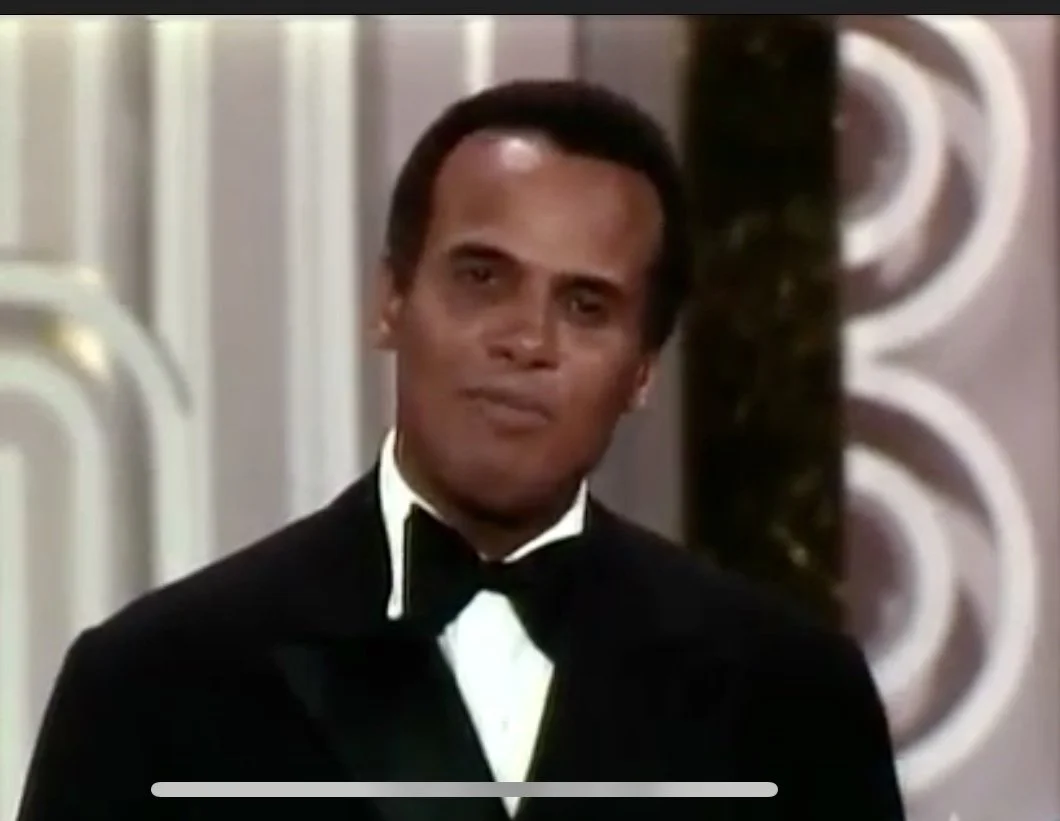
In living color on NBC!
Ryan O’Neal, George Segal, Ali McGraw and Robert Evans, Ginger Rogers and Jack Nicholson enter just in time for the overture, this time orchestrated by Quincy Jones. It’s a fun, uptempo affair, but you get distracted by the heavy neon on stage, illuminating the names of our best Best Picture nominees. We’re in the 70s, now, baby!
We also have a changing of the Academy president guard. This year, it’s Daniel Taradash. He’s fine, confident and informative, but it’s a tough draw to follow Gregory Peck in any public-speaking role. It doesn’t help that the speech is largely a stock affair, speaking to the importance of the Academy and the Oscars at large. There is an interesting side tour, though, letting us in on some behind-the-scenes footage that answers the question “how are they able to zoom in on the winners so quickly?” They hadn’t yet learned to just have five simultaneous shots ready to go, so instead the camera crew, director, and Quincy Jones had to just rehearse every possibility so they’d be prepared. Crazy display of craft.
Oh, and yes, it’s time for the 1971 Friends of Oscar!
Sally Kellerman
Jim Brown
Sarah Miles
Angie Dickinson
Burt Bacharach
Joan Blondell
John Marley
Genevieve Bujold
George Segal
Paula Prentiss
Richard Benjamin
Shirley Jones
Walter Matthau
Juliet Prowse
Glen Campbell
Merle Oberon
Gregory Peck
Jeanne Moreau
Ryan O’Neal
Eva Marie Saint
Steve McQueen
Goldie Hawn
Harry Belafonte
An extremely 1971 list, if you ask me, although not without its heavy hitters. They stick Belafonte with the “how the voting works” speech, which I think is probably a good idea. He ends the dry-as-hell spiel with a charming “get all that?”, which kicks off the envelope opening as well as anything else.
44th ACADEMY AWARDS
Date: April 10, 1972
Host: Helen Hayes, Alan King, Sammy Davis Jr., Jack Lemmon
Broadcast: NBC
Location: Dorothy Chandler Pavilion
Best Picture: THE FRENCH CONNECTION
“All these Friends of Oscar lists are great, Ryan, but where are all those crazy musical numbers old Oscar openings used to have?” you’re surely not asking.
Well, let me tell you: 1972 kicks off that era in earnest as, after the usual roundup of arriving stars, and a quick shout-out to sponsors like Shell, the show begins with Joel Grey singing a song called “Lights, Camera, Action!” In substance and sound, it sounds like the kind of cheesy, jaunty tune that someone writing a parody of an overly earnest Hollywood tribute might have come up with. As Grey moves across the stage, these little skits emerge that are meant to represent different eras of film: silents, the advent of sound, the Busby Berkeley musicals, Astaire-Rogers dance films, etc. All of these skits are performed really broadly, and would respectfully be called “cringe” by teenagers now. They’re probably right.
Here’s the thing: I kind of like it in its sincerity. Nowadays, Hollywood tributes itself with sweeping pretapes, with swelling orchestral music meant to highlight how important every single person who ever stepped on a set has Done Important Work. The goal now is to inspire, to elevate. In 1972, they honored themselves by doing a brightly colored revue number that paints in broad colors. Sure, all silents were dopey cowboys untying women from train tracks. Naturally, all musicals featured showgirls. We’re just having fun here, and I gotta love it.
Academy president Daniel Tarradash gives his speech, and Helen Hayes gets stuck with the “here’s how the voting works” dead weight and the energy all comes to a crashing halt. Oh, well. We’ll always have Joel Grey.
45th ACADEMY AWARDS
Date: March 27th, 1973
Host: Carol Burnett, Michael Caine, Charlton Heston, Rock Hudson
Broadcast: NBC
Location: Dorothy Chandler Pavilion
Best Picture: THE GODFATHER
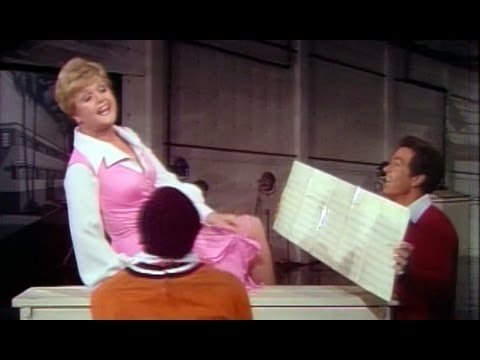
If you haven’t noticed, the Oscars at this point had been doing “hosts by committee”, which to me has always been the same thing as “no host”. None of the listed hosts above appear in the opening. That honor goes to Angela Lansbury, who performs our opening number “Make a Little Magic”. This number works along the same lines as last year’s “Lights, Camera, Action!” Instead of going through the history of Hollywood, however, this one fetes the different departments and disciplines that create “the magic” of film. Overall, I liked it about the same; it’s maybe less aggressively 70s camp, and Lansbury remains one of the most effortlessly watchable performers in the history of the medium. But I think Joel Grey’s number was more “fun”. Let’s call it a draw.
Here comes president Tarradash to temper the mood once again, although this time he actually works in a well-received joke about the impending length of the ceremony to come. But, who cares? What follows is one of the most well-remembered Oscars moments of the decade: Clint Eastwood being hurried onto the stage to fill in for Charlton Heston and read the voting rules.
If you’ve never seen this clip, it’s worth pulling up: Eastwood, one of the coolest motherfuckers in all of film, is so clearly out of his element, and he knows it: “They pick the guy who hasn't said but three lines in 12 movies to substitute”. He’s stumbling, and he begs the cue card guy to hurry up: “this isn’t my bag”. They cut to Burt Reynolds, who is howling. When Heston (who had a flat tire) finally arrives mid-spiel, the relief Eastwood experiences is more cathartic an ending than any movie I’ve seen in the last twenty years.
46th ACADEMY AWARDS
Date: April 2, 1974
Host: John Huston, Burt Reynolds, David Niven, Diana Ross
Broadcast: NBC
Location: Dorothy Chandler Pavilion
Best Picture: THE STING
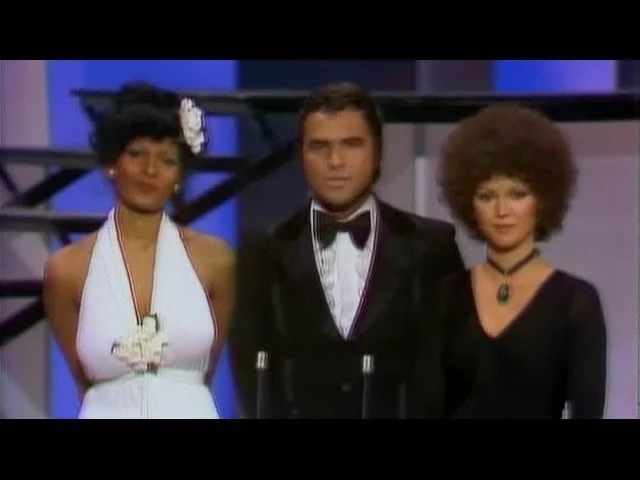
Walter Matthau, Groucho Marx, Jack Lemmon, Joel Grey, Peter Falk, Paul McCartney, William Friedkin, Diana Ross and (of course) Raquel Welch are among this year’s crowd to arrive. Then, we jump right into this year’s musical number, “Oscar”, performed by Liza Minelli. It won’t shock you that this year’s song is all about the golden man himself, Oscar. How everyone wants it, longs to have it.
This is probably my least favorite opening number so far, if only because it’s not really about the Oscar, so much as it is about Liza herself. If you don’t believe me, consider that a humongous section of this is a staged recreation of Liza sitting there waiting to hear the winners for the Best Actress of 1971 (where she lost) and 1973 (where she won). It’s filled with nervous patter, expressing all the anxieties that go through one’s mind as the envelope opens, which I imagine is supposed to be universal to this particular crowd (it gets a big reception). But, to me at home, it came off a little self-indulgent. Your mileage may vary.
Academy President Walter Mirisch does the standard “the Academy doesn’t just give out awards, it actually does a lot of good” spiel. Who cares? After him, it’s Burt Reynolds time, Yes, Mr. Reynolds gets the privilege of “pole position” amongst this year’s crop of celebrity hosts, getting to do the opening monologue. Two things strike me: one, hearing 70’s Burt talk makes you realize how weirdly accurate Norm Macdonald’s broad impression really was.
Two: Burt’s fucking great. It’s a very specific act: it’s a monologue brimming with comedic arrogance and juvenile confidence (at one point, he blows a raspberry to all the jealous, catty folk talking mad about the attendees at various cocktail parties), but it’s also got more than a serving of self-mockery, poking fun at his Hollywood Squares appearances and his lack of any nominations. I can see some people finding this fake machismo tedious, but I loved it. I genuinely think, had Reynolds not already been a major star, he could have just been the Oscars host for a while.
We end the opening proceedings with an extended montage of classic “Thank You” speeches from Oscars past, which I found to be a blast. One of the downsides of this specific project is that any major moments that happen outside the confines of the opening is ineligible for review. But, here, we can talk about the “hello, gorgeous” moment, or Sammy Davis Jr. accidentally being given the wrong envelope to read (his retort: “wait until the NAACP hears about this!”) All this while the Leslie Bricusse tune “Thank You Very Much” blares. It’s fun!
(Oh, and buried in the middle of all this is the “voting procedure” speech, this time provided to us by Timothy Bottoms. Not who I would have picked; they should have just let Burt burn through that as well.)
47th ACADEMY AWARDS
Date: April 8, 1975
Host: Bob Hope, Shirley MacLaine, Frank Sinatra
Broadcast: NBC
Location: Dorothy Chandler Pavilion
Best Picture: THE GODFATHER PART II
Fred Astaire, Diane Ladd, Gena Rowlands, John Wayne, Jack Nicholson, and Jack Lemmon are all amongst this year’s highlighted arrivals. Then, we’re implored to flash back to 1928, the dawn of the Academy’s creation. As the impetus behind the Oscars is explained, along with the who, what, where, whys, we transition into a montage of each Best Picture winner and associated poster. This is a lot of fun, but feels like something they should have held off from for a couple more years to do for the 50th anniversary. Why now?
Well, Academy president Walter Mirisch comes out, and it immediately becomes clear why. For whatever reason, Mirisch sounds really defensive about the Oscars (it might have something to do with Dustin Hoffman’s comments calling the awards “ugly” and “grotesque”, joining George C. Scott in outright boycotting the ceremony), stating that they don’t already get it right, and that audiences don’t always agree with their choices. He basically outright states, though, that the difference is when audiences disagree, they just stop showing up, while when the Academy disagrees, they dig deep and do what they can to get better. This is all probably true, but it feels weird to hear it as the centerpiece of the president’s opening remarks.
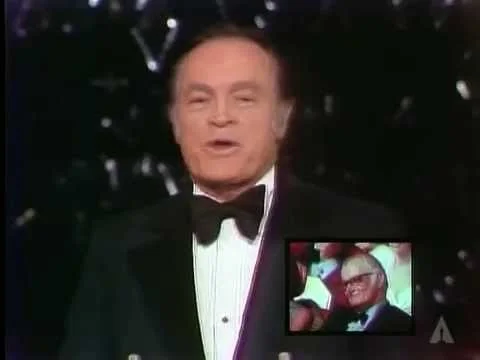
Then comes Bob Hope, who gets the opening monologue pole position, but not before a long montage of previous Bob Hope introductions. Again, it’s really fun, but it does feel like the ceremony is overcompensating for something, trying to remind us of better times before getting back to basics. Hope’s monologue is as good as always, with a few more edgy lines that brought down the house in real time, but may raise some eyebrows now (in regards to CHINATOWN’s 11 nominations: “6 from Column A, and 5 from Column B.”). He also gets in a great line lamenting how the campfire scene in BLAZING SADDLES got snubbed for an award for Best Sound. Strangely, the monologue has a second screen frequently overlaid on it, with reaction shots from the crowd. Again, why? To show that everyone is laughing? I can hear! The opening feels like it’s swinging with its back to the wall, and outside of the fact that New Hollywood was turning opinions on the ceremony, there’s no clear reason why. Odd opening all in all.
48th ACADEMY AWARDS
Date: March 29, 1976
Host: Goldie Hawn, Gene Kelly, Walter Matthau, George Segal, Robert Shaw
Broadcast: ABC
Location: Dorothy Chandler Pavilion
Best Picture: ONE FLEW OVER THE CUCKOO’S NEST

Charles Bronson, Elizabeth Taylor, Art Carney, Carol Kane, Jack Nicholson, Audrey Hepburn and O.J. Simpson are among the stars pouring into the venue. Then, in the blink of an eye, we jump to 72-year old Ray Bolger singing “Hollywood Honors Its Own”, a highly literal song: the opening lines contain, in part, “The 48th Annual Academy Awards/tonight on the 29th of March/At the Dorothy Chandler Pavilion/on the music center/in downtown Los Angeles/minutes away from Hollywood U.S.A.”. No lies detected!
This number is delightful, taking place outside the venue, which allows a lot of clever “arrival” jokes tied to key movies in Hollywood history, including a full-on Roman chariot, as well as Dorothy, the Tin Man and the Cowardly Lion (if only the Scarecrow had been there….alas). Oh, yes, and I guess it helps that early-70s Bolger still had it in spades, seeming decades younger as he leads the team of dancers from the streets of Hollywood into the main theatre, where he wraps the whole thing up with some soft-shoe. The whole epic number is seven minutes, and he’s barely breaking a sweat. Of all the opening numbers in this section of the project, this is easily my favorite.
Spirits are high. Even Academy president Walter Mirisch’s speech is a little livelier than usual. He ties his opening remarks to the history of America itself, noting that year’s bicentennial by stating that films have always depicted America ‘as it really is, and as it never was”, which I think is a very thoughtful quote. Then it’s time for some housekeeping by Walter Matthau, whose opening joke (he was supposed to do the opening number, but panicked, and the young upstart Bolger took his place) is great. Matthau takes the thankless role of explaining the voting rules with grace and humility (saying he’ll do it in his “customary casual charm”). It’s all still dry as toast, but acknowledging it and doing it with humor feels like the way to go. With Matthau, they seemed to have cracked the “Required by the FCC” code.
49th ACADEMY AWARDS
Date: March 28, 1977
Host: Warren Beatty, Ellen Burstyn, Jane Fonda, Richard Pryor
Broadcast: ABC
Location: Dorothy Chandler Pavilion
Best Picture: ROCKY
This year’s musical number is brought to us by Ann-Margret, who brings us “Magic Circle (It All Started in Someone’s Head)”. As far as these things go, it’s okay, and her star power adds a ton (it might have been unbearable without her), but it’s a little too self-serious, a little vague, and maybe just a touch too “interpretive dance”-esque for me. It’s not my cup of tea.
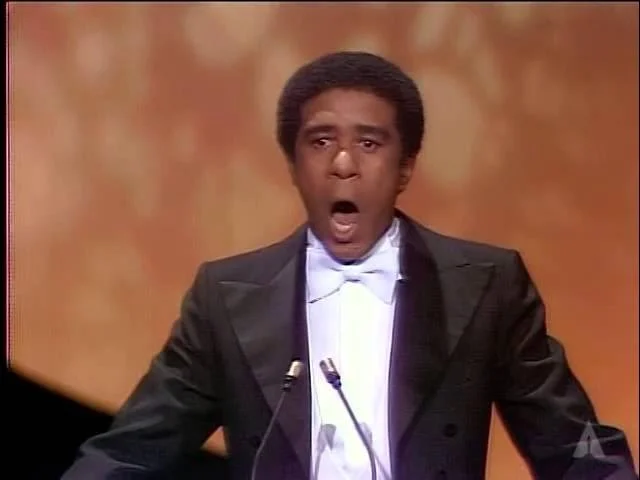
New Academy president Walter Koch takes it from there, noting this as the beginning of a year-long celebration of the 50th anniversary of the Academy. Then he kicks it over to Richard Pryor, who brings the fucking house down in the way that only he can. “I’m here to explain why black people will never be nominated for anything”, he opens, in case you’re under the impression #OscarsSoWhite is a new woke phenomenon or something. He then announces that all black people are quitting the industry, “then you see who’ll sing and dance for you; you’ll have to listen to Lawrence Welk forever”. It’s short, but it’s brilliant, and I think the only reason your conservative uncle doesn’t have a problem with it is because it happened in the past, and the past is less scary than the present and future.
Pryor kicks it to Chevy Chase, who has “voting process” duties this year. Look, Chevy is full Chevy-ing on this one, which means some people are going to find it interminable and some will find it captivating. Because it’s 1977, he opens with a pratfall, which brings the house down. He then leans heavily into his weird shticks, including launching into Spanish, doing strange asides, and making little asshole remarks, which makes the whole thing feel like it’s not so much “off the rails” so much as “never on”.
Look, here’s the thing about Chevy Chase: when he’s 100% on his game, he’s one of the four or five funniest people on the planet to me. The VACATION series, the one season of SNL he managed to get through, and the first couple years of Community all present him at his absolute peak, in my opinion. The problem is that he’s so rarely 100% on his game. Most of the time…well, he makes me really nervous, because I just don’t know what he’s going to do. This falls squarely in that camp. It’s just a little too unhinged for me to be comfortable, especially compared to Pryor’s precise routine. Just my two cents.
(In his defense, he does get out a good line when a giant plaster hand of King Kong handing him an envelope: “Ernest Borgnine, everybody!”)
50th ACADEMY AWARDS
Date: April 3, 1978
Host: Bob Hope
Broadcast: ABC
Location: Dorothy Chandler Pavilion
Best Picture: ANNIE HALL
We end this year’s review with the conclusion of the 50th anniversary celebration, and it’s an all-out, star-studded affair.
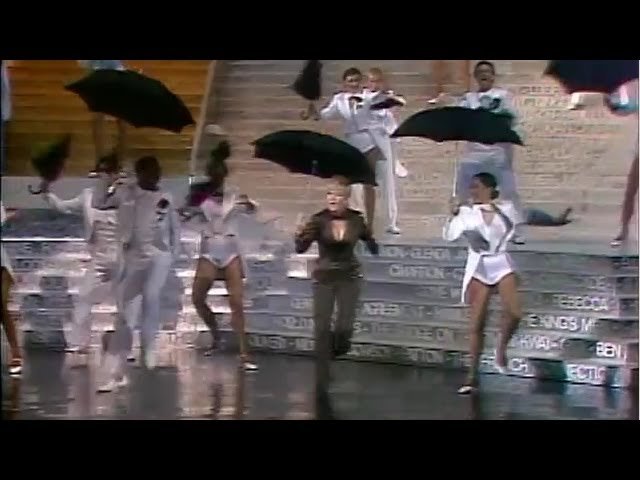
It kicks off, as all things ought, with Debbie Reynolds, who sings “Look How Far We’ve Come”, another number looking back through the history of Hollywood. Yes, it’s the kind of number the Oscars had done several times already in the 70s, but consider that they hadn’t yet done it with Debbie Reynolds, who is rivaled only by Ray Bolger in terms of just old-school watchability. As a result, it’s one of the best numbers yet.
Even more impressive is the onslaught of parading talent we get towards the numbers’ conclusion. Befitting the 50th anniversary, the broadcast pulled as many stars of past and present as they could to walk across that damn stage. I couldn’t even begin to list them all (the camera crew can barely display all the chyrons in time); instead, some highlights:
George Chakiris, Rita Moreno, Cliff Robertson, Marvin Hamlisch, Eva Marie Saint, Edith Head, George Kennedy, John Avlidsen, George Cukor, Louise Fletcher, Frank Capra, Joel Grey, Cloris Leachman…it just goes on like this.
Academy president Howard Koch saunters out, and even he seems a little overwhelmed, something he admits to right at the top. He defers his opening remarks to two fitting legends: Bette Davis and Gregory Peck. You’ll never believe it, but they also have to push through the “voting rules” spiel. At least they’re engaging.
Then, after Koch brings out the accounting team at PricewaterhouseCoopers, the conductor, and the director…by god, that’s Bob Hope’s music! Yes, as “Thanks For the Memory” blares, Hope comes out to give his 22nd and final monologue as Oscars host. Although he makes some topical quips as always (“Welcome to the real Star Wars”, a comparison between Ferd and Ginger doing the Continental and Marlon Brando doing the tango), he mostly sticks to the beautiful basics: he’ll never win an Oscar; the losers will pretend to be happy for the winners; look at all the minks in the crowd! What’s incredible is that, for what constitutes a 30-year old act, it still basically works. There are a couple of stone faces being cut to, but the crowd mostly loves it.
It’s kind of the perfect way for this era of the Oscars opening to conclude; playing the hits to a happy crowd. Hope would never host again, and I suspect the Academy knew some type of change was on the way. I’m just not sure they were aware of precisely how much they’d have to go through for the next quarter of a century. Because, yes, they would eventually land on a pretty solid rotation eventually.
But they’d have to get through the eighties to get there first.
But that’s a story for next year.

Remembering Them Well: Reviewing the Ten Best Picture Musicals!
Earlier this month, both WICKED and EMILIA PEREZ failed to become only the eleventh musical to ever win Best Picture. It made me wonder: what were the other ten like? Whether a rewatch or a first-time experience, I mostly had a good time with a surprisingly small pool of movies! WEST SIDE STORY! AN AMERICAN IN PARIS! THE SOUND OF MUSIC! Uh…THE GREAT ZIEGFELD! All these and more in this month’s article!
Hello! The intent of this article was to have it published on the same weekend the 2025 Oscars were broadcast which, as you may have noticed, was almost two weeks ago at this point. My schedule got thrown off by the recent passing of our oldest cat, Cooper. He was a good boy, and the source of a lot of other delays you never knew about, due to his penchant for lying on my chest the second after placing my laptop into position. This article is dedicated to him.
Anyway, I still had a lot of fun putting this together, so I couldn’t stand not publishing it anyway, even if it is a bit stale at this point. Let’s just pretend it’s March 2nd, 2025 or so!
There may be no genre so closely tied to “old Hollywood” than the musical. Who doesn’t marvel at the wonder of movies like SINGIN’ IN THE RAIN, THE BAND WAGON or BRIGADOON to this day? Give your jaw from dropping to the floor watching Fred Astaire and Ginger Rogers delight the audience? Even as the genre transitioned from the 60’s to the 70’s, movies like CABARET and ALL THAT JAZZ continued to move the format forward into the New Hollywood world. No style of film appeared to have more prestige than the musical.
It may surprise you, then, that not very many of them have been deemed Best Picture by the Motion Picture Academy. At least, it surprised me.
As of this writing, only 10 musicals have taken home the big prize at the Academy Awards. The hit rate isn’t as bad as it sounds; that’s 10 out of 97, so somewhere around 10% of the time, your Best Picture will be a musical. But there’s a ton of super-famous musicals that never made the cut. In fact, not one of the ones I listed in that opening paragraph ever managed to do it. If it weren’t for CHICAGO, there wouldn’t have been a musical Best Picture winner since Richard Nixon was in office. It’s been 23 years since CHICAGO’s big night.
For a while there, it sure seemed like that drought was going to be broken a couple of weeks ago. Both WICKED and EMILIA PEREZ had brief periods as strong Best Picture frontrunners (and “sort-of musical” A COMPLETE UNKNOWN always lurked as a dark horse contender). At the end of the day, Best Picture went to ANORA, ultimately the correct choice and no I am not taking questions on this just yet, thanks. So the musical will have to wait its turn for a little bit longer.
Until that time, I thought I’d take a look at the ten that did win Best Picture and see what they had to offer on either a first-time viewing or a rewatch, if they hold up, and if…well, if it seems like they deserve the legacy. So I did! Then I wrote about it!
THE BROADWAY MELODY (1929)
Directed by: Harry Beaumont
Starring: Charles King, Anita Page, Bessie Love
Written by: Sarah Y. Mason (continuity), Norman Houston, James Gleason (dialogue), Earl Baldwin (titles, uncredited)
Released: February 1, 1929 (premiere), June 12, 1929 (national)
Length: 101 minutes
Other Best Picture nominees: ALIBI, THE HOLLYWOOD REVUE OF 1929, IN OLD ARIZONA, THE PATRIOT
Also nominated for: Best Director (Beaumont), Best Actress (Love)
Synopsis: Hank and Queenie, two sisters who have developed a stage act, decide to try their chances in New York City, at the prodding of Hank’s boyfriend, songwriter Eddie. However, when Eddie begins to fall in love with Queenie, is the sister act in danger of collapsing under the bright lights?
It only took two years for a musical to snag an Academy Award for Best Picture. It also only took two years for the Academy to provide the Big Prize to a somewhat dubious recipient. Even in the old days, Best Pictures were really just best guesses!
THE BROADWAY MELODY is admittedly a tough watch nearly a hundred years later. There’s nothing really objectionable to its simple story of a pair of sisters and their attempts to make it on Broadway with their dual act (you’ll never believe it, but it turns out love and ambition stand in their way). The issue is that the movie is…well, creaky and boring, not exactly traits you look for when watching a musical. There are none of the spectacular dance sequences, or soaring ballads that you typically associate with the genre. The plot is also a little too tethered to reality to be as engaging as later musicals typically are; it’s one of those movies where everyone is actually singing songs in real life, as opposed to broadcasting their feelings to us with music.
Also, speaking of music, there just isn’t that much of it in BROADWAY MELODY! There are only seven in all, and they’re spread out unevenly. We come out hot, with the initial minutes introducing us to the title tune, which is alright! It gets sung again in the next scene, and then…things just begin to dry up after a while. We do get a couple of full-blown numbers by the end (the highlight being “Wedding of the Painted Doll”), but overall, it doesn’t really feel like a musical, where music and song is used to craft and shape a story.
There are some pieces of crucial context at play that may help raise THE BROADWAY MELODY’s standing: first, this is just kind of what musicals were like in the first few decades of the format, at least for the most part. THE BROADWAY MELODY resembles your average stage musical, and I suspect that’s largely by design. Most film musicals at the time intentionally emulated theatre aesthetics, leading to movies where stars like Maurice Chevalier and Jeannette MacDonald just turned to the camera and sang right at you. Ambition was soon to hit the genre; Busby Berkeley would choreograph his first film the year after THE BROADWAY MELODY, changing the film musical forever. But we weren’t there yet.
The second thing to keep in mind is that THE BROADWAY MELODY was incredibly popular in its day. It may be hard to believe in the here and now, but think about it. If you had never seen a musical at all before, wouldn’t this seem that much more magical? We’re spoiled now, having heard the works of Rodgers and Hammerstein, of Lerner and Lowe. We’ve seen the visual mastery of Gene Kelly and Vincente Minnelli. But, in 1929, just seeing audio synced up to video was a modern marvel. To that end, THE BROADWAY MELODY was the first sound film that received a national distribution. It’s exceedingly likely this was the first talkie most moviegoers at the time had ever seen.
Given all of that, it really isn’t all that surprising that it was the second ever Best Picture. It doesn't hurt that its competition was relatively weak, but even if it hadn’t been, THE BROADWAY MELODY probably would have stood a good chance. Hollywood likes glitz, and tends to reward it when the opportunity presents itself.
THE GREAT ZIEGFELD (1936)
Directed by: Robert Z. Leonard
Starring: William Powell, Myrna Loy, Luise Rainer
Written by: William Anthony McGuire
Released: March 22, 1936 (premiere), April 8, 1926 (national)
Length: 176 minutes
Other Best Picture nominees: ANTHONY ADVERSE, DODSWORTH, LIBELED LADY, MR. DEEDS GOES TO TOWN, ROMEO AND JULIET, SAN FRANCISCO, THE STORY OF LOUIS PASTEUR, A TALE OF TWO CITIES, THREE SMART GIRLS
Also won for: Best Actress (Rainer), Best Art Direction (Seymour Felix)
Also nominated for: Best Director (Leonard), Best Original Story (McGuire), Best Art Direction (Cedric Gibbons, Eddie Imazu, Edwin B. Willis), Best Film Editing (William S. Gray)
Synopsis: Florenz Ziegfeld is a sideshow barker in partnership with a carnival strongman. Ziegfeld chases greater ambitions after his brief success bottoms out, and he quickly becomes a successful Broadway producer off his dual eyes for talent and marketing gimmicks. We follow the highs and lows of his career and personal lives, with particular focus on his two marriages. We’re also provided a look at the numbers that made up his famous “Ziegfeld Follies” shows.
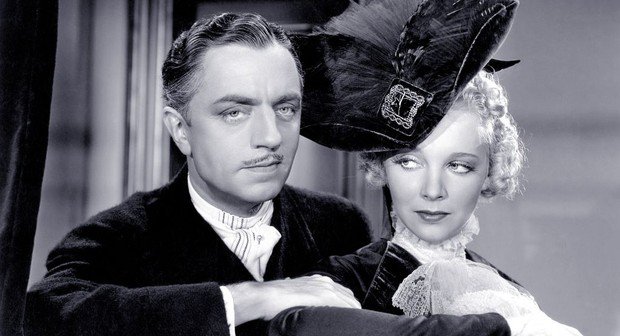
When you scroll through reviews of THE GREAT ZIEGFELD on Letterboxd (which is, as we all know, the only home for objective film criticism), you see a lot of common complaints: it’s boring, it’s overlong, the songs drag…you get the idea. It seems to be a typical example of an early Oscars whiff, the kind of flick that got rewarded in its day for its fawning portrayal of an early entertainment entrepreneur, only to be eventually buried by the sands of history. And THE GREAT ZIEGFELD undeniably has some early musical creakiness to it: like THE BROADWAY MELODY, the songs are basically all staged on a stage, under the context of “putting on a show”.
So it surprises me to say…I think I ultimately liked ZIEGFELD more than the average modern viewer. Maybe it’s just lowered expectations at play, but I really didn’t hate this. Yeah, three hours is too much, and it too often leans into cornball schmaltz in order to sell the drama; the ending scene of Ziegfeld croaking in his apartment* after reflecting on his various “Follies”, his last words being “more steps…higher, higher!” all feels like a parody of an old-timey biographical blockbuster. But ZIEGFELD generally maximizes the many talents at its disposal. Powell is actually quite engaging as the titular Ziegfeld; he doesn’t have to sing a note, but he does have the arguably tougher job of being the larger-than-life figure at the center of the entire 176-minute behemoth. His ease on camera with Myrna Loy (who plays second Ziegfeld wife Billie Burke) won’t surprise anyone who’s seen a THIN MAN flick, but the big showcase performance belongs to Luise Rainer, the first Ziegfeld wife, Anna Held. She pops in a way that nobody else in THE GREAT ZIEGFELD quite does, and the Academy seemed to agree; Rainer would become the first performer to win an acting Oscar for a musical.
*Oh, spoilers, I guess.
Also, the technique behind staging of big numbers has clearly improved tenfold since THE BROADWAY MELODY. There’s lots of great little numbers throughout, but the show stopping sequence (at least for me) is “A Pretty Girl Is Like a Melody”, a nearly ten-minute piece of staging where the camera keeps climbing up the ramp of this giant cake structure. As the structure turns, more performers are revealed: opera soloists, dancers in spats and coat tails, pianists banging on ivories built into the sides of staircases. It’s 100% excess from start to finish, and it’s great, at about as close as you can get to traveling back in time and watching The Ziegfeld Follies yourself. Or at least I presume. I wasn’t there.
The best thing THE GREAT ZIEGFELD does is deploying some major talents, playing themselves and showing off what they can do. The big two are Ray Bolger, who would soon be immortalized as the Scarecrow in THE WIZARD OF OZ, and radio/stage star Fannie Brice. Bolger is typically great in all his bouncy, flexible, expressive glory*, but Brice was the real revelation for me. I realized that I’m not sure I had ever been exposed to her before, not even in the Streisand iteration? She’s phenomenal, and so unlike anybody else that was working at the time (or, frankly, now). This in and of itself added a lot of value to my ZIEGFELD viewing experience.
*Although it should be mentioned he appears in blackface in one number, if that sort of thing is something you’d like to know ahead of time.
Still, it’s hard to defend it as the Best Picture of 1936, especially when MR. DEEDS GOES TO TOWN, one of maybe a handful of “classic Hollywood” movies the average person could even name, was on the board. Again, though, it’s important to note that this movie was a fairly big deal at the time, and was even a source of pride for MGM. And I don’t mean to keep pulling the “novelty” card but…big musical biographies were still kind of a novelty! Maybe William Powell should have considered hosting SNL and doing some Follies numbers if MGM wanted ZIEGFELD to stand the test of time. Alas.
GOING MY WAY (1944)

Directed by: Leo McCarey
Starring: Bing Crosby, Barry Fitzgerald, Frank McHugh, James Brown, Gene Lockhart, Jean Heather
Written by: Frank Butler, Frank Cavett
Released: May 3, 1944 (New York premiere), August 16, 1944 (Los Angeles premiere)
Length: 126 minutes
Other Best Picture nominees: DOUBLE INDEMNITY, GASLIGHT, SINCE YOU WENT AWAY, WILSON
Also won for: Best Directing (McCarey), Best Actor (Crosby), Best Supporting Actor (Fitzgerald), Best Writing (Screenplay) (Butler, Cavett, based on a story by McCarey), Best Writing (Original Motion Picture Story) (McCarey), Best Music (Song) (“Swingin’ on a Star”, music by James Van Heusen, lyrics by Johnny Burke)
Also nominated for: Best Actor (Fitzgerald; yep, he was nominated twice!), Best Cinematography - Black and White (Lionel Lindon), Best Film Editing (Leroy Stone)
Synopsis: St. Dominic’s Church, led by Father Fitzgibbon, appears to be on its last legs, and is on the verge of foreclosure. Only their new parish, Father O’Malley, can save them now. While he does so, he also befriends the young neighborhood toughs, and mentors a runaway, who can sing like an angel. Is there anything he can’t do?
The first time I saw GOING MY WAY, I felt a fair bit underwhelmed by it. Maybe it’s because it’s often portrayed as something it kind of isn’t, which is a musical that’s just perfect for Christmas time. And, yes, it’s sort of a musical, in the sense that the main character is a singing priest, and music is a presence throughout. However, just like the first two entries on this list, if you’re expecting a standard musical as we understand it now (big splashy opening song, impressive dance moves, 11:00 number), it’s going to fall short. It’s also not really a Christmas movie, even by my normally very loose standards. Yes, Father O’Malley sings “Silent Night”, but it’s so obviously only because they were trying to fit Crosby’s big defining hit into the movie. I think it’s Christmas when GOING MY WAY concludes, but that’s about it!
No, what GOING MY WAY is, is an optimistic feel-good post-war salve. It’s overly sweet, with its heart definitely on its sleeve. Crosby’s Father O’Malley is one of those saintly figures, a guy who always knows just what to say or what to do in order to soothe any given conflict. This is actually possibly why I still don’t fully jive with the film, even on a rewatch: our main character is too on top of things. Although there’s a lot at stake within the film (the dignity of Father Fitzgibbons, the souls of kids like Tony Scaponi and Carol James, the fate of the church itself), you’re never really worried about the outcome, since O’Malley never misses a beat. There are plenty of movies from this era with saccharine-sweet mentalities; hell, one of my favorite films of all time is IT’S A WONDERFUL LIFE. But, there, George Bailey is a deeply conflicted man, who constantly struggles to do the right thing (even though he always does). Not Chuck O’Malley; he’ll fix it with a song and a wink.
That all said, I enjoyed GOING MY WAY a great deal more this go-around, if only because I’m able to accept it for what it actually is, as opposed to what it usually gets advertised as. I think the character of Fitzgibbons is especially strong, and played beautifully by Barry Fitzgerald. The theme of trying to evaluate when your time has passed, and when it’s appropriate to hold on to old ways, is one that gets only more potent as one goes through life. Also, as straight-forward as O’Malley is, Crosby plays him so effortlessly, he practically floats through the movie. It’s also worth noting that GOING MY WAY launched a massively popular song, “Swingin’ on a Star”, which seems extraordinarily relevant for a “musical” film.
At the end of the day, I still prefer this movie’s follow-up, THE BELLS OF ST. MARY. But maybe I didn’t appreciate the original enough the first time around. Yeah, it did end up beating DOUBLE INDEMNITY for Best Picture, the clearly superior film. But, given the state of the world at that time, was there anything really wrong with believing a priest (and a cool one at that! O’Malley also likes baseball and uptempo piano playing. Woah!) could save the world just by being nice?
AN AMERICAN IN PARIS (1951)

Directed by: Vincente Minelli
Starring: Gene Kelly, Lesli Caron, Oscar Levant, Georges Guetary, Nina Foch
Written by: Alan Jay Lerner
Released: October 4, 1951 (New York), November 11, 1951 (nation-wide)
Length: 113 minutes
Other Best Picture nominees: DECISION BEFORE DAWN, A PLACE IN THE SUN, QUO VADIS, A STREETCAR NAMED DESIRE
Also won for: Best Writing (Story and Screenplay) (Lerner), Best Music (Scoring of a Musical Picture) (Johnny Green, Saul Chaplin), Best Art Direction (Color) (Cedric Gibbons and E. Preston Ames [Art Direction], Edwin B. Willis and F. Keogh Gleason [Set Decoration]), Best Cinematography (Color) (Alfred Gilks, Ballet Photography by John Alton), Best Costume Design (Color) (Orry-Kelly, Waler Plunkett, Irene Sharaff)
Also nominated for: Best Director (Minelli), Best Film Editing (Adrienne Fazan)
Synopsis: Struggling artist, and WWII veteran, Jerry Mulligan has settled in Paris with his friends, former prodigy concert pianist Adam Cook, and French singing sensation Henri Baurel. Trouble emerges when Jerry falls in love with Henri’s girlfriend, Lise Bouvier. Who will she choose? And will she choose in time, or will Jerry end up going with his suitor, the beautiful Milo Roberts?
Now we’re talking.
AN AMERICAN IN PARIS is easily the first musical film in this list to conduct itself as a musical (even if it’s secretly a dance movie). Songs aplenty! Beautiful colors! High drama! Fun characters! A romance in the middle of it all! And at the movie’s center is Gene Kelly, who was likely at his absolute peak as a Hollywood legend in 1951. Needless to say, he’s spectacular, his ease moving in front of a camera completely unrivaled by perhaps anybody who’s done so before and since. It struck me watching AMERICAN IN PARIS how spoiled audiences at the time must have been (or, looked at another way, how starved we currently are now). He was a one-of-one, with no current contemporary.
But the rest of the (surprisingly small) cast is just as great! Levant is perfect as the wry piano prodigy Adam, and both Guetary and Foch play their roles as respective romantic third wheels just right. As for Leslie Caron, it is absolutely possible that her opening bit, an introductory series of dances showing off the different sides of Lise’s personality, is one of the finest “first scenes” of a performer’s careers. There may be others, but, you know…keep ‘em to yourself.
It’s all the more remarkable that AN AMERICAN IN PARIS set the template for MGM dominance when you consider how odd its format really is. I always forget, for instance, that it’s technically a Gershwin jukebox musical (decades before that term was ever really introduced). It doesn’t really hurt the movie in any significant way*, but the usage of pre-existing American standards clears the way for Kelly to focus on what really made the film special: its all-in approach to dance, culminating in a still-stunning nearly-twenty minute ballet finale that probably did as much to popularize the art form as anything else. Kelly’s dancing is the star of the show here, as well it should be.
*And it seems relevant that it was all put together by a guy named Alan Jay Lerner, a name you’ll be seeing a lot of before this article is done.
As you can see from the list above, AN AMERICAN IN PARIS dominated the Academy Awards that year against some pretty stiff competition. Its win over STREETCAR may irk many (although it feels almost impossible to directly compare such completely opposite pieces of art), but it’s hard to balk at its victories for too long. AN AMERICAN IN PARIS is ambitious, charming, expertly crafted…the exact kind of movie musical that should be feted. If they were still being made, I’d feel certain they would be feted in the here and now.
GIGI (1958)

Directed by: Vincente Minelli
Starring: Leslie Caron, Maurice Chevalier, Louis Jordan, Hermione Gingold, Eva Gabor
Written by: Alan Jay Lerner
Released: May 15, 1958
Length: 115 minutes
Other Best Picture nominees: AUNTIE MAME, CAT ON A HOT TIN ROOF, THE DEFIANT ONES, SEPARATE TABLES
Also won for: Best Directing (Minelli), Best Writing (Screenplay - Based on Material from Another Medium) (Lerner, from the novella by Colette), Best Music (Scoring of a Musical Picture) (Andre Previn), Best Music (Song) (“Gigi”: Music by Frederick Lowe, Lyrics by Lerner), Best Art Direction (Art Direction: William A. Horning and E. Preston Ames; Set Decoration: Henry Grace and F. Keogh Gleason), Best Costume Design (Cecil Beaton), Best Cinematography (Color) (Joseph Ruttenberg), Best Film Editing (Adrienne Fazan)
Synopsis: Gaston Lachaille has become bored with his upper-crust existence, to the bewilderment of his uncle, the Honore Lachaille. In an attempt to liven things up, the Honore sets Gaston up with a courtesan, Gigi, who must first be taught how to be a lady. Then, something unexpected happens: Gaston and Gigi genuinely fall in love.
Another Vincente Minelli joint!
It’s been long enough that it’s extremely easy (even understandable) to forget now, but GIGI had accomplished an Oscars feat only matched or surpassed by two others in the sixty-plus years since. It was nominated for nine Oscars, and managed to win all nine of them, from less glitzy ones (Best Art Direction) to two of the biggest (Best Director and Best Picture). THE LAST EMPEROR would do the same in 1988, and THE LORD OF THE RINGS: THE RETURN OF THE KING would do them both two better, winning all 11 of a possible 11 in 2004. An interesting list, and hallowed company.
Unfortunately, in the modern day, GIGI tends to get painted with a broad brush, with viewers clocking the stated age difference between the title character and her eventual suitor, Gaston Lachaille, and chalking this up as so much pedophilic smut, the type that all old movies must have been actively about. I mean, look, there’s Maurice Chevalier right at the top singing about how he thanks heaven for little girls! He wants to fuck young women, and brags about how marriage is for suckers! Just what was everybody thinking back then???
This surface level analysis misses, of course, the fact that Chevalier’s little prayer eventually gets rejected, with Gaston realizing the Honore represents what he could easily become. Yeah, there’s a lot to unpack about the ultimate solution being to marry Gigi; the difference between having a teen courtesan and a teen bride is probably socially non-existent in 2025. But GIGI isn’t set in 2025, it’s set in 1900 France, where high society customs and expectations were sadly different. Besides, the thematic significance of Gaston choosing to wed instead of jumping from girl to girl until the grave should be obvious. It’s what the whole movie is about. This all felt fairly apparent, at least to me.
Anyway. In 1958, the bigger slight against GIGI was its evident similarity to MY FAIR LADY, the more popular (and, admittedly, superior) Lerner & Loewe show about a girl being groomed to become prim and proper until love intervenes. In the years after, the two shows would keep entangling themselves; Leslie Caron replaced Audrey Hepburn in the lead role of GIGI as the show jumped from stage to screen, which somewhat mirrors Hepburn famously replacing Julie Andrews in the film version of MY FAIR LADY. All you needed was Andrews replacing Caron in, like, CAMELOT or something and the circle would have been complete.
Speaking of Caron, she’s the other thing people knock GIGI for. I see a lot of people knock her as boring, or even actively holding the movie back. And, look, it’s hard not to imagine the universe where a just-to-about-to-enter-her-absolute-career-prime Hepburn didn’t turn this down; she undoubtedly would have made this an inarguable classic. But Caron isn’t boring! I do think I prefer her work in AN AMERICAN IN PARIS, but I still found her to be quite fun in GIGI, a good counterpoint to the ennui-laden performance by Louis Jordan. I submit the possibility that her performance is perceived less than others due to the script’s ultimate focus on Gaston’s struggle against the purposelessness of French elitism. That focus made sense to me, but could be jarring to expect a movie called GIGI to ultimately highlight…well, Gigi.
Regardless, I further submit that, for the first time in this project, the star of the show is actually the score, more specifically, the lyrics. Every song is just drenched in clever lyric after clever lyric, satisfying rhyme after satisfying rhyme. Chevalier* is heavily featured in my two favorites: an early duet with Jordan (“It’s a Bore”) where the Honore and Gaston debate just how exciting life really is:
*By the way, it delighted me to see a late-career Chevalier performance that begins with him singing directly to the camera, as if nothing had changed in the thirty-plus years since his filmography began.
“Don't you marvel at the power/of the mighty Eiffel Tower/knowing thеre it will remain evеrmore?/Climbing up to the sky/over ninety stories high?”
“How many stories?”
“Ninety!”
“How many yesterday?”
“Ninety!”
“And tomorrow?”
“Ninety!”
“It's a bore.”
The other, a late-show duet between Chevalier and Hermoine Gilgold, provides two memories of a date that occurred decades before:
“We met at 9”
“We met at 8”
“I was on time”
“No, you were late”
“Ah yes, I remember it well
We dined with friends”
“We dined alone”
“A tenor sang”
“A baritone”
“Ah yes, I remember it well”
It’s fun! The ear loves to hear it! The Academy clearly agreed, leading the way for GIGI’s then-unprecedented dominance, something MGM was clearly proud of. Allegedly, the day after the Oscars, all phone calls to the studio were answered with “Hello, M-GIGI-M!” This was later mirrored a couple of years ago when calls to the studio behind the 2022 Best Oscar champion were answered with, “Hello, A-EVERYTHING EVERYWHERE ALL AT ONCE-24!”
WEST SIDE STORY (1961)

Directed by: Robert Wise and Jerome Robbins
Starring: Natalie Wood, Richard Beymer, George Chakiris, Rita Moreno, Russ Tamblyn
Written by: Ernest Lehman
Released: October 18, 1951
Length: 152 minutes
Other Best Picture nominees: FANNY, THE GUNS OF NAVARONE, THE HUSTLER, JUDGMENT AT NUREMBERG
Also won for: Best Director (Wise & Robbins), Best Actor in a Supporting Role (Chakiris), Best Actress in a Supporting Role (Moreno), Best Music (Scoring of a Motion Picture) (Saul Chaplin, Johnny Green, Sid Ramin, Irwin Kostal), Best Sound (Gordon E. Sawyer, Fred Hynes), Best Art Direction (Color) (Art Direction - Boris Leven; Set Decoration - Victor A. Gangelin), Best Cinematography (Color) (Daniel L. Fapp), Best Costume Design (Color) (Irene Sharaff), Best Film Editing (Thomas Stanford)
Also nominated for: Best Writing (Story and Screenplay - Based on Material From Another Medium) (Lehman)
Synopsis: If you’ve ever seen Romeo & Juliet, you basically have the idea. Just replace the Montagues and the Capulets with the Sharks and the Jets. Oh, you haven’t seen Romeo & Juliet? Oh, okay. Two star-crossed lovers from rival New York street gangs must find a way to bring their two groups together–or pay the ultimate price. You really should see Romeo & Juliet, by the way.
A Robert Wise (co) joint!
It’s very possible that WEST SIDE STORY is my favorite movie. That possibility is, in part, due to the fact that West Side Story is my favorite musical.
Even if the original show weren’t a tremendous work of art, I would still love it due to its association with a very specific summer in my life. In 2005, the year before I graduated high school, I took on an internship with the local repertory musical theater. It wasn’t to perform; they saved those slots for LA and NY actors who were magically always available in the middle of the summer. No, it was to do unpaid labor*, either in the warehouse, or in the costuming department or, if you were really really lucky, as a part of the stage management team. This was a cush gig because a) the woman who ran it was super nice, b) you didn’t have to lift heavy things in 100-degree heat and c) you frequently got to know the actors pretty well.
*The joke would eventually be on them; two summers later, I went back and did the exact same program, but this time for $180 a week! That constituted the vast majority of the money I ever made in show business.
All this to say, I was able to help stage-manage the week they did West Side Story. Not only did this serve as my introduction to the Bernstein-Sondheim collaboration, I got to immerse myself in the production for seven days straight (plus a week of rehearsals prior to). Surround myself with the score. And Jesus, what a score. One of the all-time “oops, all legends” batch of music and lyrics, it’s possible that every single song in West Side Story has been immortalized in the general zeitgeist one way or another. “Maria.” “I Feel Pretty.” “Tonight.” You’d have to be actively dodging popular culture to not know at least one line or melody from any of those. Hell, even the mambo was used in a GAP commercial back when we were kids. The orchestrations are gorgeous, the lyrics are witty, the voices are full of character…it’s a perfect show.
Here’s the thing, though. The 1961 WEST SIDE STORY movie actually improves the stage production. By a significant amount.
For one, it makes one of the all-time great song swaps in the history of film adaptation. The jokey and light “Gee, Officer Krupke”, initially serving to cover a costume and set change in the stage version, gets moved to Act 1, where it can be the amusing commentary on the criminal justice system that it is, instead of an awkward comedy number deep into Act II, when shit has already gone down. In its place goes “Cool”, the best number in the show (and the greatest scene in the film), which now becomes this simmering pot, ready to explode. It’s genuinely difficult to go back to the stage version’s song order, even if it has a specific function.
For second…there’s a legitimate argument to be made that WEST SIDE STORY is better on color celluloid than the stage.. My wife and I were fortunate enough to see the movie on a big screen last summer, and just having the ability to see stuff like the mambo dance-off (the greatest scene in the film) and the subsequent Tony-Maria ballet on actual film..it’s enough to make you cry. Every single color on a given character’s costume, or on the wall of a given set, on down to the intermission and overture cards…made to evoke some sort of emotional response from you. And it does. That’s the movies, baby!
Lastly, WEST SIDE STORY 1961 gives us Rita Moreno, putting in a performance that resulted in maybe the most earned Oscar in the history of the Academy. She’s all over this movie; I don’t know if she literally has the most screen-time, but it actively feels like it. Her single greatest achievement is almost certainly the “America” sequence (the greatest scene in the film). It’s a terribly difficult number, with choreography and notes that frequently live on the off beats. She never slips, never reveals to us the complications of the scene. She’s just perfect. This isn’t to take away from the tremendous talent surrounding her; George Chakiris is equally effortless, as are the cadre of dancers and characters sharing the scene. But Moreno just has that…quality, that god-given thing. She dominates “America”, and does the same in every scene before or since. If there’s a better Best Supporting Actress winner out there, I’d love to hear it.
So it goes with the movie itself. WEST SIDE STORY deservedly triumphed over fairly stiff competition at that year’s Oscars (mostly at the expense of THE HUSTLER, another personal favorite). I’ve only seen about half of the almost one hundred Best Picture winners, but there are only a few I would rank above WEST SIDE STORY (off the top of my head, only LAWRENCE OF ARABIA and THE BRIDGE OVER THE RIVER KWAI come to mind). Yes, I’m severely biased, but…when you’re a Jet, you’re a Jet all the way.
MY FAIR LADY (1964)

Directed by: George Cukor
Starring: Audrey Hepburn, Rex Harrison, Stanley Holloway, Wilfred Hyde-White, Jeremy Brett
Written by: Alan Jay Lerner
Released: October 21, 1964
Length: 173 minutes
Other Best Picture nominees: BECKET, DR. STRANGELOVE, OR: HOW I LEARNED TO STOP WORRYING AND LOVE THE BOMB, MARY POPPINS, ZORBA THE GREEK
Also won for: Best Directing (Cukor), Best Actor (Harrison), Best Music (Scoring of Music - Adaptation or Treatment) (Andre Previn), Best Sound (George Groves), Best Art Direction (Color) (Art Direction - Gene Allen and Cecil Beaton; Set Decoration - George James Hopkins), Best Cinematography (Color) (Harry Stradling), Best Costume Design (Color) (Beaton)
Also nominated for: Best Actor in a Supporting Role (Holloway), Best Actress in a Supporting Role (Gladys Cooper), Best Writing (Screenplay - Based on Material From Another Medium) (Lerner, from his My Fair Lady and George Bernard Shaw’s Pygmalion), Best Film Editing (William Ziegler)
Synopsis: Professor Henry Higgins makes a bet: that he can turn poor, crass flower vendor Eliza Doolittle into a classy socialite through the power of proper English. Will he succeed? And what happens if he does?
My Fair Lady walks an incredibly fine line.
I had forgotten how abrasive its main characters can be. Henry Higgins is an obvious buffoon, a man who uses his clear intellect to craft another human being into someone he considers “proper” and “correct”, mostly just to see if he can. Eliza Doolittle is a nice girl (just ask her), but she spends the entire first half speaking in a sharp, crass Cockney accent, the kind that all bad actors default to when cast in the local Dickens fair. Her father, Alfred, is a proud deadbeat, a guy who is only too happy to go to his broke daughter, hat in hand, but makes it clear she’s not to receive any handouts from him. As for Colonel Pickering, it’s not even clear what he does around here, besides hype up his boy Higgins. This is all done with clear intent, but without the exact right cast, My Fair Lady could be unwatchable.
When it comes to the 1964 film adaptation, though, all four characters are charming at worst, and totally captivating at best. This is because…well, they have the exact right cast. It helps that two of the four are played by their originating actors (Harrison as Higgins, Holloway as Alfred), and Hyde-White is able to hold his own as Pickering. As for the titular fair lady, despite all the controversy that stemmed from Hepburn getting cast over originating actor Julie Andrews, as well as the fact that Marni Nixon did the singing (both things looming large enough to keep her from being nominated at that year’s Oscars)..I think Hepburn’s pretty fucking great.
It’s probably largely self-evident, but to be clear: Eliza Doolittle is a fucking tough role, maybe an impossible one. You have to be able to be two extremes, both a rough street urchin and the classiest woman to ever exist. Hepburn pulls off both quite comfortably! The “classy” part shouldn’t be surprising to anybody who’s ever seen a picture of Audrey Hepburn, but I think people sleep on the “Street urchin” aspect of her performance. Again, Eliza spends the first hour of this screaming and not knowing what a fucking bathtub is. If you’re not really careful, it can be easy to grow tired of Eliza really fast*. But you can’t ever really get annoyed with Hepburn. It’s easier to focus on Eliza’s hopes and desires, and why she would put up with being crafted by a jerk like Higgins (who, again, is so delightfully played by Rex Harrison that you kind of revel in how up his own ass he is).
*I suspect many who have sat through poor community theatre performances of My Fair Lady have.
I am certain that Andrews was the ideal person for Eliza, and if we were in the universe where MY FAIR LADY was meant to be her screen debut, she would have been dead-on perfect. They also probably wouldn’t have had to dub her voice, either. But, we’re not, and they did. Neither the casting nor the dubbing are really Hepburn’s fault, either. I have no idea how many people are really still fired up about this sixty years later, but it’s a controversy that still seems to hang over the movie to this day, and it’s a shame.
A scan of the 1964 Best Picture nominees reveals a brutal murderer’s row; between this, DR. STRANGELOVE, and MARY POPPINS alone, all masterpieces and cultural reference points in entirely different ways, it’s difficult to say what the worthy Best Picture winner truly is. But MY FAIR LADY remains a thrilling watch, if only to remind yourself, “oh yeah, this is where that comes from”. Much like WEST SIDE, I promise you that if you think you’re unfamiliar with anything in MY FAIR LADY, you are very likely mistaken. If nothing else, the fact that Seth MacFarlane heavily patterned the voice for Stewie after Harrison’s famous speak-singing style has to count for something.
THE SOUND OF MUSIC (1965)

Directed by: Robert Wise
Starring: Julie Andrews, Christopher Plummer, Richard Haydn, Charmaine Carr, Peggy Wood, Elanor Parker
Written by: Ernest Lehman
Released: March 2, 1965
Length: 174 minutes
Other Best Picture nominees: DARLING, DOCTOR ZHIVAGO, SHIP OF FOOLS, A THOUSAND CLOWNS
Also won for: Best Director (Wise), Best Music (Scoring of Music - Adaptation or Treatment) (Irwin Kostal), Best Sound (James Corcoran and Fred Hynes), Best Film Editing (William H. Reynolds)
Also nominated for: Best Actress (Andrews), Best Actress in a Supporting Role (Wood), Best Art Direction (Color) (Art Direction - Boris Leven; Set Decoration - Walter M. Scott and Ruby Levitt), Best Cinematography (Color) (Ted. D. McCord), Best Costume Design (Color) (Dorothy Jeakins)
Synopsis: Offbeat nun-to-be Maria has been made the governess of the house of Captain von Trapp, a widower left to raise seven children. Through the power of song, confidence, and joy, Maria is able to melt the icy heart of Captain von Trapp and establish the family as a singing novelty act. But, the von Trapps have a bigger issue to deal with: the rise of Nazism in Austria.
Another Robert Wise joint!
THE SOUND OF MUSIC is an intimidating movie to speak on. It’s such a ubiquitous part of musical history that it’s legitimately hard to imagine a time when it didn’t exist. It’s been a staple in American households since before I was born, and has managed to become an uncommon holiday tradition for many, despite not being a holiday movie really at all. What is there to say about a movie you’ve seen countless times?
Well, you’d have to ask that question to somebody else, because I had never actually seen THE SOUND OF MUSIC.
It’s true! I think I had seen the stage adaptation, and I was obviously familiar with the Rodgers & Hammerstein score, so baked into everyday life that it is (they play “My Favorite Things” countless times on the radio around Christmas despite, again, not being a Christmas song!). I even hate-watched the Carrie Underwood-starring live broadcast on NBC, years before it was cool to turn your nose at Carrie Underwood. But I never actually sat down and watched the 1965 original.
And, look, it largely speaks for itself! It serves simultaneously as a star vehicle for Andrews (coming off a Best Actress win for MARY POPPINS the year before), as well as a statement on the unacceptability of facism*. In a lot of ways, it’s the perfect family film: high-class entertainment from perhaps the most beloved star at the time of its making, with a sobering lesson baked into its narrative for both the kids and adults gathered around the movie screen or television set.
*A soft reminder for you all to never let anybody tell you movies never used to be political.
As mentioned, the score is maybe the most well-known of its kind, the song roster chock full of melodies recognizable to just about anybody even vaguely paying attention to anything around them at any point. BUT! Even if you had never heard “How Do You Solve a Problem Like Maria” or “The Lonely Goatherd” or “Edelweiss” or “My Favorite Things” or or or or…I think the songs would still have a tremendous impact, considering how steeped in that famous R&H brand of character focus, where every line, every syllable communicates what you need to know about the movie’s central figures (hell, has there been a better introduction to a lead than Maria’s opening title song belt?).
Another point to THE SOUND OF MUSIC’s legacy: it’s the uncommon three-hour movie that feels like it completely flies by. Every scene is intentional, with no real fat one could possibly trim, if you were even compelled to. This, along with a multitude of other factors, is almost certainly why it walked away with five Academy Awards (neck and neck with fellow Best Picture nominee DOCTOR ZHIVAGO). It’s only a gut feeling, but THE SOUND OF MUSIC certainly feels like easily the movie most recognizable to the average person. And, again, it’s about how Nazis are scum! What else could you possibly want?
OLIVER! (1968)

Directed by: Carol Reed
Starring: Ron Moody, Oliver Reed, Mark Lester, Jack Wild, Shani Wallis
Written by: Vernon Harris
Released: September 26, 1968
Length: 153 minutes
Other Best Picture nominees: FUNNY GIRL, THE LION IN WINTER, RACHEL RACHEL, ROMEO & JULIET
Also won for: Best Directing (C. Reed), Best Music (Score of a Musical Picture - Original or Adaptation) (Johnny Green), Best Sound (Shepperton Studio Sound Dept), Best Art Direction (Art Direction - John Box and Terence Marsh; Set Decoration - Vernon Dixon and Ken Muggleston)
Also nominated for: Best Actor (Moody), Best Actor in a Supporting Role (Wild), Best Writing (Screenplay - Based on Material from Another Medium) (Harris, based off the Lionel Bart play and Charles Dickens’ Oliver Twist), Best Costume Design (Phyllis Dalton), Best Film Editing (Ralph Kemplen)
Synopsis: If you’ve ever read Oliver Twist, you know the story of OLIVER! You haven’t? Damn, okay. A boy escapes his cruel orphan and finds himself in a gang of pickpockets in the middle of London. He must keep his distance from the brutal criminal Bill Sikes if he has any chance of finding himself a decent, warm home. Hey, that reminds me, have you seen Romeo & Juliet yet?
OLIVER! has been handed somewhat of a raw deal in terms of legacy.
As you can see from the above, the 1968 Dickens musical adaptation did very well for itself at the Academy Awards. However, by the end of the 1960s, the movie musical’s popularity peak had already come and gone, and it wasn’t going to be too long before the New Hollywood movement of the 1970’s would begin thriving. By OLIVER!’s release, movies like BONNIE AND CLYDE and THE GRADUATE had already started making the old studio system look creaky. Thus, people have the habit of looking back at OLIVER!’s great Oscar run as the last gasp of an old guard, trying desperately to cling to the past.
On the whole, this isn’t entirely inaccurate; the Academy has never been quick to embrace popular trends. And when you look at the nominees that year and see seminal works like 2001: A SPACE ODYSSEY and BULLITT only sparingly represented, it’s clear that there was a willful ignorance as to the tide change right around the corner. But I do think this is an uncharitable way to look at OLIVER!, as it paints it as a tired and old-hat, maybe even actively bad, movie.
It’s not! It’s old-fashioned, admittedly, and the British-soaked score and book don’t exactly reinvent the wheel, the way previous Best Picture musical winners like AN AMERICAN IN PARIS and WEST SIDE STORY had. But there’s such confidence embedded in its presentation, likely stemming from director Carol Reed, who was nearing the end of his decades-long career (he would only release two more movies after this). There’s also something to be said for taking British pros and letting them go nuts in a family movie.
As it happens, OLIVER! highlights at least two British pros. The first is the great Oliver Reed*, who gets to sink his teeth into villain Bill Sikes, an antagonist who just gets to be bad the whole time, without any pesky “redemption arc” to speak of. Reed would go on to make a whole career out of bringing 100% to every role he ever played, no matter the type of movie; he was just as comfortable being evil in a musical as he was in a Ken Russell or David Cronenberg film. No surprise with Sikes: Reed makes him slightly terrifying without ever turning him charmless.
*Do you think it was confusing for a man named Oliver Reed to be in this movie? If you were him, and someone referred to Mr. Reed, you’d never know if they meant you or the director, Carol. Alas, referring to “Oliver” wouldn’t do you any good, either, because you can’t rule out being confused for the film’s titular moppet. How embarrassing!
However, the real joyous ham, and MVP, of OLIVER! is Ron Moody, who makes a whole meal out of Fagin. You can feel the movie realizing in real time just how much more compelling Fagin is than anybody else; he and the Artful Dodger basically get the film’s closing beat. He just owns the screen in every scene, as he dances around during “Pick a Pocket or Two” and quite artfully sells the comic number “Reviewing the Situation”, two songs that could threaten to be completely obnoxious if not performed by somebody who knows what they’re doing. Fagin would arguably be Moody’s defining role, and one he would revisit on the stage about fifteen years later.
There are other highlights: Shani Wallis gets the most well-known number from the show (”As Long As He Needs Me”), and the choreography for the big “welcome to the city” number (“Consider Yourself”) is joyful in its building excess, reminding me at times of the big Ziegfeld spectacles of decades prior. One character that kind of gets lost in everything is poor Oliver himself. It’s not that Mark Lester isn’t good, it’s just that seemingly every other character is larger than life, and gets to be played as such. Oliver is left to be the “normal” kid at the center of it all, which can be a thankless task.
Still, after all that, it’s impossible to look at OLIVER! and its place in Oscars history and not see it as a last hurrah. The next Best Picture would be MIDNIGHT COWBOY, a defining beginning to the next chapter of Hollywood history. Save for one final film, no other musical has won the big prize since 1968. But, maybe it deserves to be looked at as the type of old-school entertainment that could still be appreciated in its moment, even as the entire structure of how to make a movie was changing around it.
CHICAGO (2002)

Directed by: Rob Marshall
Starring: Renee Zellweger, Catherine Zeta-Jones, Richard Gere, Queen Latifah, John C. Reilly
Written by: Bill Condon
Released: December 27, 2002
Length: 113 minutes
Other Best Picture nominees: GANGS OF NEW YORK, THE HOURS, THE LORD OF THE RINGS: THE TWO TOWERS, THE PIANIST
Also won for: Best Actress in a Supporting Role (Zeta-Jones), Best Sound (Michael Minkler, Dominick Tavella, David Lee), Best Art Direction (Art Direction - John Myhre; Set Decoration - Gordon Sim), Best Costume Design (Colleen Atwood), Best Film Editing (Martin Walsh)
Also nominated for: Best Directing (Marshall), Best Actress in a Leading Role (Zellweger), Best Actor in a Supporting Role (Reilly), Best Actress in a Supporting Role (Latifah), Best Writing (Adapted Screenplay) (Condon, based on the Maurine Dallas Watkins play), Best Music (Original Song) (“I Move On” by John Kander and Fred Ebb), Best Cinematography (Dion Beebe)
Synopsis: Show-biz dreamer Roxie Hart is arrested after shooting her lover dead, despite her husband’s best attempts to take the fall. In the clink, she forms an uneasy alliance with starlet Velma Kelly in an attempt to avoid execution. Flashy and opportunistic Billy Flynn crafts Roxie into a media sensation, but will her long-sought fame last for long?
It may be impossible to believe for those who weren’t really paying attention at the time, but CHICAGO winning the 2002 Best Picture award was considered a foregone conclusion.
Oh, sure, with twenty years of hindsight, the Rob Marshall adaptation of the current second-longest-running show in Broadway history seems like the 21st century Oscars aberration to end all 21st century Oscars aberrations. Despite some hopes to the contrary, CHICAGO did not launch a second wave of movie musicals; if anything, they seem like bigger novelties than ever. Also, there’s an easy argument to be made that it is the least essential of all five Best Picture nominees that year. CHICAGO hasn’t left much of a cultural impact nearly a quarter-century later.
But, at the time? Its victory was a matter of if, not when. Nearly every article you can find from back then gave CHICAGO even odds, a Vegas line that ended up being accurate. There are a couple of reasons for this: one, never forget this was a Miramax picture. Four years after SHAKESPEARE IN LOVE snatched the Best Picture statuette from SAVING PRIVATE RYAN’s calloused hands, the Weinstein machine was fully oiled (oh, shut up). I think, given the then-recent terrorist attacks in New York City, there was a desire in Hollywood to return to olden days, and Miramax was able to play to those emotions at every turn.
Also, not for nothing, but CHICAGO was well-liked at the time! They’re not perfect metrics by any means, but its Rotten Tomatoes score sits at 87%, and its Cinemascore was a healthy “A-”, indicating support from both critics and audiences. And it’s worth noting that Chicago is an easy show to like. It has a legitimate claim as the greatest musical ever written. It’s a mean, vicious satire that sinks its teeth into America’s unique relationships with fame, crime, and famous crime. Not a single character is entirely likeable; most of the leads are completely out for themselves, even as they pretend to work together. But it’s all wrapped in a vaudevillian charm that keeps the show from being fully bilious.
Crucially, though, Chicago requires literally letter-perfect casting in order to keep this balance. A whiff of effort from Billy Flynn, and he’s sunk (the Broadway show employed Jerry Orbach in the role, so he most definitely floated). If you dislike even a hair on Roxie Hart’s head, the show ceases to function (one imagines the originator, Gwen Verdon, has never had an unlikeable hair on her head). Therein lies the problem with CHICAGO, at least for me. I didn’t find Renee Zellweger or, tragically, Richard Gere very charming. Thus, you have a movie about bad people you don’t like screwing each other over. I can watch the news for that.
Yes, the satire is clear, but it’s also hammered home at every opportunity, perhaps because the movie senses the trouble at its center. The original staging of “They Both Reached For the Gun”, which envisions Roxie as a ventriloquist dummy and Billy as her puppeteer, with the entire press row nothing more than marionettes, was apparently too subtle. This leads to a shot of Gere as the marionette master because, get this, he’s pulling the strings! Pushing these things too far to make sure you get it throws off the entire equilibrium of the show.
There are other quibbles, such as the MTV-style of filming (although, gotta say, I remembered it being fast to the point of incomprehension, which it isn’t), and the decision to split the musical numbers between reality and fantasy, which, again, only feels like it’s pushing the point on you again (the songs are in their mind, man! It’s just a form of expression!) There are also things to like: I think John C. Reilly and Catherine Zeta-Jones earned their nomination and win, respectively. Christine Baranski acquits herself well as the face of the press. But overall, CHICAGO remains an odd place for this particular story to finish. Until, of course, WICKED gets the LORD OF THE RINGS treatment next Oscars season. I’m kidding. I think.

And The Nominees Are: Breaking Down the Ten 2023 Best Picture Hopefuls
It’s Oscars weekend! And this year, the pool of Best Picture nominees are an unusually interesting and diverse crop. There’s stories about gender relations, about human atrocities, about the little moments that can make life so damn melancholy, and about actors who really, really want an Oscar. But are any of them any good? Read along with my breakdown of the ten possible Best Picture nominees for 2023 to find out!
I love the Oscars. I hate the Oscars. I like the Oscars. Do I like like the Oscars? Guys, stop. We’re just friends. I don’t even think of them like that. Oh my god, stop. You’re being so stupid right now.
Since childhood, I’ve felt every kind of emotion possible towards the Academy Awards. The first Oscars broadcast I remember watching live with some sort of concept as to what was actually going on was the 70th Academy Awards, the one where TITANIC completed its year-long Wilt Chamberlain-esque dominance against all of Hollywood by winning eleven trophies. It was also the one where they trotted out seventy past winners for a special “Family Album” segment, which I sort of remember being awkward even at the time. Still, an undeniable magic emanated from the ceremony through the television and into my brain.
From there, I entered a years-long period of being super into the Oscars. All the way through high school, I became an Oscars nerd (girls loved it). I carried around a little pocket book that listed all the past winners and nominees in every category, as well as a brief write-up of every past ceremony (girls loved it). I even mastered the art of putting together an Oscars ballot, realizing early on that if you wanted to win a pool, you had better stop voting with your heart and start investing in an Entertainment Weekly or Variety subscription in order to read the tea leaves (girls loved it). My shining achievement was winning the grand prize at an Oscars party in 2006, which netted me both a DVD copy of the 2003 David Spade movie DICKIE ROBERTS: FORMER CHILD STAR and a box set of special features for the 2005 remake of KING KONG (which I hadn’t seen).
And then, I entered a even-more-years-long period of rebuking the Academy Awards, deciding I had finally seen through their shiny veneer, and assessing it as a ceremony that was more interested in rewarding mediocrity and pleasuring its own phallus rather than actually celebrating art, unlike the then-recent past where they were lavishing awards to CHICAGO and CRASH. Looking back, it’s obvious I was just walking around with a cognitive disorder that most men in their early twenties suffer from known as Being a Butthead (symptoms include just knowing you’re the smartest and most cultured person in any given room, saying the words “devil’s advocate” more than once a day, and finding any excuse in any conversation to be a chippy little bitch). But at the time, I really did think the quality of movies had cratered and was in disbelief that the Academy could put on a show every winter and pretend that they hadn’t.
Now, I still feel like the overall state of Hollywood is rather dire and too much mediocre slop is getting regaled with accolades by default. But, I now can’t really think of the Oscars without thinking of a quote from comedy uber-producer Lorne Michaels in regards to SNL’s unique creative process: “the show doesn’t go on because it’s ready; it goes on because it’s 11:30”.
So it goes with the Academy Awards. They’re not given out because there’s finally enough great flicks to bring honor to. They’re given out because it’s almost spring and they just happen every year. As a result, some years they really got it (what a year 2007 ended up being, eh?) and some years they really do not (quick, the 94th Academy Awards were less than two years ago, what won Best Picture?). But if you accept them as merely a snapshot as to what we’re guessing might be enduring works in the field, they never become anything less than fascinating, even when they end up being completely incorrect. Even people who profess to hate the ceremony and not care about them at all seem uniquely obsessed with them, just from a different angle.
As it happens, this year’s crop of Best Picture* nominees feel like a more interesting pool than in years past. It’s a mix of populist blockbusters, esoteric and challenging films being presented to the mainstream, international crossover hits, and traditional Oscars fare. It’s a pretty good cross-section of genres and, thus, felt like a good list to work my way through this month.
*Not that Best Picture is the be all and end all of Academy Award nominee pools, it just feels the most straight-forward. “Here are the ten best movies of the year”, the claim seems to be. You don’t need to know anything about acting technique or editing processes in order to weigh in.
So…let’s take a look at this crop of ten and see what we have here. I don’t know that I’m necessarily going to do this every year, but I’m more excited to dig into the Best Picture nominees than I have in literally half a decade or so, and I don’t think I’m alone. But, are any of them any good? Read along and find out!

AMERICAN FICTION
DIRECTED BY: Cord Jefferson
WRITTEN BY: Cord Jefferson
STARRING: Jeffrey Wright, Tracee Ellis Ross, John Ortiz, Erika Alexander, Leslie Uggams, Adam Brody, Issa Rae, Sterling K. Brown
ALSO NOMINATED FOR: Best Actor (Jeffrey Wright), Best Supporting Actor (Sterling K. Brown), Best Adapted Screenplay (Cord Jefferson), Best Original Score (Laura Karpman)
An imperfect first feature, but perhaps the best kind of imperfect first feature. AMERICAN FICTION is a movie bursting with ideas and creativity, and feels for all the world like a story Jefferson (who has a ton of comedy bonafides, but whose GOOD PLACE work I was personally most familiar with) has been sitting and thinking about for a long time. Its main story is of a well-regarded, but beleaguered, author (Wright) who is told his work doesn’t sell due to it not being “Black enough” (which means everything you might imagine it to mean). In a fury, he submits a joke manuscript (under the pseudonym Stagg R. Leigh) filled with every maddening Black literature trope in the book: street vernacular, drug slinging, gang members in durags. He then has to deal with the reality of it becoming critically-acclaimed in its own right, and threatens to become his first bona-fide financial hit. The satire is occasionally brutal, but always honest, to the point where I genuinely fear I’m coming off sounding like one of those goddamn literary judges in this very here sentence. How’s that for meta?
Where you can feel Jefferson’s voice still forming is in the movie’s awkward marriage between its vicious satirical eye towards the performative activism of…well, essentially every artistic domain, and its desire to also be a relatively straight-forward family drama. Monk attends a literary seminar back home in Boston, just in time for Mom (Leslie Uggams) to begin developing Alzheimer’s. His sister Lisa (an underused Tracee Ellis Ross) passes away suddenly and his estranged brother Cliff (Sterling K. Brown) is in town for the funeral. Monk maybe learns to open his heart when he begins dating the woman down the street. You get the idea.
AMERICAN FICTION is actually competent on either side of its story’s coin, but you can’t help but wish that it backed up and picked a lane for now. Still, you have to admire a movie that is willing to take a slightly Oscar bait-y tale and infuse it with a keenly observed indictment in the way well-meaning white people in power infantilize and commodify stories of black trauma in order to assuage guilt (and maybe feel like they did something) at the expense of other types of stories by black voices.
Despite the structural whiplash, Jefferson has created a movie that has guided Jeffrey Wright and Sterling K. Brown to their first Academy Award nomination (which feels impossible). I’m genuinely excited to see what Jefferson comes up with next.
(Plus, this movie features Adam Brody doing what he does best: playing a dirtbag Hollywood producer. What’s not to love?)

ANATOMY OF A FALL
DIRECTED BY: Justine Triet
WRITTEN BY: Justine Triet, Arthur Harari
STARRING: Sandra Huller, Swann Arlaud, Milo Machado-Graner, Antoine Reinartz, Samuel Theis, Jehnny Beth
ALSO NOMINATED FOR: Best Director (Justine Triet), Best Actress (Sandra Huller), Best Original Screenplay (Justine Triet and Arthur Harari), Best Editing (Laurent Senechal)
I have a very specific fear, one that has developed concurrent with the meteoric rise of true crime documentaries, podcasts and television networks.
My fear is that I will one day wake up or come home and find my wife dead under a bizarre circumstance. The fear doesn’t stem from the death of a spouse (although I should make clear I also fear that, and would find that devastating), but, rather, the routine investigation that comes after. I know a lot about myself, and one thing I’ve learned is that I do not hold up well under scrutiny. Especially when I’m aware that the person scrutinizing thinks I’ve done something I didn’t. I get squirrely, nervous, agitated. Suspicious.
I’m nervous that everyone’s going to think I killed my wife, is what I’m saying.
So, yes, I found ANATOMY OF A FALL very nerve-wracking.
It’s a rather exquisitely constructed movie, a film that delivers on its titular promise. A man mysteriously falls out of an attic window. His wife stands accused. Along the way, several isolated moments from their marriage get pulled apart, analyzed, ripped apart. We also learn about the zany game that is the French judicial system (allegedly; I suspect it’s heightened here for dramatic effect just like American legal dramas). Their blind son gets pushed to tell “his side of the story”. A dog gives one of the best goddamn animal performance since Rin Tin fuckin’ Tin.
However, the entire two-and-half-hour film seems to hinge on one crucial, extended sequence: the pivotal argument Sandra and Daniel have the day before his fateful fall (or murder?). ANATOMY OF A FALL tries to keep it as ambiguous as possible whether Sandra is guilty or innocent; even by the end when the court makes its decision, an argument could be made that they got it wrong. Thus, this argument (which begins as an orated transcript before transitioning to full-on chamber scene) needs to keep this ambiguity while still giving both characters reasons for their intense anger and unhappiness.
Mission accomplished. In a scene that probably runs about ten minutes or so, we get a full picture of a marriage built on resentment and stifled creativity. He’s mean and obstinate. She’s cold and seemingly uncaring. It’s not pleasant (and not the kind of thing I would ever want put in a public record), and it’s certainly damning. But does it mean she did it? You’ll have to watch to decide, even though you can’t know for sure. And that’s the power of ANATOMY OF A FALL.
Oh, and a steel drum cover of 50 Cent plays way more pivotal of a role than you might expect

BARBIE
DIRECTED BY: Greta Gerwig
WRITTEN BY: Greta Gerwig and Noah Baumbach
STARRING: Margot Robbie, Ryan Gosling, America Ferrara, Will Ferrell, Michael Cera, Kate McKinnon, Rhea Perlman
ALSO NOMINATED FOR: Best Supporting Actor (Ryan Gosling), Best Supporting Actress (America Ferrara), Best Adapted Screenplay (Greta Gerwig, Noah Baumbach), Best Production Design (Sarah Greenwood, Katie Spencer), Best Costume Design (Jacqueline Durran), Best Original Song (“What Was I Made For?” - Billie Eilish & Finneas O’Connell; “I’m Just Ken” - Mark Ronson & Andrew Wyatt)
BARBIE has unfortunately become a somewhat difficult movie to discuss on online spaces over the past couple of months. Think it got snubbed at the Oscars (despite it receiving eight nominations, including those for Greta Gerwig and Margot Robbie)? Think it’s a groundbreaking and important blockbuster? Think it’s a man-hating woke disasterpiece*? Think it’s pretty good, but with some messiness? Congratulations! Someone on the Internet probably thinks you’re an idiot.
*Although this take isn’t as prevalent as people seem to want to think, it’s always been a criticism I’ve found fascinating, since it’s an instant confession that the critic in question either didn’t see the movie, or went into it with that opinion ready to go and worked backwards. BARBIE is man-teasing, perhaps, but it definitely and obviously isn’t hating. Much of the movie’s power actually comes from its observation that the answer to female subjugation is not male subjugation.
Such is life for a movie that has undeniably spoken to the masses in a way I’m not sure anybody thought possible prior to its release. And, why shouldn’t it have? Although the claims of it being the first original blockbuster of a generation is a little disingenuous (it is based off of a popular toy, after all), it is the first in a while to be as audacious and colorful and funny as it is. It has a great cast, some of whom feel like they’re being properly cast in a movie for the first time (Kate McKinnon as “Weird Barbie” comes immediately to mind). The songs are bright, colorful, and clever. The sets are tactile and gorgeous. It’s even got something to say about the world. BARBIE was just a good goddamn time at the movies.
I have my quibbles about it. For instance, I’m not convinced “beach you off” is as funny as the movie clearly believes. I also thought America Ferrara’s big speech reads better on the pge than it does on the screen, if only because it makes too literal the theses that the rest of the movie had been doing a remarkable job communicating thematically up to that point, one of the only times BARBIE seemed to be courting clapping over anything else.
But then…I don’t think movies need to be perfect in order to be effective and resonate. BARBIE is a big blockbuster with a brain. Isn’t this what we’ve been clamoring for for years? I don’t think it’s going to win the big prize this weekend (and there are better movies amongst its competition), but it absolutely deserves to be in the conversation. It’s a win. Can’t wait for four toy-based movies that are doomed to fail over the next couple of summers!

THE HOLDOVERS
DIRECTED BY: Alexander Payne
WRITTEN BY: David Hemingson
STARRING: Paul Giamatti, Da’Vine Joy Randolph, Dominic Sessa
ALSO NOMINATED FOR: Best Actor (Paul Giamatti), Best Supporting Actress (Da’Vine Joy Randolph), Best Original Screenplay (David Hemingson), Best Editing (Kevin Tent)
The most straight-forward heart-warming crowd-pleaser amongst the ten, I could tell THE HOLDOVERS was working for me when I realized I wasn’t all that bothered by watching a blatant Christmas movie very out of season, something that usually drives me crazy.
I suspect for many, Alexander Payne’s latest starts clicking immediately, as the old-school 70’s blue Ratings Board notice appears, followed by retro production company logos appearing on the screen. This is a film that is unabashedly trying to fit itself into the New Hollywood aesthetic, complete with somewhat grainy film stock, a mellow soundtrack and, most importantly, character-based storytelling. I actually kinda thought literally busting out the old logos was pushing the aesthetic close to 70’s movie kabuki, and I immediately worried this was going to be more of a stunt than anything else.
I shouldn’t have been concerned. THE HOLDOVERS is so committed to telling the kind of story that the New Hollywood movement was known for making. It focuses on a set of losers, and allows them to have flaws and contradictory feelings. It really gets going when it focuses down from a story about a set of prep school students left behind on campus for the holidays (the literal “holdovers”) to a story of just one holdover, Angus Tully (Sessa), and the bond he begins to form with his cranky classics professor Paul Hunham (Giamatti) and the school’s kitchen manager Mary Lamb (Randolph).
THE HOLDOVERS is a movie about people who have been left behind in one way or another, and have essentially resigned themselves from ever forging connections with others, from moving on from their disappointing pasts and futures. But, as what so often happens during the Christmas season (whose aesthetic this movie wears like a friggin’ glove; how perfect a setting is snowy Massachusetts for something like this?), an opportunity for renewal and hope and revival. All three of our main characters have been diverted from the idea of ever having something resembling a normal family unit. But maybe they can be the family they make, not the one they have.
It’s all well-worn territory in Hollywood filmmaking, true. But when it’s approached not with treacly manipulation but with such sincerity as it is here, who can complain?

KILLERS OF THE FLOWER MOON
DIRECTED BY: Martin Scorsese
WRITTEN BY: Martin Scorsese, Eric Roth
STARRING: Leonardo DiCaprio, Robert DeNiro, Lily Gladstone
ALSO NOMINATED FOR: Best Director (Martin Scorsese), Best Actress (Lily Gladstone), Best Supporting Actor (Robert DeNiro), Best Cinematography (Rodrigo Prieto), Best Film Editing (Thelma Schoonmaker), Best Production Design (Jack Fisk and Adam Willis), Best Costume Design (Jacqueline West), Best Original Score (Robbie Robertson), Best Original Song (“Wahzhazhe (A Song for My People)” - Scott George)
This is the only one I get to cheat a little bit on. I already wrote a whole-ass article about this one in November, and my generally positive thoughts haven’t changed in the weeks and months since. The details of this true story are still infuriatingly evil, Scorsese grapples with the tricky question of “whose story is this to tell, really?” about as well as anybody can (despite many people still feeling otherwise), and DiCaprio still has a stupid grimace on his face for the entire three and a half hours.
When I reflect back on it, however, what strikes me about KILLERS OF THE FLOWER MOON is its simplicity. Compared to the other 180-minute star-studded epic in this group, Scorsese keeps his flourishes to a relative minimum, with most of the bold stylistic choices kept to the beginning (I still love the presentation of the opening exposition as a 20’s newsreel) and the ending, one of the most purposeful auteur cameos I can think of, and easily the most singular and memorable moment in a movie full of ‘em. Does it still make me pine for a cadre of indigenous storytellers in Hollywood to tackle this kind of content in the future? Of course! But this version is pretty goddamn good. Scorsese’s still got it at 81 years old. What a miracle.

MAESTRO
DIRECTED BY: Bradley Cooper
WRITTEN BY: Bradley Cooper, Josh Singer
STARRING: Bradley Cooper, Carey Mulligan, Maya Hawke, Matt Bomer, Sarah Silverman
ALSO NOMINATED FOR: Best Actor (Bradley Cooper), Best Actress (Carey Mulligan), Best Original Screenplay (Bradley Cooper and Josh Singer), Best Cinematography (Matthew Libatique), Best Makeup and Hairstyling (Kau Hiro, Kay Gerogiou and Lori McCoy-Bell), Best Sound (Steven A. Morrow, Richard King, Jason Ruder, Tom Ozanich, and Dean Zupancic)
There’s exactly one scene where MAESTRO functions as intended, where the movie’s actual subject successfully transforms into its intended subject. We watch Leonard Bernstein teach a conducting class, walking an aspiring student through a fermata he is struggling to transition his orchestra out of. Bradley Cooper as Bernstein is easygoing, warm, knowledgeable, direct but not mean. Most crucially, you actually learn something about music! The student’s trouble is audible, and Bernstein’s solution is clear even to those who don’t know the first thing about classical music. It’s actually quite wonderful.
Naturally, we then cut to Bernstein dancing with this student in a club as Tears for Fears blares on the soundtrack. The movie ends about ninety seconds later. Thanks for nothing, MAESTRO.
Yeah, I fucking hated this. Despite all my efforts to keep my biases in check, I suspected that this was going to happen; it’s the lone Best Picture nominee that feels perfunctory, like it got in simply by checking all the right boxes on a list (even the “Holocaust” nominee this year feels different from others of its ilk). It’s a biopic with a beloved actor desperate for an Academy Award that touches on themes such as art, cancer, being gay, and being an asshole. What’s not to love?
I don’t mean to, nor even really want, to speak ill of either Bernstein or Cooper. Bernstein is one of the great mythic figures of the twentieth century, whose mind (like all the great ones) was a series of contradictions. Even after a bad time at the movies, I’m eager to re-engage with his work and dig into his life. And I harbor no true hate for my man Brad! I’ve liked him for over twenty years now, going all the way back to his time on Alias. (remember Alias?) I think he has an eye for direction, and I even think the screenplay he co-wrote here is really onto something. There are a ton of rich themes permeating the story of the Leonard Bernstein-Felicia Montealegre marriage. Having to share your life and trust with a man who can seldom be himself, a man who has the very soul of music flowing through him, one of the true artists to have ever lived, yet can’t seem to truly connect with many around him….there’s a lot there.
But there’s no room for MAESTRO to really engage with any of those things, outside of lip service. Because Cooper’s quixotic search for a Best Actor trophy has taken all the oxygen. Look how much he’s acting here! He’s acting his ass off! Holy fuck, he doesn’t even look like Bradley Cooper (because he’s in prosthetics and makeup the entire time)! How is doing it? All the while, Carey Mulligan is right beside him doing twice the work with half the effort.
Never mind other things that stuck in my craw: the arbitrary usage of black-and-white for the first forty-five minutes, the even more-arbitrary usage of Bernstein’s music throughout, the fact that you don’t even get much of a sense of why he was special, outside of people constantly saying he is. Part of me just wants Bradley Cooper to just get his stupid Oscar so he can rid himself of the same cognitive disease that is currently afflicting Amy Adams and threatened to claim Leonardo DiCaprio. Actually, that reminds me: if Cooper loses this weekend, how do you think he feels about raw animal meat?

OPPENHEIMER
DIRECTED BY: Christopher Nolan
WRITTEN BY: Christopher Nolan
STARRING: Cillian Murphy, Emily Blunt, Matt Damon, Robert Downey Jr., Florence Pugh, Josh Hartnett
ALSO NOMINATED FOR: Best Actor (Cillian Murphy), Best Director (Christopher Nolan), Best Supporting Actress (Emily Blunt), Best Supporting Actor (Robert Downey Jr.), Best Adapted Screenplay (Christopher Nolan), Best Original Score (Ludwig Goransson), Best Cinematography (Hoyte van Hoytema), Best Production Design (Ruth De Jong, Claire Kaufman), Best Costume Design (Ellen Mirojnick), Best Makeup and Hairstyling (Luisa Abel), Best Film Editing (Jennifer Lame), Best Sound (Gary Rizzo, Richard King, Willie D. Burton and Kevin O’Connell)
I struggle with Christopher Nolan.
This is not a struggle I take lightly. I want very desperately to be a full-fledged fan of his work. His movies are literate, exciting, and almost uniformly well-cast. He has a love for the integrity of both the act of making films as well as watching them, almost to a fault. He as a man is not nearly as pretentious as his reputation often portends; a quick review of his favorite films reveals a palette that leans grand, meticulous and popular. I’m fairly certain most people have heard of a majority of the films he loves. He’s not that esoteric! This is not a bad thing at all! It’s imperative there be a high-level filmmaker that is accessible on this level.
I just…don’t ever get that jazzed about his actual movies. There was only one time I ever felt like I was floating on air after walking out of a theater screening a Nolan film and that was THE DARK KNIGHT and, even then, it was likely the hype talking (I was with a group of friends and had gone out of town in order to see it in IMAX. Pretty serious stuff). I never felt that way about the Batman sequel ever again.
For all the other Nolan films post-MEMENTO, I find myself just saying, “it was good, I really did like it” over and over, usually as a closer after spending a couple minutes talking about what I didn’t like about it.
So it goes with OPPENHEIMER, a movie that is frequently thrilling and haunting; how could it not be, given the subject matter. It looks gorgeous, and shares a similar “Cavalcade of Stars” quality to its supporting cast as KILLERS OF THE FLOWER MOON. It has its moments of tension, especially impressive when considering most people know where this is all going. The Trinity test sequence is pretty gripping, even when you know nobody goes up in flames as a result of it.
It’s also a somewhat misunderstood movie. Contrary to some people’s hand-wringing about it, the movie doesn’t come close to providing a loving portrayal of its titular subject matter; yes, it shows him wrestling with the unique guilt of following your natural passion all the way to creating the ultimate doomsday device. But depicting guilt isn’t the same thing as asking us to sympathize. A character in the movie even says this directly to him, albeit in relation to a different topic: “you don’t get to commit sin and then ask us to all feel sorry for you when there are consequences”. And for those who thought it would have been more respectful to Japanese culture to show the people of Hiroshima and Nagasaki getting annihilated by a bomb, let’s just say we disagree.
On the other hand, OPPENHEIMER doesn’t wind up feeling like the whole of its parts. In particular, I feel like Robert Downey Jr.’s role as Lewis Strauss is overly complicated. His perspective in the film is peppered throughout the film in black and white, much like the bits of Guy Pearce narrative in MEMENTO. I suspect (although do not know for sure) that this was broken up in order to keep the last hour of the movie from being bogged down in a lot of hearings and interviews and talks of security clearance revocations. However, given that the bomb gets dropped right around the end of hour two, guess what ends up happening? It’s unclear to me if this aspect of the story added much to the movie’s overall power at all.
Is it Nolan’s best work? It’s possible. It was certainly fortuitous to become part of the summer’s biggest phenomenon, as it likely pushed a different type of audience towards it; it’s possible this is the first “movie for adults” a lot of younger folks had the opportunity to see. It’s an important moment in one’s life! I just wish the movie had been more streamlined (note: this isn’t the same as saying it’s too long).
OPPENHEIMER was good, I really did like it. It was. Really! I did. Seriously.

PAST LIVES
DIRECTED BY: Celine Song
WRITTEN BY: Celine Song
STARRING: Greta Lee, Teo Yoo, John Magaro
ALSO NOMINATED FOR: Best Original Screenplay (Celine Song)
Having grown up in the era of the “sweet protagonist wants nothing more than to get with the free-wheeling girl of his dreams, if only she weren’t engaged to the biggest asshole on the planet” movie (see: THERE’S SOMETHING ABOUT MARY and THE WEDDING SINGER, to name just two), I often wondered if the formula would benefit from some rejiggering. What if, as so often in life, the other guy was actually a nice normal guy, and our two leads realize some things just aren’t meant to be?
Well, I finally got it with PAST LIVES, and it turns out it’s fucking devastating.
The one movie of the ten that feels like it could easily translate to the stage, PAST LIVES is just a sweet, melancholy meditation on the seemingly-little connections we make as we move around this planet that turn out to become lifelong “what if”s. Effortlessly romantic, the story of Nora (Lee) and Hae Sung (Yoo) is told more or less in three parts: their fun courtship as twelve-year olds in Korea, their reconnection over Skype in their mid-twenties, and their in-person meetup in New York in their thirties. She’s married now, and settled in a country and city she’s calling her own. To Hae Sung’s devastation, her white husband (Magaro) is a nice, supportive man (and, to the movie’s immense credit, a fully realized human being).
The honest concept of life being a train ride, with an infinite number of tracks it could possibly go on, but with the subsequent sacrifice of the ones you don’t follow…it’s a difficult one. Life rarely places you where you imagined it, which doesn’t make reality bad or unpreferable. But we’re prone to wondering..what if one little thing had gone differently. Would I be happier? Would I be where I’m magically supposed to be? It’s why the movie’s concept of the “past lives” (specially, the idea of in-yun) is so potent and so sweet and so heartbreaking, especially when Hae Sung approaches the concept in a completely different light.
A small little movie that seems like kind of an Oscars afterthought, if I’m being honest (it only has two nominations), I still admire it for its honest portrayal of complex emotions that I’m willing to bet are very universal, regardless of one’s culture.
POOR THINGS
DIRECTED BY: Yorgos Lanthimos
WRITTEN BY: Tony McNamara
STARRING: Emma Stone, Mark Ruffalo, Willem Dafoe, Ramy Youssef, Christopher Abbott, Jerrod Carmichael
ALSO NOMINATED FOR: Best Director (Yorgos Lanthimos), Best Actress (Emma Stone), Best Supporting Actor (Mark Ruffalo), Best Adapted Screenplay (Tony McNamara), Best Original Score (Jerskin Fendrix), Best Production Design (James Price, Shonda Heath & Zsuzsa Mihalek), Best Cinematography (Robbie Ryan), Best Makeup and Hairstyling (Nadia Stacey, Mark Coulier, and Josh Weston), Best Costume Design (Holly Waddington), Best Film Editing (Yorgos Mavropsaridis)
It is here that I will provide my one and only real hot take prediction regarding tomorrow night: I have this gut feeling that Emma Stone is going to win Best Actress over Lily Gladstone, if only because that would be the outcome most perfectly calibrated to cause the biggest shitstorm on Monday morning.
Remember, everybody, “Best ____” on Oscar night usually means “Most ____”. And it is undeniable Emma Stone is doing the most acting, especially when compared against the way more understated performance from Gladstone in KILLERS OF THE FLOWER MOON. Look at her walking around funny and making little animal sounds! She’s really going for it! When you also consider that this year’s Oscars isn’t predicted to have a bunch of other surprise winners or losers, and also that Stone has won it before and the last time she won, she also managed to be tangentially connected to a bigger controversy….it’s all just too perfect. I feel fairly strongly about this.
That aside, I actually loved POOR THINGS, and I was a little concerned that I wasn’t going to. It maybe shouldn’t have been that much of a surprise; I loved THE FAVORITE, although the enduring memory from that was an all-time Olivia Colman performance more than anything else. I’m not typically a fan of the type of whimsical hyper-stylization that Lanthimos likes to indulge in, as I kinda find it to be a crutch to obscure an inability to tell a narrative. But POOR THINGS’s story-telling remains crystal clear, even if I had trouble parsing out the meaning of every detail (why was Dafoe burping up bubbles, exactly?). People seem split on Ruffalo in this, but I actually really enjoyed seeing him go full cartoon character after spending the last ten years playing a theoretical one over in the MCU. And despite my sort-of swipe at her earlier, I really do think Emma Stone is good in this pseudo-riff on the story of Frankenstein’s monster. Her original talents as a comic performer (a muscle I feel she gets to flex less and less as time goes on) especially come into play here.
It also has as much on its mind in regards to the way men sexualize and infantilize women as BARBIE does, making the two movies a weirdly perfect double feature. Sure, POOR THINGS depicts four thousand times as much fornicating (a fact that, admittedly, some critics point to as a undercut of the movie’s feminist ambitions), but nevertheless, it points to an interesting undercurrent of popular themes in Hollywood nowadays. And the relative success of both with audiences suggests an undercurrent of wanting to see those themes explored. It’s kinda cool!

THE ZONE OF INTEREST
DIRECTED BY: Jonathan Glazer
WRITTEN BY: Jonathan Glazer
STARRING: Christian Friedel, Sandra Huller
ALSO NOMINATED FOR: Best Director (Jonathan Glazer), Best Adapted Screenplay (Jonathan Glazer), Best International Feature Film, Best Sound (Tarn Willers, Johnnie Burn)
A profoundly difficult movie to talk about, especially when it’s not guaranteed that the person you’re speaking to has seen it or not. I highly suspect THE ZONE OF INTEREST is even more of a chilling gut punch if you manage to walk into it completely cold. If you don’t know what its thing is, I recommend ceasing reading further and just go see it, though it should be warned: it’s not a date night movie.
For those who have seen it, or at least now what it’s about…what is there to say? It’s a Holocaust movie that winds up being the most chilling and effective because of its refusal to actually depict the Holocaust. It mostly shows us team meetings, reveals of blueprints, of domestic squabbles between our primary German family, living right next door to the infamous Auschwitz death camp. Of work transfers. Promotions. Evil, as it turns out, lives within bureaucracy and structure.
THE ZONE OF INTEREST strips itself of any sort of narrative comforts we’re used to when it comes to mainstream depictions of the Holocaust. There are no arcs to speak of, no swelling moments of hope and triumph in the face of human atrocity. It’s almost boring, at least if it weren’t for the horrifying sound design that feels specifically calculated to trigger a panic attack within you. You quickly become hyper-vigilant of any variants in noise; is that thumping coming from the house or next door? The question as to whether this is something that can sustain interest for more than a few minutes is a fair one (and there are some people who have made it clear that this was actually more of a bore than anything else), but it’s hard not to look at this as perhaps the only true Holocaust movie. Evil has no three-act structure. For most, it’s just going to work.