Recent Articles

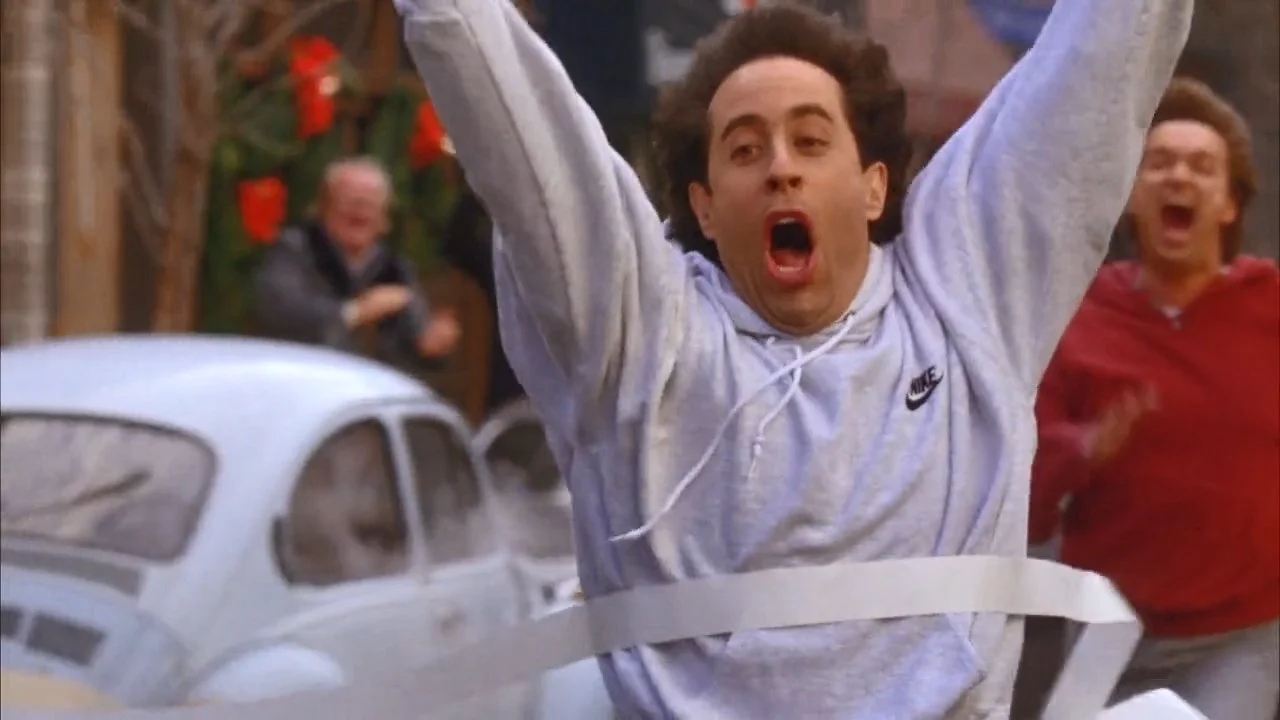


THE FRENCH CONNECTION’S Big Car Chase Still Has Drive
Maecenas faucibus mollis interdum. Nullam quis risus eget urna mollis ornare vel eu leo.
The centerpiece scene of this early 70’s classic still rocks, thanks to the power of drama through action!

Ever since I've made the call to turn this primarily into a space for film discussion a couple of years ago, I've had one constant presence in the comments: a guy I know named Tony, an old colleague from my theatre-doing days, who I remember fifteen or so years ago taking over a Wednesday evening acting class for a few weeks, one that was usually ran by the recently-deceased Edward Claudio (who, if you're not from the area, should be said was a legitimate Sacramento theatre legend that will not be easily replaced, if at all), and used the class as his pulpit for his sermon on acting in film.
I learned a lot from this version of the class (including the realization that I shouldn't act on film). I especially remember Tony walking us through his journey towards realizing the power that great movies can offer a person. As the story went, he was a huge aficionado of stuff like the James Bond series as a lad. That is, until stuff like THE GRADUATE, THE GODFATHER I and II, and DOG DAY AFTERNOON started coming out, and it changed his life forever (the movie that served as the specific turning point eludes me, although I want to say it was THE GODFATHER. Correct me, Tony?). To this day, he will happily tell you that the greatest time in American film history was approximately 1967 through 1980, before the JAWS and STAR WARS-ification of Hollywood ended the party forever. Seriously, you'll have a chance to right after you're done with this.
Well, never let it be said that Ryan Ritter doesn't pander to his audience.
February is going to be 70's New Hollywood Month in this here space!
I might be stretching the definition just a bit with one of the choices but, just like French New Wave Month, the only real criteria is that a) it was made and released during a loosely defined period and b) I haven't seen it. Since I arbitrarily drew a line at pre-1970's stuff, that will mean no GRADUATE or BONNIE AND CLYDE, and I've already seen many of the huge hitters (no GODFATHER, THE CONVERSATION or DOG DAY AFTERNOON, and stuff like TAXI DRIVER has already been covered in this space).
But, also like last month, you're still going to be stunned at the stuff I haven't gotten around to. Let's get started with an immediate huge one, a movie that made a huge splash at the 1972 Academy Awards, winning Best Picture, Best Director, Best Actor, Best Adapted Screenplay and Best Film Editing. A movie whose name you already know from reading the title and clicking on the article, throwing the wisdom of adding an air of mystery to this intro into question....
Let's do THE FRENCH CONNECTION.
THE FRENCH CONNECTION (1971)
Directed by: William Friedkin
Starring: Gene Hackman, Roy Scheider, Fernando Rey
Written by: Ernest Tidyman
Released: October 7, 1971
Length: 104 minutes
I suspect at times that people nowadays view American movies from the 70's with some apprehension, maybe due to it being a particularly favorite time period and genre of....well, "film snobs". "If the guy shitting on me for liking Marvel movies are into it," the thought might go, "it must be pretentious and boring".
But, really, a lot of the really famous ones aren'tpretentious or even particularly esoteric at all? Take THE FRENCH CONNECTION, a movie that I think has honestly aged very little, all things considered. The only thing that may have atrophied over the decades might be people's appetite for rogue "bad cops" nowadays (although I guess we'll see if that truly lasts). But, besides that, this movie really is just a well-made crime action thriller. There are gun shootouts, car chases, drug smuggling, and boozing, womanizing cops and criminals all the way through. Y'know, the good stuff.
THE FRENCH CONNECTION is the story of a New York City detective, Jimmy "Popeye" Doyle (Hackman), and his partner, Buddy "Cloudy" Russo (Scheider), who get tipped off on a huge shipment of drugs being brought into the city in the next couple of weeks. From there, it's a race to track down drug lord Alain Charnier (Rey) before he's able to complete his evil transaction.

It's a movie refreshingly light on backstory or deep character arcs; Doyle does have a story and record to him, and it's significant enough that you completely understand why other cops and superiors are reluctant to trust his instincts on this particular case. But that context is relegated to just a couple of quick lines from other characters; it's not particularly expounded on, and we certainly don't cut away to any flashbacks fleshing things out. That would slow down the action, my friend, and THE FRENCH CONNECTION don't got time for that.
The only thing that might be objectionable to modern viewers might be its pace. Hard as it might be for those who were there at the time to believe, I have no trouble imagining someone walking away from THE FRENCH CONNECTION complaining that it's too slow. And who am I to argue? In the fifty years since its release, action films have gotten impossibly big and fast. Call it the "FAST AND FURIOUS effect"; even that street-racing franchise has morphed over the past decade into essentially MEATHEAD AVENGERS, with car chases that have expanded exponentially in scope with the assistance of CGI and characters now literally going into space.
NOTE: I actually generally love the FAST AND FURIOUS movies; I think beyond all the blatant pro-wrestling-esque stupidity and dumb drama between Vin Diesel and The Rock lies a set of generally well-crafted and well-cast summer movies. They're not all created equally, and I think they've gotten so big that there's nowhere for them to go now, but I need it established that I'm no hater. This isn't Old Man Ryan here. Just that I think once you start overstimulating an audience, it's hard to crank down the dial.
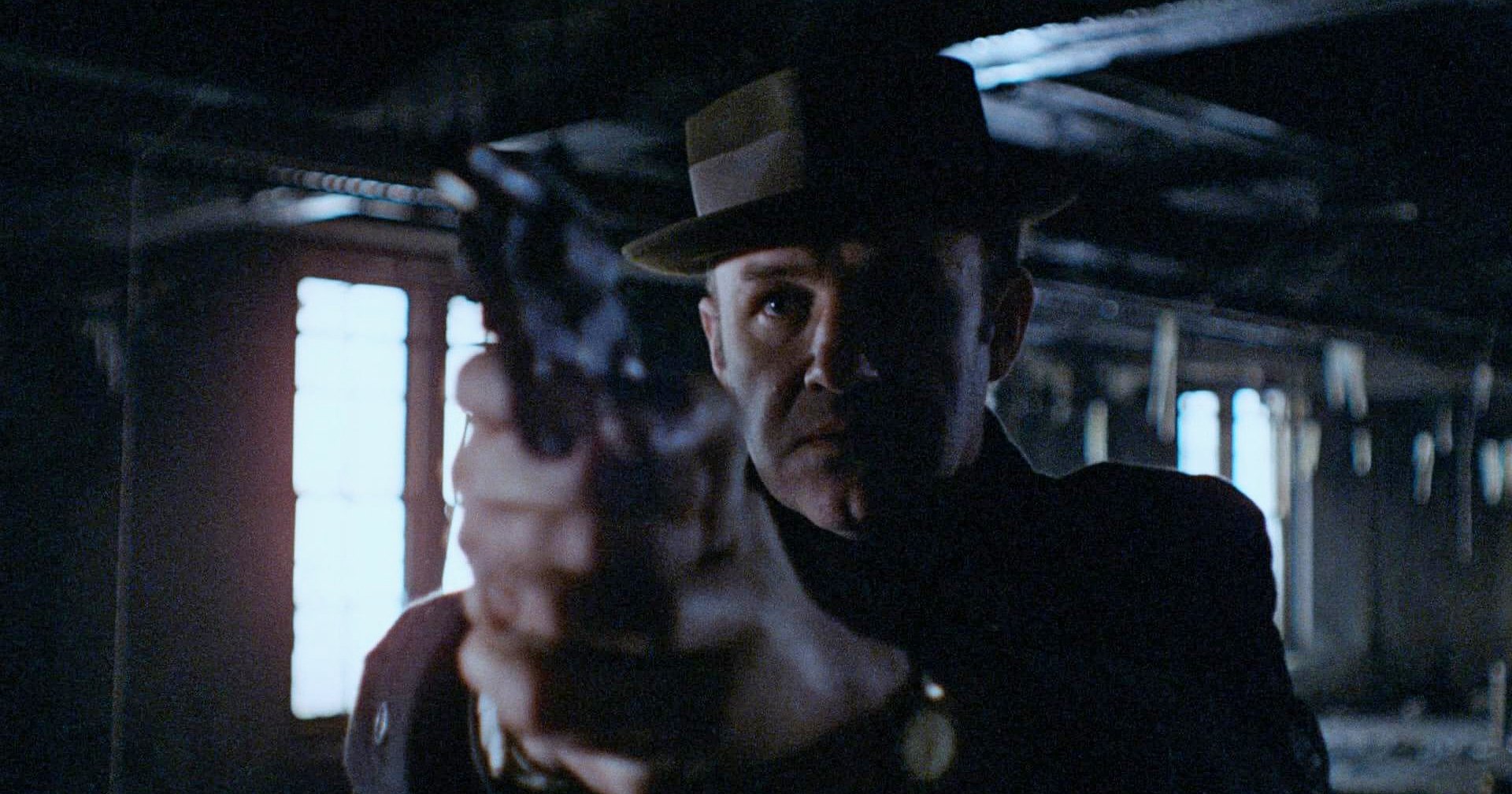
But instead of focusing on the pace of the action, I'd urge a new viewer to instead focus on the craft of it. Because, honestly, once you focus in on it, suddenly its Oscars pedigree becomes pretty clear and justified. THE FRENCH CONNECTION is the kind of movie that should win Best Picture more often, to be frank. Instead of winning its gold with its social themes or huge performances, it does it by knowing exactly how to draw every inch of drama and suspense out of a given situation.
To show what I mean, let's focus on the most famous scene, that car-train chase. Give it a watch if you've never seen it.
It goes without saying, but one of the best things about it is that they didn't have the advantage of computers. Again, I know that's another old-man complaint, and CGI does present other opportunities. But what scenes like this gain from its absence is that, to some degree, what you're seeing is real. Real in a fake movie way, yes, but some human had to strap a camera to a car to achieve that slightly vertigo-inducing weaving through lanes.
But, let's take a look at how the scene builds suspense (Note: to some degree, I'm cribbing my observations about action from an incredible article from Film Crit Hulk, who broke down what makes the action in MISSION: IMPOSSIBLE - FALLOUT work so well. As always, I'm begging you to leave this dumb article to read another, better article. The choice is yours).
Everything seems to flow logically from what's been set up previously, including the fact that Doyle is in many ways a desperate man whose reputation is on the line with this hunch that he's following. From the very start where Doyle commandeers a civilian's car (one of those things I've only ever seen happen in the movies; is this a real thing?) to the end where a hitman ends up dead on the steps of a train station, the whole thing plays out like a short film. Every time it seems like Doyle has a plan of execution to capture an assassin who has hopped on a train to get away, "Frog Two" (the assassin Doyle is chasing, played by Marcel Bozzuffi) manages to get a leg up on him. Doyle runs over to the next station, only to learn that "Frog Two" has commandeered the train and is blowing past all scheduled stops. He has to hustle and play catch-up again.

The problem with commandeering the train, however, is that the train conductor turns out to have a weak heart and panics easily. His response to having a gun repeatedly pointed at his head? He passes out and collapses onto the control panel. The train is now going way too fast with no way to fix it. Now "Frog Two" is in trouble. Now what?
All the while, we get these fast-moving POV shots, from the perspective of either the front of the train or the front of Doyle's stolen car. We're moving forward, always. It doesn't hurt that there are several moments where cars collide in ways that weren't anticipated, even by the film crew. The story of the action is meticulously planned out, but there's an improvisational feel to what actually happens. The result is something that feels just out of control enough (especially a moment where Doyle damn near runs over a woman). It all culminates in a moment that even the police officers on retainer as advisers to the film balked at, claiming it's something that no cop would ever do and claim as an act of self-defense. You watch it and tell me if it even registers as anything to you.
But notice how, throughout the whole thing, which of the two have the leg up constantly changes. It feels for all the world like both the pursued and the pursuer are making it up as they go along, a far cry from the modern "hero and criminal" dynamic in films nowadays, where one always seems to have a master plan that no normal human being could have possibly come up with on their own and failsafes for snags that nobody could anticipate. Adding to all that is the fact that "Frog Two" is established as legitimately dangerous; he shows no issue with killing law enforcement in cold blood, putting the safety of the civilians in real question.
For all intents and purposes, THE FRENCH CONNECTION's signature action sequence stars two characters who don't have a clue what the fuck they're doing. And that's why it's so fun to watch.
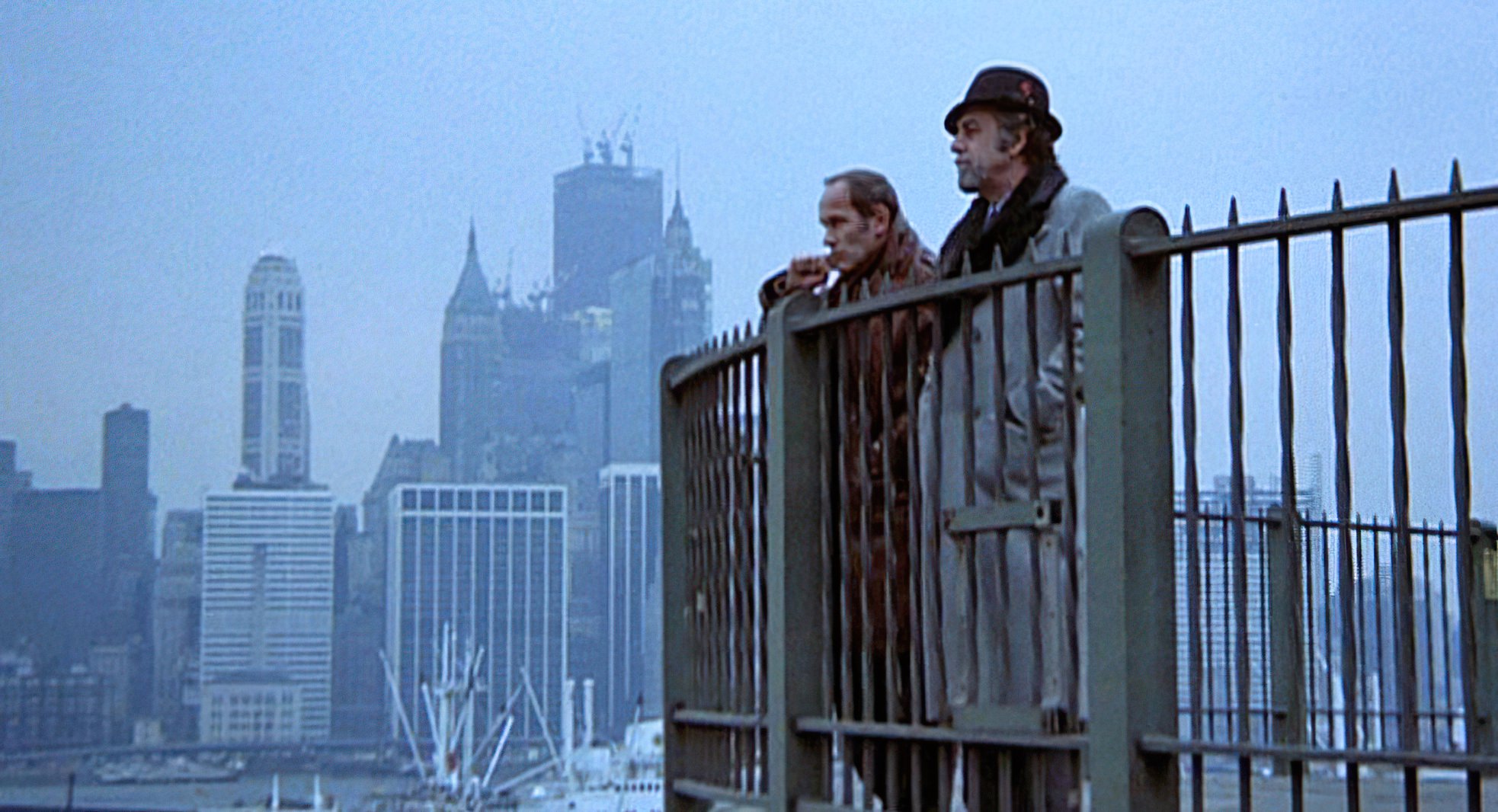
There are other scenes that are just as well-written and crafted; for as much fame as the car chase has gotten, my favorite scene in the movie might actually be Doyle tailing Charnier into the subway. Without really any lines of dialogue, we get what amounts to a complete story from start to finish. You can just feel the wheels turning inside both character's heads, and it's really and truly captivating to watch the power dynamic shift every second between the two. It all culminates in a great little "farewell" moment from Fernando Rey, a moment that pays off in such a satisfying way at the end of the film.
That's really the secret to making an action movie that endures; not necessarily an increase in the scale, but a laser focus on the drama and conflict within it. Hell, going back to the FAST AND FURIOUS example, it's no secret that the best ones of that series (for my money: 2, 5, 6) understand that better than the worst ones (for the rest of my money: 4 and 8). And William Friedkin (who, ironically, would go on two years later to arguably usher in the beginning of the eventual blockbuster culture with THE EXORCIST) and the rest of his creative team knew that intimately with THE FRENCH CONNECTION.
And so, it got rewarded at Oscars night, and it's well deserved, winning Best Picture over FIDDLER ON THE ROOF, A CLOCKWORK ORANGE, THE LAST PICTURE SHOW and NICHOLAS AND ALEXANDRA. Stiff competition, but it's hard to argue against. There's always this backlash against the Oscars as this bastion of rewarding "artsy" movies, ignoring movies loved by the general populace. Well, that may actually be accurate. BUT, the 1972 Oscars are proof positive that there was a time when action movies could win the top prize over "arty" films.
They just need to be made....well, artfully.
Scale is relative, drama is forever.

Film School Weekend: SHOOT THE PIANO PLAYER
Lorem ipsum dolor sit amet, consectetur adipiscing elit. Aenean eu leo quam. Pellentesque ornare sem lacinia quam venenatis vestibulum.
A late programming change allows me to gush about this unexpected masterpiece.
So, full disclosure this weekend.
My initial plan was to devote this space today to Francois Truffaut's third film, JULES AND JIM. After talking a couple of weeks ago about his trailblazing debut, THE 400 BLOWS, it felt like a good idea to jump over to his next nearly-larger-than-life-in-reputation film, his 1962 saga about two friends who end up falling in love with (and being seduced by) the same woman over the course of twenty-five years.
And, indeed, I ended up watching it and, as everybody says, it's great! It features a character-driven plot line that is at once endlessly complex and totally heartbreaking, not to mention innovative (Martin Scorsese devotes a whole section of his Masterclass to the use of voiceover in its opening minutes). To be honest, I'm not sure I fully absorbed the whole thing in the lone viewing of it I have under my belt; it constantly surprised me, which meant I spent much of the time recalibrating my expectations throughout. This tends to make expounding on JULES AND JIM at any length a little tricky since, well, I'm not sure I precisely know what I'm talking about yet.
But, the intent was to write about it, so prepare to write about it I did. And then I found I had a spare eighty minutes on my hands one night. And I noticed that, between Truffaut's first and third films, there sat another movie, SHOOT THE PIANO PLAYER. It seemed like a quick watch, and I thought maybe it would help inform me as to his arc between 400 BLOWS and JULES AND JIM. What was the harm?
So I watched it.
And I was blown away.
Sorry, JULES AND JIM.
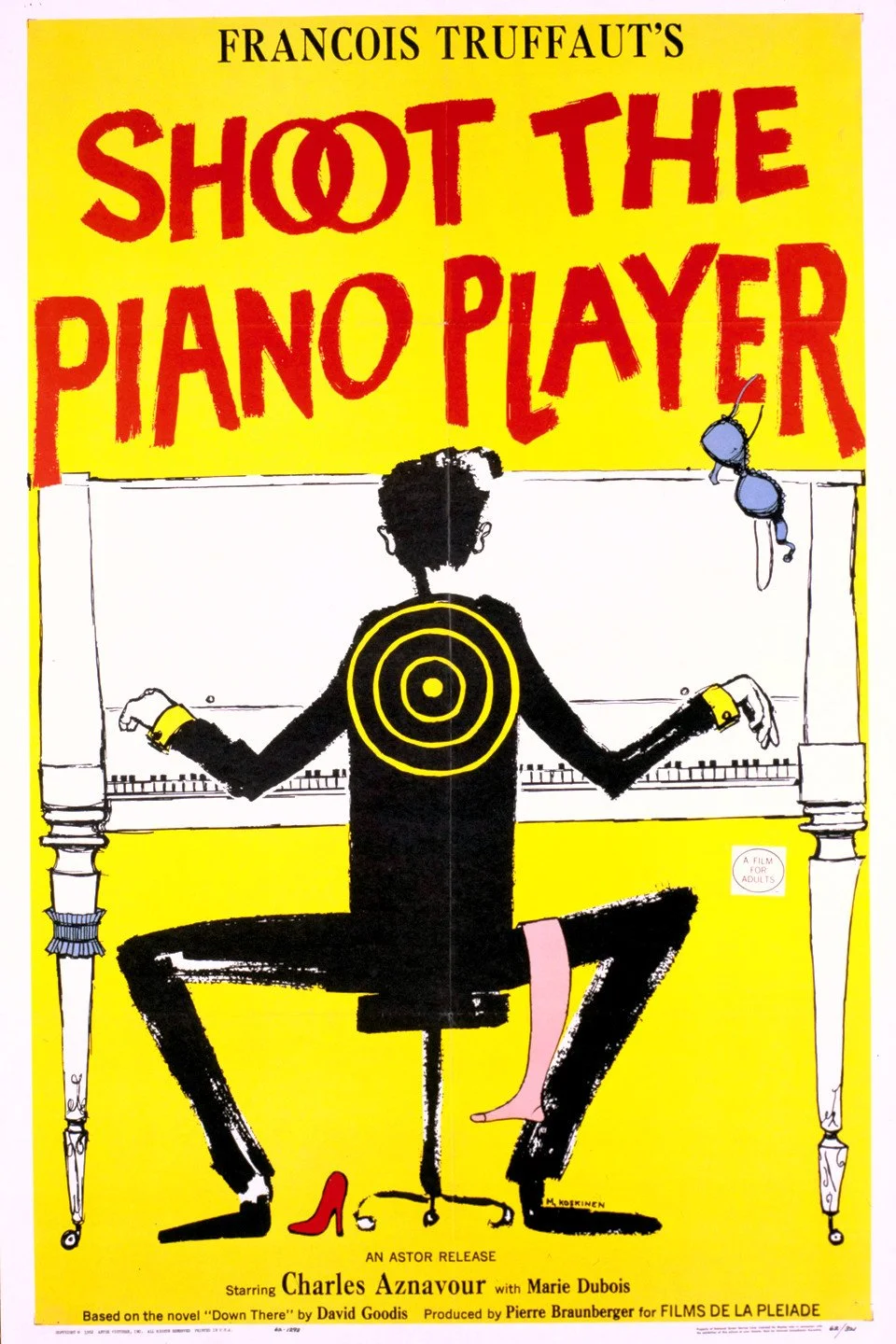
SHOOT THE PIANO PLAYER (1960)
Directed by: Francois Truffaut
Starring: Charles Aznavour, Marie Dubois, Nicole Berger, Michele Mercier
Written by: Truffaut, Marcel Moussy
Released: November 25, 1960
Length: 81 mins
Intended as a tribute to the 30's and 40's American B-movie, the initial thrust of SHOOT THE PIANO PLAYER will seem familiar to any other noir aficionado. We start with a man clearly on the run from some bad people, and follow him briefly as he stumbles into a lively piano bar. He insists on an audience with the piano player, who we quickly learn is his brother. There's clearly a history that the piano player, Charlie (Aznavour) is running from; Charlie isn't even his real name, it's Eduoard. Regardless, he wants nothing to do with his brother's affairs. Alas, as many hapless heroes of noir often find out, trouble finds him regardless. His brother has ripped off a pair of gangsters and is now trying to elude his fate. Alas, just by contacting Eduaord, he's gotten him involved.
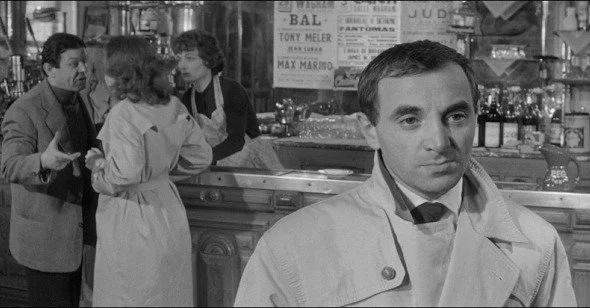
Along the way, we learn more about Charlie/Eduaord through his relationships with the three major women in his life. There's his former wife Therese (Nicole Berger), whose decisions we learn about in flashback and inform his new identity as Charlie. There's Clarisse (Mercier), a prostitute who sees Eduoard often and is raising her little brother Fido. Finally, there's Lena (Dubois), the piano bar waitress who's slowly falling in love with him and finds herself in the middle of his run-ins with a pair of gangsters.
Sure, it's all fairly rote, even by 1960, but this movie isn't necessarily trying to break ground by its plot. No, where it really makes an impression is in its storytelling and directing technique. Simply put, SHOOT THE PIANO PLAYER is probably one of the most playful movies I've ever seen.
The movie seems to change genre at will every few minutes or so. Sometimes it's a noir tribute, sometimes it's a gentle comedy, sometimes it practically borders on broad farce, sometimes it's a heightened melodrama. And it manages to do it with such ease, changing gears practically right before your eyes. I'm sure there have been many films before and since that have threaded this needle before, but I've rarely seen a movie succeed so well at attempting so much.
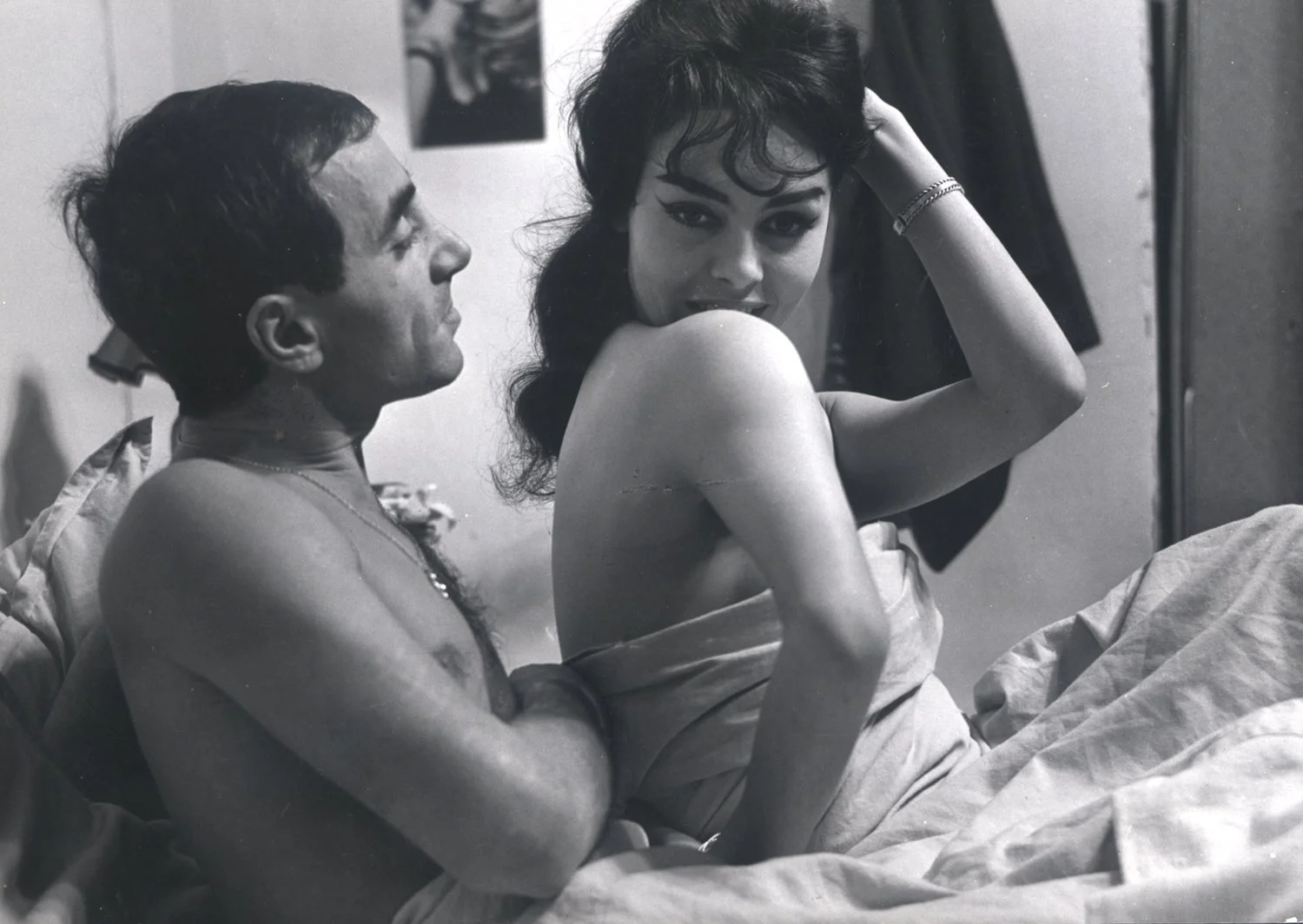
That's not to say SHOOT THE PIANO PLAYER is fully groundless; when the movie aims for both pathos and drama, it's actually genuinely affecting. There's a whole section in the middle where we really get to learn and see Eduoard and Therese's married life, with all the jealousies and perfectionisms that come with living with a professional concert piano player (as well as those costs). But Truffaut isn't afraid to swing for the fences with frequent pauses for things like bawdy songs, or wild punchlines that come out of nowhere; no joke, SHOOT THE PIANO PLAYER contains maybe one of my favorite unexpected jokes ever, after one of the gangsters swears to the truth of his recent statement, lest his mother should drop dead.
This was all an active choice on the part of Truffaut; he found a lot of success with THE 400 BLOWS and rightly so. But there was a common sentiment that it was very French. Wanting to show that he could have a varied and fruitful career, Truffaut went the total other way with his follow-up feature, going for something with uniquely American sensibilities. The screenplay is officially credited to Truffaut and his 400 BLOWS collaborator, Marcel Moussy. But, in truth, Moussy couldn't find an entry point with either the script nor its source material (David Goodis' novel Down There). Moussy wanted to ground the characters, while Truffaut insisted on keeping things loose and abstract. Moussy left the project soon thereafter.
Truffaut was right to stick to his guns on this one. He had an ethos for putting SHOOT THE PIANO PLAYER together; "I wanted to break with the linear narrative and make a film where all the scenes would please me. I shot without any criteria." And you can feel him doing just that, although it does feel like if there were criteria, it might be "pay homage to 40's Hollywood at every turn". There are apparently references to the works of director Nicholas Ray and Sam Fuller crammed in there, as well as more obvious references to stuff like The Marx Brothers (one of the brothers' names is Chico) and the filming techniques of silent films (the use of irises pervade throughout).
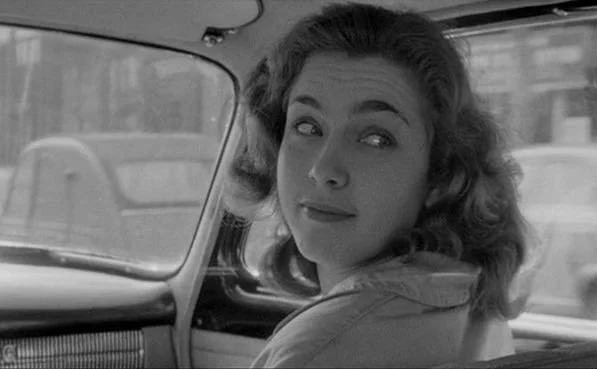
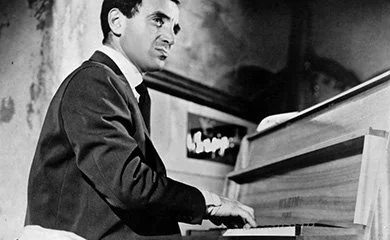
It should be noted that none of this would work without the abilities of the cast at its center. Aznavour is perfect as the man in the middle, the titular piano player. He plays everything straight, which is an informed move. As a result, the comedy around him seems that much funnier, BUT when it's time to play the drama, you easily buy it. He has one of those faces and sets of eyes that connote whole histories without having to write a single line of dialogue.
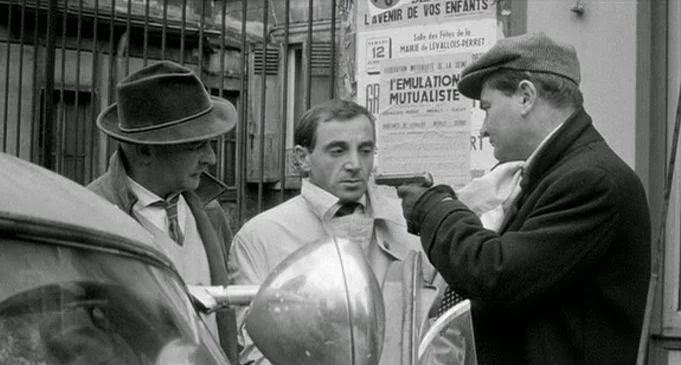
The three women are all great as well; what's fun about them is that they each provide a different personality type. Clarisse is sweet and sexy, Therese is subtly acidic and devastating, and Lena is hopelessly romantic. Special mention, though, should go to Marie DuBois, who plays Lena and endows her with a hopefulness that the other characters don't quite have. The reason I point her out is that she would go on to star in....JULES AND JIM! If you've never seen it, suffice to say she plays a completelydifferent type of character and philosophy, an example of the versatile kind of player you don't always see in the modern day.
Listen everyone, I don't know what else to say without beginning to give stuff away. SHOOT THE PIANO PLAYER is a damned delight, alright? How often do you see a filmmaker's career take such an interesting turn just two films in? Seriously, compare this to the feel and style of THE 400 BLOWS, a movie that's so controlled and so singular in its focus. It's a coming of age story that's told so simply, it's almost not apparent at first what made it so special, either then or now. The particular magic there is in its subtleties and the invisible hand of its creator.
Not SHOOT THE PIANO PLAYER. With this one, you're fully aware of the person behind the wheel, and he's having a blast! And so are you as a result. So, please, check it out. It's available for streaming right now on the Criterion Channel, as part of that massive 44-film French New Wave collection they dropped earlier this month. It goes down so easy and you're gonna have a good time.
And...that'll do it for French New Wave this month! I'll be pivoting to a new series that's a little closer to home and maybe a decade more modern next week. See you then!
Film School Weekend: Breathless
"There was before BREATHLESS, and there was after BREATHLESS!"
Few movies in the French New Wave canon loom quite as large as Jean-Luc Godard's debut (by the way, not to go super parenthetical in the very first paragraph, but the fact that we've already covered two directorial debuts that made such an impact to this particular moment in film history would indicate, I think, just how large a burst of energy the French New Wave really was. Almost like a whole generation of filmmakers were waiting and waiting and waiting, and then when they finally got the chance, BAM! Anyway.)
There are reasons for its strong legacy. BREATHLESS, a sort-of riff on American crime films, hits the ground running right at the start and never really lets up from its pace until the end of its ninety minutes. As well, it features two characters who are aimless in their own ways, and kind of feed off of each other, something that was a little unusual for its time.
And it had style in so many different ways. It had literal style; Jean Seberg's shirts (both the striped one and the one reading New York Herald Tribune) have been recreated and are available to purchase on a plethora of websites to this day. But it also had cinematic style, most famously its unconventional usage of jump cuts, sometimes several in a row within the same scene.
BREATHLESS permeates through pop culture to this day, with references to it being found in diverse sources such as Brooklyn Nine-Nine and Ghost in the Shell. Naturally, I hadn't seen it, which made it a natural choice this month for Film School Weekend.
So....how does BREATHLESS stand up to its almost overwhelming pedigree? Does it stand up to it?
Hop in, let's find out.

BREATHLESS (1960)
Directed by: Jean-Luc Godard
Starring: Jean Seberg, Jean-Paul Belmondo
Written by: Godard (story by Francois Truffaut, Claude Chabrol)
Length: 87 minutes
Released: March 16, 1960
BREATHLESS kicks things off with perhaps the greatest opening line in film history ("After all, I'm an asshole") as we meet Belmondo's charming, nihilistic criminal Michel. He's on the run from the law after stealing a car, which leads to him suddenly shooting and killing a police officer. He hightails it back to Paris and hides out with an American girlfriend of his, Patricia. His plan: get her to run away with him to Italy before the law catches up with him. Eventually, an inspector will make Patricia have to make a choice about her mysterious, free-wheeling man who, by the way, she may now be carrying the baby of.
What's really interesting about BREATHLESS is that the above all makes the film sound fairly plot-heavy, and not altogether separate from an American crime film or noir from the 30's or 40's, perhaps the kind of Humphrey Bogart-starring vehicle that Michel himself would have enjoyed. But this movie really isn't about the plot, nor does it feel American. Instead, it makes its mark in the character scenes, these long, more steadily-shot sequences where Michel and Patricia are talking about anything and everything.

Godard really wants to draw out the fundamental differences between Patricia, who is at a crossroads in her life and desperately searching for meaning and purpose, and Michel, who has long ago found his meaning and purpose: the lack and absence of meaning and purpose altogether. He likes watching movies like THE HARDER THEY FALL and then stealing cars and acting like a general piece of shit ("after all, I'm an asshole").
For a wide a gulf as this difference in philosophy is, you sort of get the appeal on Patricia's end. Admittedly, for someone who's looking for something, the option and permission to stop looking entirely must feel quite alluring. And for Michel, being with someone who is looking for something more must be so foreign as to be completely captivating. The chance to exist in each other's head spaces appears to be fulfilling some sort of psychological need for the both of them.
This brings us back to those infamous jump cuts. There are a surprising amount of theories as to their express purpose, some even suggesting the jump cuts were placed in random spots by Godard, either in an act of spite or desperation. Other explanations offered get deep into editing theory, which is way beyond my education and knowledge base. In my estimation and observation, these cuts seem to occur mostly in scenes where Michel is in transit, either with himself or with Patricia in tow. We're in Michel's territory, his mind-set, and we now have to move a million miles an hour, even when we're sitting in the back of the car. Notice, though, how much the movie seems to settle down when we're in Patricia's apartment. Now we're in her territory and, thus, in a less kinetic, fast-paced space. Whether it was the true intent or not, it felt to me like an indicator as to whose eyes we were supposed to be experiencing a certain scene through.

As you might expect with a sixty-year old movie that was so well known for its frenetic editing and pace, BREATHLESS suffers a little bit now that we have entire generations that have been born and raised after the advent of MTV. A movie that probably seemed incredibly fast, especially when compared to the more modest editing practices of many films up to that point, now seems like nothing compared to the average movie you could find buried in an Amazon Prime category.
That said, I'd argue that, when BREATHLESS is really up and running, some of its jump cuts create a pace that still reads as unusually fast, even in this age of ADD. I'm not kidding when I say there are some scenes of Michel and Patricia driving in a car where it feels like there's a cut every second for several seconds in a row. Just as an example, there's the really famous sequence where Michel, driving Patricia to an appointment, starts listing off parts of the female body he adores, each accompanied by a new jump cut of Patricia sitting in the passenger seat. They're not even shots of particular body parts, just a fresh look at her for every sentence fragment. This is a pace that is usually reserved now for bad modern action sequences, not something so relatively stationary.

This feels like a good time to mention that I stand as a little mixed on BREATHLESS as a whole. Despite how interesting it was to watch, I found it a little difficult to settle into in the way that some of my favorite movies do (side note: something I've noticed when watching a fundamental classic for the first time is that I often experience...not an out-of-body experience, exactly. But almost like I'm watching myself watch it? Like my thought process is more, "here I am, watching RAGING BULL". Almost as if the movie looms so large that I can't focus right away. Does anybody else experience this phenomenon?). With a few days to reflect, I have to wonder if it's because its true innovation was technical rather than thematic. I can usually tell when a movie resonates with me when the analysis flows through me even days after seeing it. This time, I had to look up certain things to jog my memory. C'est la vie.

However, there's still a major take-away that made it worth my, and your, time. Once again, what I want to draw attention to is a performance within BREATHLESS, this time one given to us by Jean Seberg. In a way, she has the harder role between her and Belmondo. Belmondo gets to be extroverted, forceful, the cool Humphrey Bogart wannabe. By comparison, Patricia is often more passive, at least externally. But she is the one where the change occurs in the story, at least it seemed to me. She is the one who has to evaluate the unique, aimless worldview of her criminal lover and ultimately decide to reject it by turning him in, even as she doubts herself all the way to the ambiguous closing moments.
Because Patricia does at least have goals and ambitions, her being an aspiring journalist and all. Michel is happy just to be an asshole, living his life like a Bogart film without much care and regard to who gets hurt along the way. Yet she loves him anyway, maybe too tempted by his disregard.
Seberg is able to register all of these complex emotions without doing much at all. I've already gushed last week how much I latch on to those who act without acting, whose entire inner life is so clear and consistent that the performer can just sit there and you follow along completely. Well, Seberg delivers on that front. She's someone who lived a short, complicated, fascinating life (fun fact: she was a particular target by J. Edgar Hoover and the FBI for her support of the Black Panthers), and I highly recommend Karina Longworth's series about it as part of her bigger You Must Remember This podcast if you're interested in hearing more.
Overall, despite how interesting BREATHLESS was to watch and write about, I was surprised how much of it has faded away from me a few days later. Maybe it's that lack of focus on story that caused me to walk away with less than it felt (this is something I'm still adjusting to in other genres, such as giallo). Or maybe it's the fact that it's hard to shake the feeling that it's mostly an exercise in style. Divorced from its moment in time, its legacy might be more what it would go on to inspire more than it actually is.
Jean Seberg, though, man.