Recent Articles
Four from ‘67: BONNIE AND CLYDE Live On
This week, my look back at movies from 1967 I had never seen concludes with BONNIE AND CLYDE, a Depression-era crime piece that reflects back at us our own uncertain economic times (both in 1967 and today), as well as our ability to overlook criminality in the name of excitement, charm and thrill.
Today marks the end of this quick-ish series on four famous movies from the year 1967 that I had somehow managed to have never seen until now. It was a list that was a little difficult to put together since, given the fact I hadn’t seen any of them before, I wasn’t able to form any intentional thematic cohesion ahead of time. I vaguely ordered them in terms of the movies’ cultural clout, but beyond that, any sort of commonalities would end up being accidental.
Well, a through-line ended up accidentally emerging anyway, as I started noticing during last week’s COOL HAND LUKE. It seemed to me that the 1967 Paul Newman classic, the all-star wartime epic THE DIRTY DOZEN and the seminal Mike Nichols film THE GRADUATE all centered their focus on outcasts and alienation. Such was life in 1967 America, as Vietnam started chewing up a whole generation of young men and spitting them back out, a slew of political assassinations eroding a presumed stability in government, and a new style of Hollywood filmmaking quickly starting to push out the old way.
As it turns out, the order in which I watched and wrote about these movies also provided a bit of an escalation in how challenging it could potentially be to identify and relate to the titular outsider(s). THE GRADUATE’s Benjamin Braddock is a pretty easy character for the average film lover to wrap their heads around; the experience of a recent college grad finding himself completely adrift as to what he’s supposed to be doing now is a fairly universal one (or at least it used to be). THE DIRTY DOZEN provides us a cadre of condemned prisoners, but presented in the context of a good old-fashioned war epic. COOL HAND LUKE takes this one step further, by presenting us a prisoner who, in his own way, is also condemned. This time, however, he’s intensely relatable, making the injustices he suffers hit that much closer to home.
Now, with BONNIE AND CLYDE, we’re presented with a group of real lost souls, ones who decide to conduct themselves like a bunch of scumbags. But…given the real-life economic circumstances in which their villainy arose from, are we able to sympathize anyway? Should we? Are we making a mistake by trying? Maybe that’s only up to us to decide.
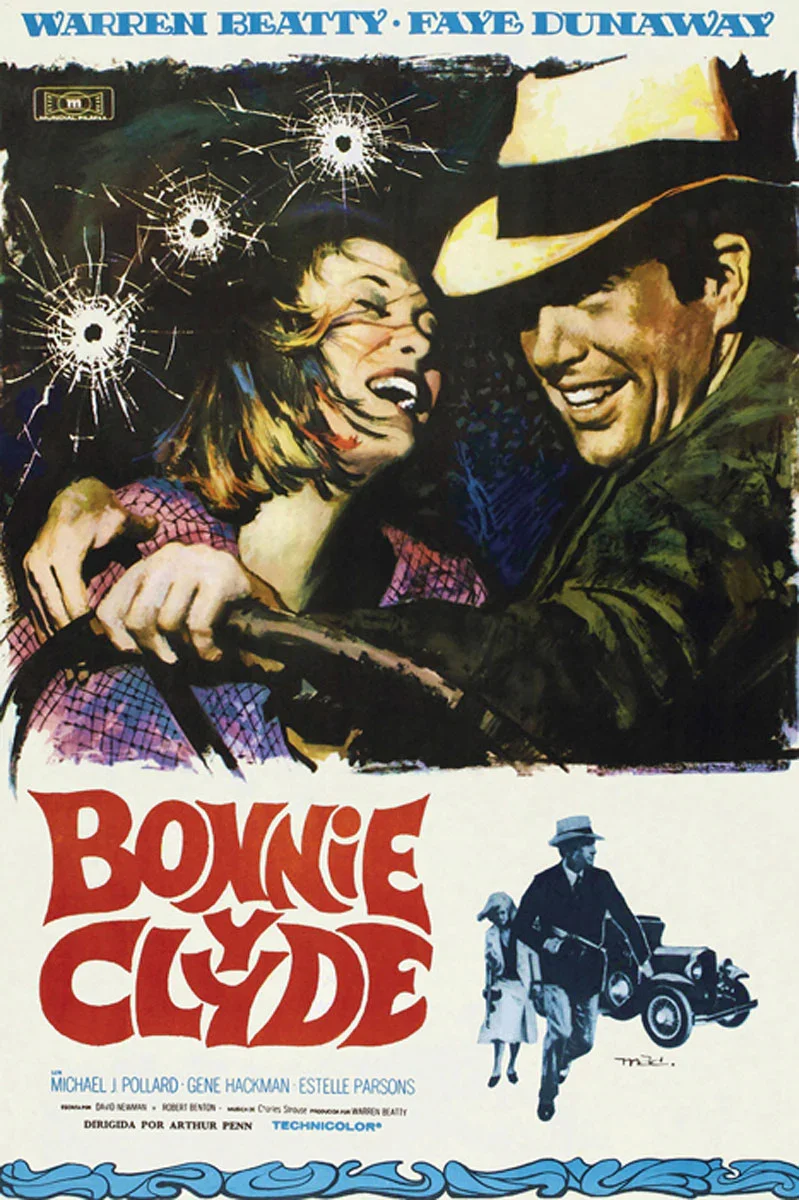
BONNIE AND CLYDE (1967)
Directed by: Arthur Penn
Starring: Faye Dunaway, Warren Beatty, Gene Hackman, Michael J. Pollard
Written by: David Newman, Robert Benton
Released: August 13, 1967
Length: 111 minutes
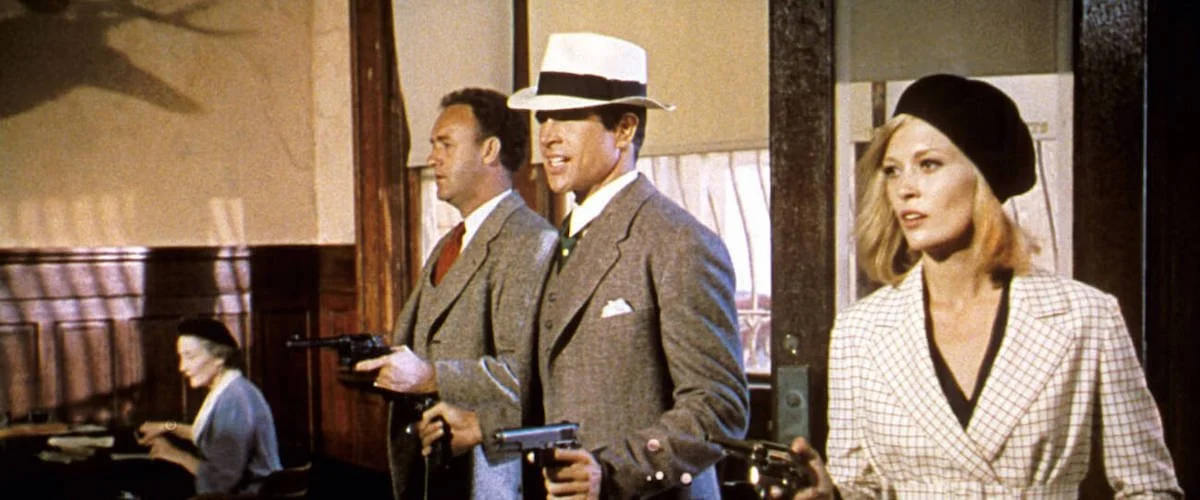
BONNIE AND CLYDE tells the real-life story of…well, Bonnie and Clyde, a pair of real-life Depression-era gangsters who committed a series of bank robberies, kidnappings and murders all across the Central United States. Their exploits made headlines around the country and, until the brutalness of their crimes were laid bare, they were even considered kind of cool by the public at large, with pictures of their cigar-chomping, pistol-toting personas being slapped across newspapers, igniting the public’s imagination at a time when distractions were crucial.
Even after their eventual deaths at the hands of police, the “idea” of Bonnie and Clyde remains ever popular. Hell, when I was a teenager, no less a power couple than Jay-Z and Beyonce released a song called “‘03 Bonnie and Clyde”, with lyrics asserting that, between the two of them, nothing can ever get in their way. Nobody can ever stop them. The romanticism of this is obvious: what greater show of love, what bigger rush can there be than robbing a bank and running from a hailstorm of police bullets?
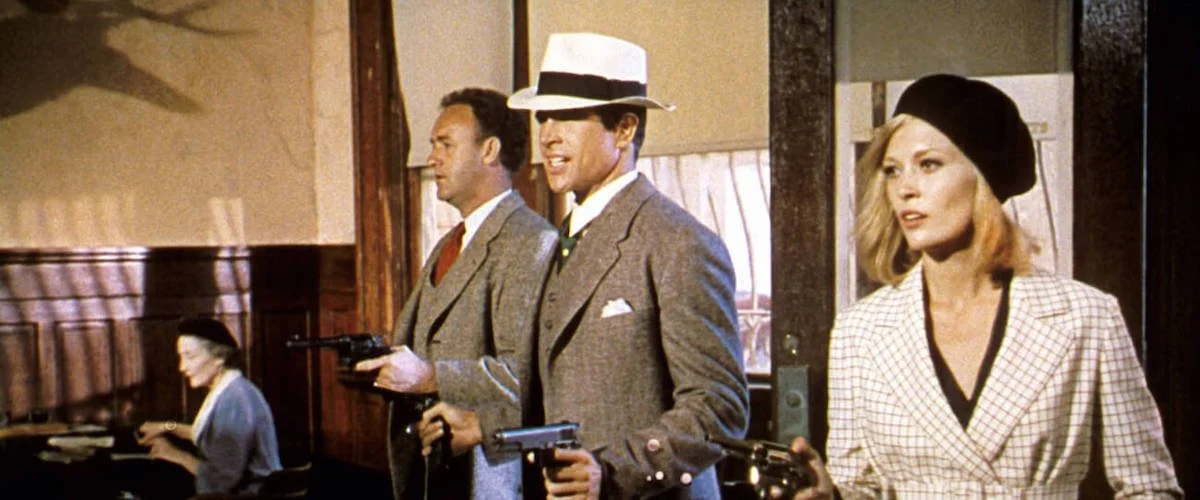
The 1967 film adaptation of their exploits (Bonnie and Clyde, not Jay-Z and Beyonce) undoubtedly contributed to this romanticism, maybe even fetishism, of the “criminal power couple” idea. BONNIE AND CLYDE is not a movie known for its strict adherence to the facts, but that probably plays in its favor. It’s a flick that thankfully gets straight to the point; after a pair of brief title cards giving us a brief backstory of both titular characters that gives us everything we need to know. By 1931, Clyde had already served two years in prison for robbery. By that time, Bonnie had worked in a cafe.
Both characters seem to be productive of the dire environment they, along with millions of Americans, found themselves in. Bonnie is a bored small-town waitress with little resource of being anything more. Clyde is a guy who clearly seems to have read the economic room early on and has decided to take matters into his own hands, even if it means jail time every so often. So when the two meet one fateful afternoon, as Bonnie catches the charming Clyde trying to steal her mother’s car? How could anyone doubt there’d be an explosion?
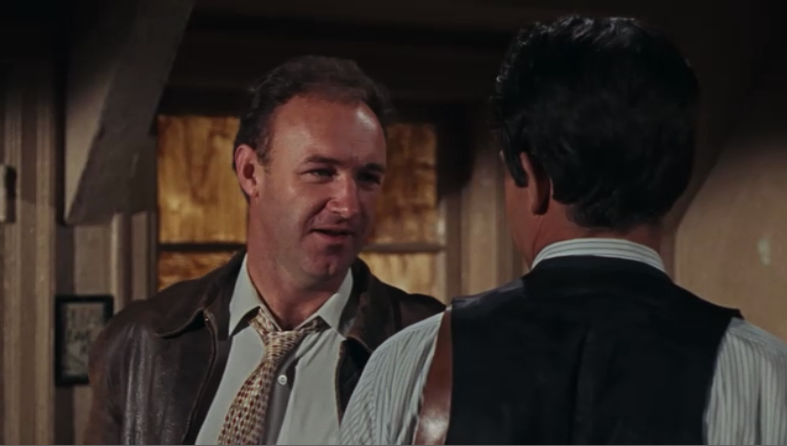
BONNIE AND CLYDE chronicles their crime spree, as well as their steady collection of “family members”. Some of them are literal family; Gene Hackman shines as Clyde’s brother, a surprisingly warm and welcome presence, given the circumstances. Although he seems to take to the new family business, his preacher’s daughter wife Blanche finds it all a little harder to swallow, never really getting along with Bonnie. Turns out not everyone from boring, normal backgrounds fall in love with the criminal lifestyle.
Other members of the crew are found family, primarily gas station attendant C.W. Moss, who sort of assumes the role of Bonnie and Clyde’s not-too-bright son. Almost immediately upon hitting the road with the duo, he botches a bank robbery, leading Clyde to have to kill a police officer, an escalation in criminality that sets the rest of the movie in motion. A couple named Eugene Grizzard and Velma Davis oh-so-briefly ride with the crew after they steal Grizzard’s car, until getting ditched on the side of the road when it’s revealed he works as an undertaker.
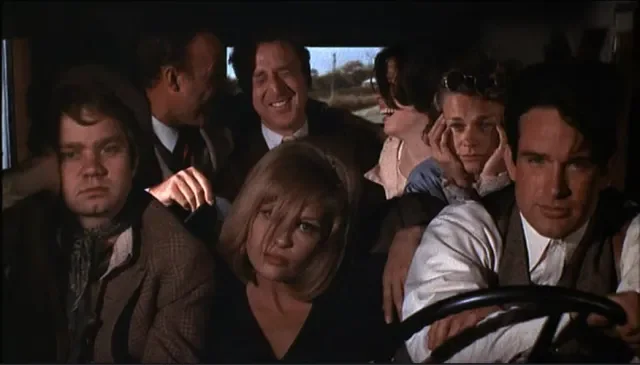
That Eugene Grizzard section, by the way, is probably my favorite of the whole film, if only because he’s played by Gene Wilder, in what constituted his film debut (to be followed the same year with THE PRODUCERS). I saw his name in the credits at the beginning, and I admit to being kind of intrigued. Would he be doing his famous neurotic guy routine? If so, how at odds would that be with this fairly serious, gritty crime story? It turns out the answers were, in order: “Yep!” and “Not at all!” It’s a pretty funny scene, with Grizzard getting exponentially more nervous as he and Velma chase the gang down, get followed (“Step on it, Velma. Step on it, Velma. STEP ON IT, VELMA!”, get caught, then end up in the backseat of the famous Bonnie and Clyde car. We even learn a little bit about Bonnie as a result of this scene, with her immediately flipping out at the reveal that Grizzard is an undertaker. Although she doesn’t quite explain her fear here, it’s not hard to assume Grizzard serves as a reminder of where this dalliance is likely leading.
The other major relationship in the movie besides Bonnie and Clyde is “Bonnie and Clyde and the media”, more specifically Clyde. One of the most fascinating things about him is that, yes, he’s handsome and rogueishly charming (in the way only young Warren Beatty could be), but he’s also intensely calculating. Once they realize their robberies are starting to draw headlines, to the point of being recognized by their victims, Clyde gets pretty performative. He even makes a big show about not taking the money from a patron who withdrew his own cash bundle. The idea of a bank robber who’s only interested in taking cash from the evil institutions (“the man”) makes for a great story, especially during the Great Depression. Hell, I’d probably be rooting this guy on if I were living in the dust bowl.
But, therein lies the rub. Because Clyde’s flair for the theatrics is a little at odds with the man inside. Clyde’s a guy who famously refuses sex from Bonnie, in a scene that has been the subject of much interpretation over the decades. Is he impotent? Asexual? Secretly hiding homosexual feelings? Well, we can only guess; for what it’s worth, the real Bonnie and Clyde apparently had no issues on this front. I took the fictional Clyde’s rejection of the fictional Bonnie as a sign that, for as much as he loves the adoration of the masses, he can’t bear to get that connected to another human being. For as many people as there are crammed in that car, he’s as alone as the day he was born.
Oh, and there’s the fact that he’s, like, you know, killed people. For however you want to frame the morality of robbing banks, or even (if you want to go there) the morality of killing police, it gets hard to justify really rooting for him when you consider that there’s no real tangible good that results from their robberies. It’s not like they redistribute the money or anything, they just take it. Yes, killing a cop resulted from an accident, but they weren’t supposed to be there in the first place. This isn’t a COOL HAND LUKE situation, where the crime feels petty compared to the punishment. Dying in a hail of gunfire feels pretty fitting for Clyde.
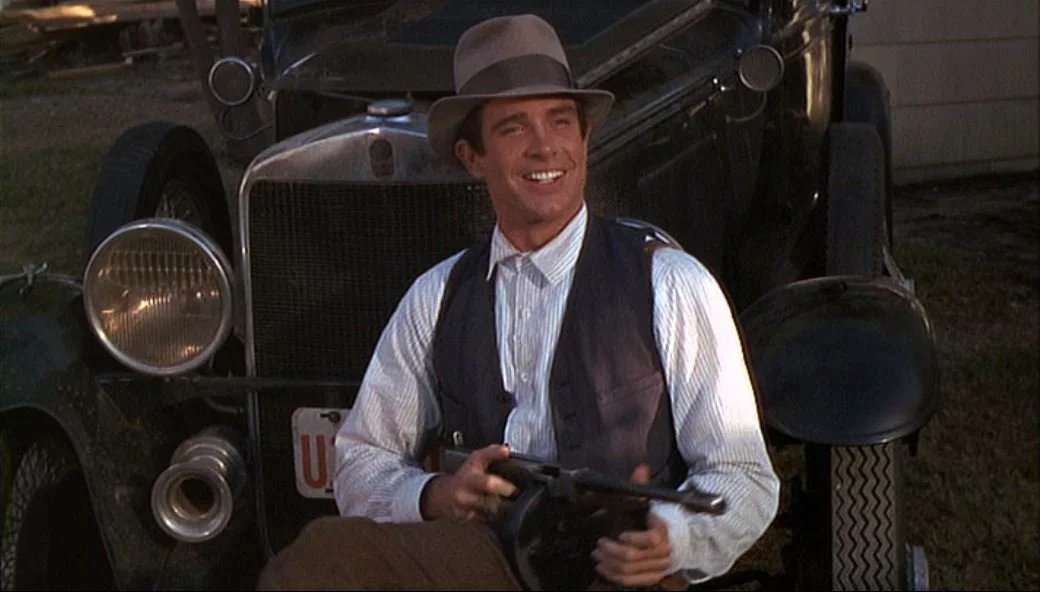
But you…still kind of like him anyway. Because he’s Warren Beatty. He looks cool. He knows how to play to an audience, including you. And, in that moment, you get why America remains infatuated with him and the girl by his side. They look great with their hats and their tommy guns. They’re kind of doing what you secretly wish you could be doing; hitting the road, taking what you want and getting your face in the newspapers for your trouble. After all, isn’t this what the rich do, both then and now? Isn’t this what they always do? It makes you want to take the risk of dying in a hail of gunfire in the name of being cool.
Speaking of the hail of gunfire, it’s worth touching on one of the controversial aspects of BONNIE AND CLYDE: its violence. This is another one of those things where you kinda need to put your “1967” glasses on. For anyone raised on Dateline, 24, or the SAW movies, there’s nothing in BONNIE AND CLYDE that reads as particularly scandalous. But there is a frank brutality and suddenness to its gunplay. There’s not a lot of poetry or romance to it. People just kind of die all of a sudden, whether it be a hapless cop or Clyde’s brother. There’s a kinetic energy to the editing of the action, the type that (in my opinion) would get co-opted for years to come, and would get turbocharged once MTV got unleashed on the public. The final ambush in particular would go on to heavily inspire a similar scene in THE GODFATHER, Sonny Corleone going down in a flurry of brutal silver the same way that Clyde and Bonnie do.
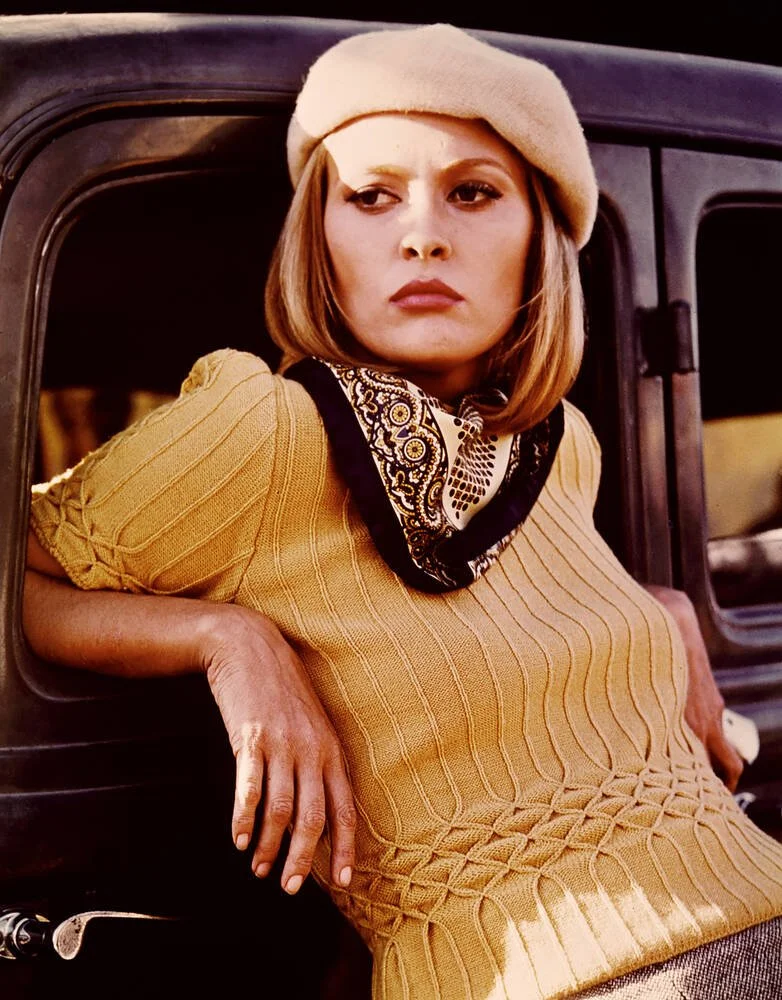
On the topic of Bonnie, it seems only right that I highlight her and Faye Dunaway the same way I did her male counterpart. She’s obviously one of those legendary Hollywood figures whose reputation precedes her, a name you would somehow know even if you had never seen a movie before. So it’s exciting to catch her at what is basically the beginning of her film career. BONNIE AND CLYDE came at the end of a busy year for Dunaway, her first two movies (THE HAPPENING and HURRY SUNDOWN) also releasing the same year. This one skyrocketed her to stardom, earning her a Best Actress nomination at that year’s Oscars, one she didn’t win.
(Surprisingly, only one actor won an Academy Award for their performance in BONNIE AND CLYDE: Estelle Parsons for playing Blanche! As always, the Oscars are mostly a guessing game.)
Dunaway does a fine job at illustrating what can be so sweeping and grand about a life of crime, the exact same emotions that make the real-life pair so compelling all these decades later. Hitting the road with some guy you’ve just met to go rob banks and defy the law seems incomprehensible for those with prospects on the horizon, with safety nets and the possibility of prosperity. But, for those whose destinies appear to be set and cast? With society appearing to crumble all around you? Why wouldn’t you, especially when “some guy” is as handsome and alluring as Beatty? Imagine that rush, that charge?
There’s a flip side. That charge, that surge ends up being addicting, and Dunaway nails the other side of that kind of addiction: the need to keep going. Thus, Bonnie’s gradual change from small-town waitress to a woman gleefully torturing captured cops on the side of the road, all to keep that buzz of fame (after all, the bigger the heists and moments, the bigger the headlines). And to keep that allure of being in Clyde’s aura. Since he’s not a romantic, and doesn’t actually want to sleep with her, there doesn’t appear to be any other way to keep in his world than to keep the party going, under any means necessary.
That’s the central tragedy, I think; Bonnie and Clyde live in a world where they happily drive down a road to nowhere, where few other options seem to exist, de-incentivizing the concept of living a moral and honest life. That world is, of course, the one we currently live in. Yes, BONNIE AND CLYDE is a period piece, set during the Great Depression. And current times aren’t quite that bad. But…it’s not good, right? You feel people getting desperate, and resentment against the rich and powerful is growing; Luigi Mangione is almost certainly a criminal, but scan through Reddit sometime to get an idea of where the court of current public opinion lies.
And, of course, the world felt like it was falling apart in 1967 as well, so it doesn’t totally surprise me that it was a hit at the box office (earning 70 mil against a 2 mil budget). It doesn’t surprise that BONNIE AND CLYDE helped nudge Hollywood towards something more immediate and true, at least for a while. It also, sadly, doesn’t surprise me that there doesn’t seem to be any sort of similar nudge coming in our current time. The banks have basically bought all the movies, so I don’t really see a way for a similar revolution to budge.
Still…the idea of Bonnie and Clyde endure. They’re not really people to look up or be inspired by. But we do anyway. Can you blame us?

FOUR WEEKS OF MAY: ISHTAR
We’ve arrived at the end of Elaine May Month, with one of the most infamous debacles in Hollywood history, ISHTAR. Does the movie deserve its ragged reputation?
It seems like once every decade or so, there’s a major motion picture that ends up making such questionable creative decisions, weathering such tremendous behind-the-scenes drama, and enduring so much negative press that they become “Worst Movie Ever” contenders almost immediately upon release. In the 90’s, it was probably Rob Reiner's famous debacle NORTH. In the 2000’s, you couldn’t avoid hearing a joke about Ben Affleck’s GIGLI . And I’m willing to bet most people heard about the disaster that was 2016’s SUICIDE SQUAD long before they ever got around to seeing it, if they ever did at all.
The funny thing about those once-every-ten-years catastrophes is that those Worst Movie Ever tags eventually start to feel like foregone conclusions, rather than something the movie in question truly earned, an end result of press outlets needing a final punchline to the film they had spent months trashing. That is to say, it wouldn’t be very satisfying to roast BATTLEFIELD EARTH and then have it come out and be just mediocre, would it?
Well, in the case of BATTLEFIELD EARTH and stuff like SUICIDE SQUAD, the moniker ended up being apt. But for some of these others? They’re usually not great, but calling something the “Worst Movie Ever” before it’s even released is usually writing a check the movie can’t actually cash.
We also live in an era where movies that were initially critically derided and financially ignored wind up eventually getting revisited and often championed by future cinephiles. Off the top of my head, a short list of movies I’ve seen get reclaimed over the years include SPIDER-MAN 3, JINGLE ALL THE WAY, STAR WARS: EPISODES 1-3, THE VILLAGE, POPEYE…and ISHTAR.
Ah, yes, ISHTAR, the movie that seemed to symbolize Hollywood failure more than any other when I was a kid. It felt like I heard it referenced a lot; I have a very specific memory of an Animaniacs episode set in a video store where a VHS copy of Elaine May’s final directorial effort was dropped to the floor, causing a nuclear explosion offscreen. Of course, I had never actually seen it; by the time I was old enough to have heard of it, it was almost ten years old. And the idea of watching a movie starring two men in their fifties wandering around in the desert didn’t sound that exciting to adolescent me.
But, as it happens, I have now seen ISHTAR, thanks to this self-imposed Elaine May marathon I’ve now completed. I find myself at a crossroads, trapped between two generation of cinematic evaluation. Is ISHTAR indeed an excessive unfunny attempt at comedy? Or is it in fact an under-appreciated romp?
In order to close out Elaine May Month, let’s find out!

ISHTAR
Directed by: Elaine May
Starring: Warren Beatty, Dustin Hoffman, Isabelle Adjani, Charles Grodin
Written by: Elaine May
Released: May 15, 1987
Length: 107 minutes
ISHTAR is the story of two very bad songwriters, Chuck Clarke (Hoffman) and Lyle Rogers (Beatty) that both manage to find each other and proceed to write terrible songs together in order to pursue their ambitions of becoming a famous singing duo. In an effort to scrape up work for them, their agent Marty Freed (Jack Weston) books them a gig in a Marrakesh hotel; as it happens, there’s an opening in the lineup due to recent political unrest. With nowhere else to turn, Chuck and Lyle head to Morocco.
Their flight takes them as far as neighboring Ishtar, where Chuck runs into a mysterious, desperate woman who claims her life is in danger and needs his passport. His decision to do so sets off a chain of events that takes us to the end of the film. Chuck and Lyle end up entangling themselves with the CIA, and find themselves in the middle of a complicated scheme to unseat the current Emir of Ishtar. Secret identities, double-crosses and good times with weapons ensue.

This complicated, yet simple, plot was meant to be an intentional riff by May on the old Bing Crosby-Bob Hope ROAD TO… vehicles, where the two stars usually played silver-tongued conmen who find themselves tossed around to faraway lands, and typically tended to be meta-riffs on popular genres of the time (desert adventure or jungle films, for instance). In a meeting with Beatty, May pitched her idea of doing a variant on that old series, set in the Middle East and starring Beatty.
I found Beatty’s appearance in this movie curious, since it didn’t seem like his kind of role, bordering on miscasting. It turns out that he was returning a favor to May, who had done extensive uncredited rewrites on REDS, as well as being the co-writer on the script for HEAVEN CAN WAIT. He decided to move forward with ISHTAR after he believed himself capable of providing the kind of protection May never had between her set and her studio.
Hoffman wasn’t as easily sold. As it turns out, his initial involvement was also as a result of a movie May had done uncredited rewrites on, 1982’s TOOTSIE. After eventually turning down ISHTAR, he’d go on to give May another shot, and met with her and brought along his creative consultant, playwright Murray Schisgal. They both felt that the movie shouldn’t leave the initial New York setting, believing the Morrocan stuff to overwhelm the rest of the film. Although he was hesitant, Hoffman ended up only doing the film after Beatty convinced him May would make it work.
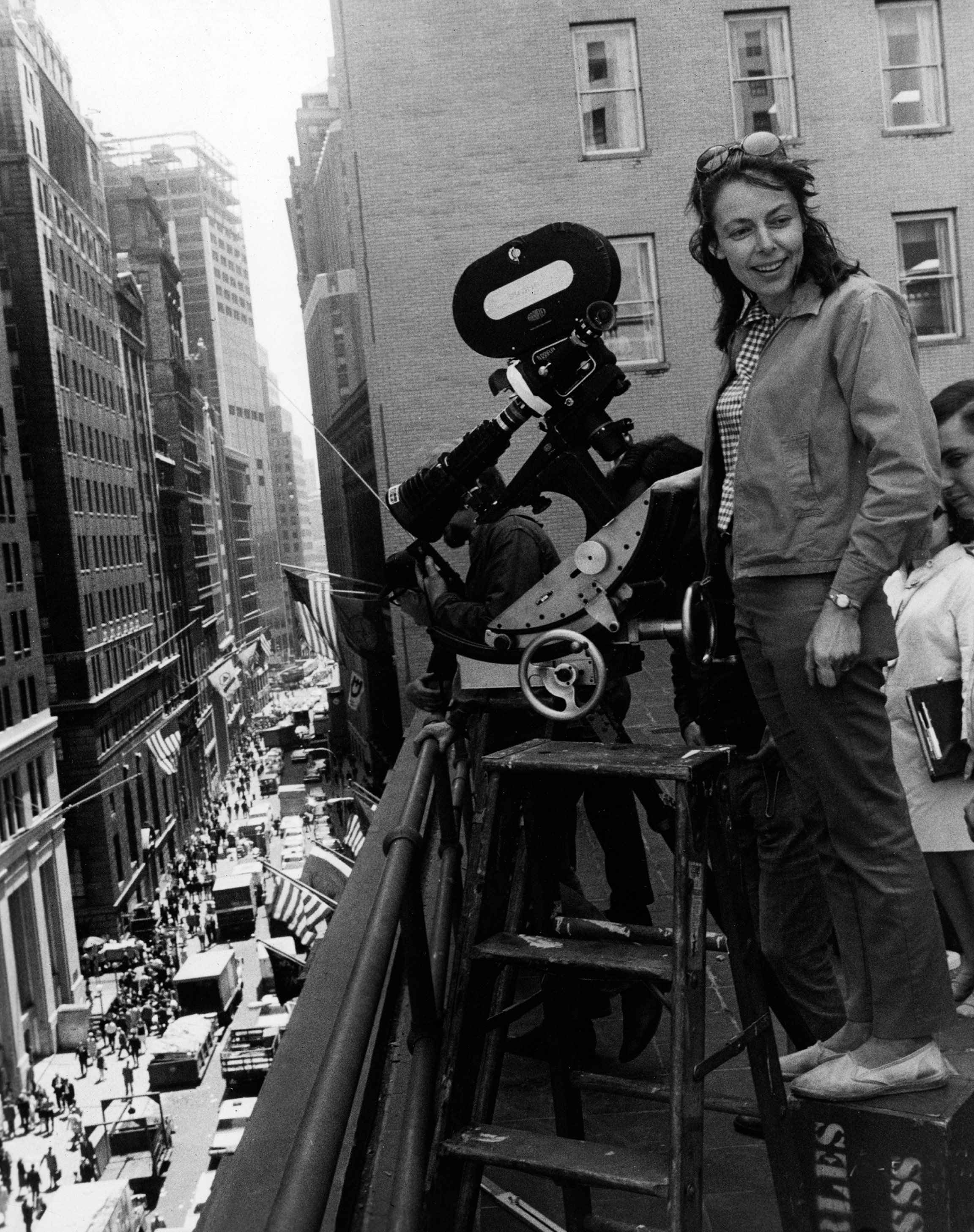
In a fashion sadly typical of Elaine May films, the shoot quickly became chaotic. Columbia already had quick trigger fingers due to May’s reputation from MIKEY AND NICKEY for shooting much more film than is typically needed.
Many of ISHTAR’s behind the scenes issues were beyond their control. The decision was made to shoot the majority of the film in the actual Sahara Desert, and principal photography began just as Israel began bombing Palestine; the infamous murder of Leon Klinghoffer soon followed. Talk about your bad timing. There were also issues stemming from cultural differences between the American film crew and the Moroccan locals; there’s an infamous (possibly untrue?) story about one of the animal trainers dragging his feet on purchasing a blue-eyed camel, only to find out the camel was eventually eaten by its owner. Also, Morocco understandably didn’t really have the infrastructure to support a Hollywood film crew, and thus were unable to fulfill many requests and obligations.
Finally, Elaine herself seemed uncomfortable in the desert setting, and ended up fighting with people constantly. Some of her targets included: Warren Beatty, her cinematographer Vittorio Storaro, Warren Beatty, her editing crew, and Warren Beatty. Seriously, May and Beatty fucking hated each other by the end of this thing. Beatty felt like he was stuck on this shoot that was spiraling out of control because he had been doing it as a favor to a friend, yet he found himself disagreeing with May on almost everything. The budget ballooned, the release dates were delayed, and a public catastrophe was born.
As they often say, the story of what went wrong is twice as interesting as the product on-screen. The interesting and fraught friendship between Beatty and May takes this tragic arc that someone is almost definitely try to dramatize in a terrible prestige miniseries eventually. Maybe the people who brought us THE OFFER can take it on.
Well, enough about what went wrong behind the scenes. Was it all worth it? Was the initial dog-piling on this movie fair? What’s the tale of the tape?
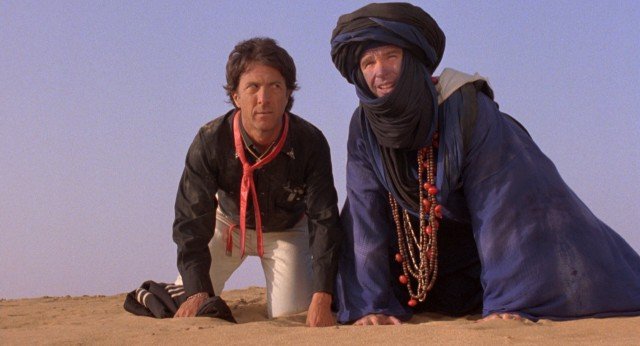
Well, I regret to report that I didn’t like ISHTAR very much. I certainly don’t think it belongs on the Worst Movies Ever list; I’m not even sure it registers on the scale. But it is easily the least of May’s four directorial efforts and a strange misfire coming from someone who had such success at trying different genres and styles of films.
I didn’t go in wanting to hate it. I really did want to join the throngs that have sung the movie’s praises in recent years. But it turns out that I couldn’t, and it’s for one specific, overriding issue.
ISHTAR’s primary sin is that it just isn’t very funny.
There are moments here and there; I think the Paul Williams-penned songs succeed in their intentional ineptitude, and I greatly enjoyed how each Rogers and Clarke song is usually just a half-syllable off in meter, which causes it to hit the ear so badly. It’s also always welcome to give Charles Grodin a few moments to do his Grodin thing (although not nearly enough).

Finally, and crucially, I generally actually liked the characters of Rogers and Clarke. The way that they’re set up in the opening minutes (two inept songwriters who find each other almost by accident and end up losing their lives and savings as a result of their misfired ambitions), it seemed like a different movie entirely was in store. They’re broadly funny without feeling unmoored from reality. I would have been perfectly content if they had just stayed in New York and try to make it big (in this and this alone, Hoffman and I share some common ground).
Alas, we’re out of the United States by the twenty minute or so mark, and we arrive in the fictional Ishtar, on their way to Morocco to head to their first paid gig. Comedic hijinks ensue and they almost all fall flat onscreen. I can’t quite put my finger on why nothing seems to work, but work they do not.
I keep thinking about how Elaine May meant for this to be a tribute to the ROAD TO movies, a noble pursuit that somehow seems to have gotten lost somewhere down the line. I’m not the world’s foremost expert on those Hope and Crosby vehicles, but I can say that the best of the ones I’ve seen, ROAD TO MOROCCO, stood out from the others due to its actually quite catchy tunes and its wildly playful sense of humor; Hope and Crosby continuously make jokes about themselves as people, including their contract status at Paramount and their desire for Academy Awards. It’s a blatant break in character, but the actual characters don’t really matter in ROAD TO… films. Nor do the plots, as they’re usually merely flimsy excuses to get the pair into the next set-piece, usually involving Dorothy Lamour (Hope and Crosby usually comment on the thinness of the plots as well).
ISHTAR seems to have landed on the opposite philosophy, working very hard to establish Hoffman and Beatty’s characters (to some significant degree of success, as mentioned above) as well as an increasingly complicated plot. None of the trademark playfulness that one might expect from a ROAD TO riff is present here. It’s a little surprising to me that May replaced that with spectacle (that being said, Dustin Hoffman DOES fire off a rocket launcher in this, which is something), since her improvisation background would seem to be a great fit for that comedy style.
As a result, I find myself unable to reclaim ISHTAR as a slept-on classic. Instead, it’s merely a sad end to a far-too-small directorial body of work from one of the funniest people on the planet. It shouldn’t surprise anyone that Elaine May never directed anything else again. However, her legacy is definitely secure, having just this year received an honorary Oscar. She has a resume full of creative credentials longer than just about any other living person in Hollywood.
I don’t blame her for not returning to the director’s chair. Would you?