Spielberg HOOKS Us In: Spielberg Summer 3 Begins!
I’ve spent a fair amount of time defending Steven Spielberg.
All throughout my life, I’ve heard other works get described as “Spielberg-ian”, and that descriptor can have a range of meaning. Sometimes, it’s meant as a good thing! Someone might describe a J.J. Abrams joint like SUPER 8, or a TV show like Stranger Things as “Spielberg-ian” in the sense that their emotional focus is on the wonderment of children staring at a universe that turned out to be way bigger than they ever could have imagined. It’s the only way to describe all those feelings we really love from the real Spielberg’s best stuff! It’s what defined the notable classics of his filmography like E.T., A.I., and JURASSIC PARK, after all.
On the other hand, someone could also use the word “Spielberg-ian“ to the eventual erosion of American Hollywood, a slow movement away from the antihero edginess that kicked off the 70s towards the safe, saccharine, borderline-manipulative commerciality that ended the 80s. Just as a point of comparison: in 1970, the top ten-highest grossing movies in America included M*A*S*H, PATTON, WOODSTOCK, and LITTLE BIG MAN. By 1989, those movies had given way to BATMAN, GHOSTBUSTERS II, BACK TO THE FUTURE PART II and INDIANA JONES AND THE LAST CRUSADE. If you were a disciple of New Hollywood, this couldn’t be seen as anything other than a fatal atrophy.
This second definition, Spielberg as the commercially manipulative media giant, is the one I’ve always rubbed up against. Firstly, it presumes that the movement towards “Spielbergian” Hollywood was objectively a bad thing, which I’m not convinced it was. For whatever it’s worth, I happen to like all those movies from 1989!* And even if you can’t stand them…well, to be honest, trends in movies (indeed, in all art) just don’t tend to last forever, and it made sense to me that the New Hollywood 70s, with all of its complicated character-driven work, and reliance on young, unique talent, would make way to something more populist in the 80s, especially considering the general direction of the country in that decade. Shit happens. If it weren’t Spielberg, it would have been somebody else.
*Well, I actually think GHOSTBUSTERS II is only okay, but. You know, other than that.
Secondly, I never agreed that Spielberg was all that emotionally manipulative or saccharine. How could someone say that? Consider the scares in JAWS, or the moments of genuine awe in JURASSIC PARK, or all the old-school thrills of RAIDERS OF THE LOST ARK, all of those moments that evoke such strong emotions, all earned through the building up of compelling characters, putting them in amazing situations, and showing what we might really do if we were in their shoes. That’s story-telling 101, baby. Spielberg’s work may not be to all tastes, admittedly, but based on the movies of his I had seen, I never got why people thought his emotional output wasn’t at least honest.
Well, this week, for the very first time, I watched HOOK, Steven Spielberg’s take on the classic J.M. Barrie Peter Pan story and…well, I’m starting to see why people might find him kind of saccharine. It’s maybe his most overtly sentimental film up to this point, and one that may have worked on me more had I seen it as a kid. On the other hand, watching it as an adult, I do feel like it’s maybe it’s his most personal movie up to this point, too, and it’s fascinating.
So…let’s talk HOOK!
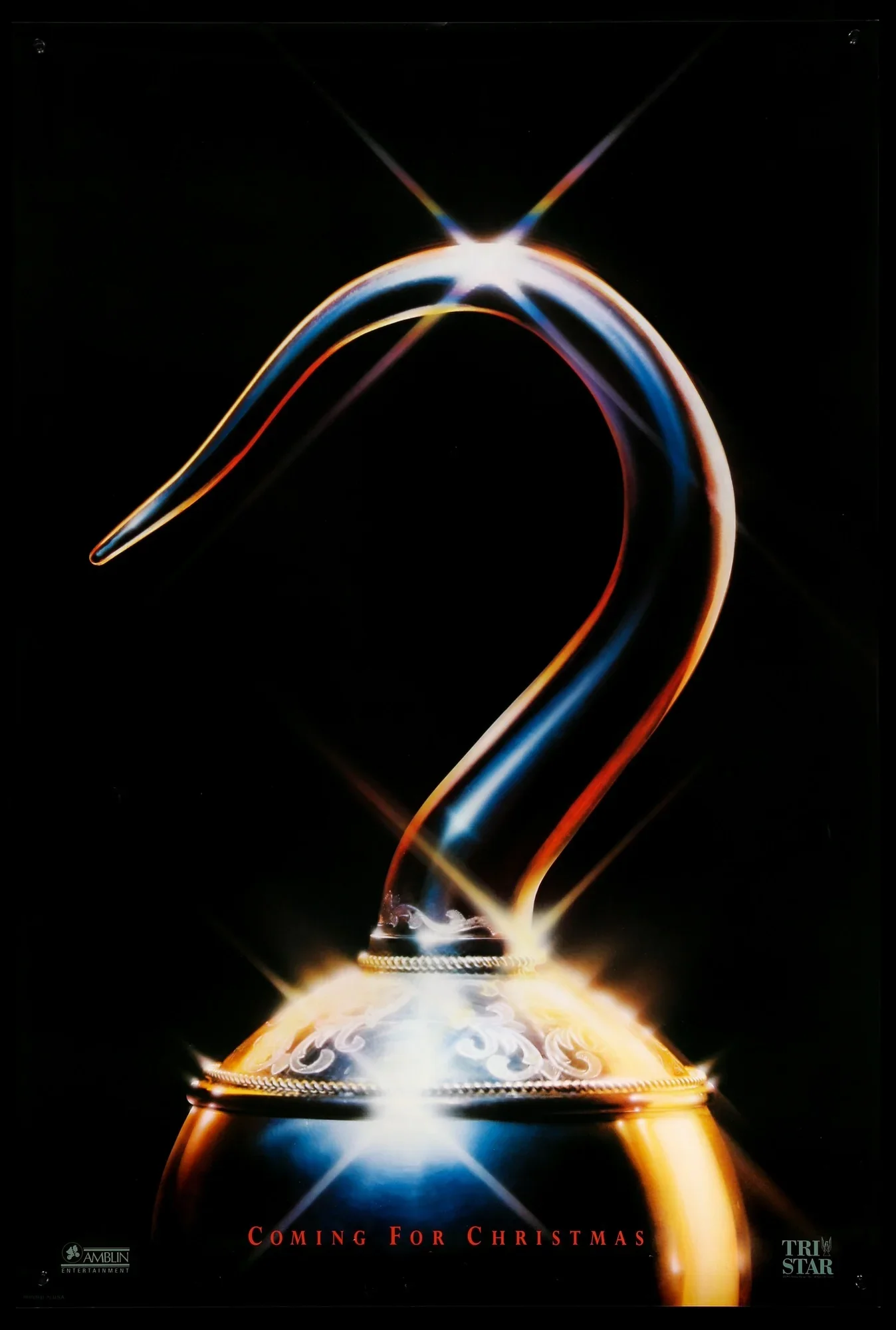
HOOK (1991)
Directed by: Steven Spielberg
Starring: Robin Williams, Dustin Hoffman, Julia Roberts, Bob Hoskins, Maggie Smith
Written by: Jim V. Hart, Malia Scotch Marmo
Released: December 11, 1991
Length: 142 minutes
HOOK tells the tale of Peter Banning, a corporate lawyer whose balance between work and family life is completely out of whack. He tries to be there for his kids, but he can’t even keep from taking an important call in the middle of his daughter’s recital. Despite his promises, he misses his son Jack’s crucial baseball game after another important meeting goes long. The man just can’t seem to get away from his adult responsibilities and embrace these critical years with his child.
Oh, and he’s afraid to fly.
This all comes to a head during a trip to London to visit Grandma Wendy for Christmas. Jack isn’t talking to him. After Peter’s wife Moira erupts at him for tracking yet another damn call, they return back to Wendy’s home to realize that the kids have been taken…by Captain Hook. From there, a grand adventure ensues, and Peter rediscovers not only his past life as the eternally-childlike Peter Pan, but his old friends the Lost Boys and the fairy Tinkerbell (who has since fallen in love with him).
Oh, and it turns out Jack can fly.
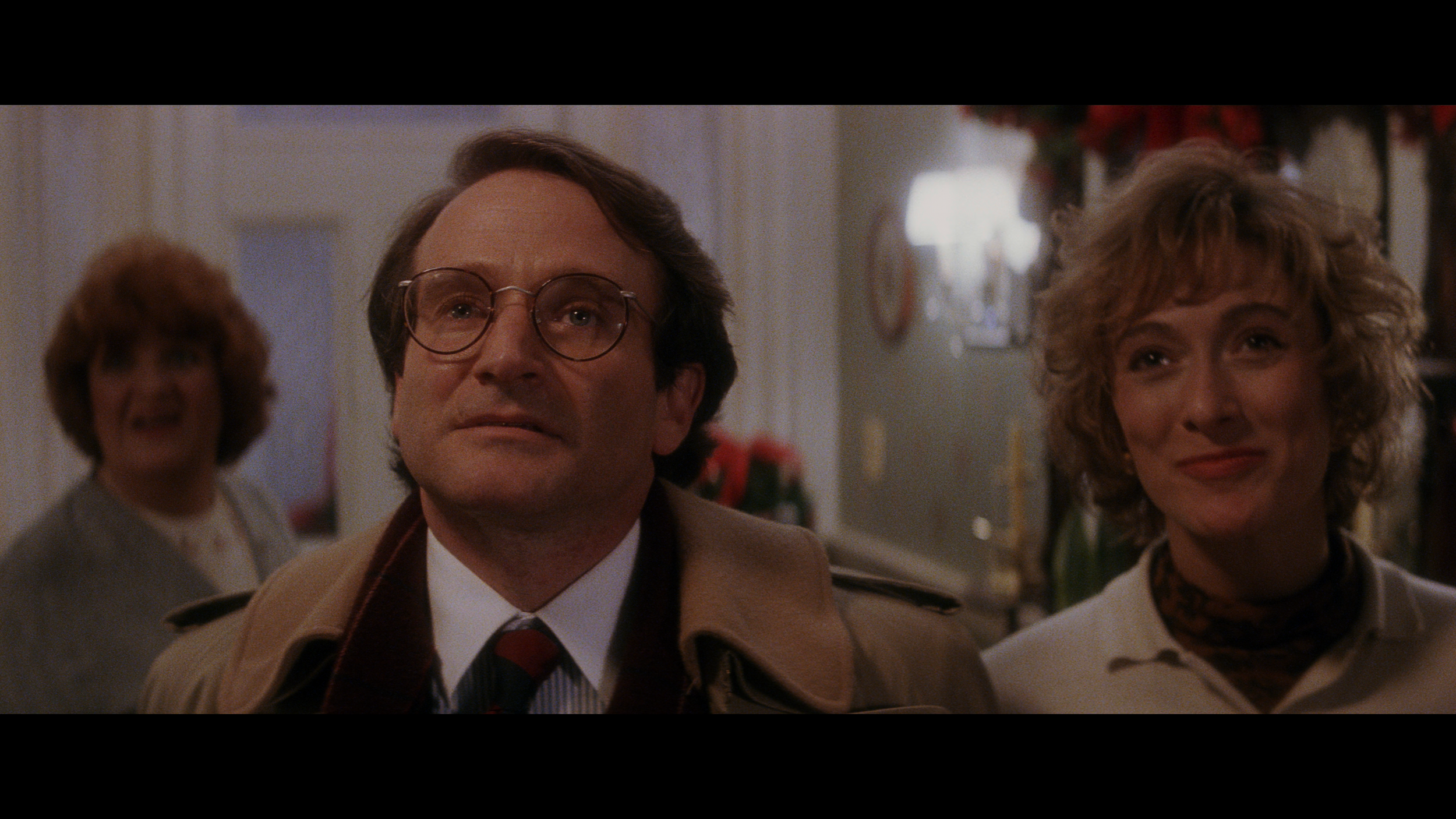
Right off the bat, the themes are clear: so often in life, our childhood sensibilities get replaced by adult responsibilities, losing much of ourselves in the process. Reconnecting with that part of our personality can take a ton of effort and focus (when’s the last time any of us have ever truly enjoyed a midweek summer day, doing absolutely nothing at all?), but it’s an effort worth pursuing, especially if you have kids of your own that will one day become corporate adults.
This type of theming in media existed in droves when I was a kid; cartoon blocks like Nickelodeon, One Saturday Morning and Kids’ WB (both the programming and the intermittent commercials) drilled into me that adults fucking suck and are lame and wear little suits and are mean to kids. Even innocent-seeming Christmas romps like THE SANTA CLAUSE made it clear that, eventually, you’ll lose your belief in Santa and become petty and cruel or even…gasp…a psychiatrist.
It made it hard to actually want to grow up, which is probably why I find myself writing pages and pages about a Peter Pan movie, and trying to connect it to a 1994 Tim Allen holiday movie, at the age of 38. But I take comfort in the fact that it felt like Steven Spielberg also seemed to struggle with the burden of adulthood around the same age. In his biography, he was quoted as saying,
“I have always felt like Peter Pan. I still feel like Peter Pan. It has been very hard for me to grow up, I'm a victim of the Peter Pan syndrome".
This aspect is probably the most interesting thing about HOOK for me. Watching it, you can feel Spielberg, a man who had survived a rocky childhood defined by the separation of his parents and his strained relationship with his father to become the biggest name in American film, all of a sudden struggling with also becoming a one-man media production company and a recent divorcee himself.
In short, Steven Spielberg was Going Through It with HOOK.
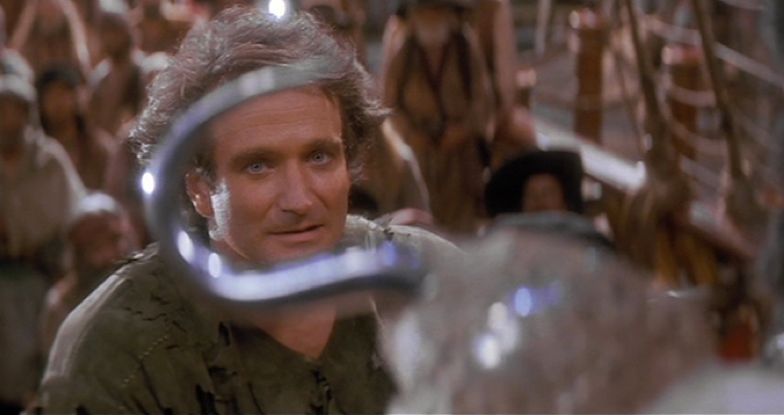
It’s very obvious that he sees himself in Peter Banning, a man who used to fight pirates as a child, and now has basically become a pirate himself as an adult. He used to be endlessly creative, flying about and shooting awkward hoops with fellow kids, and now his own kids will barely talk to him. Hell, even Peter’s ironic fear of flying is based off of Spielberg’s own aerophobia. When viewing this movie not as a story about an adult Peter Pan, but as a story about its own auteur, it’s admittedly a fascinating watch. It’s the most Spielberg had ever let us in up to that point.
And, look, as a result, HOOK is very dear and achingly sincere. Its humor is fairly gentle, and its worldview is sweetly optimistic. HOOK supposes a world where child neglect can be solved by just attending a baseball game or two, your adult anxieties can melt away by remembering your youthful adventures and the miracle of flight can be achieved by just thinking about your family. It sounds like I’m making fun, but I’m kind of not; it actually is nice that Spielberg has created a fanciful world where all of these big, complicated human issues have somewhat achievable solutions.
So, there’s a lot that’s admirable about HOOK, and I think within Spielberg’s wider filmography, the personal aspects make this a “must-watch”, in my opinion. And yet….
Look…..
Well, I’ll just say it. I didn’t connect to a lot of this.
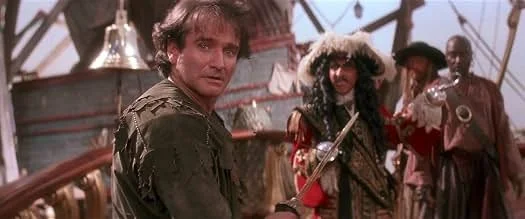
To be completely fair to HOOK, I’ve never felt a strong affinity to either its lead actor, nor the character he portrays. Of course I like Robin Williams; I was a kid in the 90s, too. How could I possibly deny the sheer-force-of-will vocal performance he brings to ALADDIN? Or the singular goofiness he brought to movies like GOOD MORNING VIETNAM, MRS. DOUBTFIRE and JUMANJI, or the simple humanity in works like DEAD POETS SOCIETY? Even outside the world of movies, I remember watching his 2002 HBO special Robin Williams: Live on Broadway make its way through my eighth-grade class. Frankly, I especially liked that my mom seemed to like Williams’ work too, which made him something we could share together.
For me, though, I’ve just never quite shared the deep, deep connection with him that many of my peers seem to. I knew several people who eulogized him after his death that he was “the reason [they] wanted to be an actor” growing up. Which, I can respect! But I can’t relate. I think he was just one of those comedians who, somewhere amidst the manic energy, there was an almost invisible, yet somehow palpable, neediness that made me just a bit uncomfortable*. This distancing is a hard thing for me to talk about, especially considering how shattering and unexpected the news of Robin’s death was at the time. But, that’s just always been how it is for me.
*It’s the same reason I could never quite love Gilda Radner’s short-lived career, another talent who we lost too soon.
As for Peter Pan…well, again, although I never read the original novel, I like the classic Disney film as much as anybody (and it was a staple in our VHS rotation as a kid). But it was never my favorite for whatever reason. I’ve spent days trying to figure out how to articulate why beyond a super-generic “it just wasn’t my thing”. I think maybe there’s something about eternally-adolescent characters that make me feel weird (it’s the same reason a lot of Will Ferrell’s movies don’t work for me). Yeah, I get the metaphor behind Peter and the Lost Boys, and Neverland, and that the ultimate message is that one must grow up. But I feel like so many kids walked away with the idea of “fuck, I actually just want to live in Neverland”, grew up, and then made it their mission to make Neverland real.
Maybe that’s what it is for me. The story of Peter Pan now irks me because there are so many real Peter Pans surrounding us now.
Anyway, as mentioned, none of this is really HOOK’s fault. What I do blame it for is how weird a lot of the performances are. Julia Roberts in particular seems to have been put in a tough position. She wouldn’t really be anybody’s first choice as Tinkerbell in the first place, but I suppose if you’re looking for an audience favorite to play off of Robin Williams, you can see the logic. The problem is that, by nature of having to make her seem tiny, she so rarely seems to even be in the same room as anybody else, cutting her entire performance off at the knees. No shocker, her best moment is when she briefly becomes human size to declare her love to Peter.
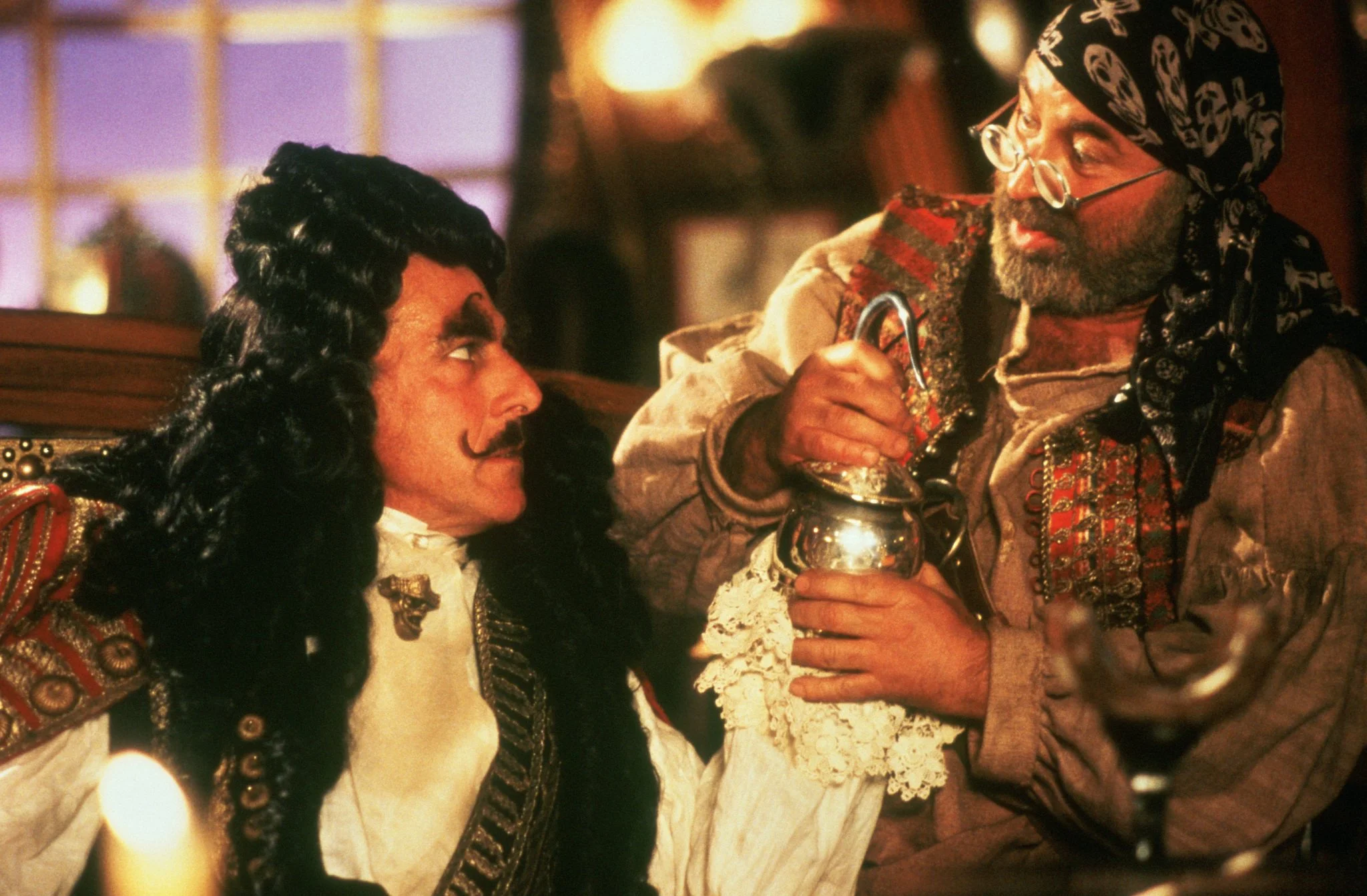
Dustin Hoffman* and Bob Hoskins are having a good time, and play Hook and Smee appropriately broad, although much of the pirate shenanigans sometimes reach the level of well-rehearsed dinner theatre. Much worse, sorry to say, are the cadre of Lost Boys. Outside of maybe Dante Basco, who plays the rival Rufio with some gravitas, the kids are all pretty annoying and kind of bad. This was especially shocking to me, considering Spielberg’s general affinity for drawing good performances out of kids (Henry Thomas, Christian Bale, Ke Huy Quan, to name just a few).
*Who, despite not being in this as much as Williams, is clearly supposed to be the main draw here, right? Since the movie is for some reason called HOOK?
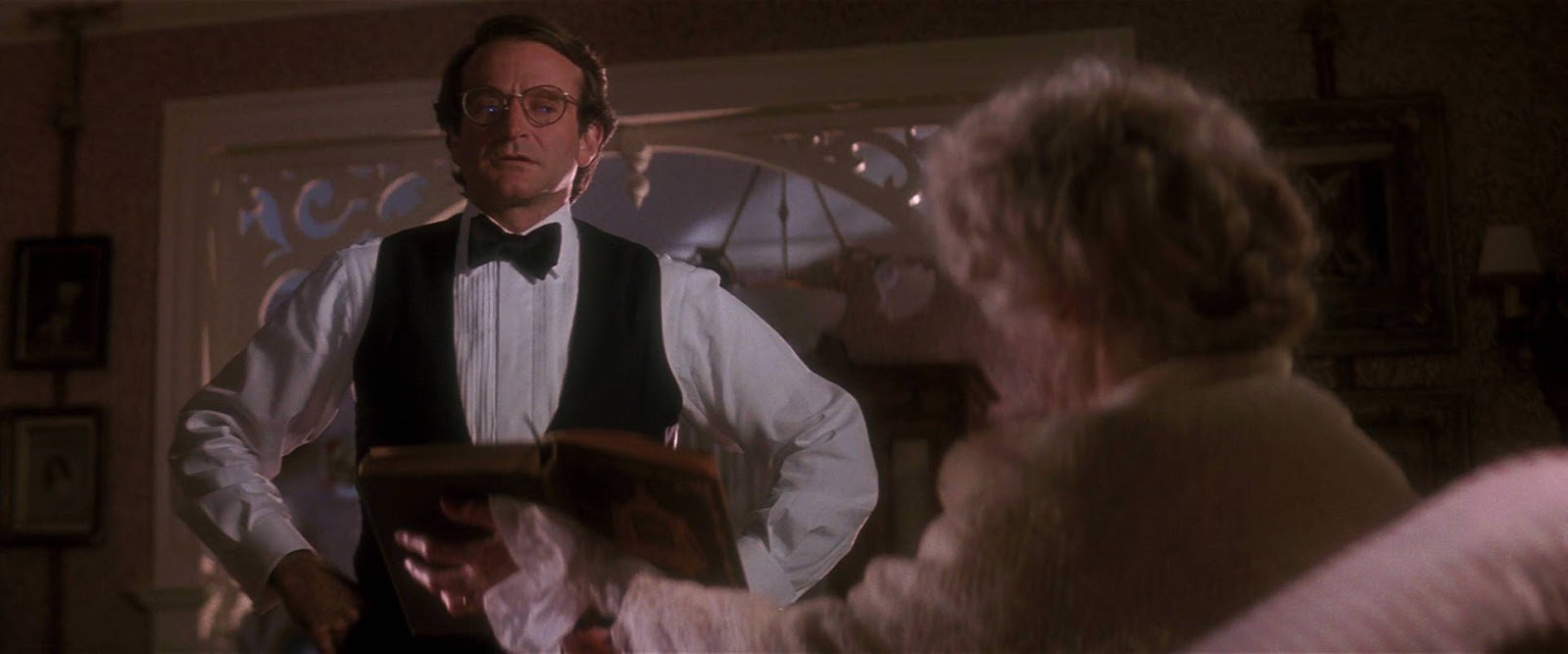
Another thing I couldn’t quite get over…the relationship between Peter and Wendy is weird, right? There may be a good reason why they didn’t just have Peter Banning be Peter Pan’s son or grandson, but it’s not evident to me what it would be. No, instead, they go with a backstory where, a hundred years ago, Peter and Wendy fall in love. As Wendy keeps growing, Peter remains the same. Eventually, Wendy becomes too old and has to move on. But then, Peter falls in love with Wendy’s granddaughter. This means that Peter used to be in love with Moira’s grandma, which you imagine led to some awkward conversations after the movie concluded.
This all just feels overly complicated, almost as if they wanted an old star to be able to play Wendy, and worked backwards from there. And, listen, I am never going to reject Maggie Smith being in a movie out of hand (and she’s terrific in her limited screentime). But at that point, let’s just do a genuine Old Man Peter Pan story. This splitting the difference didn’t work for me.
Again, it’s not all bad. Spielberg’s unrivaled eye for motion and action brings a ton of punch to some of the final battle sequences (there’s a fun gun that shoots eggs that I wish were real). And the sheer star power may carry the day for many. But, the whole time, I kept wondering if maybe I needed to see this when I was genuinely a little kid, before my later thoughts and feelings on the Peter Pan story began to creep in and crystallize. After all, from a review of my friends and colleagues who quite like this, that seems to have been when they first encountered HOOK. And, maybe that’s the time!
Because…well, as Peter says to Hook at one point in this:
“I remember you being a lot bigger.”
And as Hook replies:
“To ten-year-olds, I’m huge.”