Recent Articles
SAVING PRIVATE RYAN and Altruism in the Face of Annihilation
This week, I close out my series on Steven Spielberg’s 90s filmography by looking back on the legacy of his other WWII epic of the decade. The opening is famously visceral and brutal, but it’s more than just a gimmick: it’s crucial to setting the stakes of the movie’s titular decision, one dramatized by an all-star cast and a director still at the top of his game.
Growing up, there weren’t a lot of movies that carried themselves with a palpable, justifiable importance.
Oh, sure, there were a lot of movies that felt dangerous as a kid. I have vivid memories of adults at a dinner table speaking about THE SILENCE OF THE LAMBS and PULP FICTION with hushed tones (as well as memories of trying to hang on to every word to piece together just what kind of movie could be freaking my mom’s friends out so much). As I moved through my teenage years my relationship with hyperstylized violence waxed and waned; I rode with the Looney Tunes-coded bloodbaths in KILL BILL VOL. 1, but for some reason, I felt kind of numb to the constant shootouts in shit like SIN CITY. Although my main objection to that particular 2005 Frank Miller adaptation ought to have been to the painful try-hard “cool guy” dialogue that infected every frame, at the time, I remember sitting there thinking, “oh, maybe we are being exposed to too much.”
So, there were movies that seemed like they were going to sneak up on you and kill you if you weren’t paying attention. There weren’t a ton, though, that felt like you had to sit up straight just at their very mention in conversation. SCHINDLER’S LIST is probably the modern ideal of that kind of film, but I was just a tad too young for that one. Luckily, Steven Spielberg would make what is probably the next movie on that particular list.
For years after its 1998 release, tweens and teens would come home from school with permission slips in their hands for parents to sign, acknowledging that SAVING PRIVATE RYAN would be screened in a classroom in full, up to and including its infamous opening reel. I went through this ritual at least once, if not twice, and the crazy part is that I don’t remember a single student in my class being barred from the screening. All the adults in our sphere seemingly knew this was an important opportunity for us to watch and analyze a depiction of our history.
Everyone in America seemed to feel this way. A couple of years later, Bob Iger made the news for his agreement to have ABC air the movie completely unedited for Veteran’s Day 2001, an astounding feat considering a) America’s puritanical view of any sort of explicit material on primetime TV unless it’s the news, or Jack Bauer sticking a drill into someone’s eyesocket or something, and b) American TV had already been flooded with a very real violence for days just a couple of months prior in 2001. Everyone just accepted that SAVING PRIVATE RYAN was a critical movie for people to be able to access. Nobody really balked at the idea.
Of course, with all movies that are pushing thirty years old, one can’t help but worry as you sit down to rewatch it: “is this as good as I remember? Has its power been lessened after a quarter-century of progression and escalation in film?”
Well, the good news here is: oh, yeah. SAVING PRIVATE RYAN holds up.
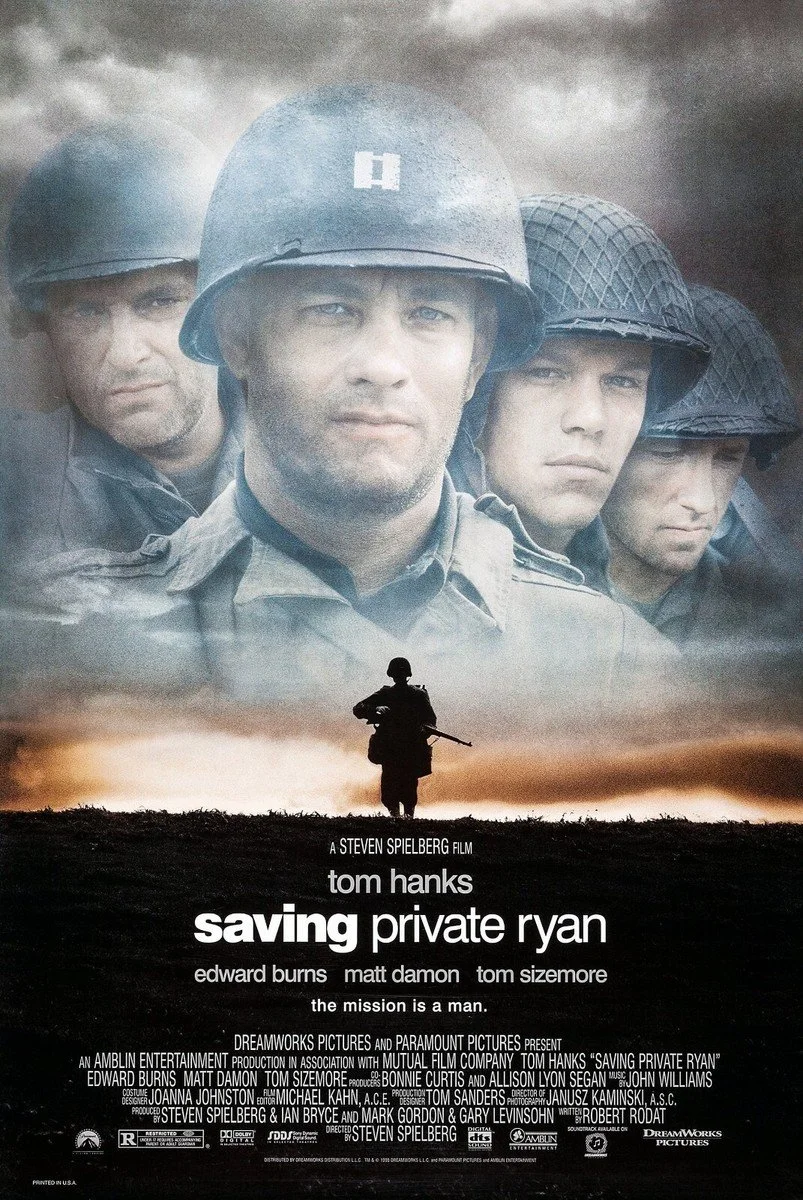
SAVING PRIVATE RYAN (1998)
Directed by: Steven Spielberg
Starring: Tom Hanks, Tom Sizemore, Matt Damon, Edward Burns, Barry Pepper, Adam Goldberg, Jeremy Davies, Giovanni Ribisi, a host of others
Written by: Robert Rodat
Release date: July 24, 1998
Length: 170 minutes
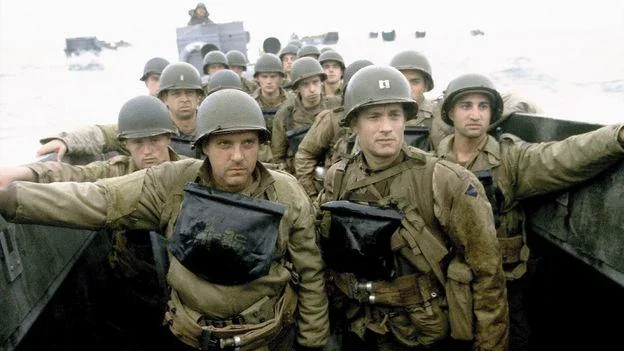
SAVING PRIVATE RYAN is a movie that is admittedly well summarized by its title: in the aftermath of D-Day, a battalion is tasking with locating Private James Ryan, whose three brothers were all killed in action, and is now to be sent home to preserve some semblance of his family. It’s not a task that Captain John Miller (Hanks) is able to sell to his troops with ease. Most of them have a very obvious question to ask: why should they be putting themselves at further risk in order to locate one single guy, one who might not even be alive anymore?
SAVING PRIVATE RYAN is a lot of things. Most obviously, it’s the most famous depiction of one of the most famous battles in WWII history (and we’ll talk about that scene, do not you worry). In practice, it also serves as one of the best “oh my god, he’s in this?” movies ever made. Vin Diesel, Jeremy Davies, Bryan Cranston, Paul Giamatti, Nathan Fillion, Ted Danson, Dennis Farina…all of these names wander in and out of the movie’s near-three hours. It’s the most fun thing about a decidedly unfun movie.
More than anything else, however, it’s a movie about the power of altruism in the face of constant annihilation. Because, on the face of it, there isn’t really a good answer to the “why save Private Ryan?” question. It’s an insane sidequest, one that doesn’t even have a clear roadmap (nobody really knows where Private Ryan is). But Miller and the team try to talk it out anyway. In an early conversation, the team tries to work out the math of risking eight men to save one, before Corporal Upham chimes in with a famous Lord Tennyson quote:
''Theirs not to reason why, theirs but to do and die.''
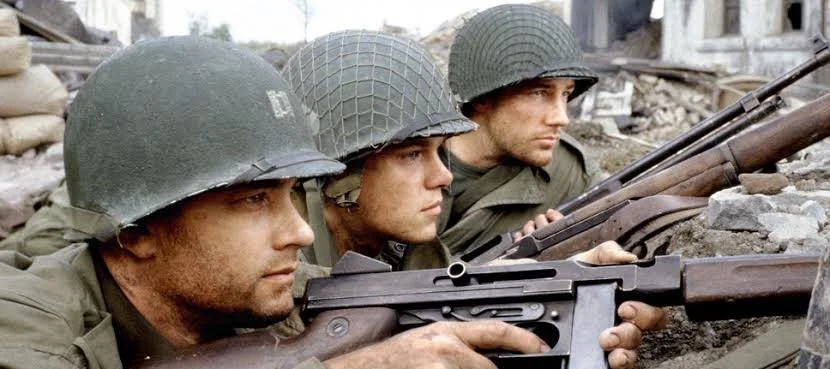
In short, they’re doing it because they have to. Orders are orders. So, fine. Soldiers have a duty, blah blah blah. But, keep in mind this is the 40s. Everything isn’t being constantly filmed. Things are only recorded if someone chooses to record it. Given that nobody even knows where Private Ryan is, if the battalion chose to do so, they could agree to just say they couldn’t find him, or someone told them he was dead, then head back. It wouldn’t be moral, but then, war is inherently immoral, isn’t it? It wouldn’t be the right thing to do to Ryan’s mother, but, as is pointed out, everyone has a mother.
Besides, every major player in this battalion has gone through literal hell to even get to this point to discuss the wisdom of saving Private Ryan. The whole opening reel of the movie makes that clear.
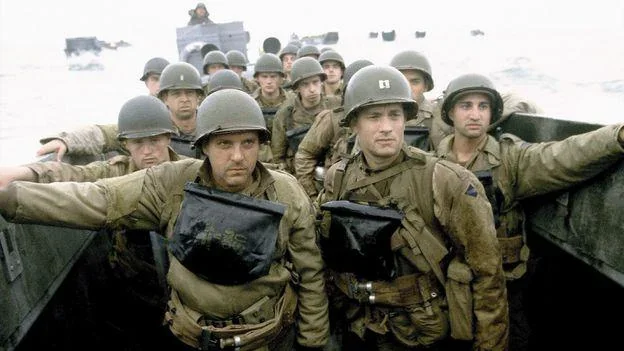
Yes, the famous opening D-Day scene, which is maybe the most visceral and blunt battle scene committed to cinema. As the U.S. Army troops land on the beach of Omaha to storm Normandy, they are met with heavy artillery fire basically from the jump. Dozens and dozens of men are dying, and exploding into red dust. Initially presented through the eye of Tom Hanks’ character, it quickly morphs into a waking nightmare. It’s a scene whose infamy precedes itself to such a degree that it’s difficult to even analyze it at this point. What is there to say about a sequence that seems to still be haunting moviegoers to this day?
In isolation, the way in which lives are lost without warning, with frank blood and guts splayed in front of the camera, where young men cry for their mothers on a French beach, where one guy finds his severed arm on the ground…you get why SAVING PRIVATE RYAN’s opening battle was a such a huge deal in 1998. American war movies are so often wrapped with a sense of nobility, with an acknowledgement that, yes, lives will be lost, but in pursuit of the greater good, it’s an acceptable sacrifice. Hell, given that American involvement in World War II is maybe one of the most acceptable and understandable interventions in the history of war, you get why a lot of movies about it have this attitude.
So, for Spielberg to show that, no, losing your life violently in the fight against fascism doesn’t make it less bleak and hollow, feels almost radical for American blockbuster filmmaking. If the rest of the movie was mediocre, or even bad, if it were merely a violent short film about D-Day followed by three hours of disconnected glitzy, glamorous Hollywood filmmaking, SAVING PRIVATE RYAN would still have a place in history.
But…the way in which life is proven to be so easily and cheaply lost on the battlefield, the way in which success in war basically boils down to luck…it actually informs that movie-long decision that Miller’s battalion is saddled with. Because, given that the longer they’re exposed, the greater the chance they meet a violent chaotic end, and given that there’s no real method of accountability for them if they decide to disobey orders, and given that they’re clearly touched by God to even be breathing with all of their limbs intact…I think most people would readily forgive them if they decided to let this mission go, just this once.
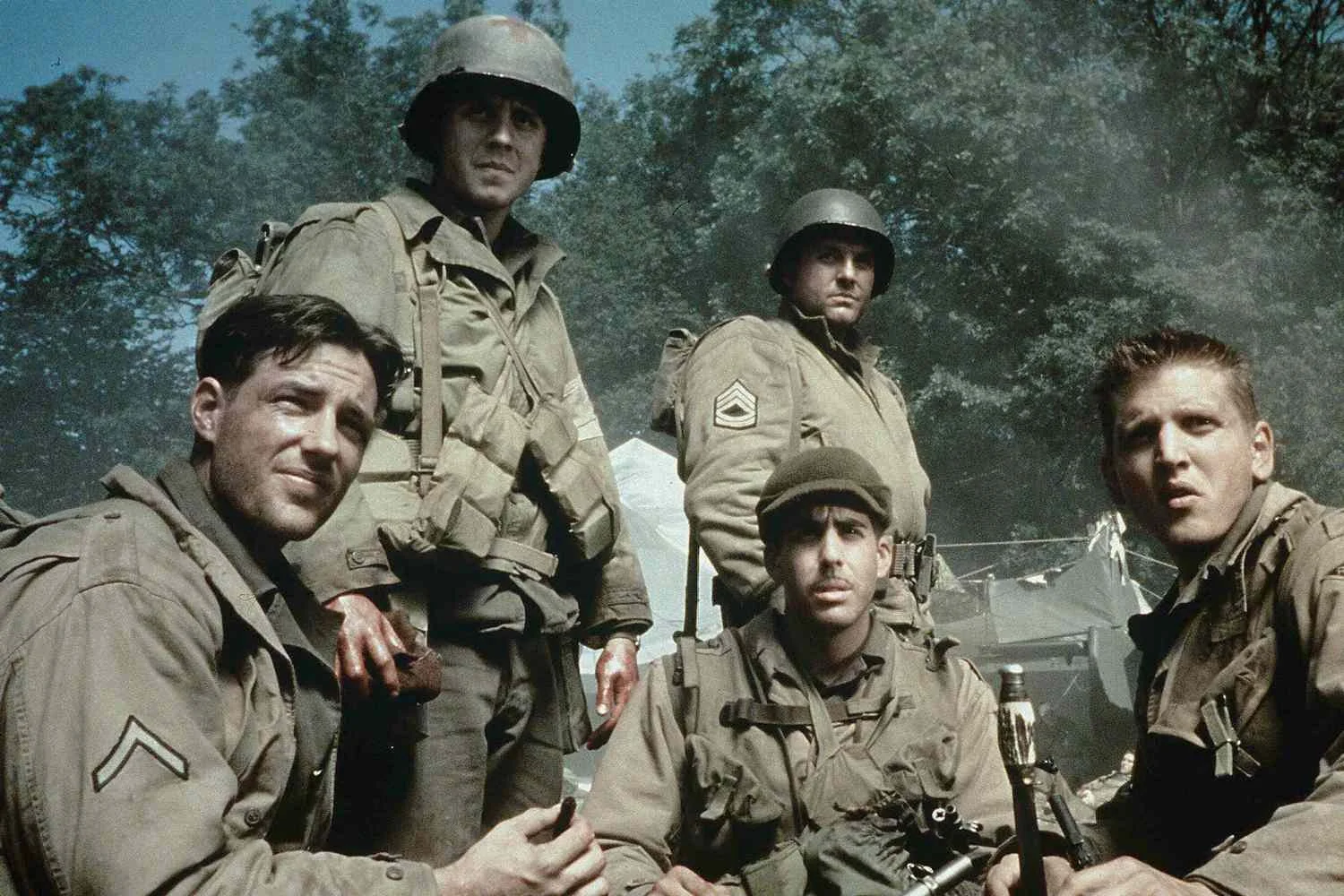
They proceed anyway. And continue to put themselves in danger. And we lose a few along the way. Vin Diesel’s Carpazo suffers an early, tense death. In one of the most upsetting sequences in the whole film, Adam Goldberg’s lovable Mellish is brutally murdered by a German soldier in an upstairs room as Corporal Upham, a man who hasn’t fired a gun since basic training and has all the intent in the world to pick up a gun, become a hero and save the day, stands frozen with fear on a staircase, so non-existent a threat that the German soldier walks right by, not even bothering to kill him.
(I’m not kidding when I say this is the scene from SAVING PRIVATE RYAN that unsettled me the most, and that is including the D-Day sequence. Maybe it’s because the D-Day sequence is so famous in its own right, while I had forgotten about Upham on the staircase until this rewatch.)
This all makes it frustrating when the flip side of the question here rears his head: what if Ryan is found Ryan and he doesn’t want to be saved? When we finally meet Private Ryan, he’s played by babyfaced, wide-eyed Matt Damon, who, when informed of the reason he’s being sent home, prefers to stay on the battlefield and the bridge he’s been assigned to defend, in order to honor the sacrifice his brothers made and make his mother proud. So…whose altruism is more worthy of being honored? The one from the individual or the one from the collective? Is saving Private Ryan still the right thing to do?
There’s no easy answer to the question, but the decision is made to defend the bridge, protect Ryan, then send him home to live his life. This costs Miller his own life, although he lives long enough to embark some wisdom to Ryan: “earn this”. Maybe Ryan didn’t want to leave, but he’s leaving. The U.S. government, in a rare act of selflessness*, is plucking a man out of the sky and getting him out of danger. Eight men decided to make this happen at great risk to themselves, even though they didn’t really want to. Ryan’s new goal from here on: make it worth it. Even if you didn’t really want it.
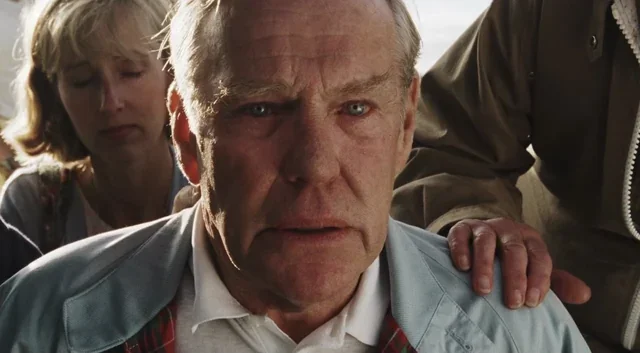
The end result is a movie experience so powerful that you don’t think to ask basic questions like: does the framing device around this movie make any sense? The first scene is in the present, as an old man walks over to a grave at Normandy Cemetery. The man is initially unidentified and, based on the way the film visually jumps to the past, I think you’re supposed to think this is an old Tom Hanks at first. But it is revealed by the end that this an elderly, saved Private Ryan, reflecting on the man who saved his life (after imploring him to earn it). It’s the kind of reveal that somewhat changes the way you reflect on the story you’ve just been told, plus it preserves the twist that Tom Hanks dies at the end of the movie.
This is lovely and moving and artfully done, but…do we agree that this implies the whole movie is Ryan’s flashback memory? If so…that doesn’t make sense, right? Since he doesn’t appear until the movie is almost over, how is he remembering battles he didn’t fight, conversations he didn’t participate in? But, again, Spielberg being the master of emotional sense over literal sense that he is, this is legitimately never a thought you have when watching the movie. It only occurs to you days later, while being a cynical know-it-all writing a blog post (you know, hypothetically).
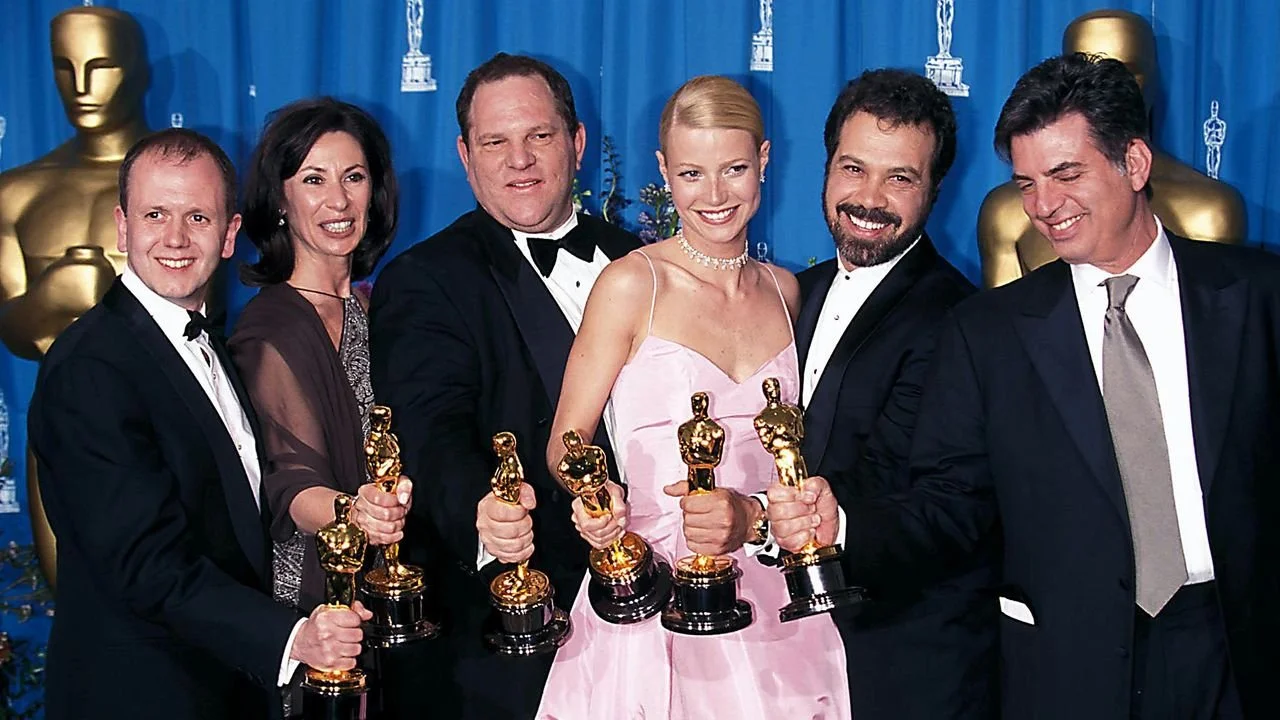
Of course, the second-most favorite thing about SAVING PRIVATE RYAN is its eventual Best Picture loss to SHAKESPEARE IN LOVE and the unstoppable Harvey Weinstein press machine. I don’t know how big of a deal that upset win really was in the broader context of everything else going on on March 21st, 1999; the escalating war in Kosovo was probably more important, all told. But, the defeat SAVING PRIVATE RYAN was enough of a cultural deal to make the news the next day (yes, there really was a time when a Best Picture win would generate mainstream conversation for awhile!) I remember my mom being fucking gobsmacked at the end result, especially considering Spielberg’s Best Directing win (his second!) just a few minutes prior.
And, look, I haven’t seen SHAKESPEARE IN LOVE in something like 25 years*. I remember liking it. I have good memories of its existence. Hell, just like SAVING PRIVATE RYAN, I also watched SHAKESPEARE IN LOVE in a classroom, this time in the context of how the movie stages Shakespeare’s actual words and works. I’m not all that worked up about it winning over another movie almost thirty years ago. I even briefly considered rewatching SHAKESPEARE IN LOVE again for the purposes of this article, before deciding it was ultimately irrelevant.
And that’s because what I find more interesting upon reflection is not so much that one movie won over the other, but that one of them was considered so important by the general population that it actually managed to make it not winning an award feel like some sort of cultural failing*. When was the last time the Best Picture Academy Award felt that important?
*Of course, it’s not helped that the man who helped push SHAKESPEARE IN LOVE to victory is, um, a convicted criminal.
And that’s the thing about movies with that kind of gravity. It kind of just pulls everything in around it. So it goes with SAVING PRIVATE RYAN and its palpable, justifiable importance.
Of course, some of the importance has been eroded by the sands of time. ABC would screen the movie uncut twice more, on Veterans Day 2002 and again in 2004. By that point, stations had started to opt out in the wake of a television event even worse than the towers falling rocked the nation: the Janet Jackson-Justin Timberlake halftime show. Since then, I can find no evidence or memory of any network TV channel in America ever airing a movie uncensored again. And, of course, in a world where mass shootings are streamed on social media, and violent images of atrocities all around the world are accessible at your fingertips, maybe the power of SAVING PRIVATE RYAN has been lessened.
But, there was a time when it seemed to unite a country that would soon be forever divided. And maybe that was the achievement all along.