The Overwhelming Legacy of SCHINDLER’S LIST
The specter of SCHINDLER’S LIST hovers over Steven Spielberg’s filmography in a way that none of his other movies do. As a kid, my mom made a habit of showing me as many of Spielberg’s most popular movies as she could. As a result, I got to see stuff like RAIDERS OF THE LOST ARK and E.T. and CLOSE ENCOUNTERS OF THE THIRD KIND in an actual movie theatre! As soon as she figured I was old enough for “scarier” ones like JAWS and JURASSIC PARK, I got to see them both on TV. She even tracked down a copy of DUEL, which wasn’t as easy to do 25-30 years ago as it is now. As a teenager, I tended to see then-new Spielberg stuff, your MINORITY REPORTs and MUNICHs and whatnot. Besides a couple of oddities from the 70s and 80s, I had a pretty good hit rate with the Spielberg filmography back then.
But there was always this massive hole in the roster, one shaped like an Oscar. It was probably THE most important Spielberg movie that had ever been made up to that point (and probably still to this day), the one that finally earned him Best Directing and Best Picture wins, and one that tackled one of the most famous crimes against humanity in history, maybe one of the most personal films ever made. And I had just…never seen it.
To be fair, can you blame us? When you’re working through a list of movies with your child, I imagine you’re not eager to get to the one about the Holocaust right away. And once I was old enough to grapple with such bleak and violent subject matter, SCHINDLER’S LIST just became one of those Important Movies that I was going to get to. One day. When I have the time. And in the mood. And the days and decades go by, and the movie remains unwatched.
So, there SCHINDLER’S LIST sat for me, waiting for the right occasion. I definitely wanted to see it, the most acclaimed and awarded film from a director who I otherwise knew so much about. And in the interim, the movie became simultaneously known as The Very Sad Movie About the Holocaust and as The Movie You Refer To When You Need a Hacky, Fake-Edgy Punchline (“My favorite date night movie? Oh, something light and breezy, like Schindler’s List, durhur!”). It felt ubiquitous, even when you had never seen a frame.
To be honest, this is the article I’ve been dreading ever since I launched this summer project going through each decade of Spielberg’s canon a couple of years ago. After all, there’s probably no movie that is the opposite of “summer content” than SCHINDLER’S LIST. There were just a lot of potential landmines to kick. For one, I like a fair bit of irreverence in my writing; would I be able to tamper that down enough to meet the moment of the subject material? More to the point, what if I straight-up just didn’t like it? It’s possible to walk away from just about any movie unimpressed (and as we’ll get into, SCHINDLER’S LIST is no exception), but I wasn’t really looking forward to possibly having to explain a more-or-less dissenting opinion.
Well, as it turns out, I’m grateful I did this project, as it caused me to “assign myself” this movie, almost as homework. And I did end up liking it, quite a bit in fact. And yes, it is a brutal movie. And sad. And infuriating. But, it also uses more colors in its palette than just “sad Holocaust suffering” to tell its remarkable story. Even a couple of comic beats that are some of the funniest Spielberg has ever done.
So, let’s do it. Let’s dig into SCHINDLER’S LIST.
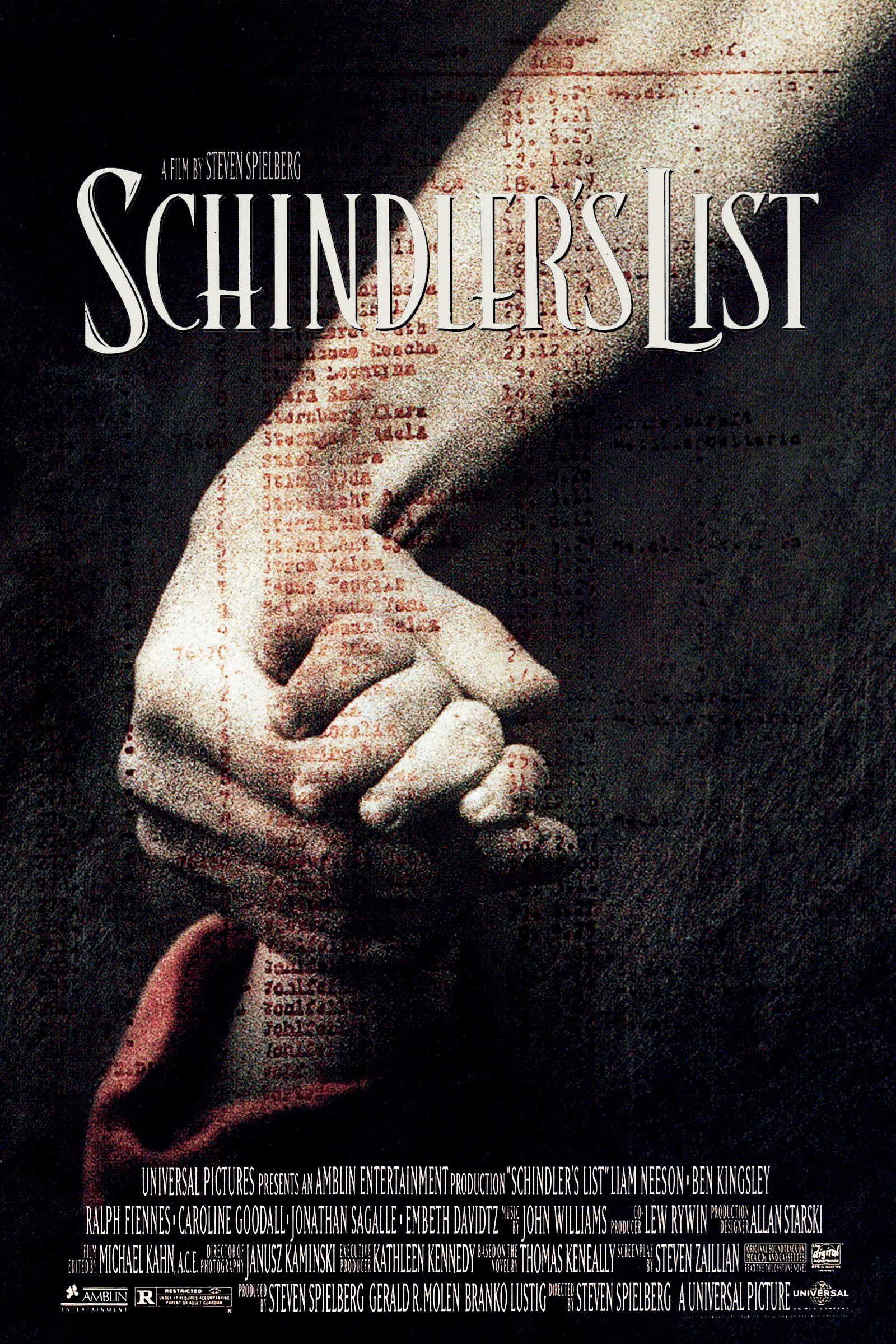
SCHINDLER’S LIST (1993)
Directed by: Steven Spielberg
Starring: Liam Neeson, Ben Kingsley, Ralph Fiennes
Written by: Steven Zaillian
Released: December 15, 1993
Length: 195 minutes
SCHINDLER’S LIST tells the story of Oskar Schindler (Neeson), a glad-handing businessman who comes to Germany-occupied Krakow to make his fortune in manufacturing. His whole world revolves around dollars and cents; he’s a man who never misses an opportunity to shake the hand of a higher-up, or suck up to the most important man in the room. The only reason the proud Nazi party member lets Jewish people into his orbit at all is because they end up making for cheaper labor than the local Polish. As the extermination of the Jewish people roils in the background, Schindler has no qualms maintaining his connections with Nazi higher-ups, including the ruthless Amon Goeth (Fiennes).
However, he also gets to know the Jewish men and women that keep his business running, including his accountant Itzhak Stern (Kingsley), whose status as a free man is constantly imperiled, and would likely be revolved if Schindler hadn’t stepped in to vouch for him. Slowly, Schindler begins to learn the limits of his Nazi support, and when bodies begin to burn, his priorities shift from making money to saving lives. When an opportunity arises to start shifting his workers away from danger, a scheme is hatched to develop…well, a list.
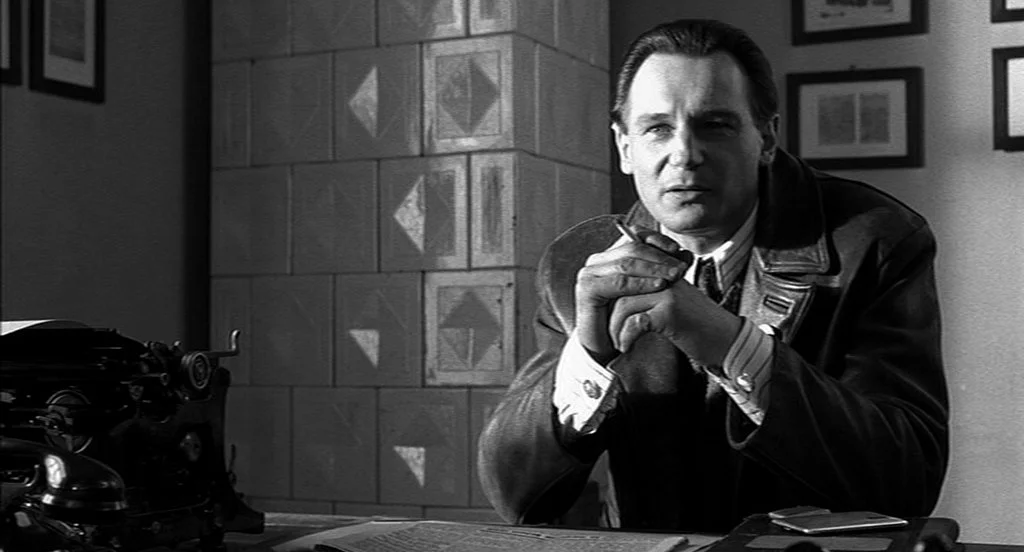
SCHINDLER’S LIST, then, is the journey of a capitalist using his resources to become a humanist, a story that might strike modern audiences as so naively optimistic as to be outright offensive. It’s all the more remarkable, then, that it’s a true story, albeit told in an American Hollywood fashion. Still, it’s not often you see this full range of human capacity captured in one three-hour block.
The making of SCHINDLER’S LIST is well-documented and famous in its own right. The most famous bit of trivia involves weekly calls Spielberg would have with Robin Williams, who did private stand-up comedy for his new friend, bailing without saying goodbye as soon as he got the director’s biggest laugh. Although the content of this stand-up will remain mostly a mystery, Liam Neeson has shared that at least one segment revolved around the concept of “I’m not a Nazi, I’m a nutsy”, so perhaps one had to be there. Still, it’s beautiful to know that Spielberg had a strong support system as he began work on the most emotionally draining story he ever had to tell.
My favorite SCHINDLER’S LIST behind-the-scenes story, however, is its involvement in a famous trade between Spielberg and Martin Scorsese. After worrying for years that he just wasn’t a mature enough filmmaker to adapt the novel the movie is based on (Thomas Keneally ‘s 1982 book Schindler’s Ark), Spielberg shopped its rights around to many of his peers. Roman Polanski, Brian De Palma, Sydney Pollack and Billy Wilder all considered taking the project on, but ultimately declined. One who did say yes was Scorsese, who signed on to direct SCHINDLER’S LIST in 1988. As so often happens in life, however, Spielberg didn’t know how much he wanted the job until it was no longer his.
So, Spielberg made a deal. He happened to be sitting on the rights to a remake of the 60s thriller CAPE FEAR, and offered Scorsese the chance to do it instead, and all it would cost Marty is the SCHINDLER project back. Scorsese acquiesced and the rest was history. For his part, Scorsese would later express belief in his potential version of the project, but never regretted giving it up.
Having seen both movies, it sure feels like history played itself out correctly. I don’t love Scorsese’s CAPE FEAR; had I seen it first, I would probably be able to appreciate more its gonzo-camp nature, allowing De Niro’s released killer go fucking bonkers in his pursuit of the public defender who failed to keep him out of hail But, at the end of the day, the 1991 remake just can’t live up to the genuinely-unnerving Robert Mitchum-starring original. That said, I doubt Spielberg’s hypothetical version would have been able to live up either. I think he could have had a blast making a tight, tense thriller, but I think the lack of a mean bone in Spielberg’s body would have held it back. It just wasn’t the project he needed at that moment.
As for a Scorsese-helmed SCHINDLER’S LIST, I think he could have made something emotional and devastating; what soulful director couldn’t have? Scorsese’s thoughtful spirituality would have guided the way. But, it’s a distinctively Christian spirituality, and that personal, historical connection to the material would have been missing. For many, many reasons, SCHINDLER’S LIST needed a Jewish director. As it happens, Spielberg was ready to fully embrace his Jewishness.
Steven Spielberg was just the right guy for the project. Even if it wasn’t super obvious at the time.
Going into 1993, Spielberg was synonymous with grand, high-minded family entertainment. Movies like E.T., CLOSE ENCOUNTERS and JURASSIC PARK were drowning in thematic meaning, but there was nothing objectionable in its content. He, of course, dabbled in movies for adults with stuff like THE COLOR PURPLE and EMPIRE OF THE SUN, both of which deal with the more devastating aspects of human interaction and instinct, but neither movies are actively unpleasant watches.
When taking in Spielberg’s filmography chronologically, then, the most remarkable thing about SCHINDLER’S LIST becomes its unflinching nature. Spielberg has never been afraid of depicting tense and dangerous situations (his career was built off of it from the jump) but he had never been one to depict violence in a bare and brazen manner. Yes, INDIANA JONES AND THE TEMPLE OF DOOM got in trouble at the time for being gross, with all its monkey brains and human hearts, as well as its depiction of child enslavement and abuse. But, compared to contemporary nonsense like the adventures of Jason Voorhees and Freddy Krueger, TEMPLE OF DOOM feels more akin to a slightly-too-egdy haunted house attraction than something actively morally depraved.
So the first time someone gets shot in the head in SCHINDLER’S LIST and you just have to kind of sit and watch them bleed out without the benefit of a merciful cut away, you realize that Spielberg has found a second gear. Characters get killed without warning. One of the more famous acts of sadism involves Goeth waking up in the morning and sniping prisoners from his balcony while having his morning coffee. It’s brutal and stark and disturbing filmmaking, which, of course, makes it the correct decision. And it’s all the more remarkable coming from a filmmaker who doesn’t normally make you feel like this (this is maybe another reason why Scorsese’s hypothetical version of SCHINDLER’S LIST wouldn’t have been as effective; you’d see it coming). Sometimes being too close to a source material can cause a storyteller to pull their punches. Spielberg doesn’t.
Of course, not to be flippant, but it’d take a profoundly poor director to not make you feel something when telling a story about the Holocaust. It’s one of the bigger layups in terms of movie material there is, a truth so well-known that it became a fuckign Ricky Gervais punchline. If the movie was just pummeling you with despair for three and a half straight hours, I don’t know that it would have been as much of a populist hit as it ultimately became. Of course, Spielberg is too smart and deft a storyteller to just bury you in brutality. There’s plenty of time for that, given the horrific subject matter. In order to keep an audience dialed in with a difficult subject, you need to provide them breaks, breaks that either move the story forward in other ways or otherwise provide some change in tone.
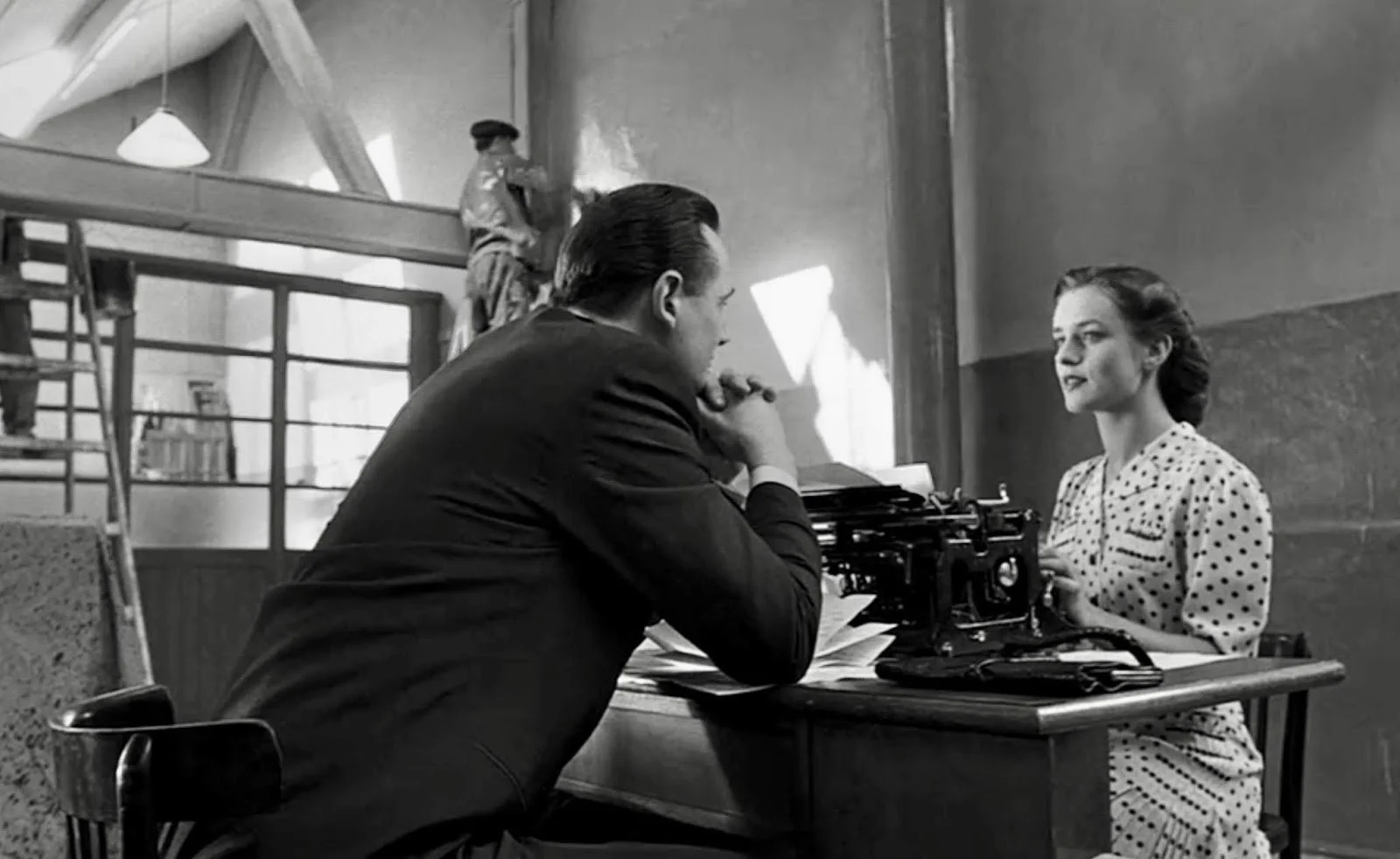
This brings me to a moment in SCHINDLER’S LIST that really, really struck me. It’s the scene where Oskar Schindler holds interviews for his secretary. It’s simple in its construct: we watch Schindler sit across a desk from a parade of potential secretary candidates doing a simple dictation test on a typewriter. As we cut from shot to shot, each one is more attractive than the last. They’re also…um, not fast typists, to the point that Schindler is having to slide the carriage back for them. Which he happily does. As each candidate goes by, Schindler leans in closer and closer. Until at last, we meet the obvious candidate, a frumpy woman who is typing in a white fury. Naturally, Schindler is now leaned all the way back in his chair, pouting with his arms crossed.
Not only did it stand out to me for the obvious reason (it’s a “setup-escalation-punchline” style gag in the middle of the most famous Holocaust movie ever made), but it also feels worth pointing out that we learn a little something about our titular character at this stage of the game. It’s actually important to note that, for all of his eventual benevolence he brings to the world, Oskar Schindler is not a saintly figure! He openly flirts with prospective employees, despite being married. Crucially, he doesn’t make the appropriate hire, choosing instead to hire all of the pretty candidates at once. This kind of moment actually helps to make his gradual crisis of conscience all the more cathartic.
It’s one of Spielberg’s all-time greatest comedic beats. And it comes in SCHINDLER’S LIST. Who would have thought?
There are other weirdly humorous moments; there’s a great jump cut involving Schindler’s afore-mentioned wife, and there’s a grimly funny sequence involving Amon Goeth and a stalled gun (which feels kind of pre-Tarantino), not the kind of stuff you typically in see in otherwise straight-forward Holocaust films. But, honestly, they’re needed, because the serious stuff in SCHINDLER’S LIST is extremely unpleasant, and there’s a lot of it. The centerpiece sequence, such as it is, probably comes straight in the middle of the film, the purging of the Krakow ghettos. Obviously no recreated visual image of such death and destruction can compare to the lived experience of the real thing, but it’s worth noting that this almost 20-minute sequence made me consider aspects of this crime against humanity I shamefully never had before, such as: “oh yeah, what happened to those actively being seen and treated in hospitals during these purges”? The answer: uh, they were fucking murdered.
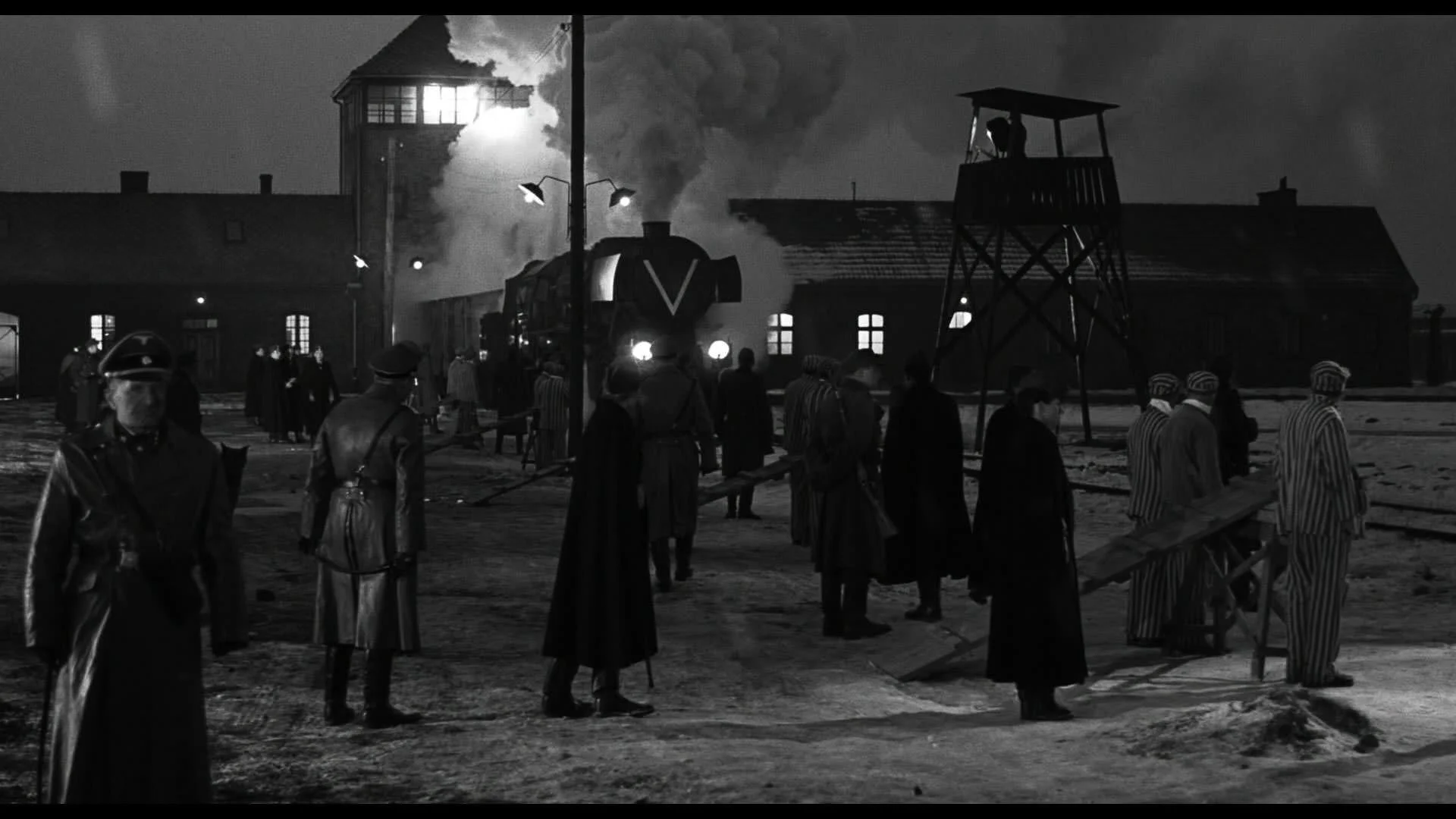
It also starkly shows the cruelty of bureaucracy, especially when it facilitates fascism. Maybe the biggest gut-punch in the whole film (and the part that Spielberg himself had the hardest time filming) is the realization that the train filled with all of the women on Schindler’s list, all the women that Schindler was able to leverage his wealth and buy off of the villainous Goeth, is not headed to Czechoslovakia, but instead to the infamous Auschwitz death camp. It’s confusing and harrowing, especially since it just kind of happens with no warning. All the more devastating is the eventual reveal as to why: a paperwork error.
Still, despite all the stark depravity, there’s a recognizable story and structure to the whole thing, a definable beginning, middle and end. There’s a John Williams score, and three big performances from your favorite stars. Liam Neeson puts in a beautiful performance, and plays both ends of his arc perfectly; his big “I could have done more” monologue at the end is one of those moments that could have felt maudlin, but is wildly effective in his hands. Ralph Fiennes gets the big villain role, and it does it with aplomb, just the starkest depiction of black-hearted evil you’ll ever see. He was nominated for a Supporting Actor Academy Award, but lost it to, of all people, Tommy Lee Jones for THE FUGITIVE. I mean, I have no problem with the choice, THE FUGITIVE is a great movie. It’s just…would you have guessed that?
For all its nasty, stark violence of the most famous atrocity in history, it is absolutely a distinctly American film, and one that was quite profitable. This all leads to the big uncomfortable question about SCHINDLER’S LIST: is it ethical to tell the story of the Holocaust within a Hollywood framework?
It’s a question that has been floating around the movie’s head since its release. There are veins of legitimate criticism against SCHINDLER’S LIST amongst the Jewish community that, for several reasons, I’m mostly just going to list out rather than actively analyze or respond to (the biggest reason being, “who the fuck am I to say they’re wrong?”). In a fascinating round-table discussion with the Village Voice, no less than Maus creator Art Spiegelman rejects the movie* for, among other things, depicting Jewish characters that, to his estimation, never rise above the “bankers and victims” stereotype. There is absolutely no love lost between Spiegelman and SCHINDLER’S LIST; the most memorable comment from the article is his statement that the enduring image of the film is “6 million emaciated Oscar statuettes hovering like angels in the sky, all wearing striped uniforms”.
*Although, Spiegelman also admits a bias against Spielberg in general, stemming from his displeasure with the Spielberg-produced AN AMERICAN TAIL, a Jewish immigration story that he took as a bastardization of Maus. Take it for what you will.
Spiegelman isn’t alone. Michael Haneke has gone on record as stating that the movie’s attempts at entertainment (specifically citing the moment of tension as to whether gas or water will be coming out of the showers) as “unspeakable”. Jean-Luc Godard famously hated the film. And, look, it’s hard to argue against the idea that SCHINDLER’S LIST is a Holocaust movie about a German, a Good Nazi in fact. It’s a story about the Good that Capitalism can do, a very unpalatable perspective in the modern day. What does one do with these facts?
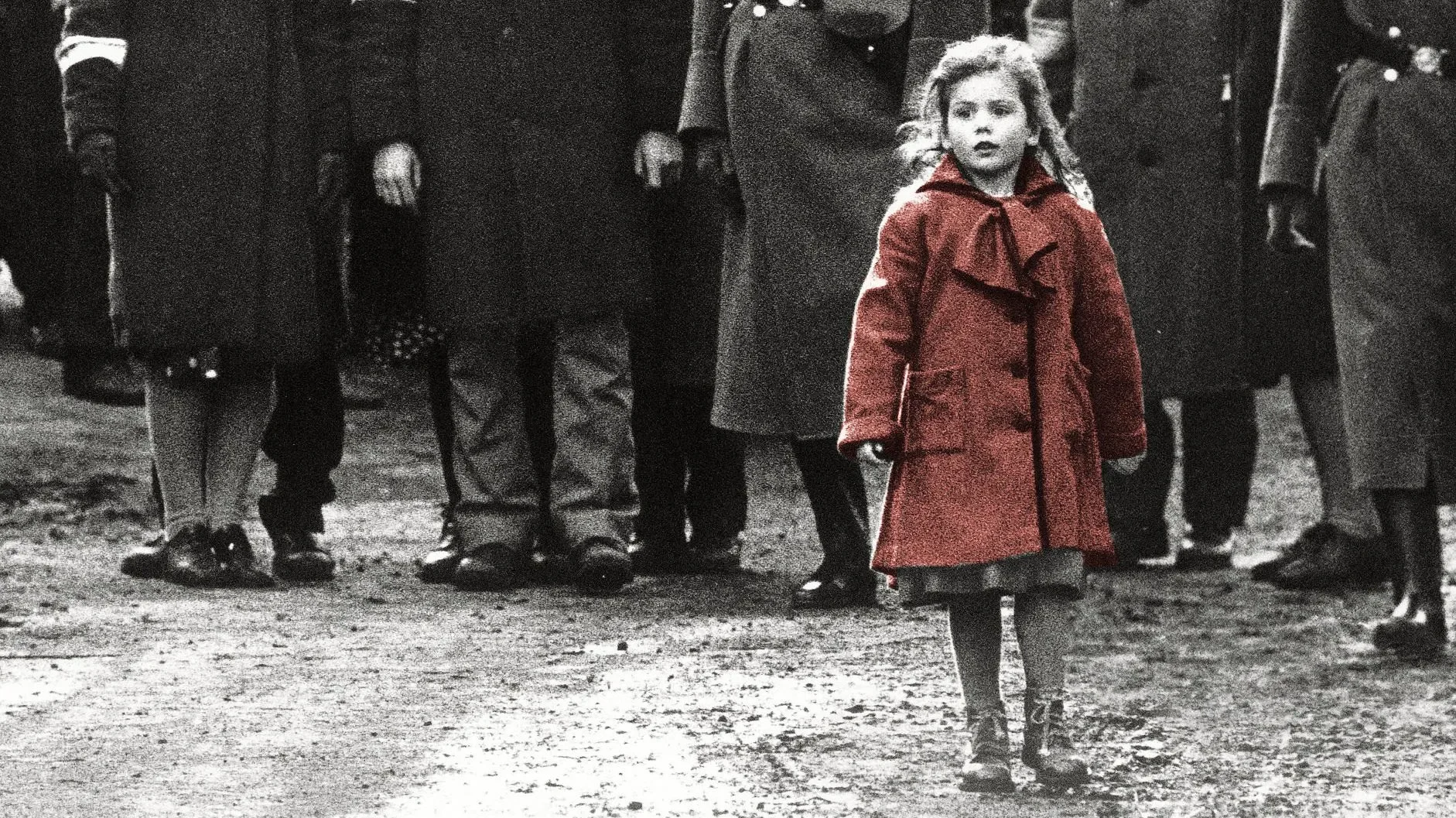
Well, the most I can offer is that it shed light on a particular story about the Holocaust that I don’t think everyone necessarily knows about even to this day (I didn’t, anyway). One doesn’t have to love Schindler for who he was, but it’s undeniable that he kept Jewish lineage going, when he absolutely could have just done nothing (or worse than nothing) and been completely supported by the fascist system he was a part of. And Spielberg’s depiction of that story drew attention to the facts of the most horrific thing humanity has ever done to itself, and drew in audiences that might not otherwise have dedicated seven hours to something like SHOAH. That’s not nothing.
Of course, Holocaust denialism, and indeed fascism, is on the rise again. And in 2026, I have a hard time imagining something like SCHINDLER’S LIST coming out of Hollywood and being embraced. I have difficulty believing all the fucks who think Hollywood mysteriously became woke the day Obama became President accepting a movie like this if it came out this year, and not just bitching about it endlessly on Twitter.
There’s something to be said about timing. And for all the valid criticism against it from people who know of that which they speak, it’s undeniable that SCHINDLER’S LIST arrived in Spielberg’s life at just the right time. And it arrived in American movie theatres at just the right time as well.
Maybe it could have done more. But, it arguably did enough. And that’s something.