Recent Articles
Four From ‘67: A Dozen Thoughts on THE DIRTY DOZEN
This week, let’s celebrate Memorial Day with the 1967 WWII all-star classic THE DIRTY DOZEN! In honor of yet another Robert Aldrich banger, let’s dig through twelve things I found interesting about watching this for the first time.
Today, I’m diving right back into my new series where I knock out a handful of classic American films from 1967 that I have yet to see! And, wouldn’t you know it, just in time for Memorial Day, it’s time to dig right into the WWII classic THE DIRTY DOZEN!
The beautiful thing about writing an article about a movie with a number in its title is that it gives you an instant gimmick. To that end, what follows are my twelve not-so-dirty thoughts about this Robert Aldrich star-studded affair. If you want your freedom, read on!
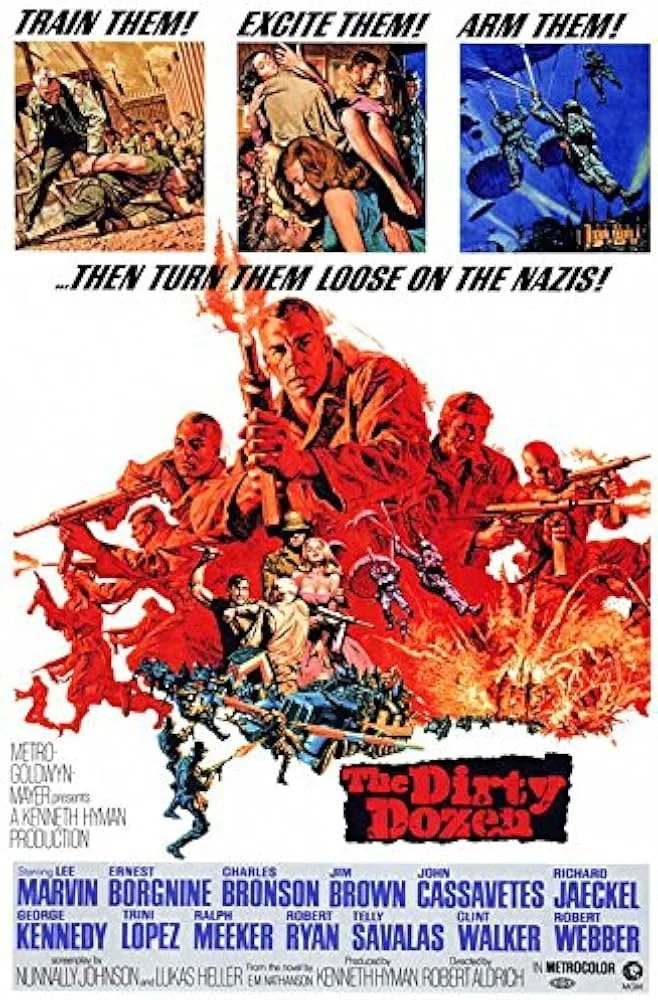
THE DIRTY DOZEN (1967)
Directed by: Robert Aldrich
Written by: Nunnally Johnson, Lukas Heller
Starring: Lee Marvin, Ernest Borgnine, Charles Bronson, Jim Brown, John Cassavetes, George Kennedy, Telly Savalas, many others
Released: June 15, 1967
Length: 150 minutes
1. It’s based on a true story…kind of.
Technically, THE DIRTY DOZEN is based off of a 1965 novel by E.M. Nathanson. But that novel was based off of a real battalion during World War II. Of course, there are a couple of creative liberties being taken here; it is my solemn duty to inform you that the realteam had thirteen members and were known as the “Filthy Thirteen”. I can understand why the eventual novel and movie cut the team down by one: “The Dirty Dozen” is a much better name.
Also, despite the best efforts of war correspondents at the time to state the contrary, the Filthy Thirteen weren’t a team of condemned criminals. Instead, they were a team of demolition experts that had a penchant for wearing mohawks and thumbing their noses at any semblance of military discipline. There is a scene early on in THE DIRTY DOZEN where the team riots at the order to shave with cold water; in actuality, the Filthy Thirteen refused to bathe for a week in order to conserve resources and cook some stolen game. Stuff like that. That said, the daughter of one of the Thirteen would later say the movie was about 30% accurate, which honestly is a better batting average than I would have expected.
2. It has a satisfying premise
Let’s start proper with the actual premise of THE DIRTY DOZEN, one so good that it’s been lifted by other movies and media franchises ever since! In short: General John Reisman (Lee Marvin) is assigned the reins to “Project Amnesty” by his superiors as an act of discipline. Reisman’s assignment? Take a dozen pre-assigned condemned or forever-locked up prisoners, all convicted for a variety of crimes (robbery, murder, rape), train them in the art of combat then complete a mission in Europe.
It’s an immediately intriguing set-up for a story (made all the more potent by the fact that it’s based somewhat in fact); how do you get a bunch of lowlifes to act as a team in the name of a greater good? How could that ever work? It’s no surprise that it’s been adopted by countless movies since 1967. The big ones are the DC and Marvel franchise entries SUICIDE SQUAD and *THUNDERBOLTS, but you can also see DIRTY DOZEN influences in movies such as 1969’s THE WILD BUNCH, 1970’s KELLY’S HEROES (which also features DD alums Telly Savalas and Donald Sutherland) and 1974’s THE LONGEST YARD, a football movie set in a literal prison. Hell, even THE DIRTY DOZEN launched a TV-movie franchise of its own, generating three sequels in the 1980s.
Of course, the key to making that premise work is one that gets forgotten about by many of its successors, especially the more modern superhero-y ones….
3. They let the dozen be bad!
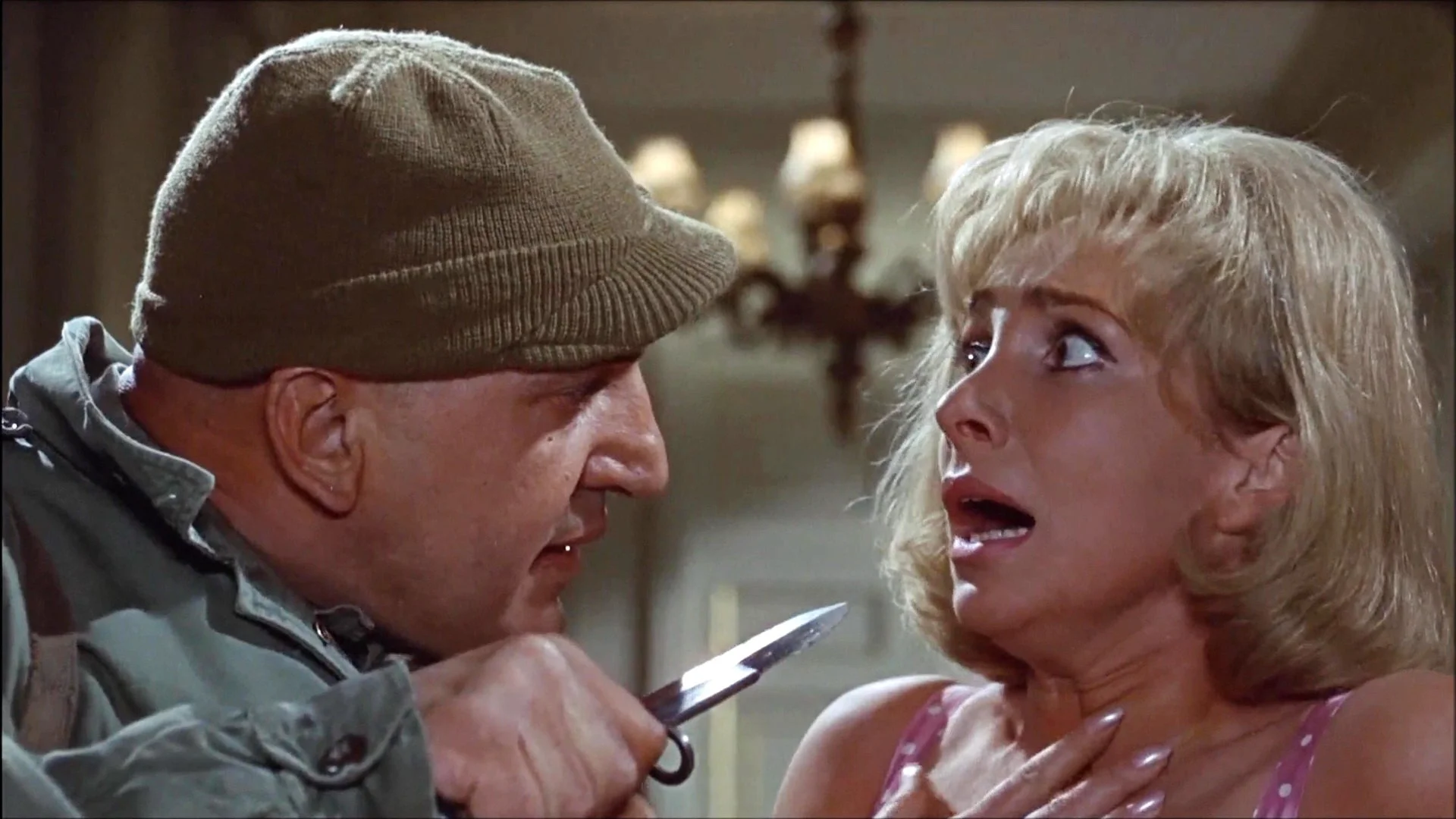
So often in movies about "villainous anti-heroes”, the creative powers behind it seem downright terrified to actually give these heroes any sort of “anti”, any sort of incontrovertible fact about them that might make the audience not like the character. This gets especially egregious when bigger media franchises give the “antihero” genre a go. Disney’s first attempt to expand their Mandalorian Star Wars television universe flopped hard when The Book of Boba Fett turned out to be…well, mostly boring. That’s what you get when you center your show around an organized crime boss who works his way to the top in order to…not organize any crime! Organized crime is illegal, after all, and fans like Boba Fett. What if he does something immoral that fans don’t like, and then people yell at us online?
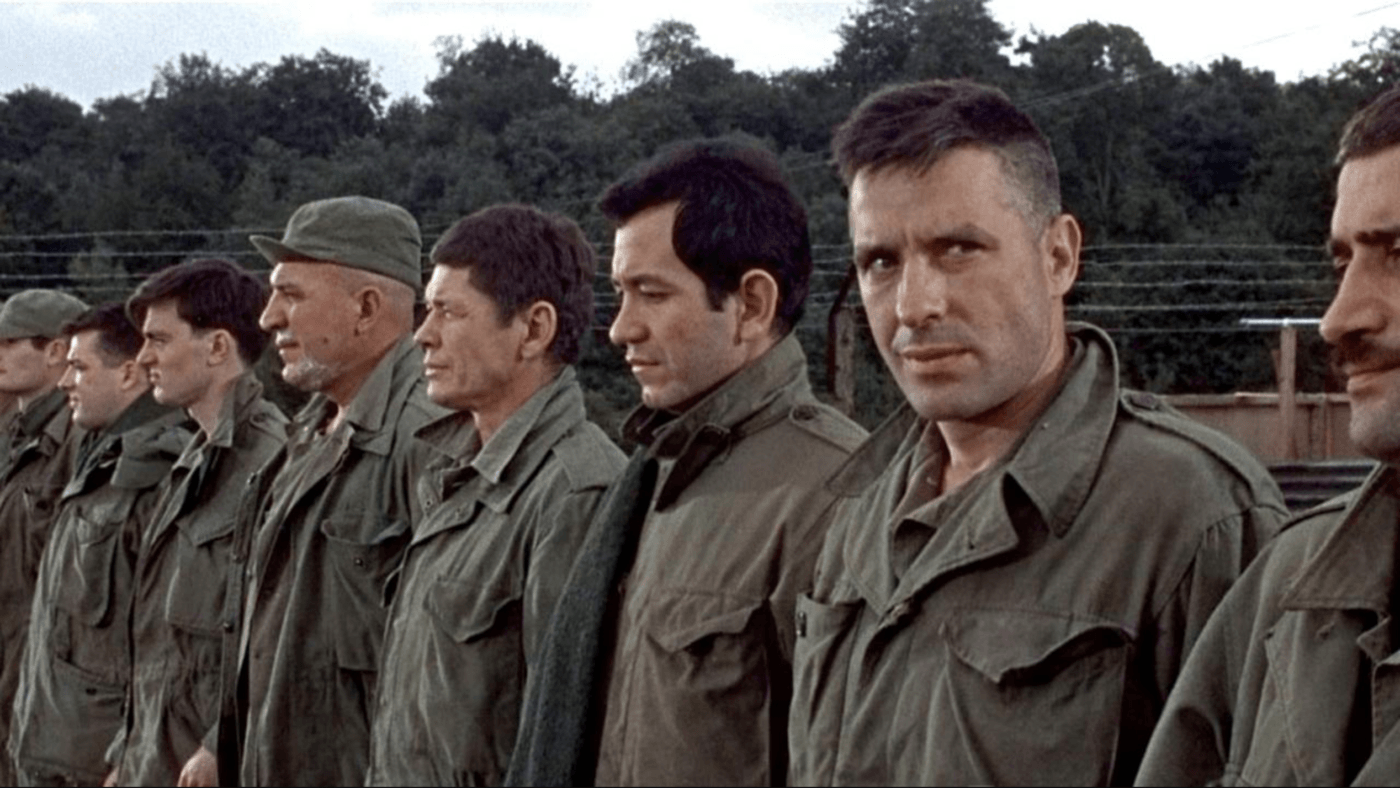
THE DIRTY DOZEN doesn’t chain themselves down with this quandary. Instead, they go all in. Maggot (Telly Savalas) is an unremorseful bigot and anti-Semite. Wladislaw is defiant and flippant against authority. At least a third of the Dozen are literal murderers. Now, some of them have context behind their crimes; Jefferson (Jim Brown) is a black activist who murdered in defense against racist attacks, while it’s questionable how all there Pinkley (Donald Sutherland) really is. But for many of our leads, they’re just…not good men. And we’re just meant to deal with it.
The end result is that the stakes and drama are actually enhanced. It’s possible our Dozen could kill Major Reisman in defiance. They could even kill each other. Who knows? It also helps that these complicated characters are brought to life by the movie’s ensemble…
4. The stars shine
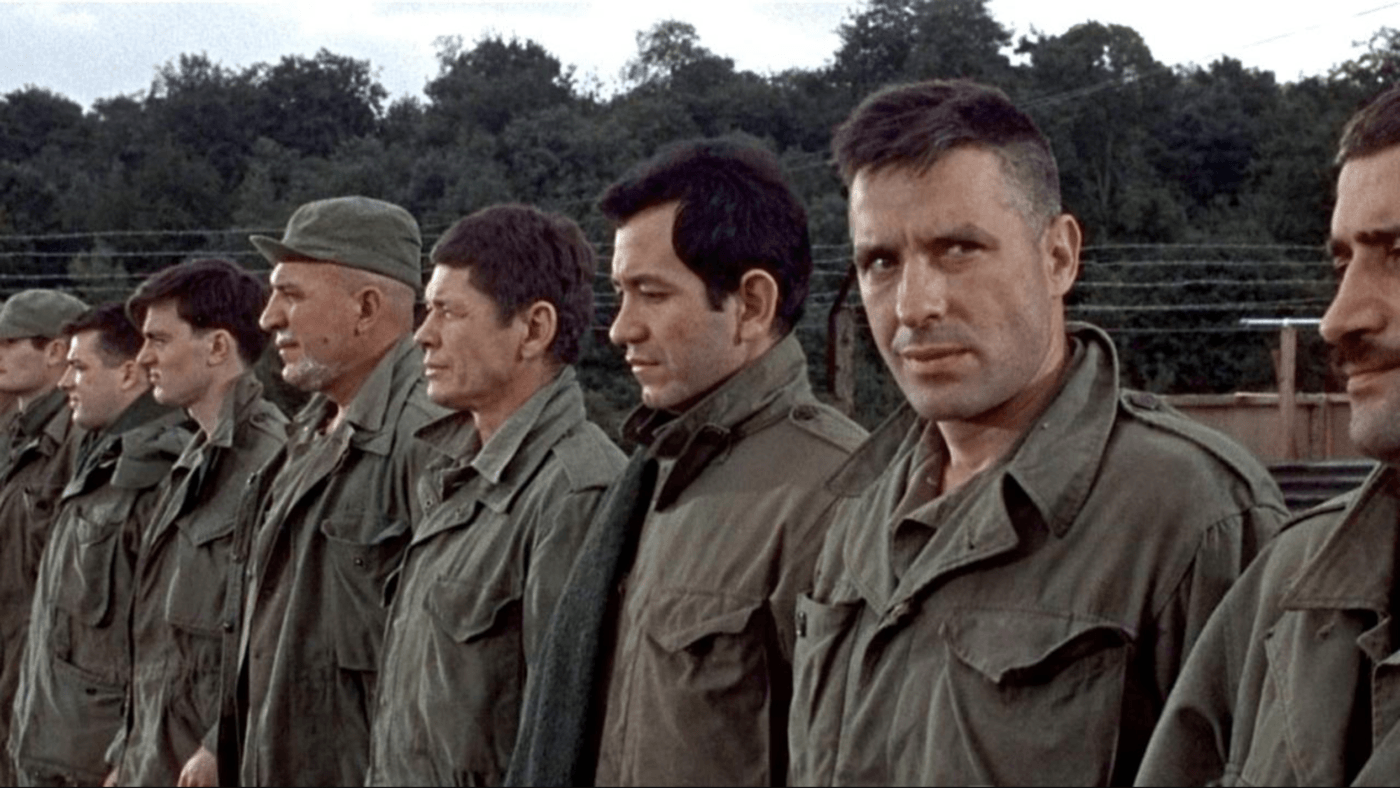
Much has been made of the fact that we don’t have “movie stars” anymore. I basically agree, although I think it’s more a sign of changing times than it is some sort of desecration of a hallowed system. Social media has made making a mystery of a movie star basically impossible. Interesting character actors from places you’ve never heard of have been largely replaced by UCB alumni. And, of course, “star-studded blockbusters” are now more about the characters the stars are playing, rather than the stars themselves. People didn’t really express excitement about Robert Downey Jr. and Josh Brolin sharing the screen in AVENGERS: INFINITY WAR so much as they did about finally seeing Iron Man and Thanos square off.
There’s something satisfying, then, to go back sixty years and see a star-studded cast be about the cast. As the opening credits play, we’re introduced to our roster of dozen dirties, and you just sit there and go “holy shit, John Cassavetes. Oh, Telly Savalas! Is that Jim Brown? Oh fuck, Charles Bronson.” The anticipation for the rest of the movie becomes about wondering how these major names are all going to play with (and against) each other.
It helps that everyone seems cast correctly, relative to our understanding of their personas. Donald Sutherland playing one of the sweeter (if only in comparison) members of the Dozen makes a lot of sense, as does Bronson playing one of the scarier, quieter ones. We just sort of sense that Cassavetes is going to be one of the more unstable ones because we know him from his other roles. Everything just feels intuitive and, thus, really satisfying.
5. It’s (relatively) anti-military
From the outside, THE DIRTY DOZEN feels like an awkward fit in the New Hollywood canon. Compared to its relative peers like THE GRADUATE, BONNIE AND CLYDE, EASY RIDER and MIDNIGHT COWBOY, THE DIRTY DOZEN resembles more of the old studio system fare that dominated Hollywood fare. A star-studded cast! Big action sequences! Sweeping music! And, look, I personally don’t have a problem with that; one of the reasons I find this era of American film fascinating is that both sects of film theory were existing side-by-side.
But, as you actually watch THE DIRTY DOZEN, it becomes clear that more of an edge exists to it that aligns it more with the Hollywood to come. Besides its aforementioned willingness to let its bad characters be bad (lining up perfectly with the rise of the American antihero in film), I was struck by how skeptical of the military this American war epic really is. The very premise implies a deeply cynical view of military brass: the idea of leveraging a dozen criminals to perform work for Uncle Sam is satisfying, but not precisely moral.
On top of that, it’s mentioned more than once that many members of the Dozen seem more hostile toward their superiors than they do their actual enemies overseas. As Reisman notes, the Nazis never did anything to these twelve. This feels like anti-military commentary of the sort that’s out of step with colorful WWII epics, until you consider that THE DIRTY DOZEN was filmed and released smack-dab in the middle of the Vietnam quagmire, one that arguably destroyed an entire generation of American men and forever altered the average citizen’s view on war. The idea that Nazis may be superficially “nicer” than military brass feels like an incendiary insinuation, but…putting yourself in the shoes of the Dozen, can you argue with it?
Now, does this anti-military streak meet the threshold of something like PATHS OF GLORY, released a decade earlier? No, not at all. After all, at the end of the day, the United States military is victorious and righteous. But, there’s enough darkness and edge to THE DIRTY DOZEN’s views on the armed forces that the film actually fits in way better with the roiling New Hollywood movement more than I ever would have thought.
6. It’s funny!
For as much as THE DIRTY DOZEN has on its mind, there are more comedy beats embedded in its narrative than you might think. The military band leader’s constant toothy-grinned false starts trying to anticipate Colonel Reed’s entrance to the base is a fun highlight, as is the good old-fashioned vaudeville routine of the Dozen informing each other via a game of telephone that the military guys who beat up Wladislaw have arrived on base, culminating in Maggot telling Wladislaw himself. It’s a broad comic beat I didn’t expect from an otherwise fairly serious war drama. Needless to say, I loved it.
7. The length
For as much as I like THE DIRTY DOZEN, I do have to question whether it really needed to be two and a half hours. Admittedly, I sometimes find the topic of how long movies should be a little tiring (the answer ultimately is, as long as they’re supposed to be and not a second less or more), I do think a movie’s economy is really important. If you feel like a film is wasting your time even a little bit, it can’t help but affect the viewing experience.
So, when the whole middle act of THE DIRTY DOZEN is devoted to a war game whose stakes are ultimately inconsequential when compared to the final mission…it’s no wonder that many walk away feeling like the whole section could be trimmed or omitted entirely. I don’t fully disagree with this notion; it feels like THE DIRTY DOZEN is a brilliant 120-minute flick stuck in the body of a 150-minute one, and this act is right around thirty minutes, so the math speaks for itself. That said, I’m feeling a little feisty, so I will defend the wargame sequence just a tad.
So many other star-studded “gang of bad guys learn to fight for a greater good” movies skip over one of the central logic questions: “why would anyone permit this to happen in the first place?” To THE DIRTY DOZEN’s credit, this is a question that hovers over the whole proceedings. Major Reisman is constantly having to justify and contextualize the project to his superiors, despite it not even being his idea in the first place. This need for justification culminates in a wager: the Dirty Dozen will take on the men of Reisman’s biggest rival, Colonel Reed, in the military version of an exhibition match. It’s their strong (and unorthodox) showing that allows Reisman to take the Dozen to France in the first place.
So, yes, there’s a version of this movie that excises this and immediately raises the stakes (and increases its economy). But…so many takes on this format skip this part, and just make its ringleader borderline-insane in order to justify letting criminals fight for the do-gooders, offering maybe lip-service “greater good” justifications. Fleshing that part out makes for a film that’s longer in the tooth, but I appreciate THE DIRTY DOZEN’s attempt to do so all the same.
8. The body count matters
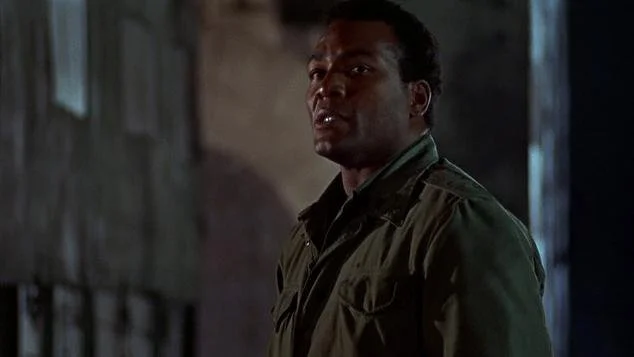
The beautiful thing about unique characters played by compelling stars is that you end up caring about them, even when they’re people you’d never want to meet in real life. So, when people start dying in THE DIRTY DOZEN’s finale, it can’t help but feel a little heartbreaking, no matter who they end up being. Obviously it’s crushing to lose fan favorites like Pinkley feel crushing, and I can’t quite describe the despair when I realized Jefferson wasn’t going to be long for this world. But I was shocked at how much I was affected by losing total degenerates like Maggot. And when this movie pulls its last trick, having what remained of the Dozen pull away in their jeep, just to have one more bullet claim a life (this time, it’s Franko who bites it), I actively said, “oh, fuck you!”, meant in the best way possible.
Again, it can’t be reiterated enough what a magic trick wringing that amount of emotional investment from a group of criminals (many unrepentant!) really is. Obviously, having a cast of beloved stars goes a long way toward establishing that sleight of hand. But we also have to give it up to two other factors. First…
9. Robert Aldrich’s direction
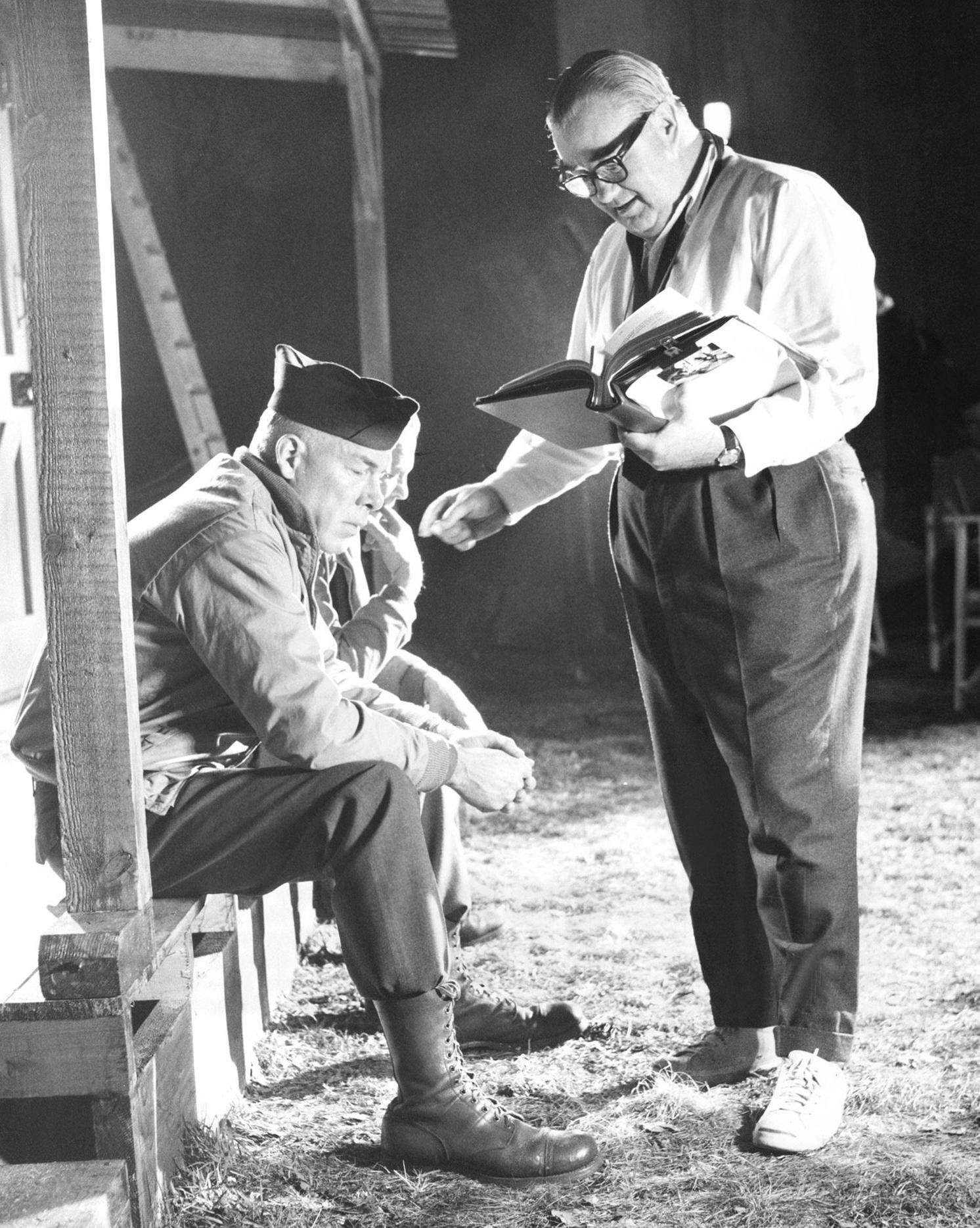
Robert Aldrich sneakily has one of the craziest filmographies of all time.
THE DIRTY DOZEN, KISS ME DEADLY, WHAT EVER HAPPENED TO BABY JANE?, THE FLIGHT OF THE PHOENIX, HUSH…HUSH, SWEET CHARLOTTE and THE LONGEST YARD make up a set of movies that wouldn’t even be collected in the same section of the video store*, let alone exist on the same filmography. But that’s Robert Aldrich for you, an old-school genre chameleon whose less-than-straightforward tonal approaches to his films made him a legend and probably helped inspire the French New Wave. To be honest, his career is probably worth a deeper dive in this space one of these days.
*To those readers too young to know what a video store is, imagine if the Netflix app was a brick-and-mortar building. Also, start taking care of your teeth now, and realize that most of the friendships you have now are situational, and somewhat illusory.
Anyway, his somewhat more psychological and personal approach to filmmaking absolutely makes THE DIRTY DOZEN a richer experience than it would have been with anybody else. He’s a skilled action director, but the action scenes almost feel secondary compared to the scenes where the Dozen and/or the various top brass are just kind of talking and bouncing off of each other. Aldrich had a knack for drawing interesting (and precise) performances from his cast, and the bounty of talent he had to work with ends up being catnip for him.
Of course, those glorious dialogue-driven scenes are nothing without the people who wrote said dialogue…
10. Nunnally Johnson and Lukas Heller’s script
Between Heller, a frequent Aldrich collaborator, and Johnson, an industry vet who had forty years of experience writing the screenplays for all kinds of romantic comedies, dramas, and mysteries, THE DIRTY DOZEN had two writers who were uniquely attuned to the material that was being presented. Fun fact: this script would turn out to be the last one Johnson would ever write prior to passing away ten years later, in 1977.
And it’s a good script to go out on! I don’t know that THE DIRTY DOZEN is a film chock full of quotable lines, in the way that other movies in the 60s were (there’s certainly nothing in this as memorable as a “what we have here is a failure to communicate”), but there is an insanely creative amount of efficiency in its storytelling, with the centerpiece example being the scene where the Dozen go over their Big Master Plan. It’s all done as a rhyming mnemonic. Major Reisman calls out “one”, the Dozen respond with “down to the road block, we’ve just begun”. He says “two”, they respond “the guards are through”. On and on, until they reach step Sixteen. My immediate disappointment with this aside (it should have been twelve steps, right?), this device is such a great way to set up the final act of the film. It’s a complicated sequence, with everyone scattered about this Nazi-occupied castle. But audience members who have been paying attention now have a handy-dandy poem to keep track of where we are and, crucially for what is basically a heist scene, where things are going wrong.
I think this is why, even as THE DIRTY DOZEN approaches its third hour, you’re hard-pressed to know precisely where you would cut things. The obvious answer is that aforementioned wargame sequence, but it still serves a purpose in the greater scheme of things. Even as it wanders, the Heller/Johnson script remains functional and engaging. Good stuff!
11. It would go on to be a TV movie franchise.
As mentioned, THE DIRTY DOZEN would spawn several TV sequels, all of them released in relatively quick succession in the 80s on NBC. Had I been on top of things, I would have located and knocked these TV movies out so I can impart to you my findings of the complete Dozen-verse. Alas, I am on top of things. Thus, I can only give you what stands out to me from afar. Sorry.
First and foremost, I am shocked at the amount of returning cast members in these, starting with Lee Marvin coming back to lead the next mission in 1985’s THE DIRTY DOZEN: NEXT MISSION, which also brought back Ernest Borgnine’s Gen. Worden. Borgnine also returns for 1987’s THE DIRTY DOZEN: THE DEADLY MISSION (whoah, this one’s deadly!), along with Telly Savalas, who has to play a new character this time. As it happens, he takes on the “general of the Dozen” slot, taking over for Lee Marvin, who had passed away at this point. It seems like it worked out because Savalas comes back once more in 1988’s THE DIRTY DOZEN: THE FATAL MISSION (which I guess is more dangerous than a deadly mission), along with…Borgnine! Yep, Ernie turns out to be the unifying glue amongst the DIRTY DOZEN quadrilogy.
Anyway, all three follow-ups have pretty rancid reviews, so I probably won’t watch them, although who knows. For now, though, that ends the DIRTY DOZEN media franchise.
12. There’s a remake in the works.
Oh, yeah, except there’s been a threatened David Ayer-directed remake that’s been in the works since 2019. Now, I would argue we’ve already seen a David Ayer remake of THE DIRTY DOZEN and it was SUICIDE SQUAD and it suicide sucked. From what I’ve seen of his work, Ayer doesn’t really have what it takes to make a redo of THE DIRTY DOZEN something satisfying, and it breaks my heart to imagine this movie being brought into this weird age of “Netflix action” flicks. So forgive me if I feel like this should probably just remain in the development hell it’s currently in.
But who knows? Maybe it’ll actually get made and Ayer will prove me wrong. It just feels like trying to take a movie that balanced genuinely nasty characters with the kind of verve and skill to get you to care about them dying and remaking it in an age where audiences don’t seem to want their movie characters to have any flaws whatsoever…it feels like a dangerous mission.
But then…I guess there have been more dangerous missions in the past.

M*A*S*H is Still a Banger
This week, we revisit one of the most acidic war satires in hollywood history, the original film version of M*A*S*H! While some parts have aged quite poorly, in an age of toothlessness, much of Altman’s breakout feature hits even harder now than it did in 1970.
Some movies get burrowed into your brain at such a young age that you’re no longer able to truly view it with fresh eyes, so ubiquitous is its presence in your soul during your formative years. Amazingly, Robert Altman’s 1970 breakthrough feature is one of those for me.
With hindsight, M*A*S*H seems like a very odd choice for one of those things, doesn’t it? This hyper-specific, context-demanding, ultra-black comedy about the Korean War (that’s really about the Vietnam War)? First-class entertainment for a middle-schooler in the early 2000’s.
Well, I have my mother to thank for that. Genuinely.
My mom, a woman who made the decision to flip her career, go back to school and ultimately enter healthcare at more or less the same age I am now, has had a lifelong knack for zeroing in on media set in hospitals of all kinds. Well before he became a fame-chasing hack, she was aware of Dr. Oz back when he was a world-class heart surgeon thanks to a book she owned that incidentally featured him. I recall a DR. KILDARE movie sitting on the shelf. Her favorite television programs of all time include China Beach, ER, and M*A*S*H, both the television program and the movie that spawned it.
As I recall, she had tracked the movie down on VHS sometime in the late-90’s, during a time when video cassettes were starting to wind down as the dominant form of physical media. A couple of years later, M*A*S*H was finally released on DVD, chock full of special features and director’s commentaries and it was game on from there. And she watched it quite a bit. And when you’re a kid…well, you kind of just absorb what’s on the screen.
As a result, M*A*S*H has taken on a life of its own inside my head, even after not having gone near it in probably ten years. Just to give you one specific example, I’ve been doing Donald Sutherland’s little three-toned whistle to myself for decades, usually without even realizing I’m doing it. For another example, I realized on this most recent re-watch that I still have a clear memory of every single song that plays over the P.A. system (“Tokyo shoe shine boy….”).
I was surprised how much of it I had held onto after all this time, although it won’t be a shock that the movie made much more of an impact on me now that I’m fully an adult. Though even at the time, I had a strong sense that this was different than a lot of films I had seen, as it turns out, a cynical condemnation of the Vietnam War isn’t something a twelve-year-old can fully appreciate.
But I can now. Although more than a few of its elements are rough around the edges fifty years later, the audacity of Robert Altman’s M*A*S*H still shines through. In fact, considering how toothless current Hollywood satire can be, much of it has aged even better.
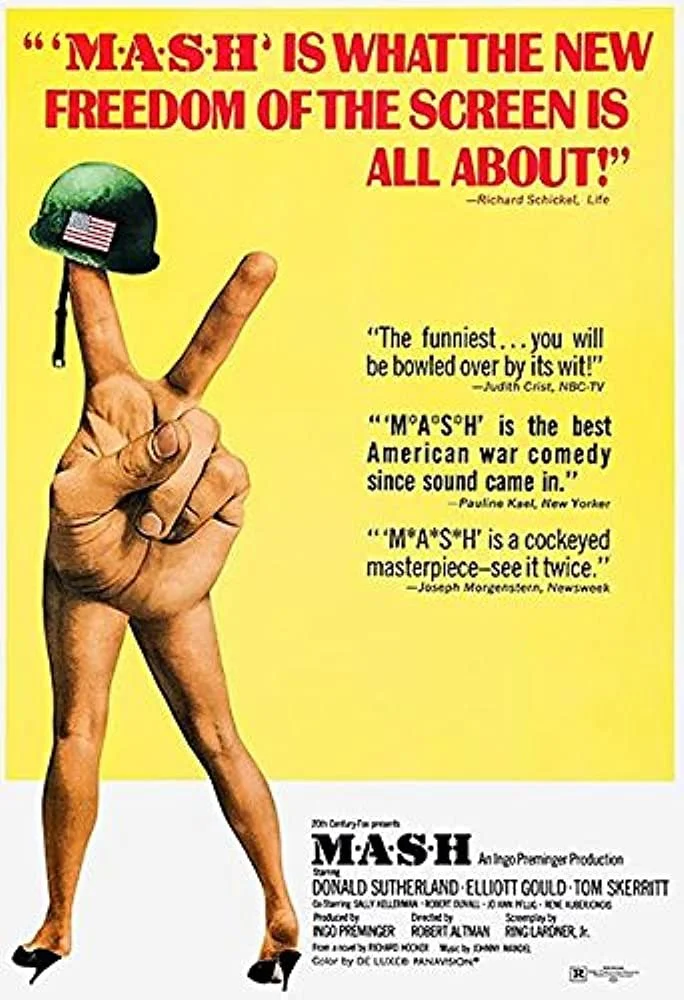
M*A*S*H (1970)
Starring: Donald Sutherland, Elliot Gould, Tom Skerritt, Robert Duvall, Sally Kellerman
Directed by: Robert Altman
Written by: Ring Lardner Jr.
Length: 116 minutes
Released: January 25, 1970
One doesn’t summarize M*A*S*H so much as just provide its basic outline: Surgeons Hawkeye Pierce (Sutherland) and “Duke” Forrest (Skerritt) arrives in South Korea and drive to the 4077th Mobile Army Surgical Hospital via stolen military jeep. As they make it to their new station, we are introduced to many of the other people already stationed there: commanding officer Henry Blake (Roger Bowen) and his assistant “Radar” O’Reilly (Gary Burghoff!), dentist Walter “The Painless Pole” Waldowski (John Shuck), man of the cloth Father Mulcahy (a very young Rene Auberjonois) and antagonistic fellow surgeon Frank Burns (Duvall), to name just a few. Two crucial late arrivals include colorful chest cracker “Trapper John” (Gould) and new head nurse Margaret “Hot Lips” Houlihan (Kellerman).
What happens in M*A*S*H? Well, the real answer is that, against this backdrop, Pierce, Duke and Trapper John mostly just kind of fuck around. They, like many men who got roped into an overseas war with a nebulous and unclear purpose, they spend their down time in Korea pulling pranks, harassing and sleeping with the few women there (including Jo Ann Pflug), and just…I dunno, playing golf?
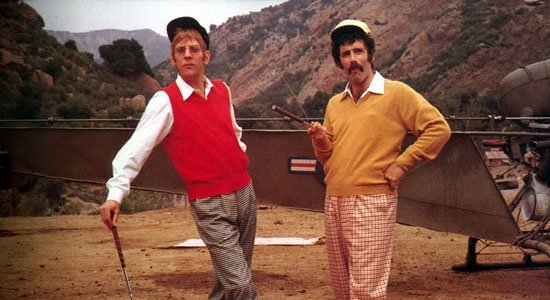
That’s during downtime. When, it’s…uh…uptime, wounded and dying soldiers are brought in from the battlefield via helicopter and it’s time to get to work. Intercut through all the buffoonery are tactful-but-bloody scenes in the actual surgery room (or tent), where our characters now have to rely on their extensive training to make split-second decisions in order to patch up our armed forces.
Anarchy is the name of the game for M*A*S*H, both in terms of the characters’ attitudes to the cold chaos and injustice surrounding them, and in terms of how the film is structured. It isn’t traditionally plotted, with an A-B-C format. Instead, it kind of lopes along, moving from vignette to vignette until it abruptly concludes. This refusal of traditional format subsequently makes it a difficult movie to peg down completely.
It’s tempting to categorize M*A*S*H as a war movie or, perhaps more accurately, an anti-war movie. And this isn’t wrong. M*A*S*H is anti-war in the sense that the movie is more or less physically absent of war, as least as it’s usually presented in a Hollywood “war” film. None of our primary characters see combat, and they’re not really soldiers in the traditional sense. There is a major battle sequence to wrap up the film: a climactic football game shot like a war zone, complete with men getting hurt and collapsing to the ground.

However, bloody conflict is felt in other ways. As mentioned above, the members of the Mobile Army Surgical Hospital are ultimately left responsible for the consequences of combat, saddled with the job of closing up the holes blown into the chests of men in a war being fought right in their backyards.
So, yes, it is anti-war, just not in the way we’re accustomed to. Compare M*A*S*H to something like Stanley Kubrick’s PATHS OF GLORY, an absolutely brilliant anti-war film where the injustice of war and how soldiers are expected to act against their own innate humanity is laid bare. However, we also know where Kubrick stands in regards to its message. To be infuriated, left with feelings of helplessness and desperation as these young men are led to their deaths at the hands of their own country for the crime of being scared…this is how Kubrick screams into the void. Through stark photography. Through Kirk Douglas’ masterful and steady performance.
But, M*A*S*H….doesn’t really leave you with any of that. Nobody gives a rousing monologue (in order to do that, they’d have to stop worrying if their erectile dysfunction makes them gay first), nobody verbally expresses their frustration or anxieties, nobody gnashes their teeth at their evil generals. The closest we get to something like that is the sequence in Japan, where they blackmail an annoying hospital commander by staging photos of him in bed with a hooker.
Otherwise, all of that interiority is expressed by the fucking around, the pranking, the harassment. For as strong leaders as Duke, Trapper and Hawkeye are when shit starts going down, they don’t really conduct themselves as noble defenders of liberty. In one of the biggest signs that opinion on American interventionism had taken a turn, their behavior is more akin to that of rowdy frat boys.
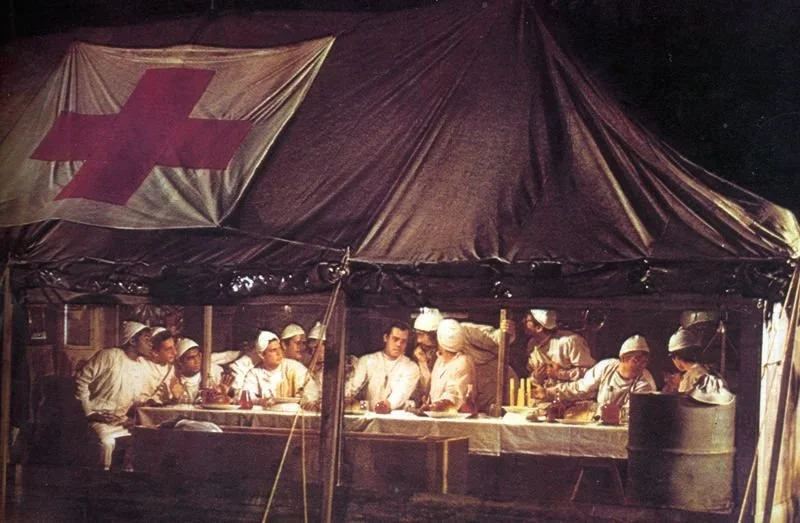
In this sense, maybe it’s best to describe MASH as an anti-Hollywood war film. Compared to more rah-rah films of the time (such as the movie that eventually beat it out for Best Picture, PATTON), Altman’s M*A*S*H may as well have been transported from a different planet. It’s an intentional, full-throated attack on what had come before; it’s no accident that many of the P.A. announcements throughout the film are advertisements for similar war films from around the time of the Korean War, their summaries and casts read with the same kind of nervous deadpan as one would when announcing the opening of a new latrine.
Now, given the description of individual scenes and moments above, it won’t shock you to hear that not everything about M*A*S*H has aged perfectly. It’s pretty blunt about gender and ethnic relations, the kind of movie whose soundtrack indicates the scene has changed to Japan by the banging of a gong. One of the only black characters with lines carries the nickname “Spearchucker”, with no apparent intended irony (in-universe, it’s because he used to throw javelins in high school, but come on). Strong women exist to be taken down a peg, to take the stick out of their ass.
Again, when put in context, the brazenness is the point and, to be honest, one of the most realistic things about M*A*S*H. Given the absence of anything else to do except patch up pawns in a pointless war, our characters blow off steam by being assholes. Funny assholes, but assholes nonetheless. Intense as it may be, it shouldn’t surprise you to learn that many related to this disillusionment in 1970 America.

Still, not all of it is handled with perfect grace. Maybe its most disappointing failure is in the depiction of Hot Lips Houlihan. Maybe the confusion as to the goal of this character as writ is aggravated by the fact that she’s played by Sally Kellerman, someone I’ve always found a little annoying (fire up a couple of her musical numbers from LOST HORIZON sometime if you disagree), putting her at a disadvantage in my heart and mind. But I think M*A*S*H the film fails her in the end.
It’s not so much that the horned-up, frustrated men surrounding her decide to take her down a peg simply for the crime of being a strong-willed woman in a war zone (again, this mostly reads as sadly realistic); it’s the fact that she becomes dumber and dumber as the movie goes on. During the infamous “shower scene” (where the curtains get pulled down, revealing her in her entirety to the entire squad) and her subsequent explosion at Blake, we both feel her exasperation, her frustration at the insanity that surrounds her (and we darkly laugh at Blake barely giving a shit, such is the male military machine).
From there? We never see that strong “head nurse” character again. By the time we get to that climactic football sequence, she’s a “blithering idiot” head cheerleader. Now, writing this all out, this sounds like an intentional shift, a consequence of being worn down by the hyper-masculine gears of war. But if that’s the case (and it may be!), it needed to be more apparent, at least for me. As it stands, her enthusiastically misunderstanding even the basic fundamentals of football as a sport feels like it’s meant to be genuinely funny. This may be a misread on my part.

Thankfully, the movie is bursting at the seams with iconic performances regardless. Donald Sutherland’s turn as Hawkeye has gotten swallowed up whole when Alan Alda’s version became essentially the only one in the public consciousness now. But he’s terrific here, playing him as a laid back observer of humanity. Once again, young Elliot Gould was a force to be reckoned with, and it’s no accident that the movie goes into another gear once Trapper John enters the fray. He’s anarchy personified, and he’s perfect.
As for Tom Skerritt, did anybody have a better knack for being in the most popular movies of all time? This, ALIEN, TOP GUN, STEEL MAGNOLIAS….though Duke may be the lesser of the three leads (and the only one not to be carried over to the TV show), he brings a nice cool-guy energy to perfectly balance out Sutherland and Gould.
Whether M*A*S*H is Altman’s best work is highly debatable. However, it might be the most indicative of his directorial trademarks, and a good early rubric for what to expect from his films going forward. All of that iconic overlapping, improvisational speech is in full force here, and it’s hard to imagine the film being any other way. What better way to effectively communicate the chaos under a MASH unit tent than everybody talking over each other?
(It should be noted the overlapping speech is also used for comedic effect, usually through Gary Burghoff’s Radar, who remains a half-second ahead of Major Burns’ orders.)
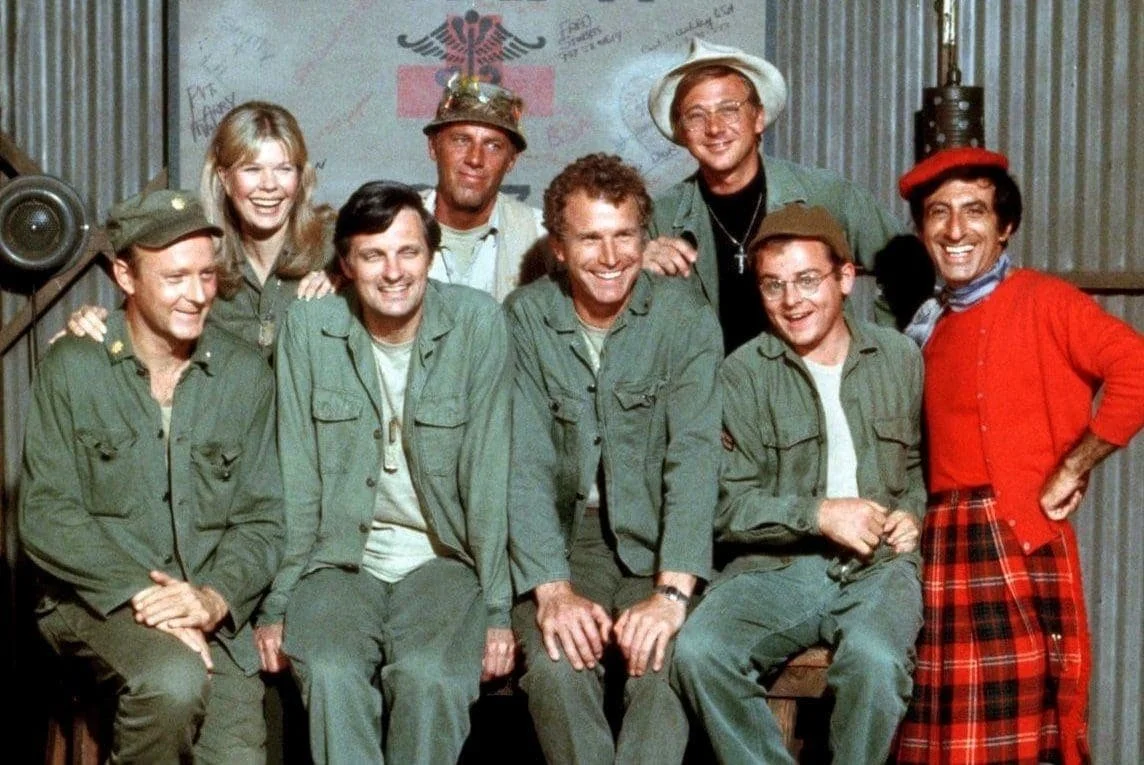
Of course, maybe the biggest ding to M*A*S*H ‘s legacy is the subsequent legacy of its spinoff project….uh… M*A*S*H, the CBS sitcom that ran for eleven years and cranked out a finale that to this day remains the single most watched episode of television in American history. For as much of a smash as MASH was in 1970, by the 80’s, the definitive versions of these characters had been cemented into the country’s consciousness.
I will say that the basic idea of M*A*S*H actually translates pretty well to episodic television (the movie is more or less structured like a bunch of episodes smashed together), but it’s always amused me how much Robert Altman hated and resented the TV show. He admitted as much in an out-of-nowhere moment on, of all things, a DVD commentary track. Whether or not he’s off-base, I’ll leave up to you. However, I always respect people who wake up extra early to be the best hater they can be.
Okay, one other thought re: the television series. We all know its theme, that somewhere-between-jaunty-and-somber instrumental melody line to “Suicide is Painless”. It’s classic, maybe the single most recognizable sitcom theme of its day. Re-watching the movie, however, made me remember that we get the full song and lyrics not once, but TWICE (once during the opening credits, and one at Painless’ “funeral”). And, folks, I was reminded that “Suicide is Painless” is one of the most nihilistic songs ever written.
The game of life is hard to play
I'm gonna lose it anyway
The losing card I'll someday lay
So this is all I have to saySuicide is painless
It brings on many changes
And I can take or leave it
If I pleaseThe sword of time will pierce our skins
It doesn't hurt when it begins
But as it works its way on in
The pain grows stronger, watch it grin
Woof. It’s very funny to me that this has managed to become a thirty-second jingle that everyone instantly recognizes from reruns. There’s a reason they left the lyrics off the opening TV credits.
All in all, M *A*S*H’s legacy was immediately secured, earning five Academy Award nominations, although it won only Best Adapted Screenplay. Fifty years on, I think it deserves more shine than it does now, eclipsed by a long-running sitcom and later, better work from its director. It’s an American satire so anarchic that it seems almost unbelievable it got made at the time, much less now.
Isn’t that worth a look?