Recent Articles
Four From ‘67: A Dozen Thoughts on THE DIRTY DOZEN
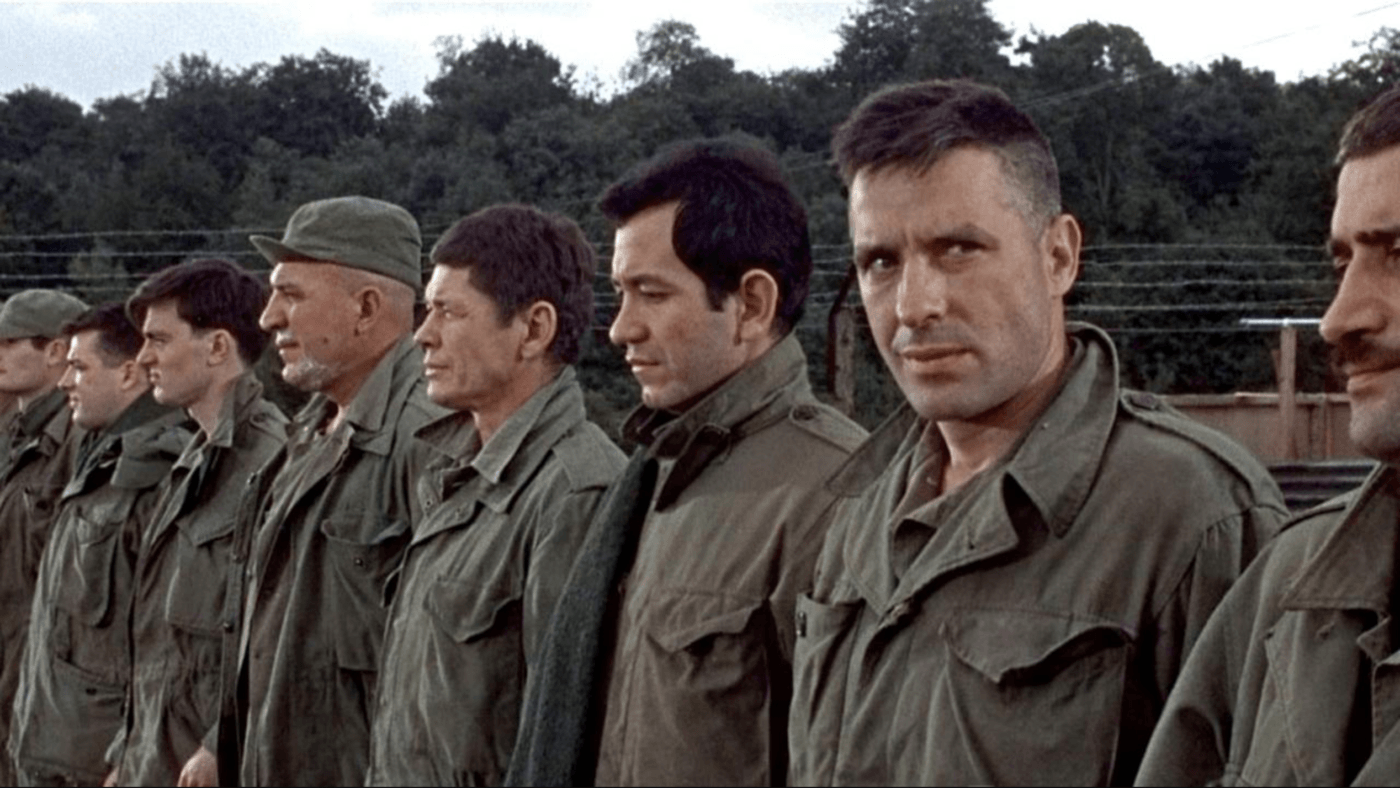
This week, let’s celebrate Memorial Day with the 1967 WWII all-star classic THE DIRTY DOZEN! In honor of yet another Robert Aldrich banger, let’s dig through twelve things I found interesting about watching this for the first time.
Today, I’m diving right back into my new series where I knock out a handful of classic American films from 1967 that I have yet to see! And, wouldn’t you know it, just in time for Memorial Day, it’s time to dig right into the WWII classic THE DIRTY DOZEN!
The beautiful thing about writing an article about a movie with a number in its title is that it gives you an instant gimmick. To that end, what follows are my twelve not-so-dirty thoughts about this Robert Aldrich star-studded affair. If you want your freedom, read on!
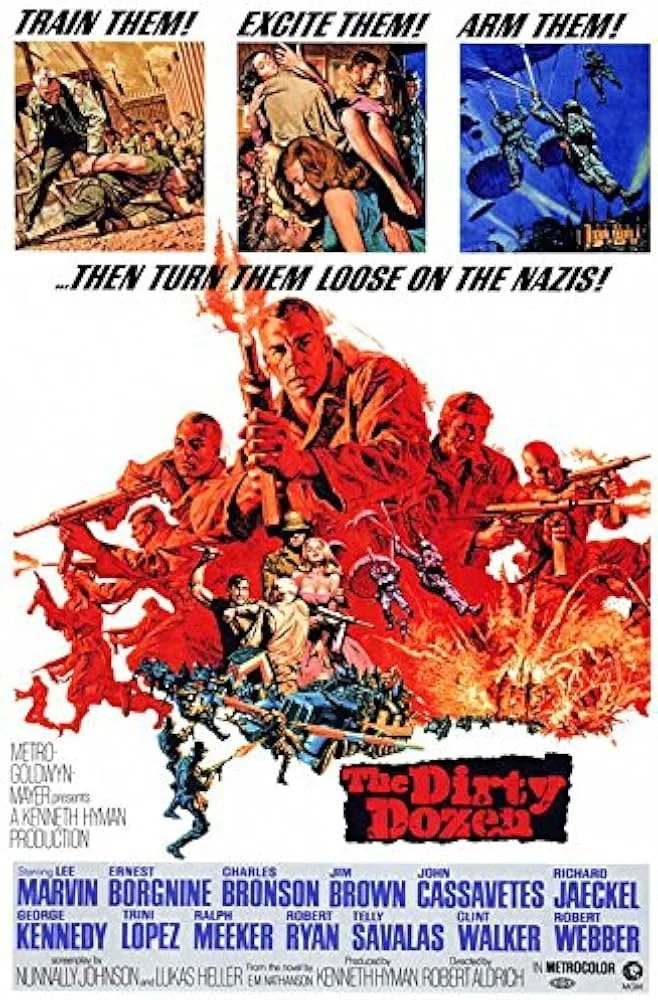
THE DIRTY DOZEN (1967)
Directed by: Robert Aldrich
Written by: Nunnally Johnson, Lukas Heller
Starring: Lee Marvin, Ernest Borgnine, Charles Bronson, Jim Brown, John Cassavetes, George Kennedy, Telly Savalas, many others
Released: June 15, 1967
Length: 150 minutes
1. It’s based on a true story…kind of.
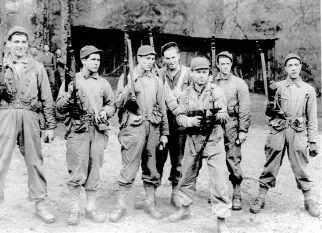
Technically, THE DIRTY DOZEN is based off of a 1965 novel by E.M. Nathanson. But that novel was based off of a real battalion during World War II. Of course, there are a couple of creative liberties being taken here; it is my solemn duty to inform you that the realteam had thirteen members and were known as the “Filthy Thirteen”. I can understand why the eventual novel and movie cut the team down by one: “The Dirty Dozen” is a much better name.
Also, despite the best efforts of war correspondents at the time to state the contrary, the Filthy Thirteen weren’t a team of condemned criminals. Instead, they were a team of demolition experts that had a penchant for wearing mohawks and thumbing their noses at any semblance of military discipline. There is a scene early on in THE DIRTY DOZEN where the team riots at the order to shave with cold water; in actuality, the Filthy Thirteen refused to bathe for a week in order to conserve resources and cook some stolen game. Stuff like that. That said, the daughter of one of the Thirteen would later say the movie was about 30% accurate, which honestly is a better batting average than I would have expected.
2. It has a satisfying premise
Let’s start proper with the actual premise of THE DIRTY DOZEN, one so good that it’s been lifted by other movies and media franchises ever since! In short: General John Reisman (Lee Marvin) is assigned the reins to “Project Amnesty” by his superiors as an act of discipline. Reisman’s assignment? Take a dozen pre-assigned condemned or forever-locked up prisoners, all convicted for a variety of crimes (robbery, murder, rape), train them in the art of combat then complete a mission in Europe.
It’s an immediately intriguing set-up for a story (made all the more potent by the fact that it’s based somewhat in fact); how do you get a bunch of lowlifes to act as a team in the name of a greater good? How could that ever work? It’s no surprise that it’s been adopted by countless movies since 1967. The big ones are the DC and Marvel franchise entries SUICIDE SQUAD and *THUNDERBOLTS, but you can also see DIRTY DOZEN influences in movies such as 1969’s THE WILD BUNCH, 1970’s KELLY’S HEROES (which also features DD alums Telly Savalas and Donald Sutherland) and 1974’s THE LONGEST YARD, a football movie set in a literal prison. Hell, even THE DIRTY DOZEN launched a TV-movie franchise of its own, generating three sequels in the 1980s.
Of course, the key to making that premise work is one that gets forgotten about by many of its successors, especially the more modern superhero-y ones….
3. They let the dozen be bad!
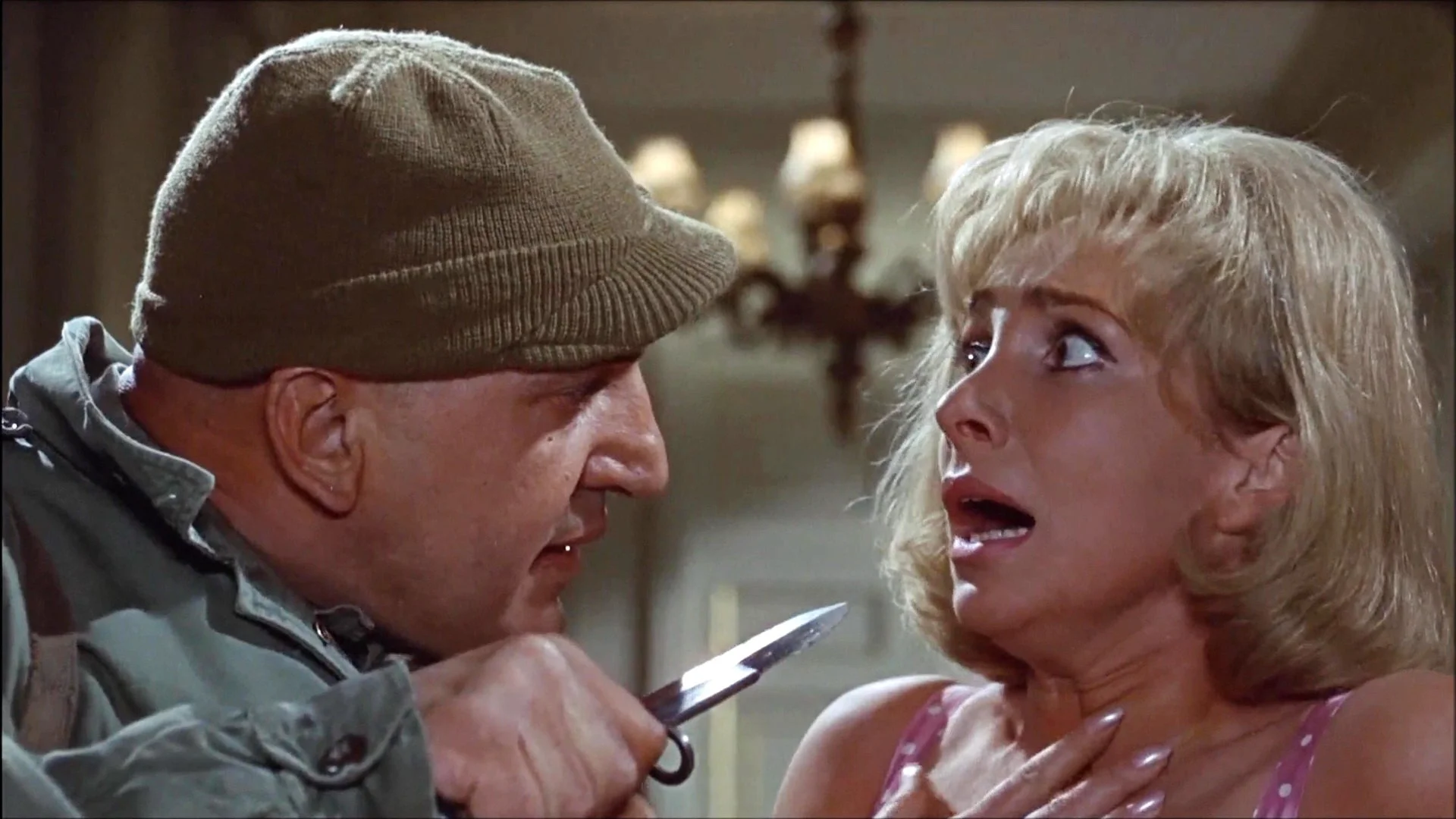
So often in movies about "villainous anti-heroes”, the creative powers behind it seem downright terrified to actually give these heroes any sort of “anti”, any sort of incontrovertible fact about them that might make the audience not like the character. This gets especially egregious when bigger media franchises give the “antihero” genre a go. Disney’s first attempt to expand their Mandalorian Star Wars television universe flopped hard when The Book of Boba Fett turned out to be…well, mostly boring. That’s what you get when you center your show around an organized crime boss who works his way to the top in order to…not organize any crime! Organized crime is illegal, after all, and fans like Boba Fett. What if he does something immoral that fans don’t like, and then people yell at us online?
THE DIRTY DOZEN doesn’t chain themselves down with this quandary. Instead, they go all in. Maggot (Telly Savalas) is an unremorseful bigot and anti-Semite. Wladislaw is defiant and flippant against authority. At least a third of the Dozen are literal murderers. Now, some of them have context behind their crimes; Jefferson (Jim Brown) is a black activist who murdered in defense against racist attacks, while it’s questionable how all there Pinkley (Donald Sutherland) really is. But for many of our leads, they’re just…not good men. And we’re just meant to deal with it.
The end result is that the stakes and drama are actually enhanced. It’s possible our Dozen could kill Major Reisman in defiance. They could even kill each other. Who knows? It also helps that these complicated characters are brought to life by the movie’s ensemble…
4. The stars shine
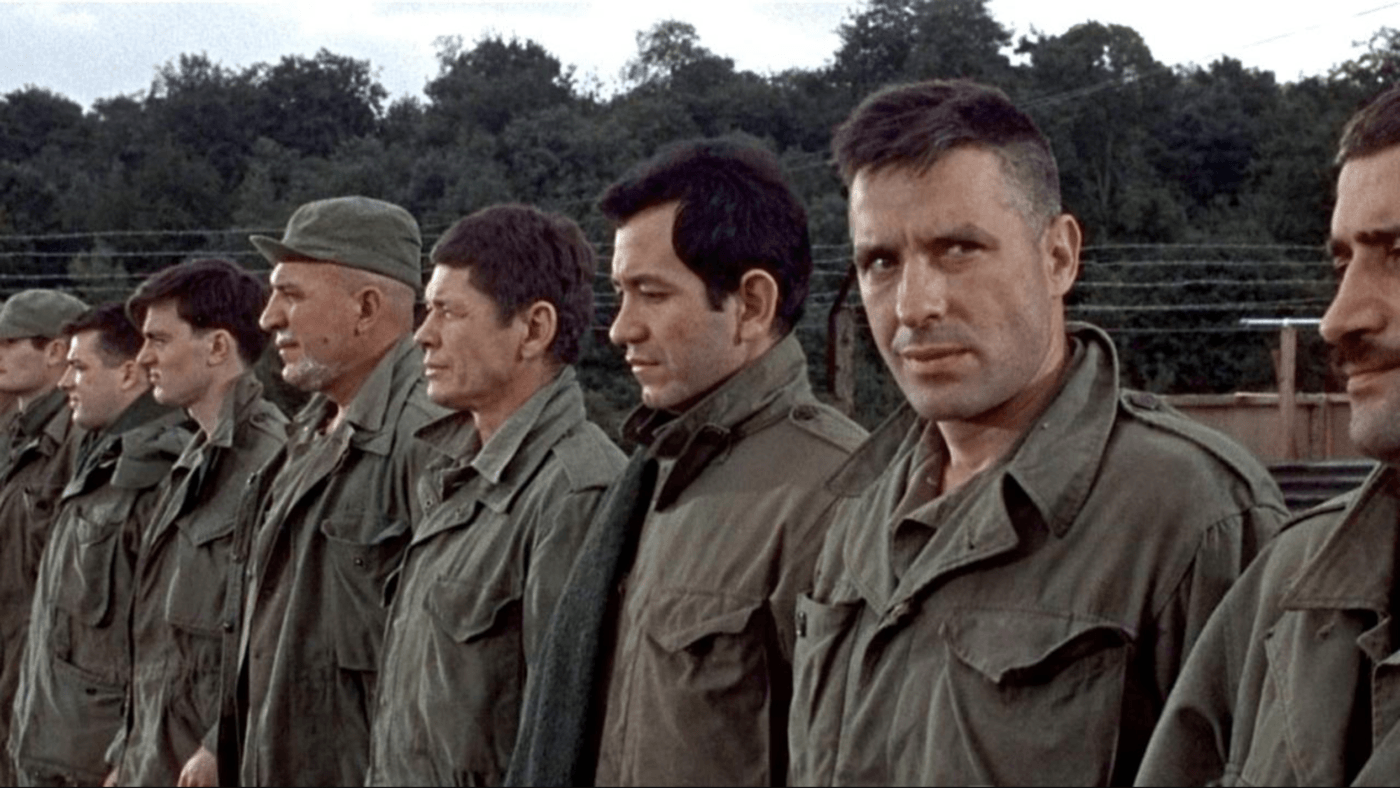
Much has been made of the fact that we don’t have “movie stars” anymore. I basically agree, although I think it’s more a sign of changing times than it is some sort of desecration of a hallowed system. Social media has made making a mystery of a movie star basically impossible. Interesting character actors from places you’ve never heard of have been largely replaced by UCB alumni. And, of course, “star-studded blockbusters” are now more about the characters the stars are playing, rather than the stars themselves. People didn’t really express excitement about Robert Downey Jr. and Josh Brolin sharing the screen in AVENGERS: INFINITY WAR so much as they did about finally seeing Iron Man and Thanos square off.
There’s something satisfying, then, to go back sixty years and see a star-studded cast be about the cast. As the opening credits play, we’re introduced to our roster of dozen dirties, and you just sit there and go “holy shit, John Cassavetes. Oh, Telly Savalas! Is that Jim Brown? Oh fuck, Charles Bronson.” The anticipation for the rest of the movie becomes about wondering how these major names are all going to play with (and against) each other.
It helps that everyone seems cast correctly, relative to our understanding of their personas. Donald Sutherland playing one of the sweeter (if only in comparison) members of the Dozen makes a lot of sense, as does Bronson playing one of the scarier, quieter ones. We just sort of sense that Cassavetes is going to be one of the more unstable ones because we know him from his other roles. Everything just feels intuitive and, thus, really satisfying.
5. It’s (relatively) anti-military
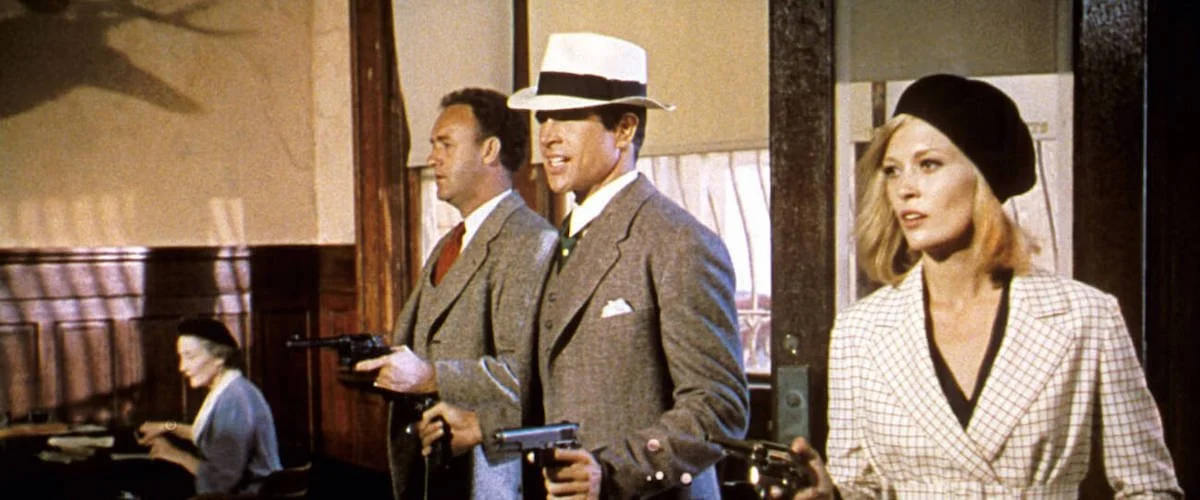
From the outside, THE DIRTY DOZEN feels like an awkward fit in the New Hollywood canon. Compared to its relative peers like THE GRADUATE, BONNIE AND CLYDE, EASY RIDER and MIDNIGHT COWBOY, THE DIRTY DOZEN resembles more of the old studio system fare that dominated Hollywood fare. A star-studded cast! Big action sequences! Sweeping music! And, look, I personally don’t have a problem with that; one of the reasons I find this era of American film fascinating is that both sects of film theory were existing side-by-side.
But, as you actually watch THE DIRTY DOZEN, it becomes clear that more of an edge exists to it that aligns it more with the Hollywood to come. Besides its aforementioned willingness to let its bad characters be bad (lining up perfectly with the rise of the American antihero in film), I was struck by how skeptical of the military this American war epic really is. The very premise implies a deeply cynical view of military brass: the idea of leveraging a dozen criminals to perform work for Uncle Sam is satisfying, but not precisely moral.
On top of that, it’s mentioned more than once that many members of the Dozen seem more hostile toward their superiors than they do their actual enemies overseas. As Reisman notes, the Nazis never did anything to these twelve. This feels like anti-military commentary of the sort that’s out of step with colorful WWII epics, until you consider that THE DIRTY DOZEN was filmed and released smack-dab in the middle of the Vietnam quagmire, one that arguably destroyed an entire generation of American men and forever altered the average citizen’s view on war. The idea that Nazis may be superficially “nicer” than military brass feels like an incendiary insinuation, but…putting yourself in the shoes of the Dozen, can you argue with it?
Now, does this anti-military streak meet the threshold of something like PATHS OF GLORY, released a decade earlier? No, not at all. After all, at the end of the day, the United States military is victorious and righteous. But, there’s enough darkness and edge to THE DIRTY DOZEN’s views on the armed forces that the film actually fits in way better with the roiling New Hollywood movement more than I ever would have thought.
6. It’s funny!
For as much as THE DIRTY DOZEN has on its mind, there are more comedy beats embedded in its narrative than you might think. The military band leader’s constant toothy-grinned false starts trying to anticipate Colonel Reed’s entrance to the base is a fun highlight, as is the good old-fashioned vaudeville routine of the Dozen informing each other via a game of telephone that the military guys who beat up Wladislaw have arrived on base, culminating in Maggot telling Wladislaw himself. It’s a broad comic beat I didn’t expect from an otherwise fairly serious war drama. Needless to say, I loved it.
7. The length
For as much as I like THE DIRTY DOZEN, I do have to question whether it really needed to be two and a half hours. Admittedly, I sometimes find the topic of how long movies should be a little tiring (the answer ultimately is, as long as they’re supposed to be and not a second less or more), I do think a movie’s economy is really important. If you feel like a film is wasting your time even a little bit, it can’t help but affect the viewing experience.
So, when the whole middle act of THE DIRTY DOZEN is devoted to a war game whose stakes are ultimately inconsequential when compared to the final mission…it’s no wonder that many walk away feeling like the whole section could be trimmed or omitted entirely. I don’t fully disagree with this notion; it feels like THE DIRTY DOZEN is a brilliant 120-minute flick stuck in the body of a 150-minute one, and this act is right around thirty minutes, so the math speaks for itself. That said, I’m feeling a little feisty, so I will defend the wargame sequence just a tad.
So many other star-studded “gang of bad guys learn to fight for a greater good” movies skip over one of the central logic questions: “why would anyone permit this to happen in the first place?” To THE DIRTY DOZEN’s credit, this is a question that hovers over the whole proceedings. Major Reisman is constantly having to justify and contextualize the project to his superiors, despite it not even being his idea in the first place. This need for justification culminates in a wager: the Dirty Dozen will take on the men of Reisman’s biggest rival, Colonel Reed, in the military version of an exhibition match. It’s their strong (and unorthodox) showing that allows Reisman to take the Dozen to France in the first place.
So, yes, there’s a version of this movie that excises this and immediately raises the stakes (and increases its economy). But…so many takes on this format skip this part, and just make its ringleader borderline-insane in order to justify letting criminals fight for the do-gooders, offering maybe lip-service “greater good” justifications. Fleshing that part out makes for a film that’s longer in the tooth, but I appreciate THE DIRTY DOZEN’s attempt to do so all the same.
8. The body count matters
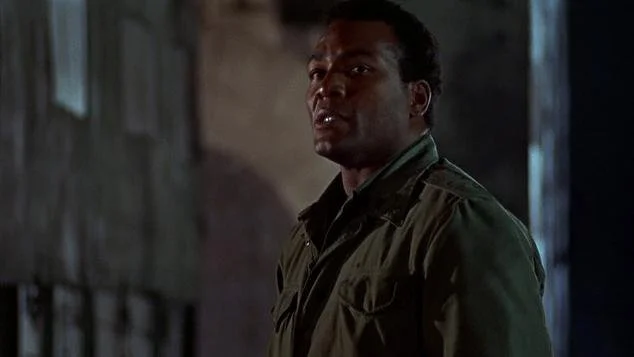
The beautiful thing about unique characters played by compelling stars is that you end up caring about them, even when they’re people you’d never want to meet in real life. So, when people start dying in THE DIRTY DOZEN’s finale, it can’t help but feel a little heartbreaking, no matter who they end up being. Obviously it’s crushing to lose fan favorites like Pinkley feel crushing, and I can’t quite describe the despair when I realized Jefferson wasn’t going to be long for this world. But I was shocked at how much I was affected by losing total degenerates like Maggot. And when this movie pulls its last trick, having what remained of the Dozen pull away in their jeep, just to have one more bullet claim a life (this time, it’s Franko who bites it), I actively said, “oh, fuck you!”, meant in the best way possible.
Again, it can’t be reiterated enough what a magic trick wringing that amount of emotional investment from a group of criminals (many unrepentant!) really is. Obviously, having a cast of beloved stars goes a long way toward establishing that sleight of hand. But we also have to give it up to two other factors. First…
9. Robert Aldrich’s direction
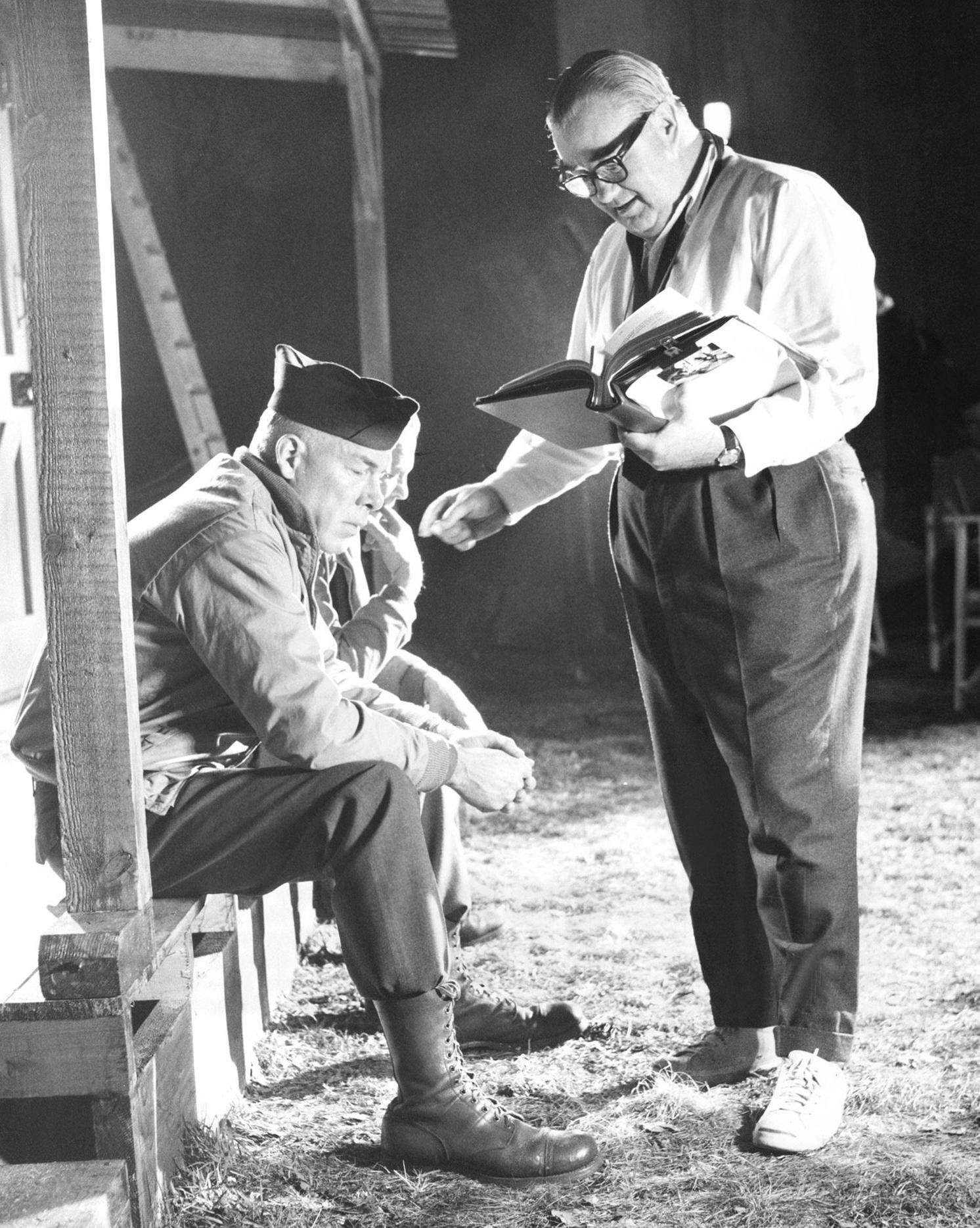
Robert Aldrich sneakily has one of the craziest filmographies of all time.
THE DIRTY DOZEN, KISS ME DEADLY, WHAT EVER HAPPENED TO BABY JANE?, THE FLIGHT OF THE PHOENIX, HUSH…HUSH, SWEET CHARLOTTE and THE LONGEST YARD make up a set of movies that wouldn’t even be collected in the same section of the video store*, let alone exist on the same filmography. But that’s Robert Aldrich for you, an old-school genre chameleon whose less-than-straightforward tonal approaches to his films made him a legend and probably helped inspire the French New Wave. To be honest, his career is probably worth a deeper dive in this space one of these days.
*To those readers too young to know what a video store is, imagine if the Netflix app was a brick-and-mortar building. Also, start taking care of your teeth now, and realize that most of the friendships you have now are situational, and somewhat illusory.
Anyway, his somewhat more psychological and personal approach to filmmaking absolutely makes THE DIRTY DOZEN a richer experience than it would have been with anybody else. He’s a skilled action director, but the action scenes almost feel secondary compared to the scenes where the Dozen and/or the various top brass are just kind of talking and bouncing off of each other. Aldrich had a knack for drawing interesting (and precise) performances from his cast, and the bounty of talent he had to work with ends up being catnip for him.
Of course, those glorious dialogue-driven scenes are nothing without the people who wrote said dialogue…
10. Nunnally Johnson and Lukas Heller’s script
Between Heller, a frequent Aldrich collaborator, and Johnson, an industry vet who had forty years of experience writing the screenplays for all kinds of romantic comedies, dramas, and mysteries, THE DIRTY DOZEN had two writers who were uniquely attuned to the material that was being presented. Fun fact: this script would turn out to be the last one Johnson would ever write prior to passing away ten years later, in 1977.
And it’s a good script to go out on! I don’t know that THE DIRTY DOZEN is a film chock full of quotable lines, in the way that other movies in the 60s were (there’s certainly nothing in this as memorable as a “what we have here is a failure to communicate”), but there is an insanely creative amount of efficiency in its storytelling, with the centerpiece example being the scene where the Dozen go over their Big Master Plan. It’s all done as a rhyming mnemonic. Major Reisman calls out “one”, the Dozen respond with “down to the road block, we’ve just begun”. He says “two”, they respond “the guards are through”. On and on, until they reach step Sixteen. My immediate disappointment with this aside (it should have been twelve steps, right?), this device is such a great way to set up the final act of the film. It’s a complicated sequence, with everyone scattered about this Nazi-occupied castle. But audience members who have been paying attention now have a handy-dandy poem to keep track of where we are and, crucially for what is basically a heist scene, where things are going wrong.
I think this is why, even as THE DIRTY DOZEN approaches its third hour, you’re hard-pressed to know precisely where you would cut things. The obvious answer is that aforementioned wargame sequence, but it still serves a purpose in the greater scheme of things. Even as it wanders, the Heller/Johnson script remains functional and engaging. Good stuff!
11. It would go on to be a TV movie franchise.
As mentioned, THE DIRTY DOZEN would spawn several TV sequels, all of them released in relatively quick succession in the 80s on NBC. Had I been on top of things, I would have located and knocked these TV movies out so I can impart to you my findings of the complete Dozen-verse. Alas, I am on top of things. Thus, I can only give you what stands out to me from afar. Sorry.
First and foremost, I am shocked at the amount of returning cast members in these, starting with Lee Marvin coming back to lead the next mission in 1985’s THE DIRTY DOZEN: NEXT MISSION, which also brought back Ernest Borgnine’s Gen. Worden. Borgnine also returns for 1987’s THE DIRTY DOZEN: THE DEADLY MISSION (whoah, this one’s deadly!), along with Telly Savalas, who has to play a new character this time. As it happens, he takes on the “general of the Dozen” slot, taking over for Lee Marvin, who had passed away at this point. It seems like it worked out because Savalas comes back once more in 1988’s THE DIRTY DOZEN: THE FATAL MISSION (which I guess is more dangerous than a deadly mission), along with…Borgnine! Yep, Ernie turns out to be the unifying glue amongst the DIRTY DOZEN quadrilogy.
Anyway, all three follow-ups have pretty rancid reviews, so I probably won’t watch them, although who knows. For now, though, that ends the DIRTY DOZEN media franchise.
12. There’s a remake in the works.
Oh, yeah, except there’s been a threatened David Ayer-directed remake that’s been in the works since 2019. Now, I would argue we’ve already seen a David Ayer remake of THE DIRTY DOZEN and it was SUICIDE SQUAD and it suicide sucked. From what I’ve seen of his work, Ayer doesn’t really have what it takes to make a redo of THE DIRTY DOZEN something satisfying, and it breaks my heart to imagine this movie being brought into this weird age of “Netflix action” flicks. So forgive me if I feel like this should probably just remain in the development hell it’s currently in.
But who knows? Maybe it’ll actually get made and Ayer will prove me wrong. It just feels like trying to take a movie that balanced genuinely nasty characters with the kind of verve and skill to get you to care about them dying and remaking it in an age where audiences don’t seem to want their movie characters to have any flaws whatsoever…it feels like a dangerous mission.
But then…I guess there have been more dangerous missions in the past.